 Nurturing Marriages, Enriching Families!
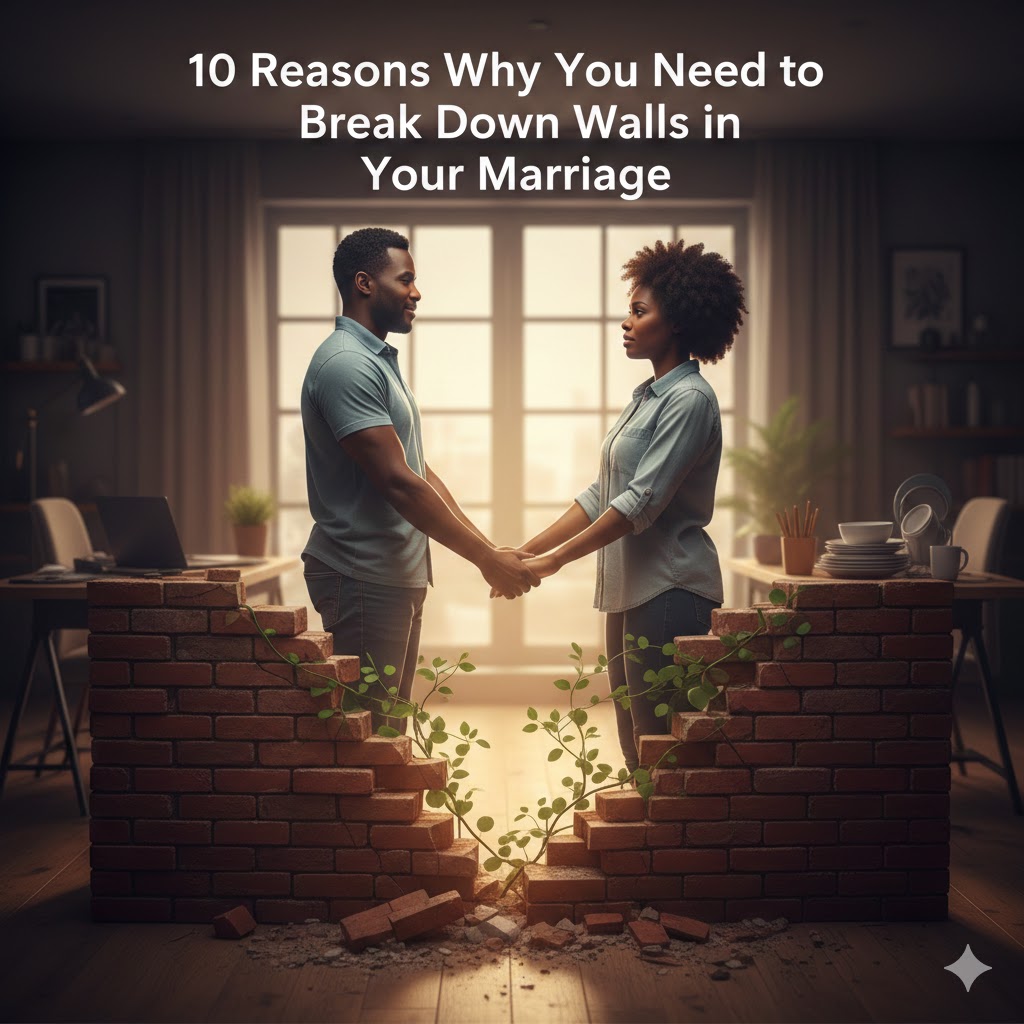
10 Reasons Why You Need to Break Down Walls in Your Marriage
Marriage thrives on emotional intimacy, trust, and vulnerability. Yet many couples unknowingly build emotional walls over time. These walls may form after arguments, disappointments, betrayals, stress, or repeated misunderstandings. While emotional barriers often start as self-protection, they can slowly weaken connection and create distance between spouses.
If you’ve noticed tension, communication breakdown, or emotional detachment in your marriage, it may be time to ask: Are emotional walls standing between us?
In this article, we explore 10 powerful reasons why breaking down walls in your marriage is essential for lasting intimacy, trust, and partnership.
What Are Emotional Walls in Marriage?
Emotional walls are protective barriers spouses create to avoid vulnerability, hurt, or conflict. They may show up as:
-
Avoiding deep conversations
-
Withholding feelings
-
Acting indifferent
-
Refusing to apologize
-
Shutting down during arguments
While walls may feel like protection, they often block love, intimacy, and understanding.
10 Reasons Why You Need to Break Down Walls in Your Marriage
1. Emotional Walls Block Intimacy
True intimacy requires vulnerability. When you hold back emotions, avoid sharing fears, or suppress feelings, emotional closeness fades.
Marriage is not just about sharing space—it’s about sharing your inner world. Breaking down walls allows your partner to truly know and understand you.
Without vulnerability, intimacy cannot grow.
2. Walls Create Miscommunication
When spouses stop expressing their thoughts and feelings openly, misunderstandings multiply. Assumptions replace clarity.
Instead of saying:
-
“That hurt me.”
-
“I feel overwhelmed.”
-
“I need support.”
Walls often result in silence or passive-aggressive behavior.
Open communication eliminates confusion and strengthens emotional connection.
3. Emotional Distance Leads to Loneliness
It’s possible to feel lonely while living in the same home as your spouse. Emotional walls create invisible separation that can feel isolating.
When you break down walls, you restore emotional accessibility. Feeling seen, heard, and valued reduces loneliness within marriage.
Connection requires openness.
4. Walls Prevent Conflict Resolution
Avoiding vulnerability often means avoiding honest conflict resolution. Problems may be ignored instead of addressed.
Unresolved issues don’t disappear—they resurface later, often stronger.
Breaking down walls allows couples to:
-
Address concerns calmly
-
Apologize sincerely
-
Repair emotional wounds
Healthy conflict strengthens marriage when handled openly.
5. Vulnerability Builds Trust
Trust is not built solely on loyalty—it’s built on emotional transparency.
When you share fears, mistakes, or insecurities, you demonstrate trust in your partner. That openness invites reciprocal honesty.
Walls suggest fear. Vulnerability signals commitment.
Over time, consistent emotional openness strengthens the foundation of trust.
6. Walls Increase Resentment
Unspoken frustrations often turn into resentment. When spouses don’t express feelings constructively, bitterness can quietly grow.
Breaking down walls prevents emotional buildup. Honest conversations—even uncomfortable ones—clear misunderstandings before they evolve into long-term resentment.
Marriage flourishes when feelings are expressed, not suppressed.
7. Emotional Walls Impact Physical Intimacy
Emotional closeness and physical intimacy are deeply connected. When emotional walls exist, physical affection often declines.
A lack of vulnerability may lead to:
-
Reduced affection
-
Decreased desire
-
Feeling emotionally disconnected
Breaking down emotional barriers often restores warmth, closeness, and physical bonding.
Intimacy begins with emotional safety.
8. Walls Limit Personal Growth
Marriage is meant to be a safe space for growth. When emotional walls remain, spouses may feel unsupported or misunderstood.
Breaking down barriers encourages:
-
Honest feedback
-
Encouragement
-
Shared goals
-
Mutual support
A transparent marriage creates room for both partners to evolve and thrive.
9. Children Learn From Your Example
If you have children, they observe how you communicate and handle emotions. Emotional walls may teach them to suppress feelings or avoid vulnerability.
Breaking down walls models:
-
Healthy communication
-
Respectful conflict resolution
-
Emotional intelligence
Your marriage sets the emotional tone for your household.
10. Marriage Is Meant to Be a Partnership
At its core, marriage is teamwork. Emotional walls weaken that partnership by creating separation.
When walls come down:
-
Decision-making improves
-
Emotional support increases
-
Shared goals feel achievable
-
Unity replaces division
A strong marriage requires emotional accessibility—not guarded detachment.
Why Do Couples Build Walls?
Understanding the root causes helps in breaking them down.
Common reasons include:
-
Past betrayals
-
Fear of rejection
-
Repeated unresolved arguments
-
Stress from work or finances
-
Feeling unappreciated
-
Childhood emotional patterns
Recognizing the source of your walls is the first step toward healing.
How to Break Down Emotional Walls in Marriage
Knowing why it matters is important—but taking action is essential.
Here are practical strategies to restore emotional openness.
1. Initiate Honest Conversations
Start small. You don’t need a dramatic emotional breakthrough overnight.
Try saying:
-
“I’ve been feeling distant lately.”
-
“I want us to feel closer.”
-
“Can we talk about what’s been bothering us?”
Approach the conversation with curiosity, not blame.
2. Practice Active Listening
When your spouse speaks, focus on understanding—not defending yourself.
-
Maintain eye contact
-
Avoid interrupting
-
Reflect back what you heard
Feeling heard is often more important than being right.
3. Apologize Without Conditions
Conditional apologies (“I’m sorry if you felt that way”) maintain walls.
Instead, offer sincere ownership:
-
“I’m sorry for hurting you.”
-
“I understand why that upset you.”
Humility breaks emotional barriers quickly.
4. Rebuild Emotional Safety
If past conflicts caused walls, emotional safety must be restored.
This includes:
-
Keeping promises
-
Avoiding harsh criticism
-
Respecting boundaries
-
Following through on commitments
Consistency rebuilds trust over time.
5. Consider Professional Support
If emotional walls feel too high to dismantle alone, marriage counseling can help.
A trained therapist provides tools for:
-
Communication improvement
-
Conflict resolution
-
Emotional reconnection
Seeking help shows commitment—not weakness.
The Long-Term Benefits of Emotional Openness
When couples break down walls, they often experience:
-
Stronger emotional intimacy
-
Reduced conflict
-
Greater trust
-
Improved physical connection
-
Increased marital satisfaction
-
A deeper sense of partnership
Marriage becomes less about survival and more about shared fulfillment.
Final Thoughts
Emotional walls may begin as protection, but over time they can quietly erode connection, intimacy, and trust in marriage.
Breaking down those walls requires courage, vulnerability, and intentional effort—but the rewards are profound. Openness fosters emotional safety, deeper understanding, and lasting partnership.
Marriage is not meant to be guarded or distant. It’s meant to be a space where two people feel fully known, supported, and valued.
If you recognize emotional barriers in your relationship, take the first step today. Start a conversation. Express a feeling. Offer an apology. Extend grace.
Because when walls come down, love has room to grow.








.jpg)

Sign in to comment