 Nurturing Marriages, Enriching Families!
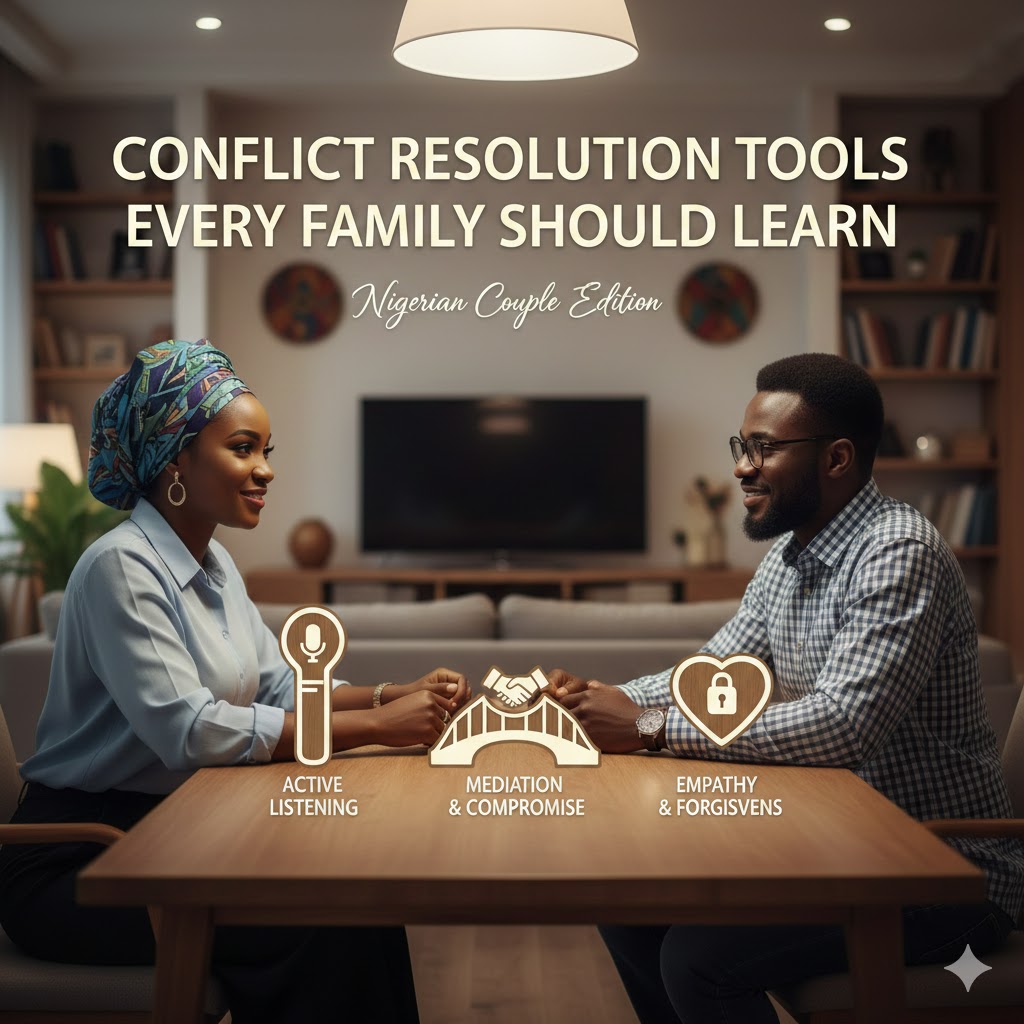
Conflict Resolution Tools Every Family Should Learn: Strengthening Nigerian Homes Through Understanding and Communicatio
Family life in Nigeria is rich, vibrant, and deeply interconnected. Relatives live together, share resources, uphold traditions, and make joint decisions. While this interconnectedness is a strength, it also makes Nigerian families particularly susceptible to conflict. Misunderstandings, generational differences, financial pressures, cultural expectations, and personality clashes often turn minor disagreements into prolonged family disputes.
The key to maintaining harmony is not avoiding conflict—it’s learning conflict resolution tools that promote understanding, restore relationships, and prevent recurring problems. This article explores practical, culturally sensitive tools every Nigerian family should master, supported by real-life scenarios and actionable strategies.
Why Conflict Happens in Nigerian Families
Before exploring tools, it’s essential to understand why conflicts arise:
-
Extended family involvement: Nigerian families often include grandparents, aunts, uncles, and cousins in decision-making. Differing opinions and interference can create tension.
-
Cultural expectations: Obedience, respect for elders, marriage, and financial support are highly emphasized. Disagreements over these expectations often cause friction.
-
Generational gaps: Young adults may adopt modern lifestyles that clash with traditional beliefs held by elders.
-
Financial stress: Economic challenges and unequal financial contributions can lead to disputes.
-
Communication breakdown: Avoidance, assumptions, or indirect communication often escalate misunderstandings.
Without tools to manage these dynamics, conflicts can fester, resulting in emotional distance, resentment, and even permanent rifts.
Real-Life Nigerian Scenario: The Polygamous Family Tension
In Kaduna, a polygamous household experienced ongoing disputes between co-wives over property allocation and child-rearing responsibilities. The husband tried to mediate but often took sides unintentionally. The tension grew so intense that family members avoided shared meals and gatherings. Conflict resolution tools, such as structured family meetings and clear boundaries, eventually helped restore peace.
Tool 1: Effective Communication
Communication is the foundation of conflict resolution. Nigerian families often struggle because:
-
Elders dominate conversations.
-
Younger members fear expressing opinions.
-
Messages are interpreted through cultural or emotional filters.
Strategies for Effective Communication
-
Active Listening: Pay full attention, avoid interrupting, and reflect on what is said.
-
I-Statements: Express your feelings without blaming (“I feel overwhelmed when…” rather than “You always…”).
-
Calm Tone: Avoid shouting or emotional outbursts.
-
Clarity: Be specific about concerns and needs.
Real-Life Scenario: In Lagos, a father constantly criticized his daughter’s career choice. She calmly explained her goals and potential income while acknowledging his concerns. This respectful communication reduced tension and opened constructive dialogue.
Tool 2: Family Meetings
Family meetings provide a structured environment to address recurring issues. In Nigerian homes, meetings work best when:
-
Scheduled ahead of time
-
Everyone knows the agenda
-
Ground rules are established (e.g., no interrupting, respect for all voices)
-
Focus is on solutions, not blame
Tips for Effective Family Meetings
-
Start with gratitude to set a positive tone.
-
Allow each member to speak without judgment.
-
Document agreements to prevent misunderstandings.
-
Follow up consistently.
Real-Life Scenario: In Ibadan, siblings held monthly meetings to discuss financial contributions for their parents. Clear communication and documentation reduced arguments and built trust.
Tool 3: Mediation
Neutral mediation is invaluable, especially when emotions run high. Mediators can be:
-
Trusted elders
-
Religious leaders
-
Professional counselors
Mediators guide the conversation, ensure fairness, and reduce emotional escalation.
Real-Life Scenario: A Lagos family faced disputes over inheritance. An elder mediator helped clarify legal documents and family expectations, preventing long-term resentment.
Tool 4: Setting Boundaries
Boundaries define acceptable behavior and protect emotional health. In Nigerian families, boundaries may include:
-
Financial limits
-
Privacy regarding marital decisions
-
Time allocation for family obligations
-
Limits on unsolicited advice
Tips for Setting Boundaries
-
Be clear, firm, and respectful.
-
Communicate boundaries before conflicts arise.
-
Reinforce boundaries consistently.
Real-Life Scenario: Tunde, an eldest son in Kano, was expected to fund extended family expenses constantly. By clearly stating what he could and could not provide, tensions eased without disrespecting elders.
Tool 5: Emotional Regulation
Managing emotions is critical during conflicts. Emotional regulation tools include:
-
Taking deep breaths before responding
-
Pausing to reflect before reacting
-
Journaling to process emotions privately
-
Seeking counseling if overwhelmed
Real-Life Scenario: A couple in Port Harcourt argued over parenting styles. By taking short breaks during heated discussions and practicing calm expression, they avoided escalating the argument.
Tool 6: Problem-Solving Techniques
Conflict often persists because solutions are not explored. Structured problem-solving involves:
-
Identifying the problem clearly
-
Brainstorming possible solutions
-
Evaluating each solution together
-
Agreeing on the best option
-
Monitoring progress and adjusting if necessary
Real-Life Scenario: In Enugu, two brothers argued over dividing their father’s farmland. By listing options and evaluating them together, they agreed on shared usage and profit allocation, preventing future disputes.
Tool 7: Forgiveness and Letting Go
Conflict resolution is incomplete without forgiveness. Forgiveness:
-
Releases resentment
-
Restores emotional balance
-
Prevents lingering grudges
In Nigerian culture, forgiveness is often tied to respect, but it must be genuine—not forced—to be effective.
Real-Life Scenario: A mother and daughter in Lagos held a long-standing argument over career choices. After months of reflection and apology, they forgave each other, restoring warmth in their relationship.
Tool 8: Collaborative Decision-Making
Family conflicts often arise from unilateral decisions. Collaborative decision-making ensures:
-
Everyone’s voice is considered
-
Shared responsibility for outcomes
-
Reduced resentment and misunderstandings
Real-Life Scenario: In a polygamous home in Kaduna, decisions about household chores and child education were made collaboratively during monthly family meetings, reducing ongoing tension.
Tool 9: Conflict Journals
Keeping a family conflict journal can help track:
-
Recurring issues
-
Emotional triggers
-
Solutions tried and outcomes
Journals create clarity and prevent repeating patterns.
Real-Life Scenario: A Lagos family documented disputes over financial contributions and reviewed them monthly. This helped identify recurring triggers and implement preventive measures.
Tool 10: External Support and Therapy
Sometimes internal tools are insufficient. Nigerian families increasingly benefit from:
-
Family therapy
-
Counseling for individual members
-
Support groups for specific issues (e.g., divorce, infertility, caregiving)
External support provides skills and neutral perspectives for long-term resolution.
Integrating Tools Into Daily Family Life
Conflict resolution is most effective when it becomes a habit, not an event. Families can integrate tools by:
-
Holding regular check-ins
-
Encouraging open dialogue about finances, responsibilities, and expectations
-
Modeling respectful disagreement for children
-
Reinforcing agreements and boundaries consistently
Real-Life Nigerian Scenario: Preventing Escalation in a Large Family
A family in Lagos with five adult children used monthly check-ins to discuss expectations around caregiving for their elderly parents. Each member expressed concerns and agreed on responsibilities. By using structured problem-solving, boundaries, and collaborative decision-making, they reduced arguments and strengthened relationships.
Benefits of Mastering Conflict Resolution Tools
Families that use these tools experience:
-
Stronger emotional bonds
-
Reduced stress and anxiety
-
Greater understanding across generations
-
Improved communication
-
Long-term harmony and trust
In Nigeria, where family is central to identity, these benefits are life-changing.
Overcoming Cultural Barriers to Conflict Resolution
Nigerian families may resist certain approaches due to:
-
Fear of disrespecting elders
-
Preference for indirect communication
-
Traditional beliefs that silence equals respect
To overcome barriers:
-
Frame tools as enhancing family harmony
-
Respect hierarchy while encouraging inclusivity
-
Use culturally sensitive language
-
Lead by example with consistent practice
Conclusion
Conflict is inevitable in Nigerian families, but it does not have to be destructive. By learning and applying conflict resolution tools—such as effective communication, structured family meetings, mediation, boundary setting, emotional regulation, problem-solving, forgiveness, collaborative decision-making, journaling, and professional support—families can transform disputes into opportunities for growth, understanding, and connection.
Mastering these tools protects mental health, strengthens marriages, improves parent-child relationships, and builds resilience across generations. In the Nigerian context, where family is central to social life, mastering conflict resolution is not just helpful—it is essential for lasting harmony.








.jpg)
Sign in to comment