 Nurturing Marriages, Enriching Families!

Cultural Expectations vs Modern Realities in Nigerian Marriages
Marriage in Nigeria has always been more than a union between two people. It is a social institution, a cultural symbol, a family alliance, and in many cases, a community affair. For generations, Nigerian marriages were guided by deeply rooted cultural expectations—clear gender roles, strong extended family involvement, defined power structures, and shared values shaped by tradition.
However, modern realities are rapidly reshaping how marriages function today. Urbanization, education, globalization, technology, women’s empowerment, economic pressure, and changing social norms have altered what couples expect from marriage and from each other.
This collision between traditional cultural expectations and modern marital realities has created tension, confusion, and conflict in many Nigerian marriages. Some couples feel trapped between honoring culture and surviving emotionally. Others feel guilty for wanting a different kind of marriage.
This article explores how these two forces clash, how they affect real Nigerian marriages, and how couples can find balance without losing themselves—or each other.
Marriage in Traditional Nigerian Culture: What Was Expected
Across Nigeria’s diverse ethnic groups—Yoruba, Igbo, Hausa/Fulani, and others—marriage traditionally came with clearly defined expectations.
Although practices varied, some common cultural assumptions existed:
-
A husband was the unquestioned head of the home
-
A wife’s primary role was domestic care, obedience, and child-rearing
-
Extended family had authority and influence over the marriage
-
Endurance was valued over emotional expression
-
Divorce was strongly discouraged, especially for women
Marriage was less about personal fulfillment and more about duty, stability, lineage, and social respectability.
Love was expected to grow, not necessarily to be present from the beginning.
Modern Realities: How Nigerian Marriages Are Changing
Today’s Nigerian marriages exist in a very different environment. Couples now marry later, choose partners themselves, live in nuclear families, and expect emotional companionship, mutual respect, and personal growth.
Modern realities include:
-
Dual-income households due to economic pressure
-
Educated and financially independent women
-
Increased awareness of mental health and emotional needs
-
Exposure to global relationship ideals through media
-
Reduced tolerance for abuse and neglect
-
Desire for friendship, intimacy, and shared decision-making
These shifts are not inherently negative—but when they collide with rigid cultural expectations, conflict arises.
Clash One: Gender Roles vs Shared Partnership
The Cultural Expectation
Traditionally, Nigerian culture places the man as the provider, authority figure, and decision-maker, while the woman is expected to submit, nurture, and manage the home.
A “good wife” is often described as patient, quiet, respectful, hardworking, and accommodating—regardless of her emotional state.
The Modern Reality
Many Nigerian women today are educated, employed, ambitious, and emotionally expressive. They desire partnership, collaboration, and respect—not silent submission.
Men, on the other hand, are under increasing economic pressure and may no longer be the sole providers. This can threaten traditional masculine identity.
Real-Life Nigerian Scenario
Bola and Kunle live in Lagos. Bola earns more than Kunle due to her role in a multinational company. While Kunle initially supported her career, he later became uncomfortable with her independence.
Kunle expects Bola to handle all domestic duties because “that’s what a wife does,” despite her demanding job. When Bola requests shared responsibilities, Kunle accuses her of being “too modern” and “forgetting culture.”
Bola feels exhausted and unappreciated. Kunle feels disrespected and emasculated.
The Impact on Marriage
When traditional gender roles clash with modern partnership expectations, resentment builds. Women feel overburdened and unheard. Men feel threatened and diminished. Without honest dialogue, the marriage becomes a power struggle rather than a partnership.
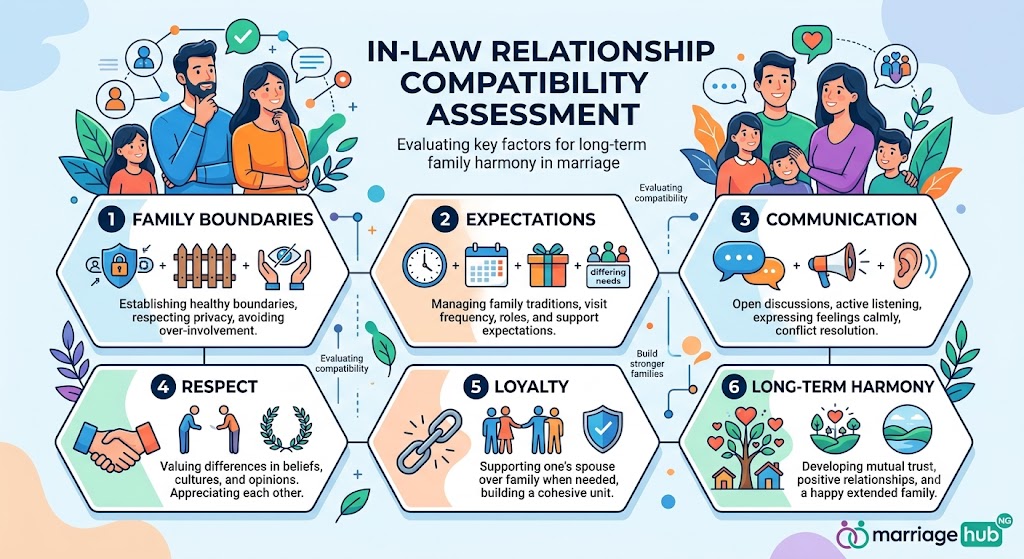
Clash Two: Extended Family Authority vs Marital Boundaries
The Cultural Expectation
In traditional Nigerian marriages, the extended family plays an active role. Parents, siblings, uncles, aunties, and even community elders may feel entitled to intervene in marital decisions.
This is often justified as concern, wisdom, or cultural duty.
The Modern Reality
Modern couples increasingly desire privacy, autonomy, and emotional safety within their marriage. Excessive interference feels intrusive and damaging.
Real-Life Nigerian Scenario
Chiamaka and Emeka live in Abuja. Emeka’s mother frequently criticizes Chiamaka’s parenting and cooking, often comparing her to Emeka’s sisters.
When Chiamaka complains, Emeka responds, “She’s my mother. She means well.” He refuses to set boundaries, fearing he will be seen as disrespectful.
Over time, Chiamaka feels unsafe and unsupported in her own home. Emotional intimacy between the couple declines.
The Impact on Marriage
When cultural loyalty to extended family overrides loyalty to one’s spouse, trust erodes. Many Nigerian marriages suffer not because couples dislike each other, but because they fail to protect their union from external pressure.
Clash Three: Endurance Culture vs Emotional Well-Being
The Cultural Expectation
Endurance is celebrated in Nigerian marriages, especially for women. Phrases like “marriage is not easy,” “be patient,” and “pray and endure” are commonly used—even in the face of emotional neglect or abuse.
Divorce is often stigmatized, and women are expected to stay “for the children” or “for family honor.”
The Modern Reality
Today, there is growing awareness of emotional health, mental well-being, and healthy boundaries. Many Nigerians now recognize that enduring pain is not the same as building a healthy marriage.
Real-Life Nigerian Scenario
Zainab has been married for 10 years in Ilorin. Her husband does not physically abuse her, but constantly belittles her, ignores her emotional needs, and withholds affection.
When Zainab confides in her relatives, she is told, “At least he’s not beating you. Stay and manage.”
Years later, Zainab is emotionally numb, depressed, and disconnected from her husband.
The Impact on Marriage
When emotional pain is normalized, marriages become emotionally barren. Couples may stay together physically but grow apart emotionally. Over time, suppressed pain turns into resentment, bitterness, or quiet despair.
Clash Four: Marriage as Duty vs Marriage as Companionship
The Cultural Expectation
Traditionally, marriage was seen as a duty—to family, lineage, and society. Friendship, romance, and emotional intimacy were secondary.
Many couples were not expected to be best friends or emotionally vulnerable with each other.
The Modern Reality
Modern Nigerian couples increasingly want marriage to include friendship, romance, emotional connection, and companionship. They want to feel loved, understood, and emotionally safe.
Real-Life Nigerian Scenario
Ibrahim and Fatima married through family arrangement in Kano. Over time, Fatima desired deeper emotional connection and conversation.
Ibrahim believes providing financially is enough. He sees emotional discussions as unnecessary. Fatima feels lonely despite being married.
The Impact on Marriage
When one partner desires emotional intimacy and the other prioritizes duty alone, emotional distance grows. Love begins to feel transactional rather than relational.
Clash Five: Cultural Silence vs Open Communication
The Cultural Expectation
In many Nigerian cultures, difficult conversations—about sex, emotions, dissatisfaction, or mental health—are discouraged. Silence is seen as maturity.
The Modern Reality
Healthy modern marriages rely on open communication, emotional honesty, and conflict resolution skills.
Real-Life Nigerian Scenario
Sola and Ade rarely argue—but not because they are happy. Sola suppresses her concerns to avoid conflict. Ade assumes silence means everything is fine.
Years later, Sola emotionally checks out of the marriage.
The Impact on Marriage
Unspoken issues accumulate. Silence creates distance. Distance breeds misunderstanding. Misunderstanding turns into resentment.
Finding Balance: Honoring Culture Without Destroying Marriage
The solution is not to reject culture entirely, nor to blindly follow tradition. Healthy Nigerian marriages require intentional balance.
Culture should serve marriage—not suffocate it.
Couples must learn to:
-
Adapt cultural values to modern realities
-
Prioritize emotional health alongside tradition
-
Set respectful boundaries with extended family
-
Redefine roles based on capacity, not gender alone
-
Communicate openly without shame
The Way Forward for Nigerian Marriages
The strongest Nigerian marriages today are not the most traditional or the most modern—but the most intentional.
They respect culture while evolving with time. They honor elders without sacrificing emotional safety. They value endurance but not at the expense of mental health. They see marriage not as ownership, but as partnership.
Marriage must grow with society—or risk breaking under outdated expectations.
Cultural expectations shaped Nigerian marriages for generations, but modern realities have changed the landscape. When couples fail to adapt, conflict, resentment, and emotional distance arise.
Understanding this clash is the first step toward healing. Marriage can still thrive in Nigeria—but only when couples are willing to question unhealthy norms, communicate honestly, and redefine success on their own terms.
Culture should guide love—not imprison it.





.jpg)

Sign in to comment