 Nurturing Marriages, Enriching Families!
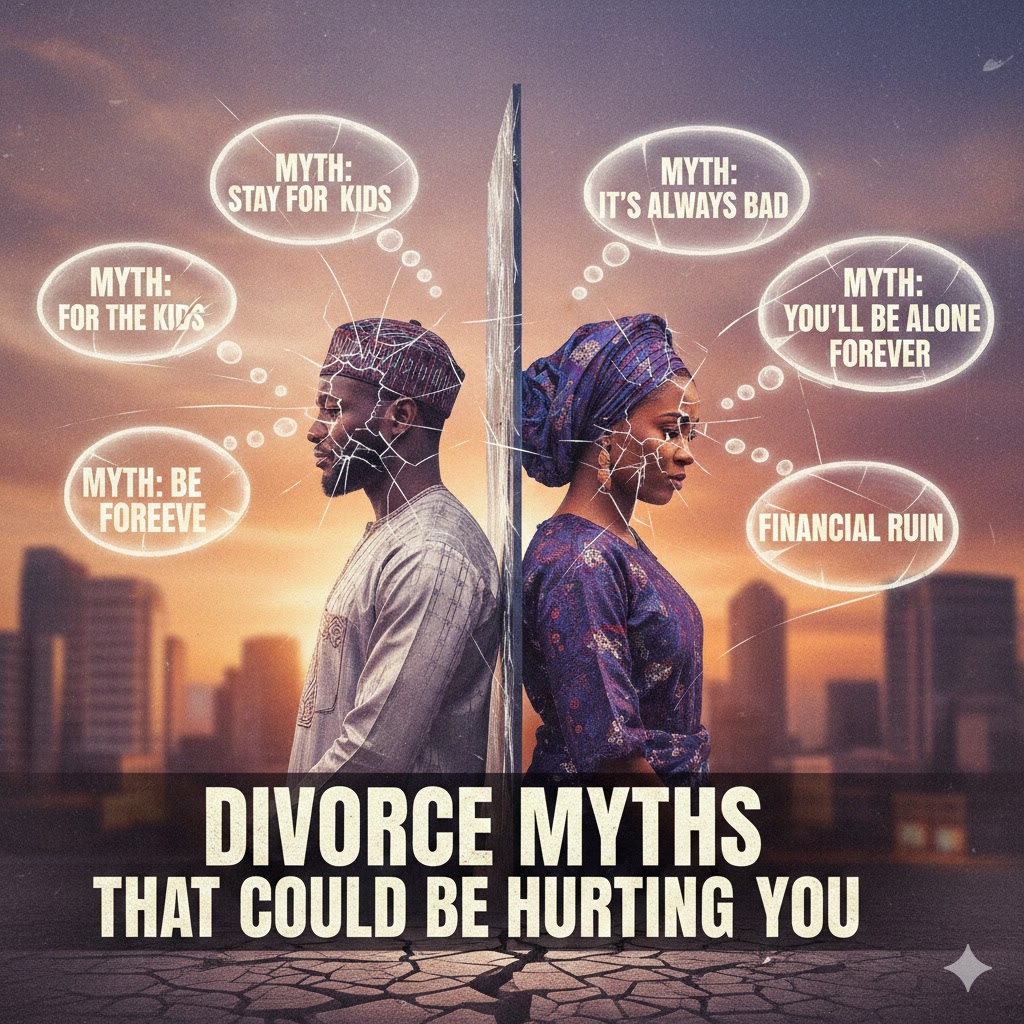
Divorce Myths That Could Be Hurting You: A Nigerian Perspective
Divorce is a sensitive topic in Nigeria. For many, it is viewed as a personal failure or a societal shame, despite being a legal and sometimes necessary solution for incompatible or harmful marriages. Misconceptions and myths surrounding divorce often exacerbate the emotional, financial, and social challenges that come with it. Believing these myths can prevent individuals from making informed decisions, accessing support, and navigating the process effectively.
This article explores common divorce myths, how they manifest in Nigerian society, and practical advice for overcoming them. Understanding these myths can empower individuals to approach divorce with clarity, confidence, and resilience, while safeguarding their emotional and financial well-being.
Myth 1: Divorce Means Failure
One of the most pervasive myths is that divorce is a personal failure. In Nigeria, societal and cultural expectations often tie a person’s worth to their ability to maintain a marriage. Families and communities sometimes stigmatize divorced individuals, implying that they lack commitment, moral integrity, or relational skills.
Reality
Divorce does not equate to personal failure. It is often a decision made after careful consideration to protect emotional health, safety, or the well-being of children. Ending an unhealthy marriage can demonstrate strength, self-respect, and wisdom.
Real-Life Nigerian Scenario:
A woman in Lagos endured emotional abuse for years but feared leaving because of societal judgment. When she eventually divorced, she faced initial criticism from extended family. Over time, she established a successful business and regained emotional stability, demonstrating that divorce was a necessary step, not a failure.
Myth 2: Women Cannot Survive Financially After Divorce
Financial dependence is a common concern for Nigerian women, especially in traditional households where husbands manage most finances. The myth that women cannot survive financially after divorce fosters fear and can trap them in toxic marriages.
Reality
With financial planning, skill development, and resourcefulness, divorced women can achieve financial independence. Entrepreneurship, freelancing, and investment opportunities are accessible and can help rebuild a stable life.
Example:
A divorced woman in Abuja leveraged her tailoring skills to start a small business. With careful budgeting and marketing through social media, she not only supported herself but also expanded her business, debunking the myth that divorce equals financial ruin.
Myth 3: Children Will Always Be Traumatized
Many Nigerian couples fear divorce because they believe children will be irreparably harmed. While divorce can be challenging for children, how parents handle it determines the emotional impact.
Reality
Children can adapt well if parents maintain open communication, reduce conflict exposure, and prioritize emotional support. Divorce may even provide a healthier environment than staying in a toxic household.
Scenario:
In Port Harcourt, a couple divorced amicably, prioritizing their children’s emotional well-being. By maintaining routine, shared decision-making, and counseling, the children adjusted positively, showing that divorce does not inherently traumatize children.
Myth 4: Only Women Initiate Divorce
There is a misconception in Nigeria that women are more likely to initiate divorce due to impatience, materialism, or emotional fragility. This stereotype unfairly paints divorced women in a negative light.
Reality
Divorce is initiated by both men and women for valid reasons. Emotional abuse, infidelity, financial irresponsibility, and irreconcilable differences are common triggers for either gender.
Example:
A man in Lagos initiated divorce after discovering persistent financial dishonesty in his marriage. This challenges the stereotype that divorce is primarily a woman’s decision and highlights that men also exercise agency.
Myth 5: Divorce Means Losing Social Respect
Divorcees in Nigeria often face social scrutiny. Myths suggest divorced individuals are unworthy of respect, friendship, or romantic prospects.
Reality
Respect is earned through character, integrity, and personal achievements, not marital status. Divorced individuals can rebuild social credibility through professional success, community engagement, and ethical behavior.
Scenario:
A divorced teacher in Kano initially faced community judgment. By focusing on her career and volunteering in local initiatives, she restored her social standing, proving that divorce does not define one’s respectability.
Myth 6: Divorce is Always Bitter and Litigious
Many Nigerians believe divorce is synonymous with long, bitter legal battles, endless conflict, and family feuds.
Reality
Divorce can be amicable, especially with mediation, counseling, and legal planning. Couples can negotiate settlements, co-parent effectively, and maintain civility.
Example:
A Lagos couple opted for mediation during divorce, dividing assets fairly and setting clear custody arrangements. The process was calm and efficient, contradicting the belief that divorce must be hostile.
Myth 7: Religion Prevents Divorce
In Nigeria, religious teachings often discourage divorce, leading to guilt, shame, and prolonged suffering for those in toxic marriages.
Reality
While religion may advocate reconciliation, most faiths also recognize circumstances where divorce is necessary for safety, health, or personal well-being. Seeking spiritual guidance can coexist with the practical need for separation.
Scenario:
A Christian couple in Abuja struggled with marital conflict for years. Guided by their pastor, they pursued counseling and ultimately divorce when reconciliation failed. Both partners maintained their faith while achieving emotional safety and independence.
Myth 8: Men Don’t Struggle Emotionally After Divorce
There is a stereotype that men handle divorce better than women and are less emotionally affected. In Nigeria, men may suppress emotions due to cultural expectations around masculinity.
Reality
Divorce impacts men profoundly, affecting identity, emotional stability, and social relationships. Men also benefit from counseling, support groups, and emotional expression.
Example:
A man in Lagos experienced depression and anxiety after divorce but found therapy and peer support invaluable. Emotional struggles are real for both genders, regardless of societal assumptions.
Myth 9: Divorce Means You Will Never Remarry
Divorced individuals, especially women in Nigeria, often fear societal judgment that remarriage is unlikely or unacceptable.
Reality
Remarriage is possible and common. Nigerian society is gradually recognizing that divorced individuals can pursue healthy, fulfilling relationships again.
Scenario:
A divorced woman in Port Harcourt remarried after five years, finding a supportive partner and building a new family while maintaining positive co-parenting with her first spouse.
Myth 10: Divorce is the End of Happiness
Perhaps the most damaging myth is that life ends after divorce. Cultural and family narratives often frame divorce as a permanent tragedy.
Reality
Divorce can be a beginning—a chance for self-discovery, growth, and better relationships. Many Nigerian divorcees report improved mental health, autonomy, and personal satisfaction post-divorce.
Example:
A Lagos entrepreneur discovered her passion for fashion design after divorce. She built a thriving business, cultivated friendships, and created a joyful life, illustrating that divorce can lead to positive transformation.
Strategies to Overcome Divorce Myths
-
Seek Accurate Information: Understand legal rights, financial options, and emotional support systems.
-
Engage in Counseling: Professional guidance helps challenge internalized myths and manage emotional stress.
-
Network with Divorce Support Groups: Nigerian divorce communities provide mentorship, shared experiences, and practical advice.
-
Educate Family and Friends: Address misconceptions proactively to reduce stigma.
-
Prioritize Self-Care: Mental, emotional, and financial well-being is key to overcoming societal myths.
-
Document and Plan Financially: Knowledge of shared debts, assets, and alimony ensures informed decision-making.
-
Focus on Personal Growth: Pursue education, career advancement, and skill-building to rebuild confidence.
The Nigerian Context: Cultural and Societal Factors
-
Extended Family Influence: Families often pressure couples to stay married or judge divorcees harshly.
-
Religious Beliefs: Faith communities can provide guidance but may also contribute to stigma.
-
Gender Roles: Societal norms often judge women more harshly than men.
-
Economic Factors: Financial dependence can trap individuals in harmful marriages.
-
Social Media Pressure: Public perception on platforms like Instagram or Facebook intensifies societal scrutiny.
By recognizing these factors, divorcees can proactively navigate myths and make informed decisions for their well-being.
Real-Life Nigerian Examples
-
Lagos Woman: Divorced due to emotional abuse. Initially feared social stigma, but after building a successful online business, she gained financial independence and social respect.
-
Abuja Man: Experienced financial mismanagement in marriage. Divorce allowed him to pursue a fulfilling career and emotional growth, dispelling myths that men are unaffected emotionally.
-
Port Harcourt Couple: Children’s well-being was initially a concern. Through counseling and co-parenting agreements, the children adjusted positively, demonstrating that divorce does not inherently harm children.
Tips for Nigerian Divorcees to Avoid Falling for Myths
-
Verify information about divorce and its consequences.
-
Consult legal and financial professionals to understand your rights.
-
Engage in therapy or support groups for emotional clarity.
-
Document agreements to prevent post-divorce disputes.
-
Avoid comparing yourself to societal expectations or other divorcees.
-
Focus on rebuilding your career, finances, and social life.
-
Separate personal worth from marital status.
-
Embrace self-discovery and personal growth post-divorce.
-
Educate family members and friends to reduce stigma.
-
Celebrate milestones in independence, emotional healing, and life achievements.
Conclusion
Divorce myths in Nigeria—ranging from assumptions about failure, financial dependence, child trauma, social stigma, and emotional resilience—can create unnecessary fear and hinder personal growth. Understanding the reality behind these myths empowers individuals to approach divorce with clarity, confidence, and resilience.
By seeking accurate information, engaging professional support, managing finances, prioritizing self-care, and fostering emotional resilience, Nigerian divorcees can overcome societal myths, protect their well-being, and build a fulfilling life post-divorce. Divorce does not mark the end of happiness; it can be the beginning of a new chapter filled with freedom, self-discovery, and growth.





.jpg)
Sign in to comment