 Nurturing Marriages, Enriching Families!
Family Conflict Role‑Plays That Build Peace: A Nigerian Perspective
Family life is full of challenges. From sibling rivalry and marital disagreements to misunderstandings with extended family members, conflicts are a natural part of household dynamics. In Nigeria, where families are often large, multigenerational, and culturally diverse, these conflicts can be especially complex. Without effective tools to manage disagreements, tensions can escalate, affecting relationships, emotional health, and even children’s development.
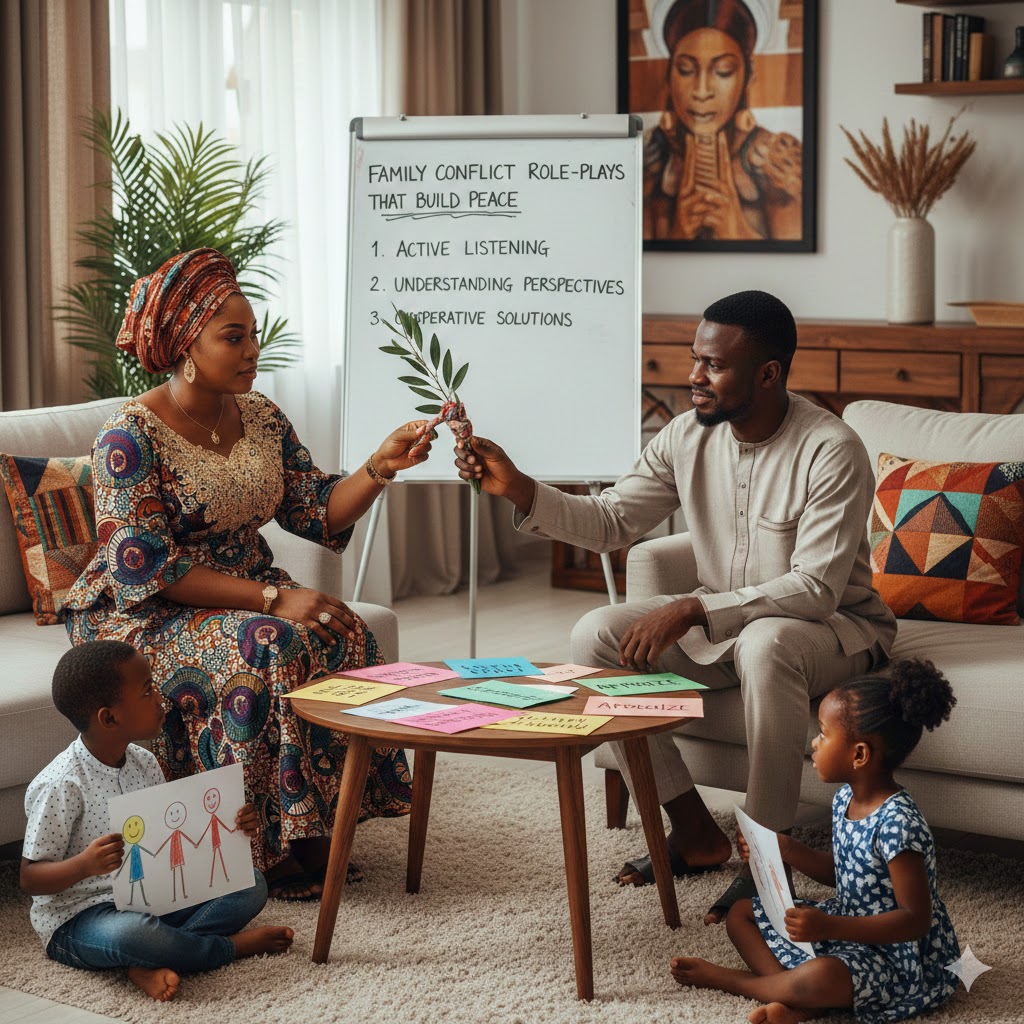
One effective strategy that families can use is role-playing—a structured activity that allows family members to practice conflict resolution in a safe and controlled environment. Role-plays teach empathy, perspective-taking, communication skills, and problem-solving. When used consistently, they can transform recurring conflicts into opportunities for understanding and growth. This article explores how role-plays can build peace in Nigerian families, provides practical examples, and illustrates real-life scenarios for effective implementation.
Understanding Family Conflict
Family conflict arises when interests, needs, or expectations clash. Common triggers in Nigerian households include:
-
Marital disagreements: Financial management, parenting styles, and household responsibilities.
-
Sibling rivalry: Competing for attention, resources, or approval.
-
Parent-child tensions: Differences in expectations, school performance, and personal choices.
-
Extended family interference: Pressure from grandparents, uncles, or aunts regarding family decisions.
-
Cultural and religious differences: Divergent views on traditions, rituals, or holiday celebrations.
Unresolved conflicts can lead to emotional distance, chronic stress, and strained relationships. Developing skills to address disagreements constructively is crucial for family harmony.
Real-Life Scenario: In Lagos, a family experienced tension during the holiday season because siblings felt unfairly treated in gift distribution. The parents noticed the increasing arguments and sought creative ways to teach fairness, empathy, and understanding through role-play exercises.
Why Role-Plays Work
Role-playing is a simulated activity where participants act out situations to explore emotions, perspectives, and outcomes. In family settings, it allows members to:
-
Practice communication skills without real-world consequences.
-
Understand others’ perspectives, fostering empathy.
-
Develop problem-solving strategies collaboratively.
-
Reduce emotional reactivity by simulating stressful situations in a safe environment.
-
Build confidence in handling real conflicts effectively.
Example: A father in Abuja noticed that arguments with his teenage son often escalated over homework. Through role-plays where the son acted as the father and vice versa, both learned to communicate expectations more clearly and respectfully, reducing real-life conflicts.
Step 1: Choose Relevant Scenarios
For role-plays to be effective, they should reflect real-life conflicts experienced by the family. Examples in Nigerian households include:
-
Sibling disputes: Over chores, screen time, or parental attention.
-
Parent-child disagreements: About school, career choices, or curfews.
-
Marital disagreements: Budgeting, household responsibilities, or extended family involvement.
-
Extended family issues: Conflicts arising from cultural traditions or visits from relatives.
Scenario: In Enugu, a family role-played a situation where grandparents pressured parents to follow traditional wedding rituals for a cousin’s engagement. Practicing responses in the role-play helped the parents address the issue respectfully and assert their preferences.
Step 2: Set Clear Objectives
Before beginning a role-play, define the goal. Objectives may include:
-
Practicing calm responses during heated arguments.
-
Learning to express feelings without blaming others.
-
Building empathy by seeing situations from another person’s perspective.
-
Developing negotiation and compromise skills.
Real-Life Scenario: In Ibadan, a mother aimed to teach her children to resolve disputes without shouting. The role-play objective was to practice using “I feel” statements to communicate emotions.
Step 3: Assign Roles
-
Each family member assumes a role relevant to the conflict.
-
Roles can be swapped to encourage perspective-taking.
-
Include observers who provide feedback and suggest alternative responses.
Example: During a role-play on financial disputes in Lagos, the eldest sibling played the role of a parent explaining budget limits, while the younger sibling played themselves expressing disappointment. This reversal helped the elder sibling empathize with the frustration of being told “no.”
Step 4: Establish Ground Rules
To ensure role-plays are safe and constructive:
-
Respect each other: No mocking or ridicule.
-
No interruptions: Allow each participant to speak.
-
Stay in character: Focus on the scenario for learning.
-
Debrief after each session: Discuss lessons learned and feelings experienced.
Scenario: In Abuja, a family conducting role-plays around curfew disputes established a rule that no one would criticize others’ reactions. This allowed children to express themselves freely and learn from feedback.
Step 5: Practice Realistic Scenarios
Role-plays should mimic realistic conflicts while avoiding exaggeration. Examples include:
-
A sibling upset over unequal chore assignments.
-
A parent frustrated with a teenager’s performance in school.
-
A marital disagreement about holiday spending.
-
A family dispute over visiting relatives during cultural festivals.
Real-Life Scenario: In Lagos, a family role-played a disagreement about a child’s attendance at a cultural festival versus a school competition. Through discussion, they negotiated a compromise, reducing tension in the actual situation.
Step 6: Swap Perspectives
Perspective-taking is critical in Nigerian families where hierarchy and authority often dominate. By switching roles, family members:
-
Understand emotional impact from the other person’s viewpoint.
-
Recognize motivations behind behaviors.
-
Develop empathy and patience in real conflicts.
Example: A father and teenage daughter swapped roles during a role-play about curfew times in Kano. The father realized the social pressure the daughter faced from peers, while the daughter appreciated the father’s concern for safety.
Step 7: Focus on Communication Skills
Role-plays are ideal for teaching:
-
“I feel” statements: Expressing emotions without blaming others.
-
Active listening: Reflecting and summarizing what the other person says.
-
Calm tone and body language: Practicing non-aggressive communication.
-
Negotiation and compromise: Finding mutually acceptable solutions.
Scenario: In Enugu, parents practiced “I feel” statements with children over holiday chores. The children expressed frustration constructively, reducing shouting and resentment.
Step 8: Debrief and Reflect
After each role-play:
-
Discuss what worked and what didn’t.
-
Identify alternative approaches for better outcomes.
-
Share feelings experienced during the exercise.
-
Reinforce positive communication and problem-solving behaviors.
Example: In Abuja, after a role-play on sharing inheritance disputes, the family reflected on how assumptions caused tension. They developed strategies for discussing inheritance calmly and fairly.
Step 9: Incorporate Cultural Sensitivity
-
Nigerian families span diverse ethnic, religious, and cultural backgrounds.
-
Include culturally relevant scenarios in role-plays, such as:
-
Disputes over festival traditions.
-
Extended family influence on marriage decisions.
-
Religious holiday conflicts between interfaith families.
-
Scenario: In Lagos, a role-play about Eid celebrations allowed children to understand both Muslim and Christian relatives’ expectations, fostering mutual respect and smoother holiday interactions.
Step 10: Make Role-Playing Regular
-
Practice role-playing consistently, not only during conflicts.
-
Use short exercises weekly or monthly to reinforce skills.
-
Gradually introduce more complex scenarios as skills improve.
Example: A family in Ibadan practiced role-plays monthly, addressing minor disagreements proactively. Over time, conflicts were resolved more quickly and with less emotional intensity.
Step 11: Combine with Other Conflict-Resolution Strategies
Role-plays work best when combined with:
-
Family meetings: Structured discussions to prevent conflicts from escalating.
-
Empathy-building exercises: Perspective-taking, active listening, and validation of emotions.
-
Mindfulness techniques: Breathing, pausing, and calming strategies during disagreements.
-
Professional guidance: Family therapists or counselors for persistent or severe conflicts.
Scenario: In Enugu, role-plays were integrated into family therapy sessions, enhancing communication and trust within the household.
Benefits of Role-Playing in Nigerian Families
-
Improved Communication: Family members articulate needs and concerns clearly.
-
Enhanced Empathy: Perspective-taking fosters understanding and reduces anger.
-
Reduced Conflict Escalation: Practicing responses prevents reactive behaviors.
-
Stronger Relationships: Shared exercises create collaboration and mutual respect.
-
Child Development: Children learn social skills, emotional regulation, and problem-solving.
-
Resilience: Families handle future conflicts more effectively.
Real-Life Scenario: A Lagos family using monthly role-plays reported fewer arguments, improved sibling cooperation, and stronger parent-child connections over six months.
Challenges and Solutions
1. Resistance to Participation
-
Some family members may feel embarrassed or reluctant.
-
Solution: Start with voluntary participation, encourage observers, and emphasize learning rather than performance.
2. Overemphasis on Winning
-
Family members may treat role-plays as competitions.
-
Solution: Reinforce collaboration and mutual understanding as the goal.
3. Emotional Triggers
-
Role-plays can evoke strong feelings if not managed carefully.
-
Solution: Use safe scenarios, debrief calmly, and provide breaks when needed.
4. Cultural Sensitivity
-
Hierarchical family structures may make younger members hesitant to speak.
-
Solution: Establish safe spaces, encourage respectful dialogue, and gradually involve all members.
Real-Life Success Stories
-
Sibling Rivalry in Lagos: Monthly role-plays reduced fights over shared chores, teaching siblings to negotiate and respect each other’s needs.
-
Marital Conflict in Abuja: Role-playing financial disagreements allowed a couple to develop budgeting strategies collaboratively, reducing arguments.
-
Extended Family Pressure in Enugu: Practicing responses to elders’ interference helped parents assert boundaries respectfully, maintaining harmony during cultural events.
Tips for Effective Role-Plays
-
Keep scenarios short and focused to maintain attention.
-
Use positive reinforcement to celebrate progress.
-
Gradually increase complexity as skills improve.
-
Encourage family reflection after each session.
-
Integrate lessons into daily interactions for real-world application.
Conclusion
Family conflict is inevitable, but it doesn’t have to erode relationships. Role-playing is a powerful, practical tool that equips Nigerian families with the skills to communicate effectively, empathize with one another, and resolve disputes constructively. By practicing role-plays, families can anticipate conflict, respond calmly, and build strong, harmonious relationships that withstand cultural pressures, financial stress, and generational differences.
When implemented consistently, role-plays create a peaceful household environment, foster mutual respect, and teach children critical life skills in communication, empathy, and problem-solving. For Nigerian families, this approach not only addresses present conflicts but also cultivates a foundation for long-term resilience, emotional health, and harmonious living.







.jpg)


Sign in to comment