 Nurturing Marriages, Enriching Families!
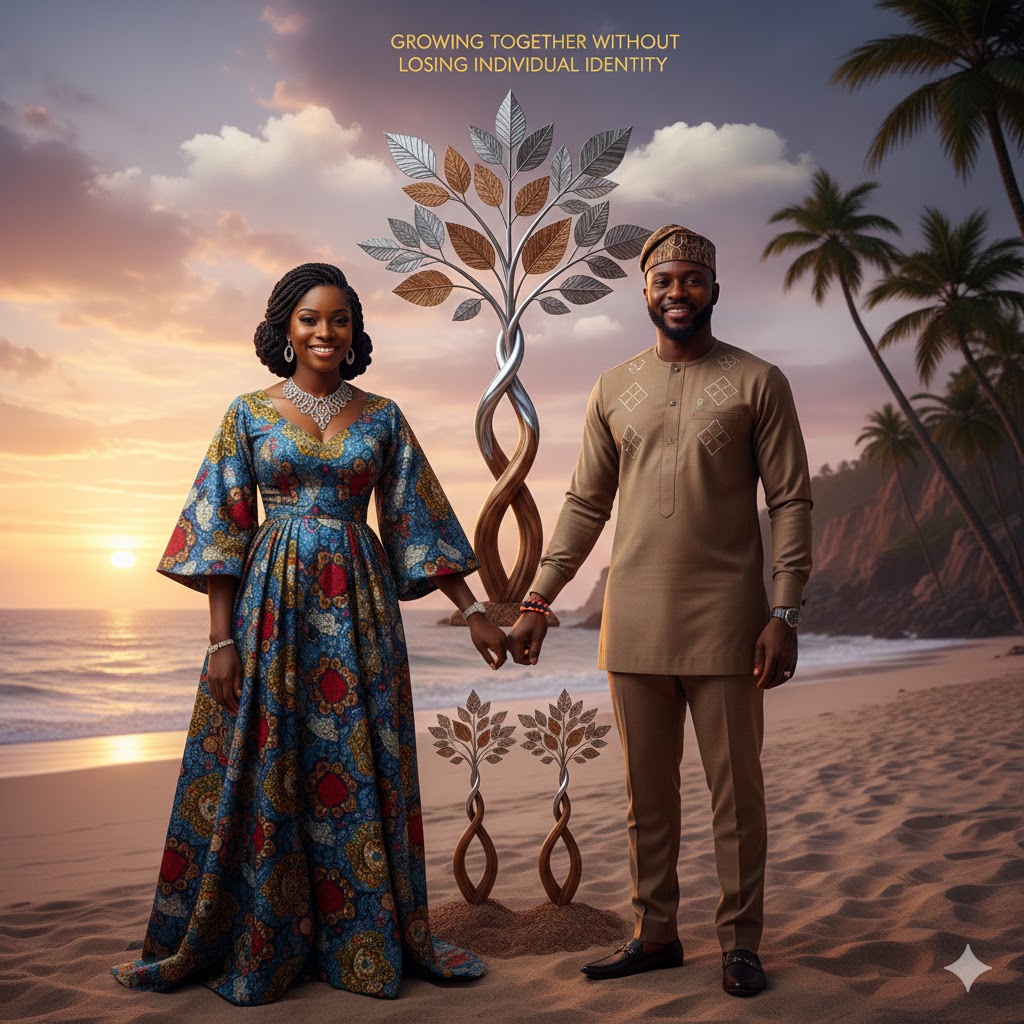
Growing Together Without Losing Individual Identity: How Couples Can Stay Connected and Still Be Themselves
One of the quiet fears many people carry into marriage is the fear of losing themselves. They worry that love will require shrinking, suppressing dreams, or slowly dissolving into roles defined only by the relationship. On the other hand, some fear that prioritizing individuality may weaken unity. These concerns are understandable, but they are built on a false choice.
Healthy marriage is not about choosing between togetherness and individuality. It is about learning how to grow together without losing who you are.
The strongest marriages are not those where two people merge into one indistinguishable identity, but those where two whole individuals choose to walk side by side, supporting each other’s growth while building a shared life.
Why Individual Identity Matters in Marriage
Every person enters marriage with a unique history, personality, passion, calling, and set of values. These elements do not disappear after the wedding; they shape how each partner loves, contributes, and grows.
When individuality is suppressed, resentment often grows quietly. A partner who feels unseen or restricted may comply outwardly but withdraw emotionally. Over time, the marriage may feel heavy rather than life-giving.
Individual identity is not a threat to marriage. It is one of its greatest assets.
A fulfilled individual brings energy, creativity, confidence, and emotional health into the relationship. When both partners are growing personally, the marriage grows naturally.
Why Some Couples Lose Themselves
Losing individual identity in marriage often happens unintentionally. It can be driven by cultural expectations, fear of conflict, unequal power dynamics, or unspoken assumptions about sacrifice.
In many cultures, including Nigeria, marriage roles can be strongly defined. One partner—often the woman—may feel pressured to pause personal dreams for the sake of family stability. Over time, this can create an imbalance where one partner grows while the other feels stuck.
Loss of identity can also occur when couples over-prioritize agreement. Avoiding disagreement may seem peaceful, but constantly silencing personal opinions erodes self-expression and authenticity.
Togetherness Does Not Mean Sameness
Marriage thrives on unity, but unity does not require sameness. Two people can share values and goals while maintaining different interests, personalities, and perspectives.
Growing together means aligning direction, not erasing difference.
Differences, when respected, enrich marriage. They expand understanding, deepen empathy, and prevent stagnation. Couples who appreciate each other’s uniqueness often experience greater curiosity and long-term attraction.
The Importance of Emotional Autonomy
Emotional autonomy means being emotionally connected without being emotionally dependent. It allows each partner to take responsibility for their own growth, emotions, and fulfillment while remaining supportive of the relationship.
When partners rely on each other for all emotional needs, pressure builds. When they maintain healthy emotional independence, they bring balance and stability into the marriage.
Emotional autonomy does not weaken intimacy. It strengthens it by reducing emotional strain and encouraging mutual respect.
Real-Life Scenario: Rediscovering Self Within Marriage
Ngozi loved writing and public speaking before marriage. After having children, she gradually stopped pursuing these interests, believing her role as a wife and mother required full sacrifice. Years later, she felt restless and unfulfilled, though she loved her family deeply.
Her husband, Chukwudi, noticed her emotional withdrawal and encouraged her to re-engage her passions. As Ngozi slowly reclaimed her identity, her confidence returned. Their marriage improved—not because she became less committed, but because she became more alive.
Her growth did not take away from the marriage. It enriched it.
Supporting Each Other’s Growth
Growing together requires mutual encouragement. When one partner grows, the other does not lose—they gain.
Support may look like encouragement, flexibility, shared responsibilities, or simply emotional reassurance. It communicates, “Your growth matters to me.”
Couples who celebrate each other’s progress strengthen trust and reduce competition or insecurity.
Maintaining Personal Interests and Friendships
Personal interests and friendships provide emotional nourishment that marriage alone cannot fulfill. They offer perspective, creativity, and emotional renewal.
Maintaining these connections prevents emotional overload within the marriage and allows partners to return refreshed and engaged.
Healthy marriages are not isolated systems. They are connected to broader support networks.
Communication as the Bridge Between Unity and Individuality
Open communication allows couples to express personal needs, boundaries, and aspirations without fear. It helps partners understand each other’s evolving identities.
As individuals grow, communication keeps marriage aligned with change. It prevents misunderstanding and allows adjustment.
Marriage is not static. Neither are the people within it.
Avoiding the Trap of Comparison
Individual growth happens at different paces. One partner may experience rapid professional or personal development while the other moves more slowly.
Comparison can create insecurity or resentment. Healthy couples focus on support rather than competition, understanding that growth seasons differ.
Marriage is a shared journey, not a race.
Balancing “We” and “Me”
Strong marriages balance shared goals with personal fulfillment. The “we” is built from two strong “me’s.”
Couples who lose sight of personal identity often struggle with burnout. Couples who ignore shared identity struggle with disconnection. Balance is key.
This balance allows marriage to feel both stable and expansive.
Why Growing Together Deepens Love
When partners grow individually, they bring new insights, energy, and depth into the relationship. This keeps marriage dynamic and engaging.
Growing together does not mean growing identically. It means growing in alignment, respect, and shared purpose.
Love deepens when partners feel free to become their best selves within the marriage.
Letting Go of Fear-Based Sacrifice
Sacrifice in marriage should come from love, not fear. Fear-based sacrifice—giving up identity to avoid conflict or rejection—breeds resentment.
Healthy sacrifice is mutual, temporary, and chosen. It supports growth rather than suppressing it.
Marriage should be a place where identity is refined, not erased.
Conclusion: Two Whole People, One Strong Marriage
Marriage is strongest when it is built by two individuals who know who they are and choose each other daily.
Growing together without losing individual identity is not only possible—it is essential for long-term fulfillment. It creates marriages that are resilient, emotionally rich, and deeply satisfying.
Love does not ask you to disappear.
It invites you to become.
When couples honor individuality while nurturing unity, marriage becomes a partnership where both people thrive—together.



.jpg)
Sign in to comment