 Nurturing Marriages, Enriching Families!
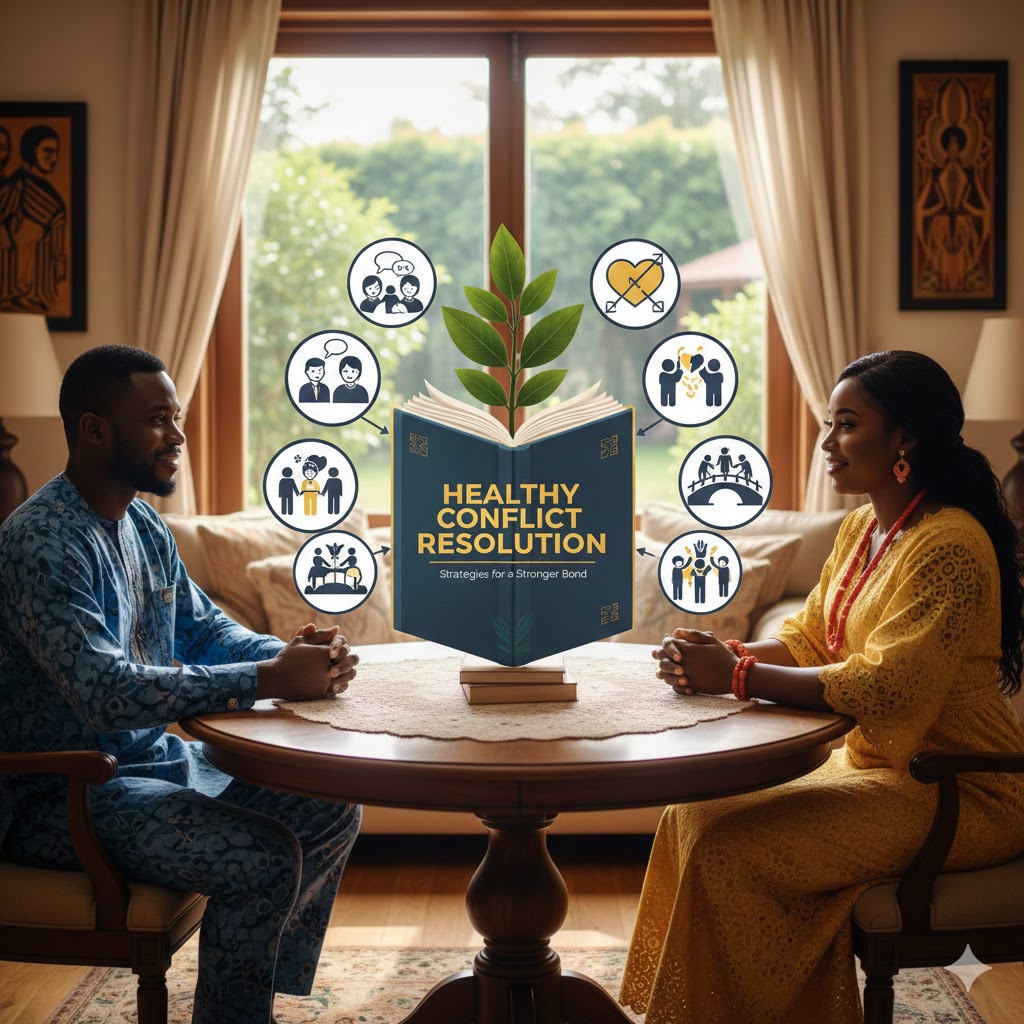
Healthy Conflict Resolution Strategies: Building Stronger Nigerian Marriages
Conflict is an inevitable part of any marriage. Even the happiest Nigerian couples will face disagreements at one point or another, whether over finances, parenting, career priorities, lifestyle choices, or expectations from extended family.
What distinguishes thriving marriages from struggling ones is not the absence of conflict, but the ability to address disagreements in a constructive and healthy manner. Learning how to resolve conflict effectively strengthens emotional intimacy, builds trust, and fosters a resilient partnership.
Understanding conflict is the first step toward resolution. Conflicts arise from differences in opinions, values, needs, or desires. They can manifest in various ways, from verbal arguments and silent treatments to emotional distancing or repeated cycles of blame.
Importantly, conflict itself is not harmful. In fact, when managed well, disagreements can create opportunities for growth, understanding, and deeper connection. The problem emerges when conflicts are mishandled, leading to unresolved tension, resentment, or emotional disconnection between partners.
Consider the experience of Kemi and Ade, a couple married for seven years in Lagos. They often found themselves arguing about finances. Ade preferred strict saving and budgeting, while Kemi wanted to occasionally enjoy luxuries and treat themselves. Their disagreements sometimes escalated into shouting matches that left both feeling frustrated and unheard.
With the guidance of a marriage counselor, they learned to schedule monthly discussions about finances, actively listen to one another, and negotiate compromises. Over time, their arguments transformed into constructive conversations that strengthened their teamwork and clarified their shared goals.
In Abuja, Ngozi and Chinedu faced a different challenge. They disagreed on how to discipline their first child, with Chinedu favoring traditional strict methods and Ngozi preferring a gentler, positive reinforcement approach. Their constant disagreements began to affect their emotional intimacy. To address the problem, they established parental meetings where they could discuss routines, agree on consistent discipline strategies, and resolve conflicts privately.
This approach allowed them to maintain unity as parents and present a cohesive front to their child, reinforcing both authority and love.
Extended family influence can also heighten conflict. Funke and Emeka, living in Port Harcourt, experienced tension when Emeka’s mother frequently gave unsolicited advice about household management. Funke initially felt undermined, and small disagreements escalated into larger arguments.
By practicing calm and respectful communication, discussing concerns privately, and establishing boundaries, they managed to reduce tension, preserve their marital authority, and maintain harmony with their extended family.
Understanding the root causes of marital conflict is crucial. Financial stress is a common source of disagreement, particularly when partners have differing spending or saving habits. Parenting differences can create daily tension, especially when couples have contrasting disciplinary approaches or educational priorities.
Work-related stress, communication breakdowns, and cultural or religious expectations can further complicate matters. Recognizing the underlying causes allows couples to address the issues rather than reacting purely from emotion.
Healthy conflict resolution begins with the practice of active listening. Partners must learn to give full attention, avoid interrupting, and reflect on what their spouse is expressing. Responding with empathy, even during disagreements, can prevent escalation and promote understanding.
Similarly, framing concerns using “I” statements rather than blaming your partner reduces defensiveness and encourages collaboration. Instead of saying, “You never help with the kids,” it is far more constructive to express, “I feel overwhelmed when I manage everything alone.”
Maintaining emotional control during disagreements is equally important. Conflicts often escalate when anger takes over. Techniques such as taking deep breaths, pausing the conversation, or even briefly walking away can help both partners regain composure.
In Nigeria, culturally familiar methods like prayer or quiet reflection can also be effective in calming emotions before addressing the issue. Equally critical is focusing on the specific issue rather than attacking your partner personally. Discussing behaviors, choices, or actions prevents the conflict from becoming an attack on character and keeps the dialogue productive.
Finding common ground is another essential strategy. Even when couples disagree, emphasizing shared goals or values can foster collaboration and reduce hostility. For example, both partners may have different ideas about discipline, but they share a common desire to raise respectful, responsible children.
Acknowledging this shared vision helps couples work together rather than against one another. It is also important to avoid bringing up past conflicts, as doing so can derail constructive discussion. Addressing only the current issue ensures the conversation remains focused and productive.
Forgiveness and letting go play a vital role in resolving conflict. Holding grudges or ruminating on past mistakes prolongs tension and prevents reconciliation. Sincere apologies, acknowledgment of mistakes, and a commitment to move forward create an environment of trust and emotional safety.
When conflicts become intense, agreeing on a temporary break or time-out can prevent escalation and allow for thoughtful reflection before returning to the discussion.
Collaboration is at the heart of conflict resolution. Couples who approach disagreements as partners rather than adversaries can identify solutions that meet both partners’ needs. When conflicts persist despite best efforts, seeking professional guidance from counselors, spiritual mentors, or culturally-informed therapists can provide neutral support and practical tools for resolution.
Practical exercises can further help Nigerian couples strengthen their conflict resolution skills. Keeping a conflict journal to track recurring arguments, triggers, and emotional responses allows couples to recognize patterns and develop strategies. Scheduling weekly check-ins for discussing minor grievances prevents them from escalating into major disputes. Role-reversal exercises, where each partner presents the other’s perspective, can cultivate empathy and understanding. Developing a shared goal map for the marriage, highlighting areas for compromise, and practicing calm conversation scripts also reinforce constructive communication.
For example, Kemi and Ade used monthly financial meetings to prevent arguments from escalating. Ngozi and Chinedu implemented a structured approach to parenting disagreements, ensuring consistency and cooperation. Funke and Emeka established private discussions and boundaries with extended family, which reduced interference and preserved marital harmony. These Nigerian scenarios highlight that practical strategies, respect, and communication can transform conflicts into opportunities for growth.
The benefits of healthy conflict resolution extend beyond immediate problem-solving. Couples develop stronger emotional bonds, communicate more effectively, experience higher marital satisfaction, reduce stress, and model positive conflict management for their children. Children learn by observing their parents; seeing disagreements resolved respectfully equips them with skills for healthy relationships in their own lives.
Reflection is crucial for continuous improvement. Nigerian couples should consider how they currently handle disagreements, identify triggers, and reflect on what strategies work or fail. Creating a safe space for discussion, aligning on shared goals, and integrating cultural and family expectations can all contribute to more constructive outcomes.
Conflict in Nigerian marriages is often influenced by cultural norms, extended family involvement, and religious expectations. Couples must navigate these influences carefully, balancing respect for elders and cultural traditions with the need to maintain marital authority and autonomy.
Prayer, spiritual guidance, and culturally-informed counseling can complement practical communication strategies, helping couples address disagreements without compromising their values or emotional connection.
Ultimately, conflict does not define a marriage; the ability to resolve it does. Nigerian couples who develop healthy conflict resolution skills—through active listening, empathy, collaboration, and reflection—experience deeper emotional intimacy, strengthened trust, and resilient partnerships capable of weathering life’s challenges.
A marriage is not the absence of conflict but the presence of skills and commitment that transform disagreements into opportunities for growth, understanding, and lasting connection.










.jpg)



Sign in to comment