 Nurturing Marriages, Enriching Families!
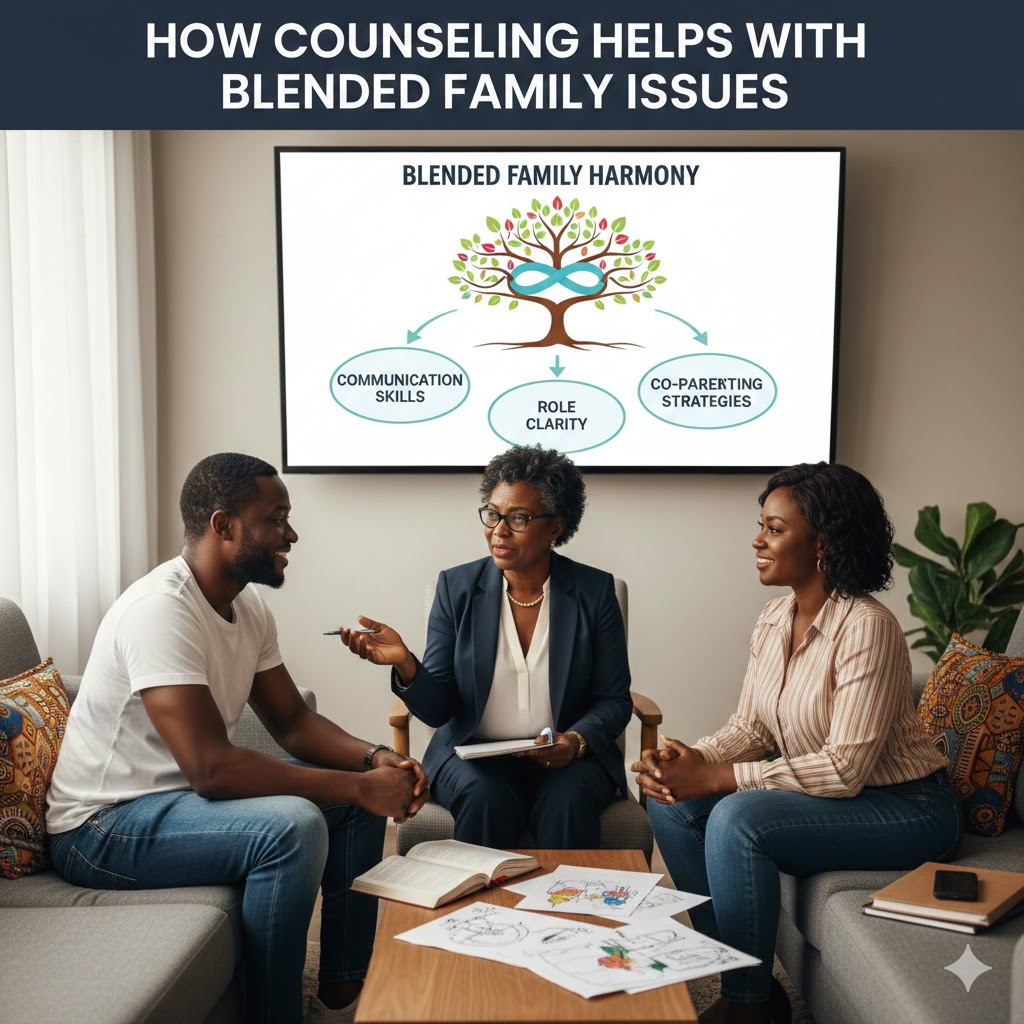
How Counseling Helps With Blended Family Issues: A Nigerian Couples’ Guide
Blended families—formed when one or both partners bring children from previous relationships—are increasingly common in Nigeria. While love and commitment bind couples together, blended family dynamics can be complex, involving step-parenting challenges, co-parenting conflicts, sibling rivalry, and extended family expectations.
Marriage counseling provides tools, guidance, and strategies to navigate these challenges, strengthen emotional connection, and build a harmonious blended household. This article explores how counseling helps with blended family issues, featuring real-life Nigerian scenarios to illustrate practical solutions.
Understanding Blended Families in Nigeria
A blended family typically includes:
-
One or both spouses bringing children from previous relationships
-
Step-siblings navigating new relationships
-
Step-parents adapting to parental responsibilities
-
Extended family involvement, especially in Nigerian cultural contexts
Scenario:
In Lagos, Tobi, a widower with two children, married Sade, who had one child from a previous relationship. The new family structure brought challenges—differences in parenting style, loyalty conflicts, and expectations from relatives. Counseling helped them establish rules, build trust, and foster cooperation among all family members.
Key Insight: Blended families in Nigeria face unique pressures due to cultural norms, extended family influence, and social expectations, making counseling especially valuable.
Common Challenges in Blended Families
1. Step-Parenting Tensions
Step-parents often struggle to balance authority with nurturing, especially if children are loyal to biological parents.
Scenario:
In Abuja, Amaka felt unsure about disciplining her husband Chidi’s teenage son. Counseling helped her learn strategies for establishing boundaries while building trust and rapport with the child.
2. Co-Parenting Conflicts
When ex-partners remain involved, disagreements on parenting style, visitation schedules, or financial responsibilities can arise.
Scenario:
In Port Harcourt, Chika and Emeka experienced tension due to Chika’s ex-husband interfering in decisions about the children. Counseling provided tools to communicate boundaries and negotiate agreements respectfully.
3. Sibling Rivalry and Adjustment
Children may feel insecure, jealous, or competitive in a blended household. Counseling helps couples address these dynamics constructively.
Scenario:
In Lagos, Tunde and Bimpe’s children often fought over chores and attention. Counseling sessions introduced family meetings and shared activities, fostering teamwork and empathy among siblings.
4. Loyalty Conflicts
Children may feel torn between their biological parent and step-parent, causing emotional stress and behavioral issues.
Scenario:
In Abuja, Amaka noticed her stepdaughter was withdrawing emotionally and expressing loyalty conflicts. Counseling taught the couple strategies to provide reassurance and emotional support, strengthening family bonds.
5. Extended Family Expectations
Nigerian families often have strong opinions about child-rearing and marital dynamics, which can complicate blended family relationships.
Scenario:
In Lagos, Tobi’s parents initially opposed Sade’s role in disciplining their grandchildren. Counseling helped the couple navigate family influence while maintaining authority and harmony in their household.
How Counseling Helps With Blended Family Issues
Counseling provides structured support to address challenges, strengthen relationships, and build family cohesion. Key benefits include:
1. Enhancing Communication
Effective communication is critical in blended families. Counseling teaches couples to:
-
Express needs and concerns clearly
-
Listen actively without judgment
-
Mediate conflicts between children or adults
Scenario:
In Port Harcourt, Chika and Emeka struggled with disagreements over screen time limits. Counseling sessions helped them develop a unified approach, reducing conflicts and improving household harmony.
2. Establishing Parenting Guidelines
Counselors help couples develop consistent rules and expectations for all children, including stepchildren, promoting fairness and stability.
Scenario:
In Lagos, Tunde and Bimpe created a chore chart and clear disciplinary guidelines for their blended household, preventing favoritism and promoting cooperation among children.
3. Addressing Loyalty Conflicts
Counseling provides tools to support children experiencing divided loyalty, teaching step-parents how to foster trust without undermining biological parents.
Scenario:
In Abuja, Amaka learned to reassure her stepdaughter that her role was supportive, not substitutive, which reduced anxiety and strengthened the child’s connection with both parents.
4. Navigating Extended Family Influence
Counseling helps couples set boundaries with extended family members while maintaining respect for cultural norms.
Scenario:
In Lagos, Tobi and Sade established clear communication protocols with parents and in-laws, reducing interference in household decisions while maintaining cultural respect.
5. Strengthening Emotional Connection
Blended families face unique emotional challenges. Counseling provides:
-
Exercises to build intimacy between spouses
-
Activities to foster bonds between step-parents and stepchildren
-
Strategies to enhance empathy and understanding
Scenario:
In Port Harcourt, Chika and Emeka engaged in family bonding exercises, such as weekly game nights and shared projects, improving emotional closeness and teamwork.
Practical Counseling Exercises for Blended Families
Counselors often assign exercises to help families navigate blended dynamics.
1. Family Meetings
Purpose: Foster open communication and collective decision-making.
Method:
-
Hold weekly meetings to discuss issues, achievements, and plans
-
Encourage children and adults to share perspectives respectfully
-
Problem-solve collaboratively
Scenario:
In Lagos, Tunde and Bimpe’s family meetings helped children express feelings about chores, fostering accountability and reducing sibling rivalry.
2. Step-Parent Bonding Activities
Purpose: Build trust and emotional connection between step-parents and children.
Method:
-
Engage in shared hobbies or activities
-
Spend one-on-one quality time with each child
-
Celebrate milestones together
Scenario:
In Abuja, Amaka took her stepdaughter for cooking sessions, strengthening their bond and improving mutual respect.
3. Unified Parenting Plans
Purpose: Ensure consistency in rules, discipline, and rewards across all children.
Method:
-
Develop a written parenting plan
-
Agree on discipline, screen time, chores, and rewards
-
Review and adjust as needed
Scenario:
In Port Harcourt, Chika and Emeka’s unified plan reduced confusion and favoritism, promoting fairness among their children.
4. Emotional Check-Ins
Purpose: Support family members in expressing emotions safely.
Method:
-
Allocate time daily or weekly to discuss feelings
-
Use “I feel…” statements
-
Validate emotions without judgment
Scenario:
In Lagos, Tobi and Sade’s nightly emotional check-ins with children allowed expression of concerns and feelings, reducing anxiety and promoting emotional safety.
5. Vision Boards for Family Goals
Purpose: Align family values, goals, and expectations.
Method:
-
Create a visual board with household goals, milestones, and family activities
-
Include all family members in planning
-
Review progress regularly
Scenario:
In Abuja, Amaka and Chidi’s blended family created a board highlighting vacation plans, academic achievements, and family projects, fostering unity and shared purpose.
Cultural Considerations in Nigeria
Blended family counseling must account for Nigerian cultural factors:
-
Respect for Elders: Families often influence household decisions, requiring negotiation and diplomacy.
-
Community Perceptions: Counseling can help couples manage societal scrutiny about step-parenting and family roles.
-
Religious Values: Incorporating faith-based guidance can enhance counseling relevance.
-
Gender Roles: Counseling can address expectations around parenting, chores, and authority.
Scenario:
In Lagos, Tobi and Sade worked with their counselor to balance Yoruba cultural expectations with modern parenting approaches, fostering family harmony.
Benefits of Counseling for Blended Families
-
Improved Communication: Reduces misunderstandings among spouses and children
-
Conflict Management: Helps address disputes constructively
-
Strengthened Emotional Bonds: Promotes trust and intimacy
-
Consistent Parenting: Establishes fairness and stability
-
Navigated Extended Family Influence: Reduces tension with relatives
-
Enhanced Family Unity: Aligns goals, values, and routines
-
Prepared for Challenges: Provides tools for long-term blended family success
Scenario:
In Port Harcourt, Chika and Emeka reported improved family cohesion, reduced conflict, and stronger marital intimacy after six months of counseling.
Choosing the Right Counselor for Blended Families in Nigeria
-
Experience with Blended Families: Ensure the counselor understands step-parenting and co-parenting challenges.
-
Cultural Competence: Familiarity with Nigerian family dynamics and religious values is crucial.
-
Approach: Solution-focused, emotionally focused, or family systems therapy may be effective.
-
Accessibility: Consider online, in-person, or hybrid sessions depending on family logistics.
-
Comfort Level: All family members, including children, should feel safe and respected.
Scenario:
In Lagos, Funke and Ade initially chose a counselor without blended family experience. They switched to one specializing in blended families, resulting in more targeted and effective guidance.
Tips for Maximizing Counseling Benefits in Blended Families
-
Commit to regular sessions and exercises
-
Engage all family members in age-appropriate ways
-
Practice open communication and active listening
-
Establish household rules and routines collaboratively
-
Be patient; relationship building takes time
Scenario:
In Abuja, Amaka and Chidi reinforced lessons from counseling through daily check-ins, family meetings, and step-parent bonding activities, achieving lasting improvement in family dynamics.
Conclusion: Counseling as a Lifeline for Blended Families
Blended families face unique challenges in Nigeria, from parenting tensions to cultural expectations and emotional adjustment. Marriage counseling offers structured support to navigate these challenges, build trust, foster emotional connection, and promote family harmony.
Key Takeaways:
-
Counseling strengthens communication, conflict resolution, and emotional intimacy
-
Step-parenting and co-parenting strategies help reduce loyalty conflicts and sibling rivalry
-
Practical exercises like family meetings, bonding activities, unified parenting plans, emotional check-ins, and vision boards improve cohesion
-
Cultural, religious, and societal considerations are vital for successful blended family counseling
-
Early and consistent counseling establishes a strong foundation for lasting family unity
Final Thought: For Nigerian couples in blended families, counseling is not just a support mechanism—it is an investment in family harmony, emotional well-being, and long-term marital success. Couples who engage proactively in counseling create households where love, respect, and cooperation thrive despite complex family dynamics.





.jpg)
Sign in to comment