 Nurturing Marriages, Enriching Families!
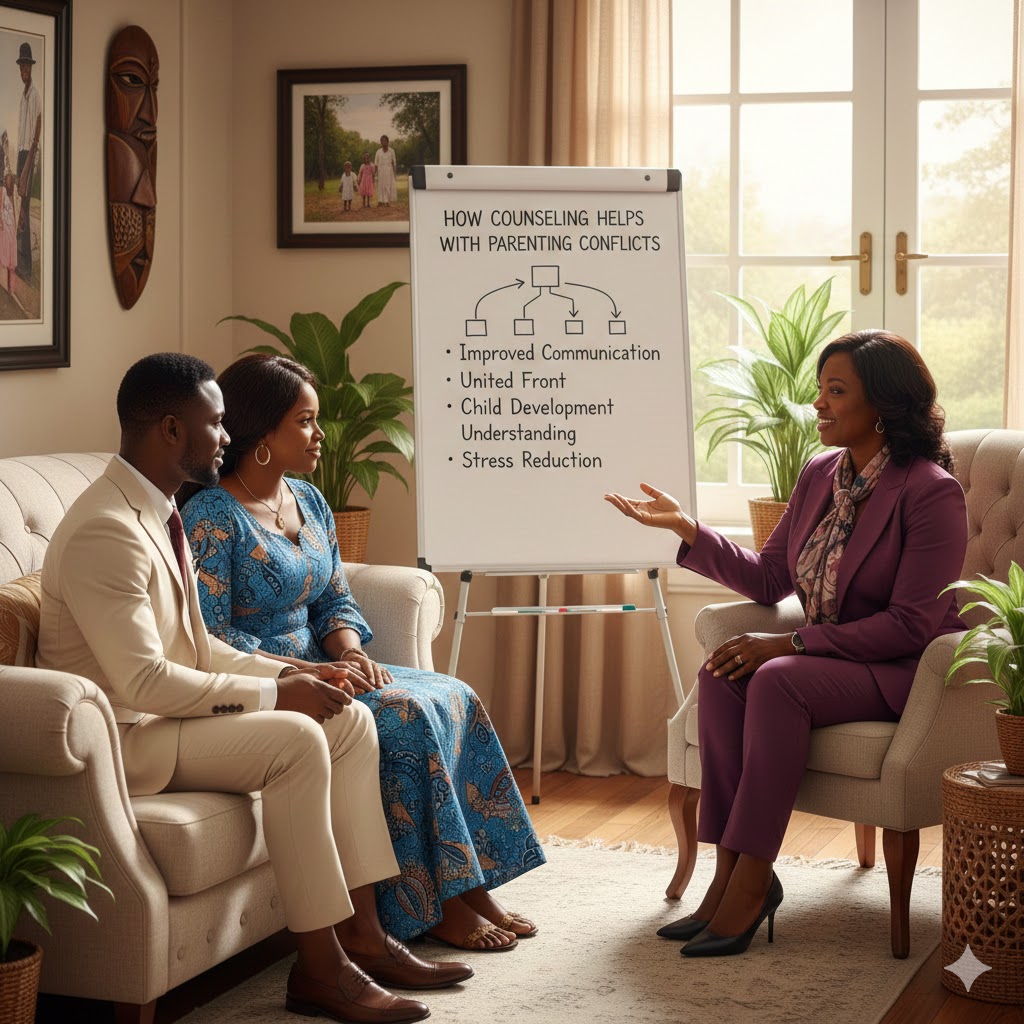
How Counseling Helps with Parenting Conflicts: A Nigerian Couples’ Guide
Parenting is one of the most rewarding yet challenging aspects of marriage. In Nigeria, where extended family influence, cultural expectations, and societal pressures play a significant role in family life, parenting conflicts can strain even the strongest marriages. Disagreements about discipline, education, chores, and values can escalate quickly if not managed effectively.
Marriage counseling provides structured support for couples facing parenting challenges, helping them communicate better, resolve disputes, and create a united parenting front. This article explores how counseling helps with parenting conflicts, featuring real-life Nigerian examples, practical strategies, and actionable tips.
Understanding Parenting Conflicts in Nigerian Marriages
Parenting conflicts arise when couples disagree on approaches to raising children. Common sources include:
-
Discipline Methods – Differing views on corporal punishment, timeouts, or verbal correction.
-
Education Choices – Public vs. private schooling, religious education, or extracurricular priorities.
-
Chores and Responsibilities – Distribution of parenting duties and household tasks.
-
Cultural Expectations – Influence of extended family and societal norms.
-
Parenting Styles – One parent may be permissive, while the other is authoritarian.
Scenario:
In Lagos, Tobi and Sade frequently argued about how to discipline their 8-year-old son. Tobi preferred strict rules, while Sade advocated for a more nurturing approach. Their arguments affected emotional intimacy and household harmony.
Why Nigerian Couples Seek Counseling for Parenting Conflicts
-
Recurring Arguments – Constant disagreements creating tension.
-
Strained Relationship – Parenting disputes affecting emotional connection.
-
Children’s Wellbeing – Exposure to conflict impacting children’s mental health.
-
Inconsistent Discipline – Children receive mixed messages, causing confusion.
-
External Pressure – Influence of extended family on parenting decisions.
Scenario:
In Abuja, Amaka and Chidi noticed their children were anxious and disobedient due to inconsistent rules at home. Counseling provided a neutral space to align parenting strategies and rebuild household structure.
How Counseling Addresses Parenting Conflicts
Counseling helps couples by providing guidance, communication tools, and problem-solving strategies tailored to Nigerian family contexts. Key approaches include:
1. Improving Communication Between Parents
Effective communication reduces misunderstandings and ensures both parents are heard.
Techniques Include:
-
Active Listening: Paraphrasing the partner’s concerns to confirm understanding.
-
“I” Statements: Expressing feelings without blaming the partner.
-
Regular Parenting Meetings: Setting aside time to discuss challenges and plans.
Scenario:
In Lagos, Sade used “I feel” statements to express frustration over Tobi’s strict disciplinary approach. Tobi responded with active listening, allowing them to discuss a compromise without arguments.
2. Conflict Resolution Strategies
Counseling teaches couples to address disagreements constructively.
Techniques Include:
-
Time-Outs: Pausing heated discussions to prevent escalation.
-
Problem-Solving Exercises: Brainstorming solutions collaboratively.
-
Compromise and Negotiation: Finding middle ground on parenting decisions.
Scenario:
In Abuja, Amaka and Chidi used time-outs during arguments about screen time limits for their children. They returned later to brainstorm solutions and agreed on a balanced schedule.
3. Aligning Parenting Styles
Counselors help couples understand and reconcile differing parenting approaches.
Strategies Include:
-
Identifying each parent’s style: authoritative, permissive, or balanced.
-
Discussing values and priorities in child-rearing.
-
Developing consistent approaches that reflect both parents’ beliefs.
Scenario:
In Port Harcourt, Chika’s permissive style clashed with Emeka’s strict approach. Counseling helped them blend strategies, resulting in consistent rules and reduced tension.
4. Managing Extended Family Influence
In Nigeria, extended family often plays a role in child-rearing. Counseling helps couples set boundaries and manage external pressures.
Techniques Include:
-
Clarifying roles of grandparents, aunts, and uncles.
-
Establishing agreed-upon rules for external involvement.
-
Practicing respectful communication with family members.
Scenario:
In Lagos, Tobi’s mother often intervened in discipline. Counseling helped the couple agree on boundaries and communicate them respectfully, preserving family harmony.
5. Rebuilding Emotional Connection
Parenting conflicts can strain intimacy. Counseling supports couples in reconnecting emotionally while managing disagreements.
Techniques Include:
-
Scheduled quality time together.
-
Emotional check-ins about parenting experiences.
-
Shared parenting goals and reflections.
Scenario:
In Abuja, Amaka and Chidi scheduled weekly reflections on their parenting challenges. Sharing experiences strengthened their emotional bond while reducing conflict.
6. Co-Parenting Exercises
Counselors introduce practical exercises to improve teamwork in parenting.
Examples Include:
-
Parenting Calendars: Scheduling responsibilities and routines.
-
Role Reversal Exercises: Experiencing the other parent’s perspective.
-
Team Decision-Making: Making joint choices on education, activities, and discipline.
Scenario:
In Port Harcourt, Chika and Emeka created a weekly parenting calendar, ensuring both parents were equally involved in school runs, homework, and chores.
7. Emotional Regulation Techniques
Parenting is stressful. Counseling teaches couples skills to manage emotions during conflicts, preventing escalation.
Techniques Include:
-
Mindfulness and breathing exercises during disputes.
-
Recognizing emotional triggers and pausing before reacting.
-
Stress management strategies for parents.
Scenario:
In Lagos, Tobi practiced deep breathing when frustrated with his children. This allowed discussions with Sade to remain calm and constructive.
8. Strengthening Children’s Emotional Environment
Counseling emphasizes creating a stable, supportive environment for children, reducing negative effects of conflict.
Strategies Include:
-
Unified messaging and consistent rules.
-
Encouraging children’s emotional expression.
-
Avoiding arguments in front of children.
Scenario:
In Abuja, Amaka and Chidi learned to resolve disputes privately, leading to calmer, happier children who felt secure and supported.
9. Developing Shared Values and Goals
Counseling helps couples define common parenting goals, including:
-
Academic success
-
Emotional development
-
Cultural and religious values
-
Social skills and peer relationships
Scenario:
In Port Harcourt, Chika and Emeka aligned on educational priorities, agreeing to focus on both academics and character development. This created consistency and reduced conflicts.
10. Ongoing Support and Follow-Up
Counseling isn’t a one-time solution. Continuous support ensures that parenting strategies remain effective.
Techniques Include:
-
Regular follow-up sessions to discuss progress
-
Adjusting strategies as children grow and circumstances change
-
Reinforcing successful communication and problem-solving skills
Scenario:
In Lagos, Tobi and Sade attended monthly follow-ups to review parenting strategies, ensuring consistency and adaptability as their children aged.
Common Misconceptions About Counseling for Parenting Conflicts
-
Counseling is only for troubled marriages – Even couples with minor disagreements benefit from guidance.
-
Counseling blames one parent – The process is collaborative and solution-focused.
-
Parenting conflicts can resolve without discussion – Structured support ensures long-term improvement.
-
Counseling replaces personal responsibility – Couples still actively participate in implementing strategies.
Scenario:
In Abuja, Amaka initially thought counseling would assign blame for parenting disagreements. She realized it was a neutral space for collaboration and problem-solving.
How to Maximize the Benefits of Counseling for Parenting Conflicts
-
Commit to the Process – Attend sessions regularly and practice exercises.
-
Be Honest and Vulnerable – Share parenting frustrations and expectations openly.
-
Apply Learned Techniques at Home – Communication, conflict resolution, and co-parenting strategies require practice.
-
Align on Goals – Ensure both parents share priorities for children’s well-being.
-
Set Boundaries with Extended Family – Manage external pressures effectively.
-
Celebrate Progress – Recognize improvements, no matter how small.
Scenario:
In Port Harcourt, Chika and Emeka committed to weekly co-parenting exercises, shared calendars, and scheduled check-ins, resulting in improved teamwork and a happier household.
Real-Life Nigerian Success Story
Case Study: Tobi and Sade, Lagos
-
Challenge: Constant arguments over discipline and routines disrupted emotional connection and household harmony.
-
Approach: Attended marriage counseling focused on communication, co-parenting strategies, and emotional regulation.
-
Process: Practiced active listening, developed a parenting calendar, and scheduled weekly reflections.
-
Outcome: Reduced conflicts, consistent parenting approach, stronger marital bond, and emotionally secure children. Counseling became a proactive tool for family cohesion.
Conclusion: Counseling as a Solution for Parenting Conflicts
Parenting conflicts are a common source of stress for Nigerian couples. Counseling provides structured support, communication tools, and practical strategies to manage disagreements, rebuild intimacy, and create a united parenting approach.
Key Takeaways:
-
Counseling helps couples navigate discipline, education, and household responsibilities effectively.
-
Techniques include communication exercises, emotional disclosure, co-parenting strategies, and conflict resolution skills.
-
Emotional regulation and shared goals strengthen both the marriage and children’s well-being.
-
Consistent participation, honesty, and follow-up maximize counseling benefits.
Final Thought: For Nigerian couples, counseling is not a sign of failure but a proactive investment in the marriage and children’s future. By addressing parenting conflicts constructively, couples create a nurturing, harmonious home where both spouses and children thrive.









.jpg)

Sign in to comment