 Nurturing Marriages, Enriching Families!
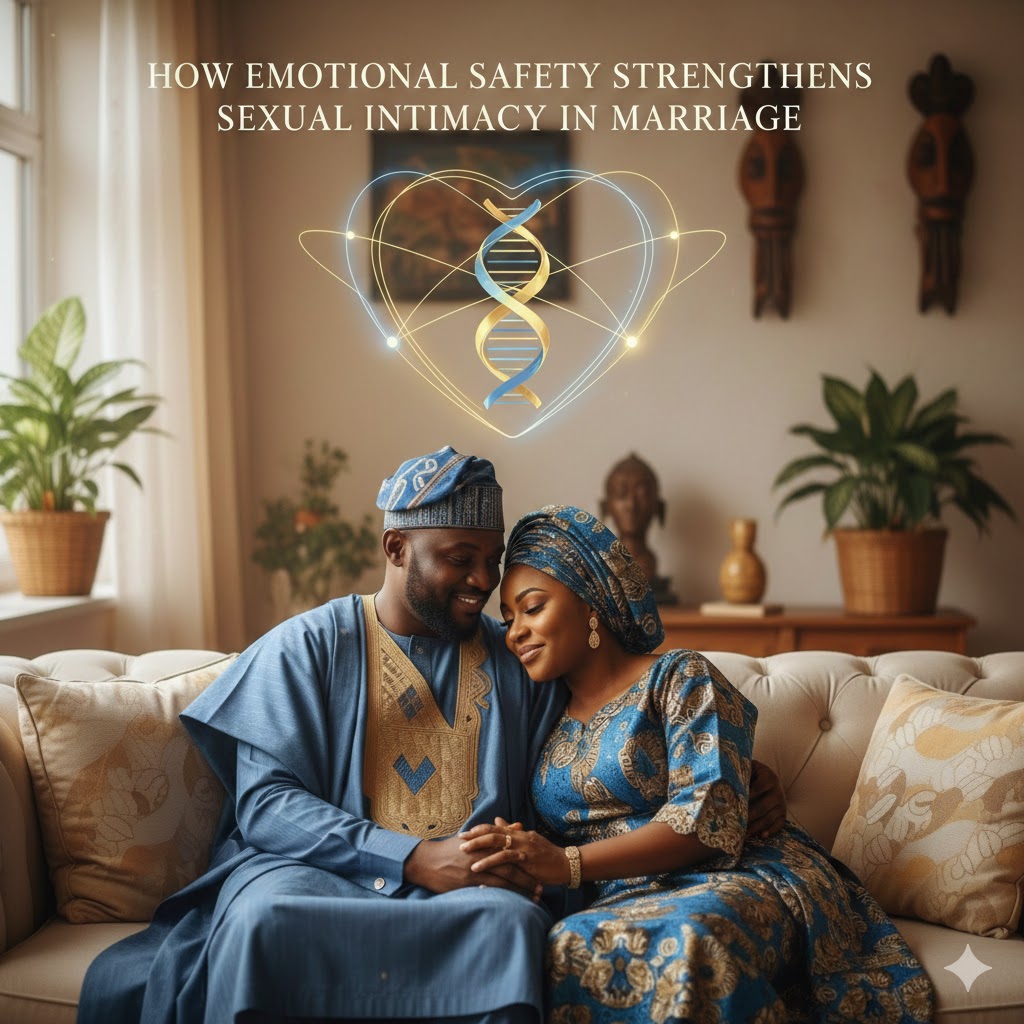
How Emotional Safety Strengthens Sexual Intimacy in Marriage: A Nigerian Perspective
Sexual intimacy is one of the most important aspects of a healthy marriage, but it is not solely a physical act. Emotional safety—the feeling that you can express yourself, be vulnerable, and trust your partner without fear of judgment or rejection—is a critical foundation for satisfying sexual connection. In Nigerian marriages, where cultural, religious, and societal expectations often shape relationships, emotional safety is especially crucial for fostering intimacy and sustaining a healthy sex life.
When emotional safety is compromised, couples may experience decreased desire, avoidance of sexual intimacy, and growing emotional distance. Conversely, when partners feel secure, understood, and valued, sexual intimacy flourishes. Emotional safety enables couples to communicate openly about desires, experiment sexually, and maintain long-term satisfaction in their marriage.
This article explores the connection between emotional safety and sexual intimacy, identifies challenges Nigerian couples face, and provides practical strategies for fostering trust, vulnerability, and sexual fulfillment.
Understanding Emotional Safety in Marriage
Emotional safety is the belief that one can express thoughts, feelings, and vulnerabilities without fear of criticism, ridicule, or abandonment. In marriage, it involves:
-
Trust: Believing that your partner will not exploit or dismiss your feelings.
-
Acceptance: Feeling valued and respected, regardless of flaws or mistakes.
-
Support: Knowing your partner will provide emotional reassurance and understanding.
-
Non-judgment: Being able to share desires, concerns, or fears without shame.
Emotional safety is a prerequisite for sexual intimacy. Couples who lack it may avoid physical connection due to anxiety, fear of rejection, or unresolved conflict.
Why Emotional Safety Matters for Sexual Intimacy
Sexual intimacy is more than a physical act; it is a deeply emotional experience. Emotional safety directly influences sexual desire, arousal, and satisfaction in several ways:
1. Encourages Vulnerability
Sexual intimacy requires vulnerability. Sharing fantasies, desires, and preferences is impossible without trust and emotional security. When Nigerian couples feel emotionally safe, they can openly discuss their sexual needs, leading to greater satisfaction.
Example: A couple in Lagos felt disconnected until they created a safe space to share their sexual preferences without judgment. This openness allowed them to explore new ways of connecting sexually, enhancing pleasure and intimacy.
2. Reduces Anxiety During Sex
Fear of criticism, ridicule, or rejection can inhibit sexual desire. Emotional safety reduces performance anxiety, enabling partners to relax, enjoy intimacy, and be fully present during sexual encounters.
Example: In Abuja, a husband was anxious about premature ejaculation. His wife’s consistent reassurance and non-judgmental responses created emotional safety, allowing him to feel confident and engage in fulfilling sexual activity.
3. Strengthens Trust and Connection
When couples trust that their partner will respect their boundaries, honor commitments, and respond with empathy, sexual intimacy deepens. Trust fosters anticipation, arousal, and a sense of mutual satisfaction.
Example: A Port Harcourt couple rebuilt trust after past conflicts by regularly checking in emotionally. This strengthened their bond, resulting in more spontaneous and satisfying sexual encounters.
4. Facilitates Communication About Sexual Needs
Nigerian couples often face cultural taboos around discussing sexual desires. Emotional safety enables honest conversations about what each partner enjoys, dislikes, or wants to try, improving sexual satisfaction.
5. Helps Heal Sexual Trauma or Past Hurts
Emotional safety provides the foundation for healing past sexual or emotional trauma. When partners feel safe, they can gradually engage in intimacy without fear, building resilience and deeper connection.
Challenges to Emotional Safety in Nigerian Marriages
Despite its importance, emotional safety is often compromised in Nigerian marriages due to cultural, social, and relational factors:
1. Cultural and Religious Expectations
In many Nigerian communities, open discussions about sexual desires or marital dissatisfaction are considered taboo. Couples may suppress feelings, leading to emotional distance and reduced sexual intimacy.
2. Gender Roles and Societal Pressure
Traditional gender roles may prevent men or women from expressing vulnerability. Men may fear appearing weak, while women may avoid discussing sexual needs to conform to expectations of modesty or obedience.
3. Frequent Conflict and Miscommunication
Repeated arguments, criticism, or unresolved disputes create fear and defensiveness, undermining emotional safety. Nigerian couples juggling extended family responsibilities or high-stress jobs may experience more conflict, affecting intimacy.
4. Past Infidelity or Betrayal
Emotional wounds from infidelity or breaches of trust can leave partners hesitant to be vulnerable sexually. Without intentional healing, sexual intimacy often suffers.
5. Stress and Daily Life Pressures
Financial stress, work demands, and parenting responsibilities can reduce energy for emotional connection. When couples feel exhausted, emotional safety may be compromised, impacting sexual desire.
Real-Life Nigerian Scenarios
Scenario 1: Lagos Couple Rebuilding Connection
A Lagos couple faced declining sexual intimacy due to unresolved arguments and miscommunication. Both partners felt emotionally unsafe expressing desires. By committing to weekly “emotion check-ins,” practicing non-judgmental listening, and offering daily affirmations of appreciation, they gradually rebuilt emotional safety. As trust grew, sexual intimacy became more spontaneous and satisfying.
Scenario 2: Abuja Couple and Gender Norms
In Abuja, a husband struggled to express sexual desires due to cultural expectations of masculinity. His wife encouraged openness through gentle affirmation and reassurance, creating emotional safety. Over time, they communicated desires freely, experimented with new sexual activities, and strengthened their bond.
Scenario 3: Port Harcourt Couple Healing From Betrayal
A couple in Port Harcourt experienced infidelity, leaving the betrayed partner hesitant to engage sexually. Through counseling, transparent communication, consistent emotional support, and setting boundaries, emotional safety was gradually restored. Sexual intimacy returned, now characterized by deeper trust and mutual understanding.
Strategies to Foster Emotional Safety in Marriage
1. Prioritize Open Communication
Emotional safety begins with honest and respectful dialogue:
-
Share feelings without blame (“I feel hurt when…” rather than “You always…”).
-
Discuss sexual needs, boundaries, and desires openly.
-
Practice active listening and validate your partner’s emotions.
2. Practice Non-Judgmental Listening
Avoid criticism or ridicule when your partner expresses vulnerabilities. Respond with empathy, understanding, and patience. This approach encourages further openness.
3. Offer Consistent Emotional Support
Reassure your partner of your commitment, love, and respect. Simple gestures—verbal affirmations, touch, and attentive listening—signal emotional reliability.
4. Create Safe Spaces for Intimacy
Dedicate time for private conversations and affectionate moments. Minimize distractions and ensure that interactions are free from judgment, interruptions, or pressure.
5. Address Past Hurts
Healing from infidelity, betrayal, or previous sexual trauma is essential. Couples may need professional counseling, structured dialogue, and consistent reassurance to rebuild trust.
6. Reinforce Appreciation and Affection
Regularly express gratitude, admiration, and love. Nigerian couples often face cultural pressures to suppress compliments or affectionate gestures, but acknowledging each other fosters emotional safety.
7. Practice Patience
Emotional safety develops gradually. Avoid rushing sexual intimacy or expecting immediate restoration of trust. Consistency and patience are key to long-term intimacy.
8. Align Cultural and Religious Values
Incorporate faith and cultural principles to reinforce respect, patience, and commitment. Couples may engage in prayer, reflection, or shared religious practices to strengthen emotional connection.
The Link Between Emotional Safety and Sexual Fulfillment
Emotional safety enhances sexual intimacy by:
-
Increasing desire: Partners feel secure enough to initiate and enjoy intimacy.
-
Improving arousal: Reduced fear and anxiety allow full sexual engagement.
-
Enhancing satisfaction: Emotional connection amplifies pleasure and fulfillment.
-
Encouraging exploration: Safe partners are more willing to experiment and communicate preferences.
-
Strengthening long-term intimacy: Emotional trust fosters enduring sexual connection.
Practical Tips for Nigerian Couples
-
Schedule Daily Connection Time: Even 15–20 minutes of focused conversation strengthens emotional bonds.
-
Incorporate Non-Sexual Touch: Hugs, hand-holding, and cuddling enhance security and closeness.
-
Practice Appreciation Exercises: Express gratitude for specific actions, words, or gestures.
-
Engage in Shared Activities: Cooking, walking, or hobbies foster teamwork and connection.
-
Use Affirmations: Regular verbal reassurance reinforces love and emotional safety.
-
Address Conflict Constructively: Focus on resolution rather than blame, fostering trust.
-
Seek Counseling When Needed: Professional support helps couples navigate deep emotional wounds.
Case Study: Lagos Couple Strengthening Emotional Safety
A Lagos couple experienced sexual dissatisfaction after repeated arguments and neglect of emotional connection. The husband felt emotionally unsafe expressing desires, while the wife felt neglected and misunderstood. They implemented nightly check-ins, weekly date nights, and non-sexual physical affection, gradually creating an environment of trust and emotional safety. As a result, sexual intimacy became more frequent, spontaneous, and satisfying.
Challenges Nigerian Couples May Face in Building Emotional Safety
-
Societal Judgment: Couples may fear discussing sexual challenges due to cultural norms.
-
Time Constraints: Busy work schedules and family obligations reduce opportunities for meaningful interaction.
-
Past Traumas: Unresolved emotional wounds can hinder openness.
-
Resistance to Change: One partner may be hesitant to adopt new communication or intimacy practices.
Recognizing these challenges allows couples to approach emotional safety strategically and patiently.
Long-Term Benefits of Emotional Safety in Marriage
-
Stronger Sexual Intimacy: Couples experience increased desire, arousal, and satisfaction.
-
Enhanced Emotional Bond: Trust and vulnerability deepen connection.
-
Improved Conflict Resolution: Couples navigate disagreements without damaging intimacy.
-
Greater Marital Satisfaction: Emotional safety fosters overall happiness and stability.
-
Resilient Partnership: Couples can handle stress, life changes, and challenges together.
Conclusion
Emotional safety is the cornerstone of sexual intimacy in marriage. Nigerian couples often face unique challenges—cultural norms, gender expectations, work pressures, and societal judgments—that can compromise trust and vulnerability. However, intentional effort to foster emotional safety transforms sexual intimacy, enhancing desire, satisfaction, and connection.
Key steps include open communication, non-judgmental listening, emotional support, consistent affection, patience, and seeking professional guidance when necessary. By creating an environment of trust, understanding, and acceptance, Nigerian couples can cultivate sexual intimacy that is deeply fulfilling, resilient, and enduring.
Investing in emotional safety is an investment in marital health. Couples who prioritize trust, vulnerability, and mutual respect enjoy stronger sexual intimacy, emotional connection, and a partnership capable of thriving through the challenges of life.









.jpg)
Sign in to comment