 Nurturing Marriages, Enriching Families!
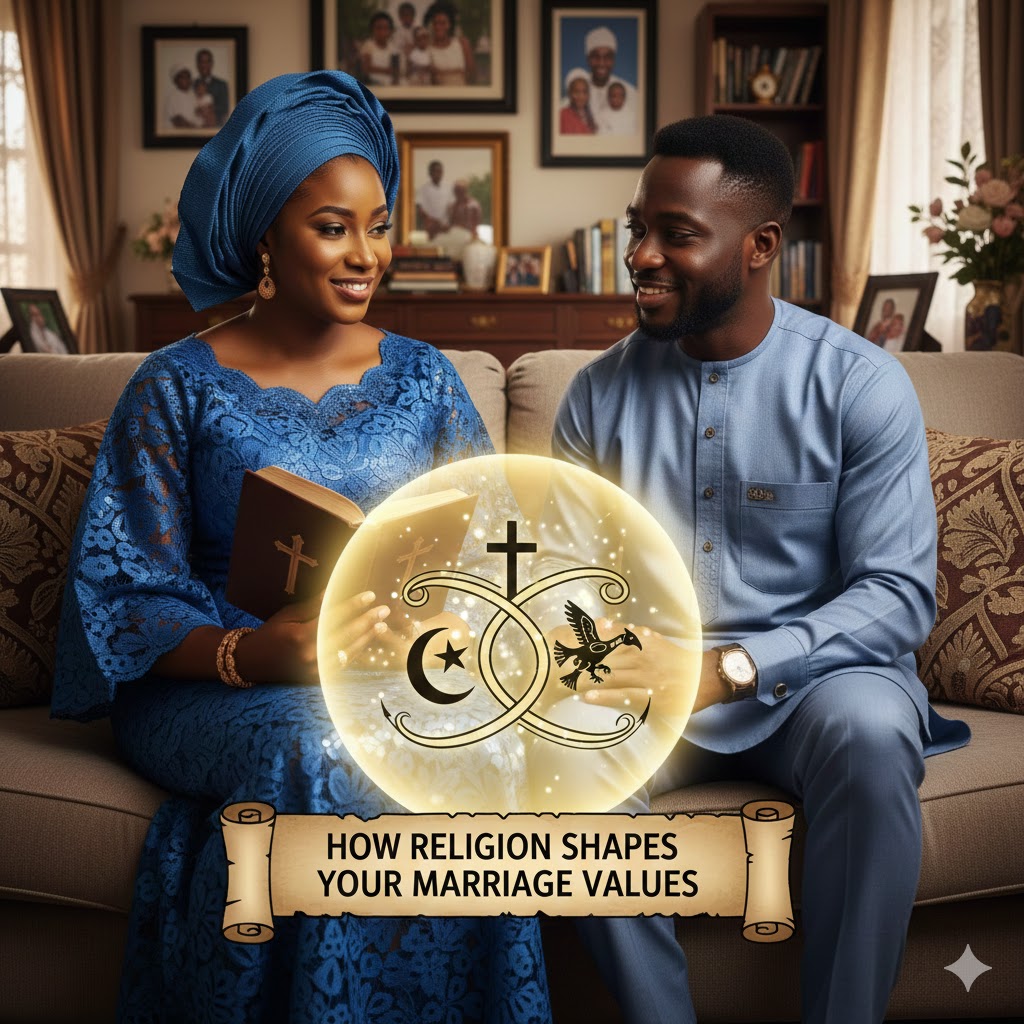
How Religion Shapes Your Marriage Values: Understanding Faith, Commitment, and Daily Living in Marriage
Religion plays a powerful role in shaping how people view marriage, love, responsibility, and commitment. For many couples, religious beliefs are not limited to places of worship; they influence daily decisions, expectations, conflict resolution, parenting, and long-term vision. Whether consciously or unconsciously, faith often forms the moral framework upon which marriage values are built.
In societies like Nigeria and much of Africa, where religion is deeply woven into social life, marriage is rarely separated from faith. Christianity, Islam, and traditional belief systems all provide guiding principles that shape how spouses relate to each other and to their families.
Understanding how religion shapes marriage values helps couples appreciate their similarities, navigate differences, and build stronger, more intentional unions.
Religion as a Moral Foundation for Marriage
Religion often defines what is considered right, wrong, acceptable, or unacceptable in marriage. These moral standards influence how couples view fidelity, honesty, sacrifice, forgiveness, and responsibility.
For many believers, marriage is seen as sacred—not merely a legal or emotional agreement, but a covenant with spiritual significance. This belief can strengthen commitment, especially during difficult seasons. Couples who see marriage as sacred are often more willing to work through challenges rather than walk away.
For example, a Christian couple may believe their marriage reflects divine love and therefore strive to model patience and selflessness. A Muslim couple may see marriage as an act of worship and mutual responsibility, guided by clear religious obligations. In both cases, faith provides a moral compass that shapes behavior within the relationship.
How Religion Influences Choice of Partner
Religious beliefs often affect whom people choose to marry. Shared faith can create a sense of unity, shared purpose, and mutual understanding. Couples with similar religious values tend to agree more easily on lifestyle choices, child-rearing, moral boundaries, and long-term goals.
In Nigeria, many families strongly encourage marrying within the same faith. This expectation is rooted in the belief that religious alignment reduces conflict and strengthens family harmony. While interfaith marriages exist and can thrive, they often require deliberate communication and mutual respect to navigate differing beliefs.
Religion shapes expectations even before marriage begins—how courtship is conducted, boundaries around intimacy, and the level of family involvement are often guided by faith traditions.
Religious Teachings and Roles in Marriage
Many religions outline roles and responsibilities within marriage. These teachings influence expectations around leadership, submission, provision, care, and mutual respect.
In Christianity, marriage is often described as a partnership built on love, sacrifice, and mutual submission. In Islam, marriage emphasizes balance, compassion, and clearly defined rights and responsibilities for both spouses. Traditional belief systems may emphasize communal responsibility, respect for elders, and continuity of lineage.
While interpretations vary, these teachings shape how spouses understand their roles and responsibilities. Problems often arise not from religion itself, but from rigid or selective interpretations that ignore mutual respect and evolving realities.
Healthy marriages often involve couples interpreting religious teachings through the lens of love, empathy, and fairness rather than control or superiority.
Religion and Conflict Resolution in Marriage
One of the strongest ways religion shapes marriage values is through approaches to conflict. Many faiths emphasize patience, forgiveness, humility, and reconciliation.
Couples guided by religious principles may be more inclined to:
-
Seek peaceful resolution rather than escalation
-
Practice forgiveness instead of holding grudges
-
Involve spiritual leaders or counselors when necessary
-
Pray or reflect together during difficult moments
For instance, a couple experiencing tension may rely on prayer, fasting, or spiritual counseling to gain clarity and emotional calm before addressing issues. Faith-based conflict resolution encourages introspection and accountability rather than blame.
Faith and Commitment During Difficult Seasons
Marriage inevitably goes through seasons of stress—financial challenges, health issues, infertility, loss, or emotional distance. Religion often provides strength during these moments.
Belief in a higher purpose, divine support, or spiritual reward can help couples endure hardship with hope. Faith can remind spouses that difficulties are temporary and that perseverance has meaning beyond immediate comfort.
A real-life scenario is that of Tunde and Amina, who faced years of financial instability early in their marriage. Their shared belief that marriage is a trust and responsibility before God helped them remain united despite pressure. Their faith encouraged teamwork rather than resentment.
Religion and Parenting Values
Marriage values shaped by religion often extend into parenting. Faith influences how couples raise children, teach discipline, model behavior, and instill values.
Parents may prioritize:
-
Moral instruction and character development
-
Respect for elders and authority
-
Spiritual education and religious participation
-
Community involvement and service
When couples share religious values, parenting decisions tend to be more aligned. When beliefs differ, open discussion and compromise become essential to avoid confusion and conflict.
Interfaith Marriages and Value Negotiation
Interfaith marriages present unique challenges and opportunities. When spouses come from different religious backgrounds, marriage values may not automatically align.
Key areas that often require negotiation include:
-
Worship practices
-
Holiday observance
-
Child upbringing
-
Extended family expectations
Successful interfaith marriages are built on respect, communication, and agreed boundaries. Rather than attempting to convert or control each other, couples who thrive focus on shared values such as love, honesty, kindness, and commitment.
Religion shapes values, but mutual respect sustains the marriage.
When Religious Differences Cause Conflict
Religion can become a source of conflict when:
-
One partner imposes beliefs forcefully
-
Faith is used to justify control or abuse
-
Religious leaders are prioritized over spousal communication
-
Spiritual guilt replaces healthy dialogue
In such cases, couples benefit from counseling—preferably with professionals who respect faith while promoting emotional health and equality.
Healthy faith strengthens marriage; unhealthy application weakens it.
Balancing Faith and Personal Growth in Marriage
As individuals grow, their understanding of faith may evolve. Marriage values shaped by religion must allow room for personal growth, questions, and maturity.
Strong marriages encourage:
-
Open conversations about faith
-
Respect for spiritual journeys
-
Flexibility in non-core beliefs
-
Unity in core values
Faith should serve the marriage, not suffocate it.
The Positive Power of Shared Spiritual Practices
Couples who engage in shared spiritual practices—such as prayer, reflection, or acts of service—often report deeper emotional connection. These practices foster vulnerability, gratitude, and shared meaning.
Shared faith activities remind couples that they are partners on a journey, not opponents in conflict.
Final Thoughts
Religion shapes marriage values in profound ways. It influences how couples choose partners, define roles, resolve conflict, endure hardship, and raise children. When approached with humility, love, and mutual respect, faith can be a powerful force for unity and resilience in marriage.
However, religion must be lived with wisdom. Values rooted in faith should promote love, dignity, and partnership—not fear or domination. Couples who intentionally reflect on how religion shapes their marriage values are better equipped to build unions that are both spiritually grounded and emotionally healthy.






.jpg)

Sign in to comment