 Nurturing Marriages, Enriching Families!
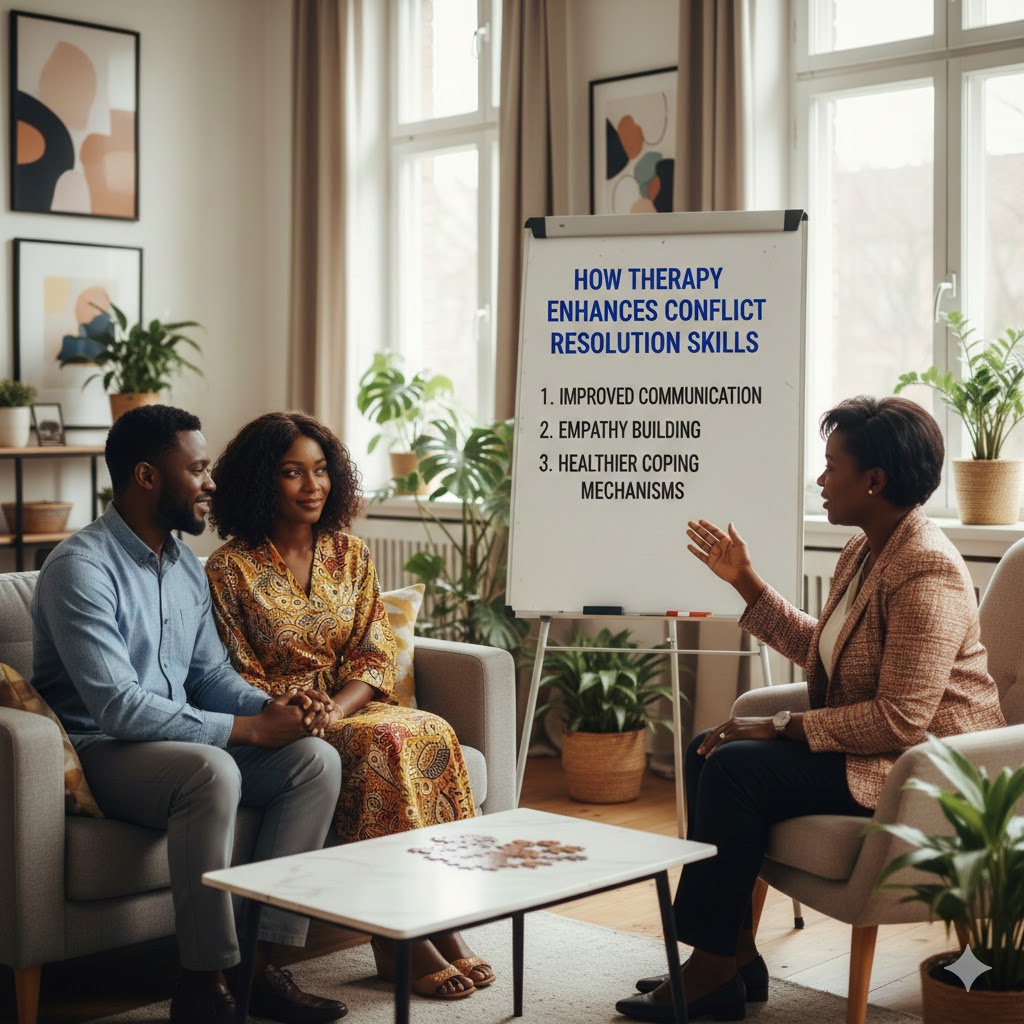
How Therapy Enhances Conflict Resolution Skills: A Nigerian Couples’ Guide
Conflict is inevitable in any relationship. Differences in opinion, values, and priorities can lead to disagreements, tension, or emotional distance. In Nigeria, couples often face additional challenges from cultural expectations, extended family involvement, and societal pressures, which can intensify conflicts.
Therapy—whether individual, couples, or family-based—provides tools, guidance, and structured interventions to enhance conflict resolution skills, helping couples manage disagreements constructively. This article explores how therapy enhances conflict resolution skills, offering practical strategies and real-life Nigerian scenarios.
Understanding Conflict in Nigerian Relationships
Conflict occurs when partners’ needs, expectations, or beliefs clash. Common sources of marital conflict in Nigeria include:
-
Financial disagreements
-
Parenting and child-rearing differences
-
Household responsibilities
-
Extended family interference
-
Career and life priorities
Scenario:
In Lagos, Tobi and Sade frequently argued about household finances. Tobi preferred saving aggressively, while Sade valued spending on family experiences. Therapy helped them understand each other’s perspective and develop a collaborative approach to managing money.
Key Insight: Conflict is natural, but constructive management is a skill that can be learned and strengthened through therapy.
Why Conflict Resolution Skills Are Essential
Effective conflict resolution:
-
Reduces Emotional Distance – Prevents unresolved issues from creating resentment
-
Strengthens Communication – Encourages active listening and understanding
-
Builds Trust and Security – Partners feel heard and valued
-
Enhances Emotional Intimacy – Fosters connection even during disagreements
-
Promotes Long-Term Relationship Stability – Prevents minor issues from escalating
Scenario:
In Abuja, Amaka and Chidi’s arguments over parenting methods were frequent and intense. Therapy equipped them with skills to discuss disagreements calmly, ultimately strengthening their bond.
How Therapy Helps Couples Develop Conflict Resolution Skills
Therapy provides a safe and structured environment where couples can learn, practice, and refine conflict resolution strategies.
1. Identifying Conflict Triggers
Therapists help couples recognize underlying triggers that escalate arguments, such as:
-
Stress and fatigue
-
Financial worries
-
Miscommunication
-
Past relationship experiences
Scenario:
In Port Harcourt, Chika and Emeka realized that their fights about household chores were often triggered by work stress. Therapy helped them address triggers proactively, reducing unnecessary arguments.
2. Improving Communication Skills
Effective conflict resolution begins with clear and respectful communication. Therapy teaches couples to:
-
Express feelings using “I” statements
-
Avoid blame and criticism
-
Listen actively and empathetically
-
Ask clarifying questions
Scenario:
In Lagos, Funke and Ade learned to replace “You never…” statements with “I feel…” expressions, reducing defensiveness and enhancing understanding during disagreements.
3. Teaching Emotional Regulation
Therapists guide couples in managing emotions during conflicts, helping them avoid escalation:
-
Recognize emotional responses
-
Practice calming techniques like deep breathing
-
Pause before responding in anger
-
Maintain a solution-focused mindset
Scenario:
In Abuja, Amaka and Chidi practiced a “time-out” strategy when arguments intensified. This allowed them to cool down and approach discussions rationally, reducing emotional outbursts.
4. Introducing Structured Problem-Solving
Therapy teaches couples systematic methods to address disagreements:
-
Identify the issue clearly
-
Brainstorm potential solutions
-
Evaluate options collaboratively
-
Agree on actionable steps
-
Review progress and adjust if necessary
Scenario:
In Lagos, Tobi and Sade used therapy’s structured problem-solving approach to decide how to allocate their monthly budget, resolving conflicts without resentment.
5. Rebuilding Trust and Mutual Respect
Conflict often damages trust and respect. Therapy helps couples:
-
Restore confidence in each other’s intentions
-
Validate feelings and experiences
-
Reinforce commitment to resolution and growth
Scenario:
In Port Harcourt, Chika and Emeka rebuilt mutual respect by acknowledging past hurt and agreeing to communicate openly during disagreements.
6. Learning Negotiation and Compromise
Therapists teach couples how to negotiate and find mutually beneficial solutions, preventing zero-sum arguments:
-
Identify non-negotiables and flexible areas
-
Explore creative solutions
-
Practice give-and-take
Scenario:
In Abuja, Amaka and Chidi negotiated household responsibilities by dividing chores based on availability and preference, avoiding recurring arguments.
7. Managing External Influences
In Nigeria, extended families and social pressures can exacerbate conflicts. Therapy guides couples to:
-
Set healthy boundaries with relatives
-
Communicate decisions respectfully
-
Maintain unity as a couple
Scenario:
In Lagos, Tobi and Sade faced pressure from relatives regarding childcare choices. Therapy helped them present a unified front, reducing external conflict interference.
Practical Therapy Exercises for Conflict Resolution
Therapists often assign exercises to strengthen conflict resolution skills.
1. The “I Feel” Exercise
Purpose: Encourage expression of emotions without blame.
Method:
-
Take turns expressing feelings using “I feel…” statements
-
Focus on emotions, not actions
-
Practice active listening
Scenario:
In Abuja, Amaka expressed frustration about household tasks: “I feel overwhelmed when I manage chores alone.” Chidi responded empathetically, initiating collaboration rather than defense.
2. Time-Out Technique
Purpose: Prevent escalation during heated arguments.
Method:
-
Agree to pause when emotions rise
-
Use time to calm down and reflect
-
Resume discussion constructively
Scenario:
In Port Harcourt, Chika and Emeka implemented a 10-minute pause during arguments about finances, reducing shouting and tension.
3. Role Reversal Exercise
Purpose: Build empathy and perspective-taking.
Method:
-
Each partner explains the situation from the other’s viewpoint
-
Discuss insights and emotional reactions
Scenario:
In Lagos, Funke explained her perspective on career stress, while Ade articulated hers. This exercise fostered understanding and reduced judgment.
4. Conflict Journal
Purpose: Track conflicts and identify patterns.
Method:
-
Write down disagreements, triggers, and responses
-
Review with therapist to identify recurring issues
-
Develop targeted strategies for improvement
Scenario:
In Abuja, Amaka and Chidi tracked arguments about finances and parenting. Therapy revealed that timing and fatigue were key triggers, guiding preventive strategies.
5. Collaborative Problem-Solving Sessions
Purpose: Strengthen joint decision-making skills.
Method:
-
Identify one ongoing conflict
-
Brainstorm solutions together
-
Agree on steps and responsibilities
-
Review progress in future sessions
Scenario:
In Port Harcourt, Chika and Emeka used collaborative problem-solving to schedule household chores, improving fairness and reducing friction.
Cultural Context of Conflict Resolution in Nigeria
Conflict resolution strategies must consider cultural norms and expectations:
-
Extended Family Influence: Couples learn to navigate advice and opinions respectfully while maintaining autonomy.
-
Gender Roles: Counseling can address traditional expectations around authority, chores, and parenting.
-
Community Expectations: Therapy supports couples in managing societal scrutiny regarding marital harmony.
-
Religious Values: Integrating faith-based principles can reinforce conflict resolution practices.
Scenario:
In Lagos, Tobi and Sade balanced Yoruba family expectations with personal decisions about parenting and household management, guided by therapy.
When to Seek Therapy for Conflict Resolution
-
Recurring unresolved disagreements
-
Emotional distance or withdrawal during conflicts
-
Frequent arguments escalating in intensity
-
Desire to strengthen problem-solving and communication skills
-
Preparing for major life transitions (e.g., relocation, children, career changes)
Scenario:
In Abuja, Amaka and Chidi sought therapy after repeated arguments over childcare routines. Early intervention prevented long-term resentment and restored emotional connection.
Long-Term Benefits of Therapy in Conflict Resolution
-
Enhanced Communication: Clear, respectful, and empathetic exchanges
-
Improved Emotional Regulation: Reduced emotional escalation during disagreements
-
Strengthened Trust and Respect: Emotional safety and reliability restored
-
Collaborative Problem-Solving: Couples develop systematic approaches to challenges
-
Reduced Recurring Conflict: Early identification and management of triggers
-
Family Harmony: Minimizes external pressures and internal tension
-
Relationship Satisfaction: Couples report increased intimacy and partnership
Scenario:
In Lagos, Tobi and Sade reported reduced arguments, improved collaboration, and stronger emotional connection six months after attending therapy sessions focused on conflict resolution.
Tips for Maintaining Conflict Resolution Skills After Therapy
-
Continue structured communication exercises (daily check-ins, “I feel” statements)
-
Implement time-out strategies during heated moments
-
Regularly review and adjust collaborative agreements
-
Keep a conflict journal to track triggers and responses
-
Celebrate problem-solving successes and improvements in communication
Scenario:
In Port Harcourt, Chika and Emeka maintained conflict journals and weekly reflection sessions, reinforcing therapy lessons and reducing tension in their household.
Challenges Couples May Face During Therapy
| Challenge | Solution via Therapy | Nigerian Scenario |
|---|---|---|
| Emotional resistance | Create safe environment for vulnerability | Abuja couple hesitant to express feelings gradually opened up |
| Cultural expectations | Integrate Nigerian norms with therapy guidance | Lagos couple balanced family advice with personal decisions |
| Busy schedules | Flexible session planning | Abuja couple used evening online sessions to accommodate work |
| Past conflicts | Trust-building exercises | Port Harcourt couple restored mutual respect after prior disputes |
| Sustaining progress | Assign homework and exercises | Lagos couple reinforced lessons with daily check-ins and shared goals |
Conclusion: Therapy as a Tool for Conflict Resolution
Therapy is a powerful mechanism for Nigerian couples seeking to enhance conflict resolution skills, manage disagreements constructively, and strengthen their relationships.
Key Takeaways:
-
Conflict is natural but manageable with learned skills
-
Therapy provides a safe, structured space for skill-building
-
Exercises like “I feel” statements, time-outs, role reversal, conflict journals, and collaborative problem-solving improve outcomes
-
Nigerian cultural, religious, and societal factors should guide counseling strategies
-
Commitment, consistency, and practice ensure long-term conflict resolution success
Final Thought: For Nigerian couples, therapy is not just a response to conflict—it is an investment in partnership, trust, and long-term relationship satisfaction. By strengthening conflict resolution skills, couples can navigate disagreements gracefully, maintain emotional closeness, and build a marriage that thrives despite life’s inevitable challenges.





.jpg)

Sign in to comment