 Nurturing Marriages, Enriching Families!
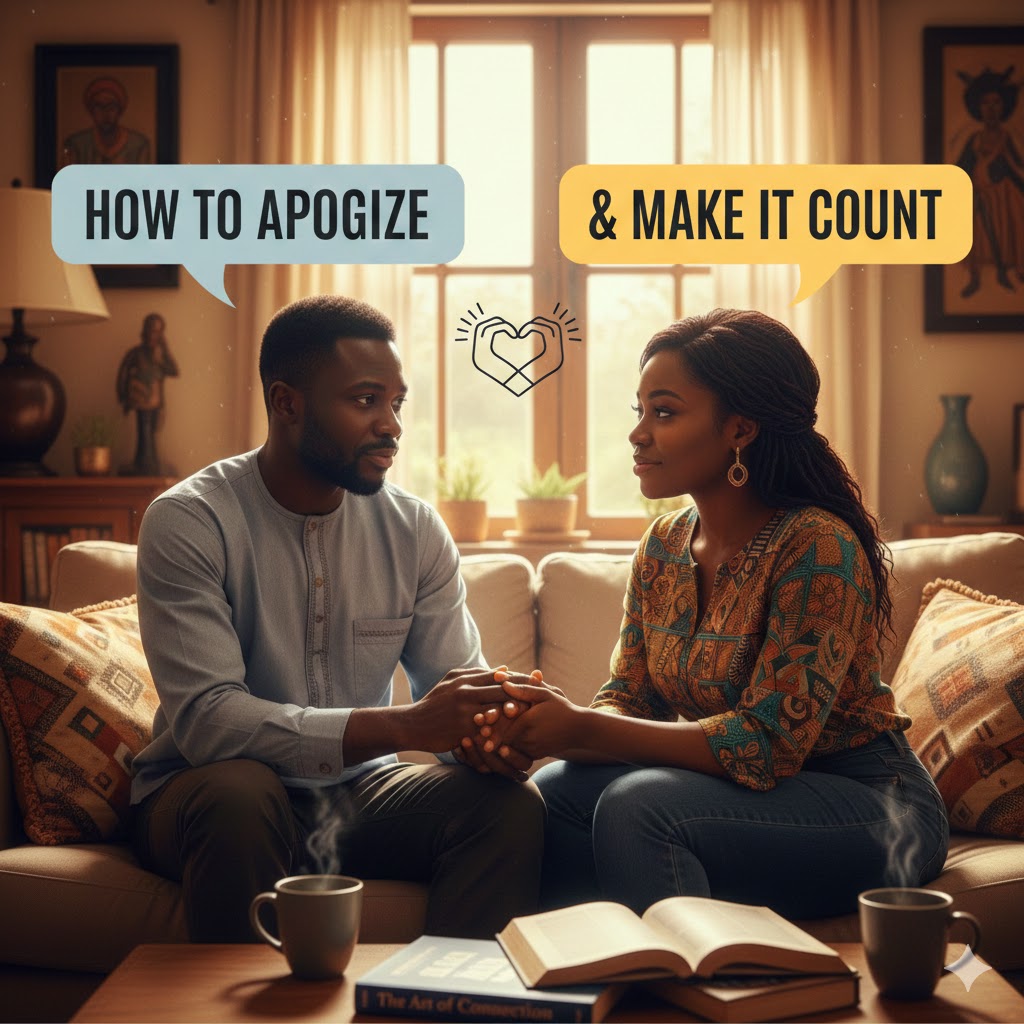
How to Apologize & Make It Count: A Complete Guide to Restoring Trust and Healing Relationships
An apology can heal a broken heart or deepen a wound, depending on how it is given. Many people say “I’m sorry,” yet the relationship remains damaged because the apology lacked sincerity, accountability, or understanding. Learning how to apologize and make it count is one of the most important skills in marriage, relationships, and everyday life.
In Nigeria and many African cultures, apologies are often avoided due to pride, cultural expectations, gender roles, or fear of losing respect. However, the truth is simple: strong relationships are built by people who know how to take responsibility, repair emotional damage, and rebuild trust.
This article explains what a real apology is, why many apologies fail, and how to apologize in a way that truly heals and restores relationships.
Why Apologies Matter in Relationships
Apologies are not just polite words; they are emotional repair tools. When someone is hurt, what they often need most is acknowledgment of their pain. A sincere apology validates emotions, rebuilds safety, and opens the door to reconciliation.
In marriage, unresolved hurt accumulates over time. Small offenses ignored today become deep resentment tomorrow. Apologies interrupt this cycle and prevent emotional distance from becoming permanent.
A meaningful apology communicates three powerful messages:
I see you.
I take responsibility.
I care about this relationship.
Without these messages, forgiveness becomes difficult.
Why Most Apologies Fail
Many apologies do more harm than good because they are incomplete or defensive. Common examples include apologies that shift blame, minimize pain, or rush forgiveness.
Statements like “I’m sorry if you were offended,” “You know I didn’t mean it,” or “Let’s just forget it” may sound polite, but they avoid responsibility. These apologies focus more on ending the conversation than on healing the hurt.
In some Nigerian homes, apologizing is wrongly seen as weakness, especially for men or elders. This mindset leads to silence, avoidance, or gifts replacing genuine emotional repair. While gifts may soften anger temporarily, they do not heal emotional wounds.
What a Real Apology Truly Means
A real apology is not about words alone; it is about ownership and empathy. It acknowledges wrongdoing without excuses and recognizes the emotional impact of one’s actions.
True apologies involve humility. They say, “I was wrong,” without adding “but.” They focus on the injured person’s experience rather than the offender’s intention.
A genuine apology also carries the willingness to change behavior. Without change, an apology becomes manipulation.
The Emotional Power of Accountability
Accountability is the backbone of an effective apology. When you accept responsibility, you remove the burden from the other person to prove their pain is valid.
In marriage, accountability builds trust. A spouse who consistently owns mistakes creates emotional safety. A spouse who avoids responsibility creates fear, resentment, and emotional withdrawal.
Accountability does not mean self-hate or humiliation. It means maturity.
Understanding the Pain Before You Apologize
Before apologizing, it is important to understand what exactly caused the hurt. Many conflicts escalate because people apologize for the wrong thing.
For example, your partner may not be angry because of what you said, but because of how it made them feel—disrespected, ignored, or unloved.
Effective apologies begin with listening. Listening without interrupting, defending, or correcting allows you to fully grasp the emotional impact of your actions.
In Nigerian relationships, where emotional expression is sometimes discouraged, listening becomes even more crucial. Silence does not always mean forgiveness.
Timing Your Apology Wisely
Timing affects how an apology is received. Apologizing while emotions are still heated may lead to rejection, while apologizing too late may feel insincere.
The right time is when both parties are emotionally safe enough to communicate. This may require space, but not avoidance.
Delaying an apology out of pride often worsens the damage. Emotional wounds grow deeper with time.
How to Apologize the Right Way
A powerful apology includes clarity, sincerity, empathy, and commitment to change. It is specific, not vague. It names the wrongdoing clearly so the other person knows you understand what hurt them.
Tone matters. A calm, respectful tone shows seriousness. Body language, eye contact, and posture reinforce sincerity.
An apology should never demand forgiveness. Forgiveness is a process, not a transaction.
The Role of Empathy in a Meaningful Apology
Empathy is the ability to step into another person’s emotional experience. When you express empathy, you communicate that their pain matters.
Statements that show empathy include acknowledging emotional impact rather than intent. Saying “I understand that my words made you feel disrespected” is far more healing than saying “I didn’t mean it that way.”
Empathy shifts the focus from self-defense to connection.
Apologizing in Marriage
In marriage, apologies are essential for long-term emotional health. Spouses hurt each other unintentionally through words, actions, neglect, or unmet expectations.
Regular, sincere apologies prevent resentment from becoming permanent. They also model humility and emotional intelligence for children.
In Nigerian marriages, where cultural expectations may discourage open emotional dialogue, learning to apologize openly strengthens the marital bond and reduces silent conflict.
Apologizing Without Repeating the Same Mistake
An apology without change loses credibility. When the same behavior repeats, apologies begin to feel manipulative.
Making an apology count requires identifying patterns and committing to improvement. This may involve setting boundaries, changing habits, or seeking counseling.
Change does not mean perfection. It means effort and consistency.
When You Are Not Ready to Apologize
Sometimes emotions such as anger, shame, or pride make apologizing difficult. In such moments, honesty is better than a forced apology.
Acknowledging the need for time while committing to return to the conversation shows respect. Silence without communication, however, feels like punishment.
Emotional maturity includes knowing when to pause and when to repair.
Apologizing After Betrayal or Deep Hurt
Some hurts are deeper than everyday misunderstandings. Infidelity, broken trust, public embarrassment, or long-term neglect require more than a simple apology.
In such cases, apologies must be accompanied by transparency, patience, and consistent rebuilding of trust. The injured partner may need time, reassurance, and proof of change.
Rushing forgiveness after deep hurt often leads to unresolved pain resurfacing later.
Accepting an Apology Gracefully
Knowing how to apologize is important, but knowing how to receive an apology also matters. Accepting an apology does not mean forgetting or minimizing pain.
It means acknowledging effort and choosing healing over bitterness. However, forgiveness does not cancel the need for boundaries or change.
Healthy relationships allow space for both accountability and grace.
Teaching Children the Art of Apology
Children learn how to apologize by watching adults. Forced apologies without understanding teach compliance, not responsibility.
Parents should teach children to understand the impact of their actions, express remorse, and correct behavior. This builds emotional intelligence and empathy.
In Nigerian families, where authority is emphasized, teaching apology alongside respect creates balanced character.
Cultural Barriers to Apologizing
Culture influences how apologies are viewed. In some settings, age, gender, or status may discourage apology.
However, true respect is not lost through humility. In fact, people who apologize sincerely often earn deeper respect.
Healthy culture evolves. Emotional intelligence strengthens tradition rather than destroys it.
The Long-Term Benefits of Meaningful Apologies
When apologies are done well, relationships grow stronger. Trust deepens. Communication improves. Emotional safety increases.
Couples who apologize effectively experience fewer unresolved conflicts and greater intimacy. Families that normalize apology create emotionally secure children.
Apology is not weakness; it is relational strength.
Learning how to apologize and make it count is a life skill that transforms marriages, friendships, families, and workplaces. A real apology takes courage, empathy, and accountability.
In a world full of pride and defensiveness, sincere apologies stand out as acts of emotional maturity. When done right, an apology does more than end a conflict—it rebuilds trust, restores connection, and opens the door to deeper love.








.jpg)
Sign in to comment