 Nurturing Marriages, Enriching Families!
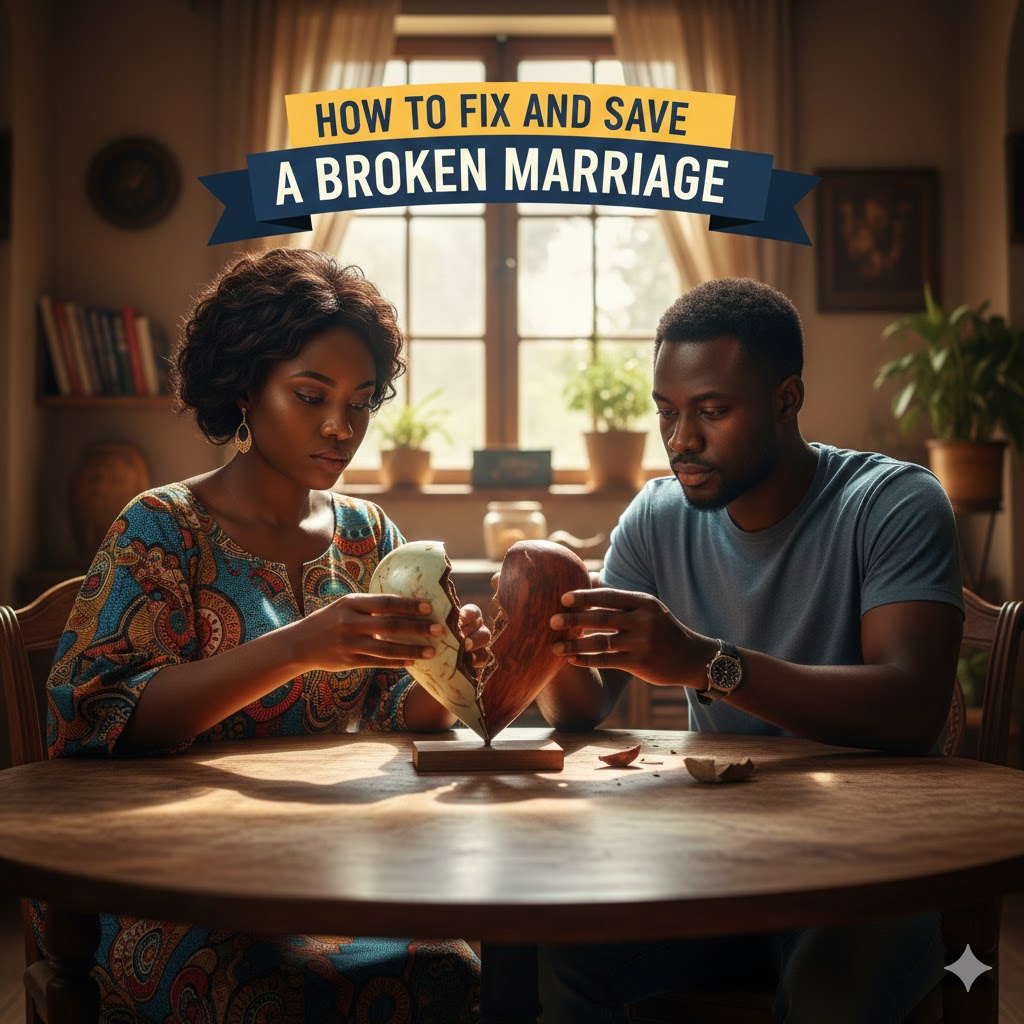
How to Fix and Save a Broken Marriage
Many marriages do not collapse suddenly. They break slowly—through silence, resentment, unmet expectations, unresolved conflict, emotional neglect, betrayal, financial stress, and external pressures from family or society. In Nigeria, where marriage is deeply tied to culture, faith, family, and reputation, a broken marriage is often endured quietly rather than addressed openly.
Yet a broken marriage does not automatically mean a hopeless marriage. Many relationships that feel damaged, distant, or emotionally dead can be restored when both partners are willing to confront the truth, take responsibility, and rebuild intentionally.
This article explores how to fix and save a broken marriage in a realistic, compassionate way, grounded in real Nigerian experiences and practical steps.
First, Understand What “Broken” Really Means
A marriage is broken when:
-
Communication has shut down or turned hostile
-
Trust has been damaged by lies, betrayal, or neglect
-
Emotional connection feels lost
-
One or both partners feel unseen, unheard, or unsafe
-
Resentment outweighs affection
Broken does not always mean abusive or beyond repair. Many marriages are broken simply because emotional needs were ignored for too long.
Nigerian Reality
In many Nigerian homes, couples stay together physically but drift apart emotionally. They co-parent, share bills, attend family events—but intimacy, friendship, and emotional safety are gone. This kind of quiet breakdown is common and dangerous because it feels normal until it becomes unbearable.
Step One: Stop Focusing on “Who Is Right” and Face What Is Wrong
When marriages break, couples often argue over blame:
-
“You changed.”
-
“You’re the problem.”
-
“If only you listened.”
-
“I wouldn’t have done that if you hadn’t…”
This mindset keeps the marriage stuck.
Saving a broken marriage begins when both partners stop fighting to be right and start fighting for the relationship.
Real-Life Scenario (Ibadan)
Tunde and Funke constantly argued about who caused the emotional distance in their marriage. Each conversation turned into a courtroom. Progress only began when they shifted the question from “Who is at fault?” to “What has gone wrong, and how do we fix it together?”
Step Two: Rebuild Honest Communication (Even If It Feels Awkward)
Most broken marriages suffer from poor communication, not lack of love.
Some couples shout.
Some keep silent.
Some talk but never feel understood.
Fixing communication means learning to speak without attacking and listen without defending.
What Healthy Communication Looks Like
It involves expressing feelings instead of accusations.
It involves listening to understand, not to respond.
It involves allowing uncomfortable conversations without shutting down or walking away.
Nigerian Challenge
Many Nigerian couples were not taught emotional communication. Men were taught to suppress emotions. Women were taught to endure. As a result, difficult conversations feel threatening.
But avoiding conversation doesn’t preserve peace—it postpones explosion.
Step Three: Address Emotional Disconnection Before Physical or Financial Issues
Many couples try to fix surface problems—sex, money, chores—without addressing the deeper issue: emotional disconnection.
When emotional safety is gone:
-
Intimacy disappears
-
Cooperation becomes difficult
-
Small issues feel huge
-
Resentment builds quietly
Real-Life Scenario (Abuja)
Ngozi complained that Chinedu was distant and uninterested. Chinedu complained that Ngozi was always angry. Counseling revealed both were reacting to emotional neglect. Once they rebuilt emotional safety through honest conversations and empathy, other issues became easier to solve.
Step Four: Take Responsibility Without Defensiveness
Saving a broken marriage requires personal accountability, not perfection.
This means:
-
Admitting where you failed
-
Acknowledging your partner’s pain
-
Avoiding excuses like “That’s how I am”
-
Being willing to change harmful patterns
Responsibility does not mean taking all the blame. It means owning your part.
In Nigerian culture, pride often blocks accountability—especially for men. But humility heals faster than ego ever will.
Step Five: Rebuild Trust Through Consistency, Not Promises
If trust has been broken—through infidelity, lies, secrecy, or repeated disappointment—words alone will not fix it.
Trust is rebuilt through:
-
Transparency
-
Predictability
-
Follow-through
-
Time
Real-Life Scenario (Lagos)
After an emotional affair, Emeka wanted Chinwe to “move on quickly.” She couldn’t. Healing began when Emeka stopped demanding forgiveness and started demonstrating change consistently—open communication, accountability, and patience.
Trust is rebuilt slowly, but it can be rebuilt.
Step Six: Set Boundaries With Extended Family and External Pressure
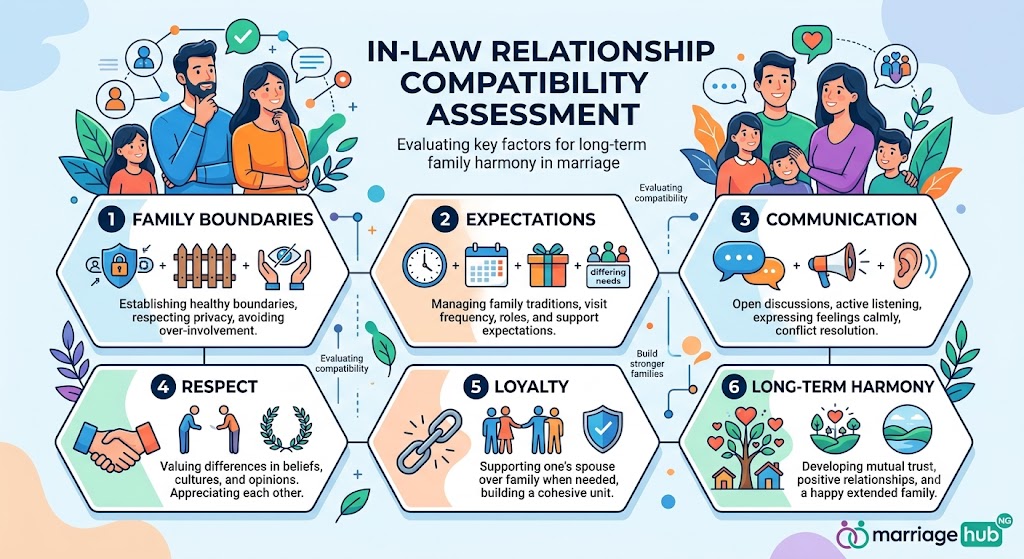
In Nigeria, extended family interference can break even strong marriages. Parents, siblings, religious leaders, and friends may influence decisions, fuel conflict, or undermine unity.
Saving a marriage often requires:
-
Prioritizing the marital bond
-
Making decisions together privately
-
Presenting a united front publicly
-
Setting respectful but firm boundaries
A marriage cannot heal if outsiders have unrestricted access to its wounds.
Step Seven: Relearn Each Other (People Change)
Many marriages break because couples fall in love with who their partner was, not who they have become.
People change through:
-
Career growth
-
Parenthood
-
Trauma
-
Loss
-
Spiritual shifts
Saving a marriage means being willing to rediscover your spouse, not punish them for changing.
Ask again:
-
Who are you now?
-
What do you need now?
-
What hurts you now?
-
What gives you joy now?
Step Eight: Rebuild Friendship Before Romance
Romance cannot survive where friendship has died.
Before focusing on sex or passion, focus on:
-
Enjoying each other’s company
-
Talking without tension
-
Laughing again
-
Spending intentional time together
Many Nigerian couples jump straight to prayer or sex while ignoring friendship. Friendship is the bridge back to intimacy.
Step Nine: Seek Help Early, Not When Damage Is Extreme
Counseling is often seen as a last resort in Nigeria, or as a sign of failure. In reality, it is a tool for clarity, healing, and growth.
Healthy help may include:
-
Marriage counselors
-
Faith-based counselors
-
Trusted mentors (not gossipers)
-
Structured marriage programs
Seeking help is not weakness—it is wisdom.
Step Ten: Decide Daily to Choose the Marriage
Saving a broken marriage is not a one-time decision. It is a daily choice to:
-
Communicate better
-
Act kinder
-
Be patient
-
Show up emotionally
-
Keep trying even when it’s hard
There will be setbacks. Healing is not linear. Progress comes from consistency, not perfection.
When a Marriage Cannot Be Saved
It is important to say this honestly: not all marriages should be saved, especially where there is abuse, persistent infidelity without remorse, or emotional or physical danger.
Saving a marriage should never require sacrificing safety, dignity, or mental health.
Wisdom is knowing the difference between a marriage that needs healing and one that needs boundaries.
Conclusion
A broken marriage does not mean a failed marriage. It often means two imperfect people have been hurting silently for too long.
In Nigeria, where cultural pressure encourages endurance without healing, many marriages suffer unnecessarily. But with honesty, accountability, emotional reconnection, boundaries, and intentional effort, many broken marriages can be restored—stronger than before.
Saving a marriage is not about going back to what it was.
It is about building something healthier than what existed before the break.




.jpg)

Sign in to comment