 Nurturing Marriages, Enriching Families!
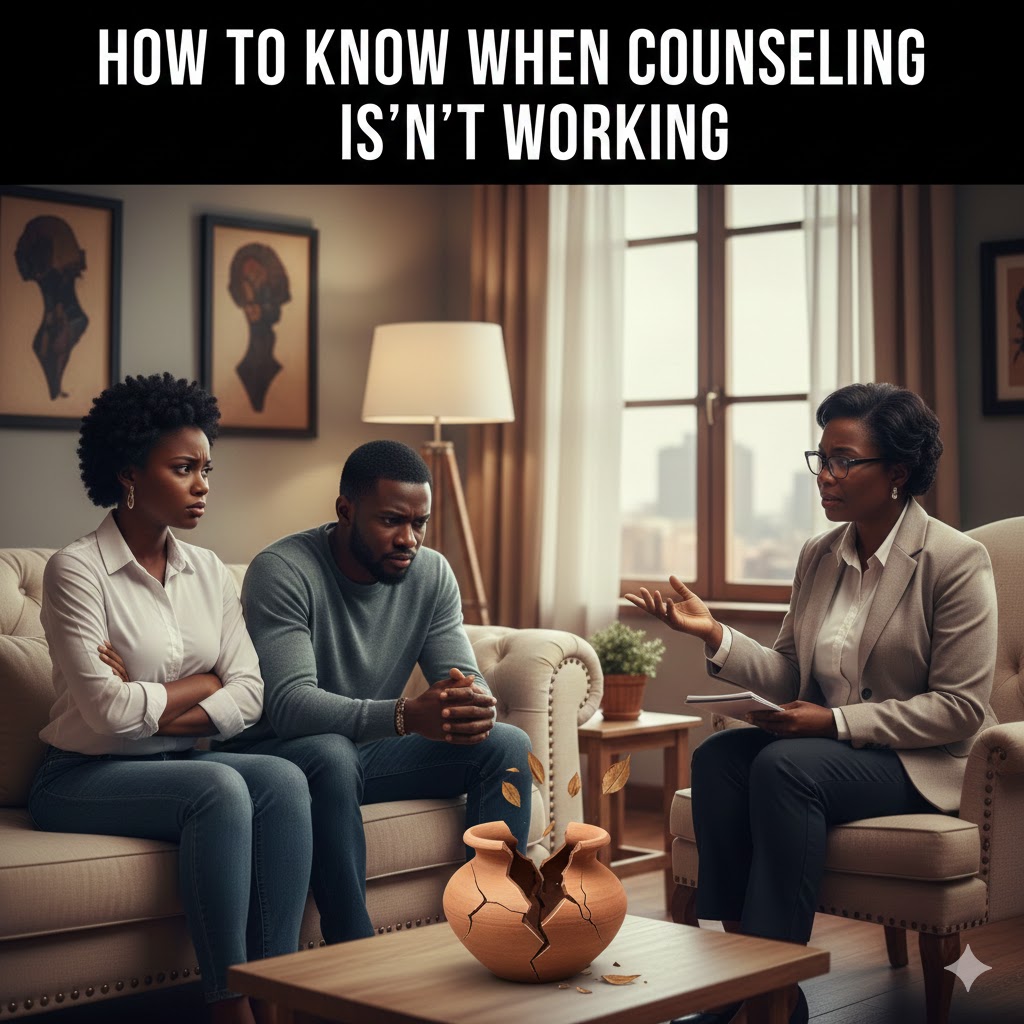
How to Know When Counseling Isn’t Working: A Nigerian Couples’ Guide
Marriage counseling is a valuable tool for Nigerian couples to strengthen communication, rebuild trust, and resolve conflicts. However, therapy is not always immediately effective. Some couples may struggle to see progress, feel frustrated, or wonder if counseling is working at all.
This article explores how to identify when counseling isn’t working, why it might be ineffective, and what steps Nigerian couples can take to improve outcomes. Using real-life Nigerian scenarios, we provide practical insights for couples navigating counseling challenges.
Understanding Counseling Effectiveness
Marriage counseling is a collaborative process between a couple and a trained therapist. Its effectiveness depends on:
-
Mutual commitment – Both partners must participate actively.
-
Qualified counselor – Experience, training, and cultural sensitivity matter.
-
Realistic expectations – Counseling is a process, not a quick fix.
-
Consistent practice – Skills and strategies must be applied between sessions.
-
Open communication – Honesty and vulnerability are critical.
Scenario:
In Lagos, Tobi and Sade attended counseling to resolve constant arguments over finances. With mutual commitment and consistent practice, they gradually improved communication and reduced conflict, showing how counseling can be effective when all factors align.
Signs Counseling Might Not Be Working
While progress takes time, there are warning signs that therapy may not be producing meaningful results.
1. Lack of Progress After Multiple Sessions
-
Persistent issues remain unresolved
-
Arguments continue at the same frequency or intensity
-
No improvement in emotional connection or intimacy
Scenario:
In Abuja, Amaka and Chidi attended five counseling sessions over two months, but their arguments about extended family involvement remained unchanged. This indicated the need to reassess the approach or counselor.
2. Feeling Misunderstood or Unheard
-
One or both partners feel ignored during sessions
-
Counselor fails to facilitate productive dialogue
-
Emotional needs are not addressed
Scenario:
In Port Harcourt, Chika felt her concerns about parenting were dismissed repeatedly, making her question the effectiveness of the sessions.
3. Counselor Bias or Lack of Cultural Sensitivity
-
Counselor takes sides or shows favoritism
-
Lack of understanding of Nigerian family, religious, or societal norms
-
Inappropriate advice that doesn’t align with the couple’s values
Scenario:
In Lagos, Tobi and Sade’s counselor suggested solutions that clashed with their religious beliefs, causing resistance and frustration.
4. Resistance to Participation
-
One partner refuses to engage fully
-
Avoidance of exercises or homework assignments
-
Frequent cancellations or no-shows
Scenario:
In Abuja, Chidi rarely participated in sessions, claiming he didn’t have time. Without full commitment, counseling failed to address underlying issues.
5. Communication Breakdowns Persist
-
Arguments continue after sessions
-
Skills learned are not applied at home
-
Emotional disconnection remains
Scenario:
In Port Harcourt, Chika and Emeka completed counseling exercises inconsistently, resulting in unchanged conflict patterns.
6. Unrealistic Expectations
-
Expecting instant results
-
Belief that counseling will “fix” the partner, not the relationship
-
Frustration when challenges take time to resolve
Scenario:
In Lagos, Sade expected Tobi to immediately adopt new communication habits. When changes didn’t occur overnight, she became discouraged, undermining progress.
7. Unresolved Core Issues
-
Counseling addresses surface-level problems but ignores deeper challenges
-
Avoidance of sensitive topics such as trust, infidelity, or financial control
Scenario:
In Abuja, Amaka and Chidi focused only on minor disagreements while avoiding discussions about past betrayals, limiting the effectiveness of therapy.
8. Emotional Safety Is Not Maintained
-
Partners feel judged, blamed, or criticized
-
Sessions trigger defensiveness rather than collaboration
-
One or both partners leave feeling worse than before
Scenario:
In Port Harcourt, Chika felt blamed for recurring conflicts, making her hesitant to open up in subsequent sessions.
Common Reasons Counseling Fails
Understanding why therapy may not work helps couples take corrective action.
1. Inadequate Counselor Expertise
-
Lack of training or experience
-
Poor understanding of Nigerian cultural and familial dynamics
Scenario:
In Lagos, Tobi and Sade’s first counselor was unfamiliar with local extended family influences, leading to advice that was impractical in their context.
2. Poor Couple Engagement
-
Minimal participation or effort from one or both partners
-
Lack of willingness to implement learned strategies
Scenario:
In Abuja, Chidi rarely practiced communication exercises at home, limiting the benefits of therapy.
3. Unrealistic Expectations
-
Expecting rapid transformation or “perfect” communication
-
Disappointment when counseling requires patience and persistence
Scenario:
In Port Harcourt, Emeka expected immediate conflict resolution, leaving him frustrated when progress was gradual.
4. External Pressures
-
Interference from extended family
-
Financial stress or societal judgment
-
Religious or cultural conflicts
Scenario:
In Lagos, Tobi and Sade faced pressure from relatives to handle issues privately, undermining counseling efforts.
5. Misalignment Between Counselor and Couple
-
Communication styles clash
-
Philosophical differences in approach
-
Lack of empathy or rapport
Scenario:
In Abuja, Amaka felt disconnected from the counselor, who seemed dismissive of her emotional concerns.
Steps to Take When Counseling Isn’t Working
1. Assess the Situation Honestly
-
Identify what’s ineffective: counselor, approach, participation, or expectations
-
Discuss concerns openly with your partner
Scenario:
In Port Harcourt, Chika and Emeka listed persistent problems and discussed whether sessions were addressing core issues.
2. Communicate Concerns with Your Counselor
-
Be honest about your experience
-
Ask for adjustments in approach or techniques
-
Ensure sessions are addressing your needs
Scenario:
In Lagos, Sade informed the counselor that suggested exercises were culturally inappropriate. The counselor adapted strategies to suit their context.
3. Evaluate the Counselor Fit
-
Consider switching counselors if rapport or expertise is lacking
-
Look for professionals familiar with Nigerian culture, religion, and family dynamics
Scenario:
In Abuja, Amaka and Chidi switched to a culturally aware counselor who understood extended family expectations, improving session effectiveness.
4. Reassess Commitment Levels
-
Ensure both partners are fully engaged
-
Commit to practicing exercises and attending sessions consistently
Scenario:
In Port Harcourt, Emeka agreed to actively participate in sessions, practicing techniques at home, which led to gradual improvements.
5. Set Realistic Goals and Expectations
-
Understand that counseling is a process
-
Track incremental progress rather than expecting immediate results
Scenario:
In Lagos, Tobi and Sade set achievable goals, such as reducing weekly arguments and increasing quality time, creating measurable outcomes.
6. Explore Complementary Approaches
-
Consider individual therapy alongside couples counseling
-
Use workshops, seminars, or self-help tools as supplements
Scenario:
In Abuja, Chidi attended individual therapy to address personal stress while couples sessions focused on joint communication.
Red Flags That Counseling May Be Ineffective
-
Sessions feel repetitive without progress
-
Partners leave feeling more frustrated than before
-
Core issues remain unaddressed
-
Emotional safety is compromised
-
One partner consistently disengages
-
No tangible improvement in communication, trust, or intimacy
Scenario:
In Port Harcourt, Chika realized counseling was ineffective when arguments remained unchanged after multiple sessions, prompting a reassessment of approach and counselor.
Tips for Maximizing Counseling Success
-
Choose a Qualified Counselor – Look for experience and cultural sensitivity.
-
Commit Fully – Attend sessions consistently and practice exercises.
-
Be Honest – Share concerns and emotions openly.
-
Maintain Realistic Expectations – Recognize that progress takes time.
-
Evaluate Progress Periodically – Track improvements in communication and emotional connection.
-
Seek a Second Opinion if Needed – Switching counselors or approaches can improve outcomes.
Scenario:
In Lagos, Tobi and Sade monitored progress after every session and adjusted their strategies, ensuring counseling remained effective.
Real-Life Nigerian Scenario: Turning Counseling Around
Case Study: Amaka and Chidi, Abuja
-
Challenge: Counseling initially failed to resolve arguments about finances and extended family pressures.
-
Action: They communicated concerns with the counselor, switched to a culturally sensitive therapist, and committed fully to exercises.
-
Outcome: Gradual improvement in communication, reduced conflict, and strengthened emotional intimacy, illustrating that recognizing ineffective counseling and taking corrective action can restore progress.
Conclusion: Recognizing and Addressing Ineffective Counseling
Counseling is a valuable tool, but not all therapy works for every couple immediately. Nigerian couples must recognize warning signs of ineffective counseling, communicate concerns, reassess goals, and seek adjustments when necessary.
Key Takeaways:
-
Counseling effectiveness depends on engagement, counselor fit, realistic expectations, and consistent practice.
-
Signs of ineffectiveness include lack of progress, feeling unheard, ongoing conflict, or unsafe emotional space.
-
Honest communication with your counselor and partner is essential for improving outcomes.
-
Switching counselors or approaches, setting achievable goals, and addressing commitment issues can restore effectiveness.
Final Thought: For Nigerian couples, recognizing when counseling isn’t working is not a failure—it’s an opportunity to adjust strategies, improve engagement, and ultimately strengthen the relationship. Counseling remains a proactive tool for love, growth, and resilience when approached thoughtfully.









.jpg)
Sign in to comment