 Nurturing Marriages, Enriching Families!
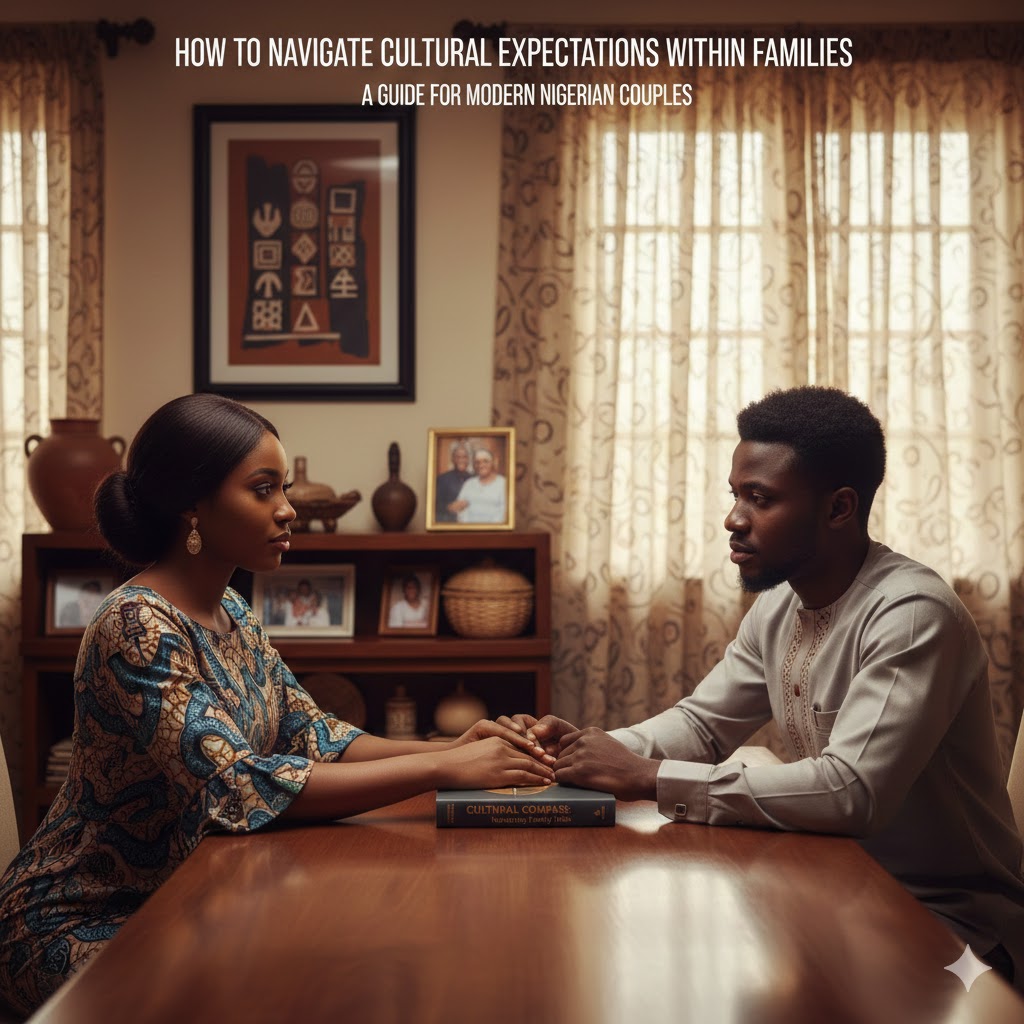
How to Navigate Cultural Expectations Within Families: Building Peace, Identity, and Respect in Nigerian Homes
Cultural expectations are deeply woven into family life in Nigeria. They shape how we speak, marry, spend money, raise children, practice religion, and relate to elders. Culture gives families identity and continuity, but it can also become a heavy burden—especially when traditions clash with personal values, modern realities, or changing generations.
Many family conflicts in Nigeria are not caused by bad intentions but by unspoken cultural expectations. When these expectations are not understood, questioned, or negotiated, they can lead to guilt, resentment, silence, and broken relationships.
This in-depth guide explores how to navigate cultural expectations within families, using real-life Nigerian scenarios. It offers practical, respectful strategies for balancing tradition with personal growth—without losing family harmony or self-identity.
Understanding Cultural Expectations in Nigerian Families
Culture in Nigeria is not just tradition; it is a system of beliefs about how life should be lived. It influences family roles, hierarchy, gender norms, marriage timelines, financial obligations, and communication styles.
In most Nigerian cultures:
-
Elders are respected and rarely questioned
-
Family decisions are communal, not individual
-
Marriage and childbirth are highly prioritized
-
Financial success carries extended responsibilities
-
Silence is often preferred over confrontation
While these values promote unity and respect, they can also suppress individuality and emotional honesty.
Why Cultural Expectations Cause Family Conflict
Cultural expectations become problematic when they are:
-
Assumed rather than discussed
-
Enforced without flexibility
-
Used to control rather than guide
-
Outdated in modern economic realities
-
Applied without considering mental health
Conflict arises when family members feel trapped between who they are and who they are expected to be.
Real-Life Nigerian Scenario: The Marriage Timeline Pressure
Amaka was 32, financially independent, and fulfilled in her career. Her parents, however, believed she was “late” for marriage. Every family gathering became a reminder—prayers, jokes, comparisons, and introductions to potential suitors.
Though her parents meant well, Amaka felt reduced to her marital status. Eventually, she began avoiding home visits, creating emotional distance.
This scenario is common across Nigeria, where cultural timelines for marriage often clash with personal readiness.
Generational Gaps and Changing Realities
One major source of tension is the generational gap between parents raised in a different Nigeria and children navigating today’s realities.
Parents grew up in:
-
More stable job markets
-
Lower living costs
-
Stronger communal support systems
Adult children face:
-
High unemployment
-
Inflation and housing challenges
-
Global exposure and diverse worldviews
-
Increased awareness of mental health
When parents apply old expectations to new realities, conflict is inevitable.
Cultural Expectations Around Obedience and Authority
In many Nigerian families, obedience is seen as love, and questioning elders is seen as disrespect. This creates a dynamic where:
-
Parents expect compliance
-
Adult children suppress opinions
-
Disagreement becomes rebellion
This dynamic makes healthy dialogue difficult, especially when adult children want to make independent decisions about career, marriage, or relocation.
The Emotional Cost of Silent Compliance
Many Nigerians comply outwardly but suffer inwardly.
Silent compliance often leads to:
-
Emotional burnout
-
Resentment toward parents
-
Identity confusion
-
Double lives
-
Difficulty setting boundaries in adulthood
Culture should guide, not suffocate.
Gender Roles and Cultural Expectations
Cultural expectations often affect men and women differently.
Women may face pressure to:
-
Marry early
-
Endure unhappy marriages
-
Prioritize motherhood over personal goals
-
Accept unequal domestic responsibilities
Men may face pressure to:
-
Be sole providers
-
Hide emotional struggles
-
Support extended family endlessly
-
Avoid vulnerability
These expectations create stress, shame, and unspoken conflict.
Real-Life Nigerian Scenario: Financial Expectations on the “Successful Child”
Kunle became financially successful in Lagos. His extended family assumed his income belonged to everyone. Requests came daily—school fees, rent, hospital bills, business capital.
When Kunle tried to set limits, he was accused of pride and forgetting his roots. His marriage also began to suffer under the pressure.
Cultural expectations around financial success can quietly destroy families if not managed wisely.
Marriage, Tribe, and Religious Expectations
Marriage often becomes the biggest cultural battlefield.
Parents may insist on:
-
Same tribe or religion
-
Family background approval
-
Traditional marriage timelines
-
Interference in marital decisions
Adult children may feel torn between love and loyalty.
When culture overrides emotional compatibility, long-term happiness is threatened.
Navigating Cultural Expectations Without Disrespect
The goal is not to reject culture, but to reinterpret it wisely.
Respect does not require silence.
Culture does not forbid conversation.
Tradition can evolve.
The Power of Self-Awareness
Before addressing family expectations, individuals must understand themselves.
Ask:
-
Which expectations align with my values?
-
Which expectations cause harm?
-
What am I willing to compromise on?
-
What are my non-negotiables?
Clarity reduces guilt and strengthens communication.
Communicating Across Cultural Lines
Effective communication in Nigerian families requires sensitivity.
Strategies include:
-
Choosing calm moments for discussion
-
Using respectful language and tone
-
Framing decisions as thoughtful, not rebellious
-
Acknowledging parents’ intentions
-
Avoiding public confrontation
Conversations should aim for understanding, not victory.
Real-Life Nigerian Scenario: Career Choice Conflict
Sadiq wanted to pursue creative writing, but his parents insisted on engineering. They believed stability mattered more than passion.
Instead of arguing, Sadiq explained his plan, income potential, and long-term vision. Though hesitant, his parents gradually accepted his choice.
Preparation and calm communication made the difference.
Setting Boundaries in a Cultural Context
Boundaries are essential for mental health, but must be set carefully in Nigerian families.
Healthy boundaries include:
-
Limiting intrusive questions
-
Protecting marital decisions
-
Managing financial support
-
Creating emotional space when needed
Boundaries should be firm but respectful, consistent but kind.
Dealing With Guilt and Emotional Manipulation
Cultural expectations are sometimes enforced through guilt:
-
“After all we did for you”
-
“Is this how you repay us?”
-
“People will laugh at us”
Recognizing guilt-tripping helps individuals respond thoughtfully rather than react emotionally.
When Culture Conflicts With Mental Health
Many Nigerians suffer silently because mental health struggles are dismissed as weakness or spiritual failure.
Navigating culture means knowing when to prioritize:
-
Therapy
-
Rest
-
Emotional support
-
Personal healing
Mental health is not rebellion—it is responsibility.
The Role of Faith in Navigating Culture
Faith plays a central role in Nigerian families. It can either:
-
Promote compassion and understanding
-
Or be used to enforce control and fear
Healthy faith encourages wisdom, love, and balance—not oppression.
Involving Neutral Mediators
In difficult cases, trusted mediators can help:
-
Elders with emotional intelligence
-
Religious leaders with counseling training
-
Professional family counselors
Neutral voices often reduce defensiveness.
When Distance Becomes Necessary
Sometimes, temporary distance is required to heal.
Distance can:
-
Restore emotional balance
-
Prevent constant conflict
-
Create clarity
-
Protect mental health
Distance does not mean abandonment.
Helping Parents Adapt to Change
Parents also struggle with change. Adult children can help by:
-
Reassuring parents of love and respect
-
Sharing life updates
-
Involving them appropriately
-
Appreciating their sacrifices
Change feels safer when parents feel valued.
Breaking Harmful Cultural Cycles
Navigating cultural expectations today shapes future generations.
Healthy families:
-
Teach respect with dialogue
-
Encourage independence with responsibility
-
Preserve culture with compassion
You can honor culture without repeating harm.
Building a New Family Culture
Every family evolves. Healthy families intentionally build cultures that include:
-
Open communication
-
Emotional safety
-
Mutual respect
-
Flexibility
-
Shared values
Culture should serve the people—not silence them.
Conclusion
Navigating cultural expectations within Nigerian families is one of the most delicate but necessary journeys of adulthood. Culture gives us roots, but growth requires room to breathe.
By practicing self-awareness, respectful communication, healthy boundaries, and empathy, families can honor tradition while embracing change.
The strongest families are not those who cling rigidly to culture—but those who allow it to grow with love, wisdom, and humanity.






.jpg)


Sign in to comment