 Nurturing Marriages, Enriching Families!
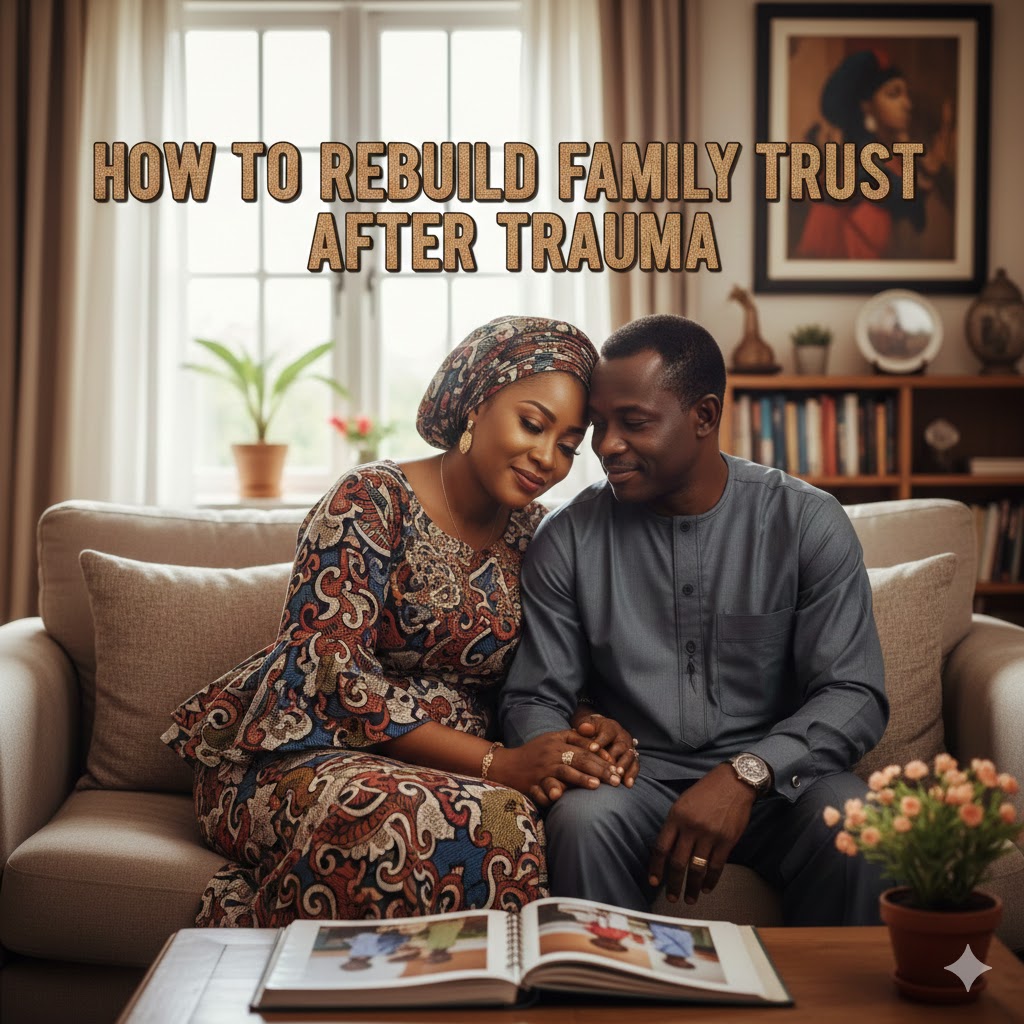
How to Rebuild Family Trust After Trauma: A Nigerian Family Guide
Family trust is the foundation of any healthy household. When trust is broken—whether through betrayal, miscommunication, financial crises, abuse, or other forms of trauma—the entire family structure can be shaken. Rebuilding trust is challenging, but with deliberate effort, patience, and consistent strategies, families can restore bonds, create emotional security, and foster resilience.
In Nigeria, families face unique stressors, including extended family obligations, cultural expectations, financial pressures, and social stigma associated with trauma. These factors make rebuilding family trust both urgent and delicate. This article explores practical strategies for restoring trust, provides real-life Nigerian scenarios, and offers actionable guidance for parents, spouses, and caregivers.
Understanding Family Trauma
Family trauma occurs when an event or series of events disrupts the emotional safety and stability of the household. Examples include:
-
Infidelity or marital betrayal
-
Domestic violence or abuse
-
Financial dishonesty or mismanagement
-
Loss of a family member
-
Substance abuse or addiction
-
Severe illness or prolonged hospitalization
-
Divorce or separation
Trauma affects every family member differently. Children may develop anxiety, fear, or behavioral challenges, while adults may experience resentment, withdrawal, or depression. Restoring trust requires addressing the trauma at both individual and collective levels.
Real-Life Scenario: In Lagos, a father suffered a stroke that left him hospitalized for months. The sudden inability to provide financially and participate in family life led to tension, fear, and mistrust between him, his spouse, and children. With counseling and structured family conversations, trust was gradually restored.
The Importance of Rebuilding Trust
Rebuilding trust is essential for:
-
Emotional Safety: Family members feel secure expressing feelings and needs.
-
Healthy Communication: Open, honest dialogue replaces suspicion and secrecy.
-
Conflict Resolution: Families can address disagreements constructively.
-
Strengthened Bonds: Trust fosters closeness, empathy, and mutual respect.
-
Resilience: Families can face future challenges together without fear or doubt.
Without trust, families may experience chronic conflict, emotional distance, and dysfunction.
Example: In Enugu, a mother discovered her spouse had hidden debts, causing arguments and tension. By addressing the issue transparently and agreeing on financial plans, the family rebuilt trust and created a more collaborative household.
Step 1: Acknowledge the Trauma
Trust cannot be rebuilt without acknowledging the trauma that caused the breach.
-
Avoid denial or minimizing the event.
-
Recognize each family member’s feelings and perspectives.
-
Validate emotions such as anger, fear, sadness, and betrayal.
Real-Life Scenario: In Abuja, a teenager confided about being bullied at school, which led to family arguments about supervision. Parents acknowledged the child’s feelings without judgment, fostering trust and opening the door for problem-solving.
Step 2: Open Lines of Communication
Honest, consistent communication is the cornerstone of trust restoration:
-
Hold family meetings in a safe, neutral environment.
-
Encourage each member to speak without interruption or judgment.
-
Listen actively and reflect on what is heard.
-
Avoid assigning blame; focus on understanding and healing.
Example: A family in Lagos created weekly “talk time,” where children and parents discussed challenges openly. Over months, this strengthened trust and reduced secrecy.
Step 3: Take Responsibility and Apologize
-
Acknowledge actions that contributed to broken trust.
-
Offer sincere, specific apologies.
-
Avoid conditional apologies or blaming others.
-
Commit to making amends through consistent behavior.
Real-Life Scenario: In Ibadan, a father admitted to hiding financial difficulties from his spouse. By apologizing and creating a transparent budgeting system, he rebuilt credibility and trust over time.
Step 4: Set Clear Boundaries
Boundaries create safety and predictability, which are essential for trust:
-
Define acceptable behavior and consequences clearly.
-
Respect privacy and personal space.
-
Establish household rules collaboratively.
-
Ensure boundaries are enforced consistently and fairly.
Example: In Kano, after a conflict over screen time and chores, parents and children agreed on specific rules. Both sides respected the boundaries, reducing arguments and improving trust.
Step 5: Rebuild Through Small Steps
Rebuilding trust is gradual and requires patience:
-
Start with small commitments and follow through reliably.
-
Celebrate minor successes to reinforce positive behavior.
-
Avoid expecting immediate forgiveness or restoration of trust.
Real-Life Scenario: In Enugu, after a marital infidelity incident, the couple began by rebuilding daily trust—communicating schedules, sharing responsibilities, and attending therapy. Gradually, the emotional distance lessened.
Step 6: Foster Accountability
-
Hold family members accountable for their actions.
-
Encourage transparency in decision-making and problem-solving.
-
Track commitments and follow-ups consistently.
Example: A family in Lagos created a shared calendar for chores, appointments, and responsibilities. Accountability through visible tracking helped restore confidence in each other’s reliability.
Step 7: Encourage Empathy and Understanding
-
Teach family members to consider each other’s perspectives.
-
Promote emotional literacy by naming and discussing feelings.
-
Encourage acts of kindness and support within the household.
Real-Life Scenario: In Abuja, siblings who had frequent arguments were encouraged to express how conflicts affected them emotionally. Understanding each other’s feelings reduced hostility and promoted cooperation.
Step 8: Professional Support
In many Nigerian families, cultural stigma may prevent seeking counseling. However, professional guidance can accelerate healing:
-
Family therapists or psychologists provide neutral mediation.
-
Social workers and support groups can guide trauma-informed strategies.
-
Online counseling platforms offer accessible options for urban and rural areas.
Example: A Lagos family attending weekly therapy sessions after domestic conflict reported improved communication, reduced anger, and restored trust over six months.
Step 9: Build Consistent Routines
Predictable routines create security and reliability:
-
Daily family meals
-
Study or homework time
-
Weekend bonding activities
-
Religious or cultural practices
Consistency signals reliability, which strengthens trust.
Real-Life Scenario: In Ibadan, a family reintroduced Sunday family meals after a period of tension. This consistent, shared time became a cornerstone for emotional reconnection.
Step 10: Reinforce Positive Behavior
-
Recognize honesty, cooperation, and supportive actions.
-
Use praise, acknowledgment, and encouragement to reinforce trust-building behaviors.
-
Avoid punishing attempts to communicate or rebuild relationships.
Example: A teenager in Lagos admitted to a mistake regarding school fees allocation. Parents praised the honesty and guided correction, reinforcing trustworthiness and openness.
Step 11: Manage External Influences
-
Extended family, friends, and community can influence family dynamics positively or negatively.
-
Communicate openly with influential relatives to maintain a supportive environment.
-
Establish boundaries to prevent interference in trust-rebuilding efforts.
Real-Life Scenario: In Enugu, a grandmother frequently undermined a father’s authority. Parents addressed the issue respectfully, explaining decisions and requesting support, which reduced conflicting messages for children.
Step 12: Practice Forgiveness and Letting Go
-
Healing requires releasing resentment gradually.
-
Forgiveness does not mean forgetting or condoning harm.
-
Focus on rebuilding future trust rather than dwelling on past mistakes.
Example: After a financial deception incident, a mother in Lagos forgave her spouse but continued to monitor household finances until full transparency and consistency were established.
Step 13: Promote Family Bonding Activities
-
Shared experiences strengthen connections and rebuild trust:
-
Weekend outings or cultural festivals
-
Sports and games
-
Volunteer or community projects
-
-
Focus on collaboration and teamwork to reinforce interdependence.
Real-Life Scenario: In Abuja, a family participating in community clean-up activities together observed increased cooperation and reduced interpersonal tension at home.
Step 14: Teach Conflict Resolution Skills
-
Equip children and adults with tools to handle disagreements constructively.
-
Encourage dialogue, negotiation, and compromise.
-
Avoid escalating conflicts or reacting impulsively.
Example: In Lagos, parents taught children to use “I feel” statements when arguing with siblings. This skill reduced aggressive responses and increased understanding.
Step 15: Monitor Progress and Adapt
-
Periodically assess family trust and emotional health.
-
Adjust strategies as children grow and circumstances change.
-
Celebrate milestones and progress, reinforcing positive patterns.
Real-Life Scenario: A blended family in Kano tracked trust-building progress monthly, celebrating achievements and addressing persistent challenges proactively.
Benefits of Rebuilding Family Trust
-
Improved Emotional Safety: Family members feel secure expressing feelings.
-
Stronger Relationships: Bonds among spouses, siblings, and children are restored.
-
Reduced Conflict: Disagreements are addressed constructively.
-
Enhanced Cooperation: Daily routines, responsibilities, and decision-making become smoother.
-
Increased Resilience: Families can face future crises together.
-
Healthy Child Development: Children learn trust, empathy, and problem-solving skills.
Challenges in the Nigerian Context
-
Cultural Stigma Around Counseling: Families may fear judgment for seeking help.
-
Extended Family Interference: Relatives may unintentionally hinder trust rebuilding.
-
Economic Pressures: Financial stress can exacerbate mistrust.
-
Communication Barriers: Generational gaps and differing perspectives can impede understanding.
Solutions: Awareness campaigns, family workshops, counseling, transparent financial planning, and structured communication strategies.
Conclusion
Rebuilding family trust after trauma in Nigeria requires acknowledgment, communication, accountability, empathy, consistency, and patience. Families face unique cultural, economic, and social challenges, but with deliberate effort, trust can be restored.
By creating safe spaces for dialogue, setting clear boundaries, fostering empathy, and incorporating professional guidance when needed, Nigerian families can navigate trauma, strengthen bonds, and build resilient households. Trust is not restored overnight, but consistent actions, patience, and commitment can transform a fractured family into a cohesive, loving, and supportive unit.
Investing in trust restoration is not only about healing past wounds—it is about creating a stable foundation for the future, ensuring emotional security, and nurturing healthy relationships for generations to come.










.jpg)


Sign in to comment