 Nurturing Marriages, Enriching Families!
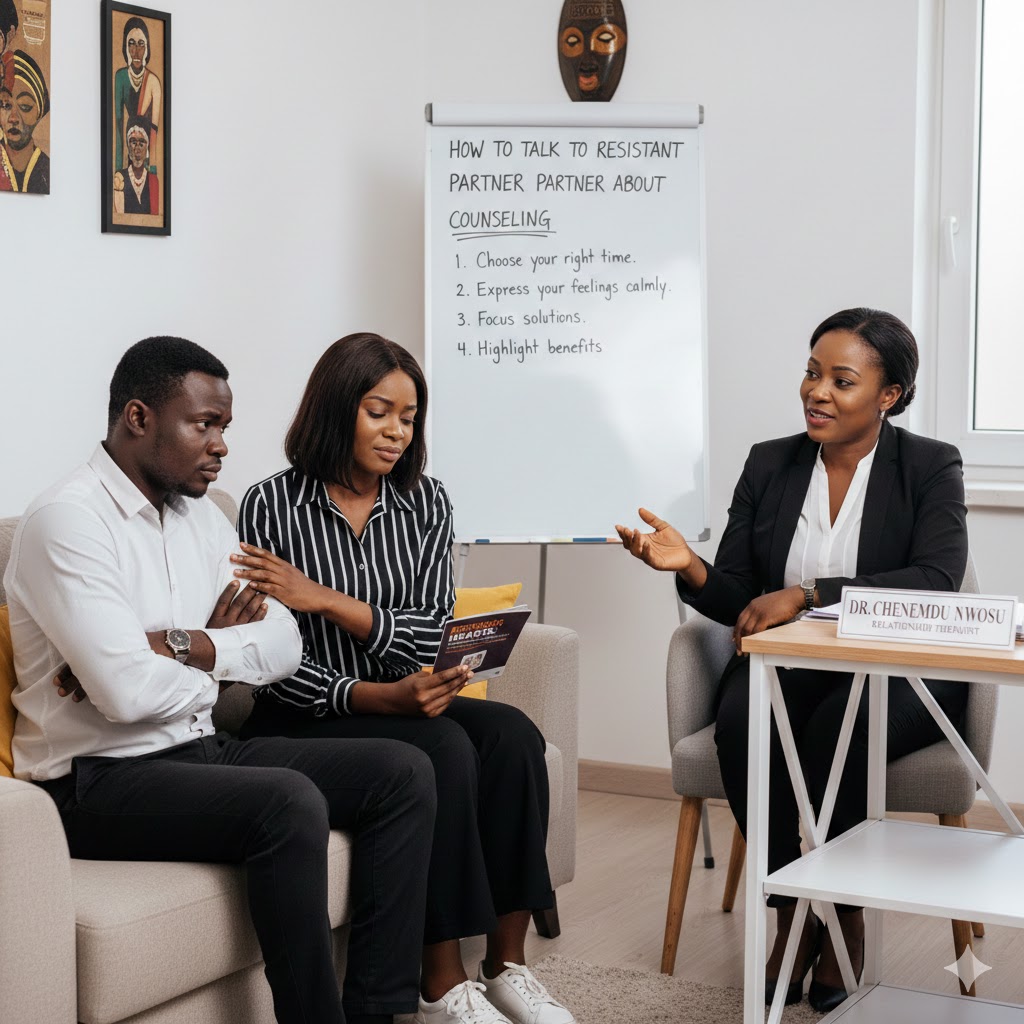
How to Talk to a Resistant Partner About Counseling: A Nigerian Couples’ Guide
Marriage counseling is a powerful tool for improving communication, resolving conflict, and rebuilding emotional intimacy. However, convincing a partner to attend therapy can be challenging, especially in Nigeria, where cultural norms, societal pressure, and misconceptions about counseling influence perceptions.
This article explores strategies for approaching a resistant partner about counseling, highlighting real-life Nigerian examples, practical techniques, and culturally sensitive approaches to foster cooperation and understanding.
Understanding Resistance to Counseling
Resistance to counseling is common and can take many forms, including:
-
Refusal to attend sessions
-
Minimizing relationship problems
-
Belief that counseling is unnecessary or a sign of failure
-
Fear of judgment or vulnerability
-
Concerns about confidentiality or trust
Scenario:
In Lagos, Tobi refused to attend therapy, believing that discussing relationship issues outside the home was a sign of weakness. His partner, Sade, struggled to communicate her desire for professional help without causing conflict.
Key Insight: Resistance is rarely about unwillingness to improve the relationship—it often stems from fear, misconceptions, or past experiences.
Common Reasons Nigerian Partners Resist Counseling
1. Cultural Beliefs and Norms
-
Counseling may be perceived as unnecessary or foreign
-
Preference for resolving issues within family or religious circles
-
Concern about public perception and societal judgment
Scenario:
In Abuja, Amaka’s husband resisted therapy, stating that seeking help was only for “broken marriages” and that private family matters should remain within the home.
2. Fear of Vulnerability
-
Emotional disclosure can feel threatening
-
Fear of being judged, blamed, or criticized
-
Anxiety about confronting difficult issues
Scenario:
In Port Harcourt, Chika’s husband avoided counseling because he feared exposing weaknesses and past insecurities, worrying it might affect his authority or image.
3. Misconceptions About Counseling
-
Belief that therapy is only for couples on the brink of divorce
-
Thinking that counseling forces one partner to take sides
-
Misunderstanding that counseling is a quick fix
Scenario:
In Lagos, Tobi believed that counseling would force him to accept blame for recurring arguments, making him defensive and unwilling to attend.
4. Financial Concerns
-
Therapy costs can be perceived as unnecessary expenses
-
Fear that time spent in sessions is unproductive
Scenario:
In Abuja, Chidi resisted counseling, worrying that the fees and time investment would outweigh benefits, given family responsibilities and work commitments.
5. Previous Negative Experiences
-
Past failed therapy attempts can create skepticism
-
Observing friends or relatives’ unsuccessful counseling experiences
Scenario:
In Port Harcourt, Emeka’s reluctance stemmed from witnessing a friend attend counseling without seeing results, making him doubtful about its effectiveness.
Preparing Yourself Before the Conversation
1. Reflect on Your Own Goals
-
Identify what you want to achieve through counseling
-
Understand your personal motivations versus your partner’s
-
Clarify what you can control and what requires cooperation
Scenario:
In Lagos, Sade reflected on her goal of improving communication with Tobi before discussing therapy, helping her approach the conversation calmly and purposefully.
2. Educate Yourself About Counseling
-
Understand the process, benefits, and expectations
-
Learn common misconceptions and how to address them
-
Be ready to provide examples of therapy successes
Scenario:
In Abuja, Amaka researched Nigerian marriage counseling centers and shared case studies where therapy improved communication, easing her husband’s concerns.
3. Practice Empathy and Patience
-
Approach the conversation with understanding, not judgment
-
Recognize your partner’s fears or concerns
-
Prepare to listen actively, not just argue your point
Scenario:
In Port Harcourt, Chika acknowledged her husband’s fear of vulnerability before suggesting counseling, making him more receptive.
4. Choose the Right Time and Setting
-
Avoid discussing counseling during arguments or stressful periods
-
Choose a calm, private, and relaxed environment
-
Allow for uninterrupted conversation
Scenario:
In Lagos, Sade chose a quiet Sunday evening after dinner to discuss therapy, ensuring Tobi was relaxed and open to dialogue.
Strategies to Approach a Resistant Partner
1. Normalize Counseling
-
Emphasize that counseling is a tool for growth, not a sign of failure
-
Compare it to preventive measures like health check-ups
Scenario:
In Abuja, Amaka explained to Chidi that counseling was like visiting a doctor to maintain emotional health, reducing the stigma.
2. Focus on Positive Outcomes
-
Highlight benefits for the relationship, children, and overall wellbeing
-
Frame counseling as a collaborative effort, not punishment or blame
Scenario:
In Port Harcourt, Chika emphasized that therapy could improve communication, reduce conflicts, and enhance their parenting, making it more appealing.
3. Use “I” Statements
-
Communicate your needs without blaming or pressuring
-
Examples:
-
“I feel overwhelmed when we argue and want help learning to communicate better.”
-
“I want us to grow closer and stronger together, and counseling could help.”
-
Scenario:
In Lagos, Sade told Tobi, “I feel stressed when we fight repeatedly. I want us to work together on this, and counseling can help us understand each other.”
4. Suggest a Trial Session
-
Offer to attend a single session as a trial
-
Emphasize that it’s low-pressure and exploratory
Scenario:
In Abuja, Amaka invited Chidi to attend one counseling session to “see what it’s like” before making a commitment, lowering resistance.
5. Address Misconceptions Directly
-
Explain confidentiality policies
-
Clarify that counseling does not take sides
-
Highlight that it’s a collaborative process
Scenario:
In Port Harcourt, Chika reassured Emeka that the counselor’s role was to guide both partners equally and help them develop skills together.
6. Highlight Cultural Sensitivity
-
Emphasize that Nigerian counselors understand cultural and family dynamics
-
Ensure the counselor respects religious and societal values
Scenario:
In Lagos, Sade told Tobi that the therapist understood Nigerian family structures and societal expectations, easing his concern about cultural misalignment.
7. Show Willingness to Participate Actively
-
Demonstrate your own commitment to counseling
-
Express readiness to work on personal behaviors and relationship dynamics
Scenario:
In Abuja, Amaka shared that she was ready to implement strategies from counseling, encouraging Chidi to join as a team effort.
Handling Objections and Pushback
Common Objections
| Objection | Strategy to Respond | Nigerian Scenario |
|---|---|---|
| “We don’t need counseling; our marriage is fine.” | Frame counseling as preventive maintenance, like a check-up | Amaka compared counseling to regular health checks to reduce Chidi’s resistance |
| “Counseling is a waste of money.” | Highlight long-term benefits: improved communication, reduced conflict | Sade explained how therapy could prevent expensive conflicts and emotional stress |
| “I’ll be blamed for problems.” | Emphasize collaborative, non-judgmental approach | Chika reassured Emeka that the counselor supports both partners equally |
| “I don’t want to talk about private matters.” | Stress confidentiality and safe space | Tobi learned that sessions are private, fostering openness |
| “I’m afraid it won’t work.” | Suggest trial sessions and gradual participation | Amaka invited Chidi to one trial session to evaluate the process firsthand |
Practical Tips for Talking About Counseling
-
Stay Calm and Non-Confrontational – Avoid arguments or ultimatums.
-
Listen Actively – Understand your partner’s fears and concerns.
-
Highlight Mutual Goals – Focus on improving the relationship together.
-
Be Patient – Resistance may reduce over time; repeated gentle conversations work better than pressure.
-
Use Examples – Share success stories of other Nigerian couples.
-
Focus on the Future – Emphasize growth, connection, and long-term benefits.
Scenario:
In Lagos, Sade used calm, empathetic language, focused on shared goals, and provided real-life examples. Over time, Tobi agreed to attend the first session voluntarily.
After Your Partner Agrees
-
Choose the Right Counselor – Ensure they are culturally sensitive and experienced.
-
Set Goals Together – Clarify what you hope to achieve.
-
Commit to the Process – Attend sessions consistently.
-
Practice Skills Between Sessions – Apply communication techniques and exercises daily.
-
Celebrate Progress – Recognize improvements to reinforce motivation.
Scenario:
In Abuja, Amaka and Chidi attended a counseling session, set clear communication goals, and practiced weekly exercises. They noticed fewer arguments and better understanding within two months.
Real-Life Nigerian Scenario: A Success Story
Case Study: Tobi and Sade in Lagos
-
Challenge: Tobi resisted counseling, believing it was unnecessary and private matters shouldn’t be discussed externally.
-
Approach: Sade used empathy, shared her feelings using “I” statements, emphasized relationship growth, and suggested a trial session.
-
Outcome: Tobi attended one trial session, appreciated the safe environment, and agreed to continued counseling. Over six months, they improved communication, reduced conflicts, and strengthened emotional intimacy.
Key Lesson: Patience, empathy, and framing counseling as a collaborative tool helped overcome resistance.
Conclusion: Approaching Counseling with Care and Strategy
Talking to a resistant partner about counseling requires empathy, patience, and strategy. In Nigeria, cultural, societal, and personal factors influence receptiveness, making approach and timing critical.
Key Takeaways:
-
Resistance is often rooted in fear, misconceptions, or past experiences.
-
Preparation, empathy, and knowledge of counseling help reduce anxiety.
-
Frame therapy as a tool for mutual growth, not blame or criticism.
-
Use trial sessions, examples, and culturally sensitive counselors to encourage participation.
-
Persistence, patience, and consistent communication often yield positive results.
Final Thought: For Nigerian couples, navigating resistance thoughtfully can turn initial reluctance into willingness, allowing counseling to strengthen relationships, rebuild trust, and enhance emotional connection.






.jpg)

Sign in to comment