 Nurturing Marriages, Enriching Families!
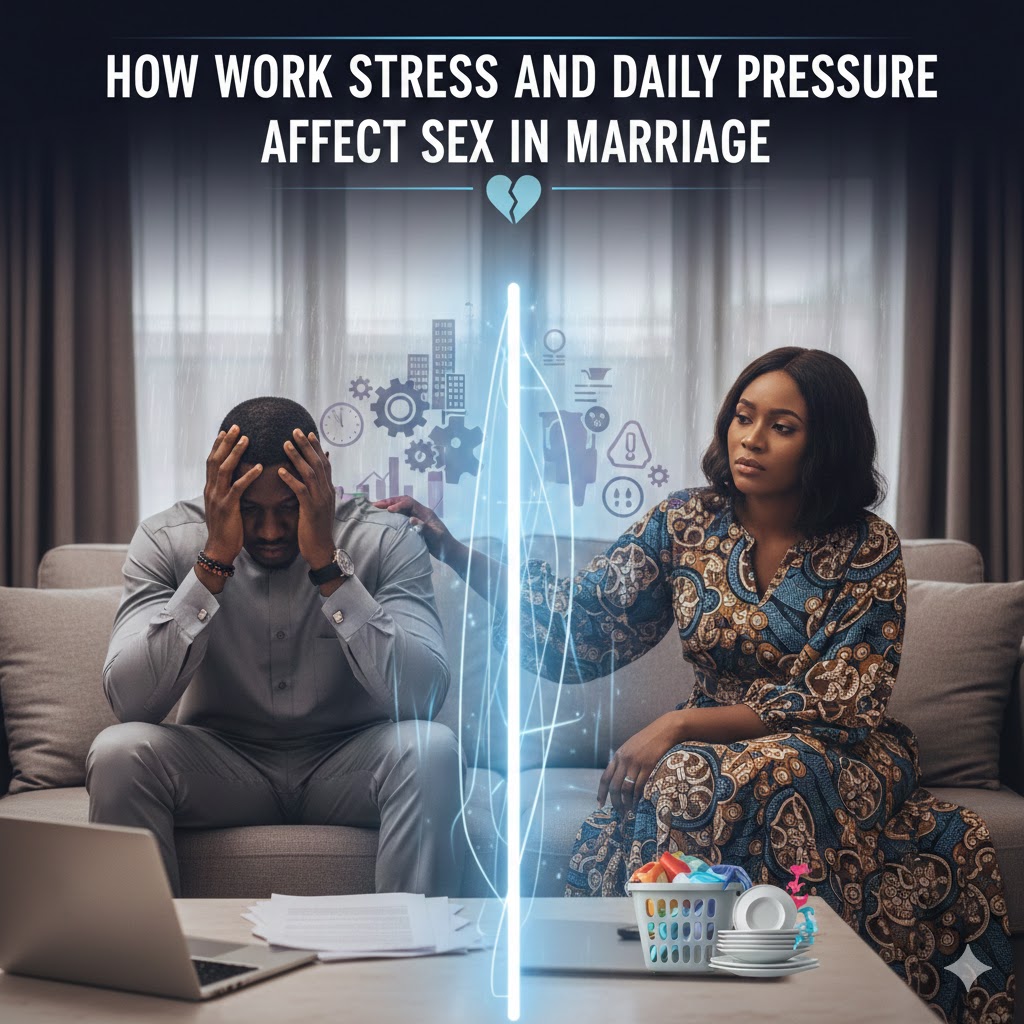
How Work Stress and Daily Pressure Affect Sex in Marriage (Nigerian Realities You Can’t Ignore)
In Nigeria today, marriage is no longer strained only by infidelity or incompatibility. One of the biggest silent enemies of marital intimacy is work stress and daily pressure. Many couples love each other deeply, yet their sex life slowly fades—not because attraction is gone, but because exhaustion has taken over.
From Lagos traffic to Abuja deadlines, from unpaid salaries to side hustles, from NEPA outages to school fees, Nigerian couples are under constant pressure. Sadly, the bedroom often becomes the first casualty.
This article explores how work stress and everyday pressures affect sex in marriage, using real-life Nigerian scenarios, cultural insights, and practical solutions that couples can apply immediately.
1. Understanding Work Stress in the Nigerian Context
Work stress in Nigeria is unique. It is often intensified by systemic and environmental challenges beyond the job itself.
Common Nigerian sources of work stress:
-
Long commuting hours due to traffic
-
Job insecurity and delayed salaries
-
Poor work-life balance
-
Unrealistic targets and toxic bosses
-
Multiple jobs or side hustles
-
Economic instability and inflation
Unlike some countries where stress ends at the office, Nigerian stress follows people home.
Reality:
When stress dominates the mind, sexual desire rarely survives.
2. Daily Pressure Doesn’t End After Work
Many Nigerian couples underestimate how non-work pressures affect intimacy.
Daily pressures include:
-
Financial responsibilities
-
Extended family obligations
-
Parenting stress
-
House chores imbalance
-
Health concerns
-
Religious and societal expectations
Sex doesn’t exist in isolation—it reflects the emotional climate of the marriage.
3. Exhaustion Is the Number One Bedroom Killer
The most common phrase Nigerian couples use is:
“I’m too tired.”
Why exhaustion kills sex:
-
Low physical energy
-
Reduced mental focus
-
Irritability and impatience
-
Hormonal imbalance
Real-life scenario:
A banker in Victoria Island leaves home by 5 a.m. and returns by 10 p.m. His wife, who manages the home and children, is equally exhausted. Sex becomes an afterthought.
4. Stress Reduces Sexual Desire (Libido)
Stress increases cortisol—the stress hormone—which directly suppresses libido.
Signs stress is affecting desire:
-
Reduced interest in sex
-
Avoidance of physical touch
-
Emotional withdrawal
-
Erectile difficulties
-
Vaginal dryness
Many couples wrongly assume their partner no longer finds them attractive.
5. Financial Pressure Creates Bedroom Tension
Money issues are one of the biggest causes of marital conflict in Nigeria.
Common financial stressors:
-
Rent and house ownership pressure
-
School fees
-
Supporting extended family
-
Medical bills
-
Business losses
When finances are unstable, sex becomes transactional or tense rather than intimate.
Example:
A husband feels inadequate because he cannot meet expectations. His wife feels insecure. Sexual connection weakens.
6. When Sex Feels Like Another Responsibility
For many couples, sex stops being pleasurable and starts feeling like an obligation.
Especially for women:
-
“I must satisfy my husband”
-
“If I don’t, he may cheat”
-
“I’m too tired but I must comply”
Duty-driven sex eventually breeds resentment and emotional shutdown.
7. Work Stress Affects Men and Women Differently
For men:
-
Performance anxiety
-
Erectile dysfunction
-
Reduced testosterone
-
Emotional withdrawal
For women:
-
Mental overload
-
Emotional disconnection
-
Reduced lubrication
-
Painful intercourse
Understanding these differences helps couples respond with empathy instead of blame.
8. Emotional Disconnect Creeps In Quietly
Stress reduces communication.
What happens:
-
Short conversations
-
Increased arguments
-
Less affection
-
Emotional distance
Sex thrives on emotional connection. When that connection weakens, intimacy suffers.
9. The Nigerian Hustle Culture and Its Impact on Intimacy
Nigeria glorifies hustle.
Many couples believe:
“We’ll rest after we make it.”
But constant hustling delays intimacy indefinitely.
Truth:
There is no “perfect time” for connection.
10. Technology, Phones, and Mental Distraction
Work no longer ends at the office.
Modern distractions:
-
Emails at night
-
WhatsApp work groups
-
Social media scrolling
-
Online businesses
Even when couples are physically together, they are mentally elsewhere.
11. Shift Work and Irregular Schedules
Many Nigerians work:
-
Night shifts
-
Rotational schedules
-
Offshore or interstate jobs
Sex requires rhythm. Irregular schedules disrupt intimacy patterns.
12. Parenting Pressure Reduces Sexual Energy
Children are a blessing—but also exhausting.
Nigerian realities:
-
Limited childcare support
-
High parenting expectations
-
Overburdened mothers
When parents collapse into bed, sex rarely happens.
13. Cultural Silence Makes It Worse
Many Nigerian couples don’t talk about sex-related stress.
Reasons:
-
Fear of appearing weak
-
Cultural shame
-
Religious guilt
Silence allows problems to grow unchecked.
14. Stress Can Lead to Infidelity
Unmet sexual and emotional needs sometimes push partners toward unhealthy alternatives.
Stress doesn’t excuse infidelity—but it often creates vulnerability.
15. Health Problems Triggered by Stress Affect Sex
Chronic stress can cause:
-
High blood pressure
-
Diabetes
-
Depression
-
Anxiety disorders
These conditions directly affect sexual performance and desire.
16. Women Carry Invisible Mental Loads
Many Nigerian women work professionally and still handle:
-
Cooking
-
Cleaning
-
Childcare
-
Family coordination
Mental overload leaves little room for sexual desire.
17. Men Struggle With Identity and Performance Pressure
In Nigerian culture, men are expected to provide.
Failure—or perceived failure—damages self-esteem and sexual confidence.
18. How Stress Turns Minor Issues Into Major Bedroom Conflicts
Small stressors escalate into:
-
Rejection sensitivity
-
Overreaction
-
Silent treatment
Sex becomes emotionally risky.
Practical Ways Nigerian Couples Can Protect Their Sex Life From Stress
1. Redefine Sex Beyond Penetration
Intimacy includes touch, affection, and closeness.
2. Schedule Intimacy Without Guilt
Planned intimacy is not unromantic—it’s intentional.
3. Share the Mental Load
Divide responsibilities fairly.
4. Create Stress-Free Zones
No work talk in the bedroom.
5. Communicate Without Blame
Use “I feel” statements.
6. Prioritize Rest
Rest fuels desire.
7. Seek Professional Help Early
Doctors, counselors, and therapists are not signs of failure.
Faith, Stress, and Sexual Balance
Many Nigerian couples are deeply religious.
Important truth:
Spiritual devotion should not eliminate marital intimacy.
Healthy marriages balance faith, work, rest, and intimacy.
Final Thoughts: Stress Is Inevitable, Disconnection Is Optional
Work stress and daily pressure are realities of Nigerian life—but sexual disconnection doesn’t have to be.
Couples who acknowledge stress, talk openly, adjust expectations, and protect their intimacy build resilient marriages.
Sex is not a luxury—it’s a relationship glue.
When Nigerian couples learn to manage stress together, intimacy doesn’t disappear—it evolves.










.jpg)



Sign in to comment