 Nurturing Marriages, Enriching Families!

Marriage Contract Rights in Nigeria: What Couples Should Know (2026 Legal Guide)
Marriage in Nigeria is both a cultural institution and a legally binding contract. While many couples focus on the celebration, few fully understand the legal rights and obligations that begin once they say “I do.” Whether you are planning a statutory, customary, or Islamic marriage, knowing your contract rights is essential for protecting your property, finances, children, and future.
This in-depth guide explains marriage contract rights in Nigeria, the laws that govern them, and what couples should understand before and after marriage.
Table of Contents
-
What Is a Marriage Contract in Nigeria?
-
Types of Marriage Recognized Under Nigerian Law
-
Legal Framework Governing Marriage Rights
-
Property Rights of Married Couples
-
Financial Responsibilities and Maintenance
-
Rights Over Children and Custody
-
Inheritance and Succession Rights
-
Polygamy and Contract Implications
-
Prenuptial Agreements in Nigeria
-
Divorce and Dissolution Rights
-
Protection Against Domestic Abuse
-
Practical Legal Checklist for Couples
-
Frequently Asked Questions (FAQs)
-
Conclusion
What Is a Marriage Contract in Nigeria?
A marriage contract is a legally recognized agreement between two individuals that creates enforceable rights and obligations. Once married, spouses gain legal protections relating to property ownership, inheritance, financial support, and child custody.
In Nigeria, the nature of your rights depends largely on the type of marriage you contract.
Marriage is not merely symbolic. It carries legal consequences that can affect your life long after the wedding ceremony.
Types of Marriage Recognized Under Nigerian Law
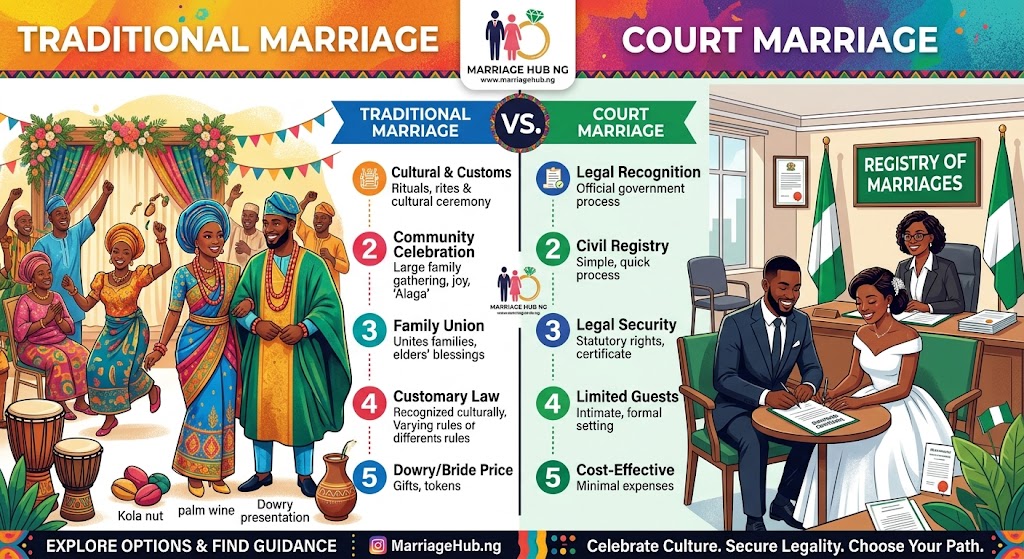
Marriage rights differ depending on whether the union is statutory, customary, or Islamic.
Statutory Marriage
Statutory marriages are governed by the Marriage Act. This form of marriage is monogamous and provides the strongest legal protections across Nigeria and internationally.
Under statutory marriage:
-
A person cannot legally marry another spouse while still married.
-
Property disputes are handled in civil courts.
-
Divorce proceedings are governed by federal law.
This type of marriage is often conducted at a registry or licensed church.
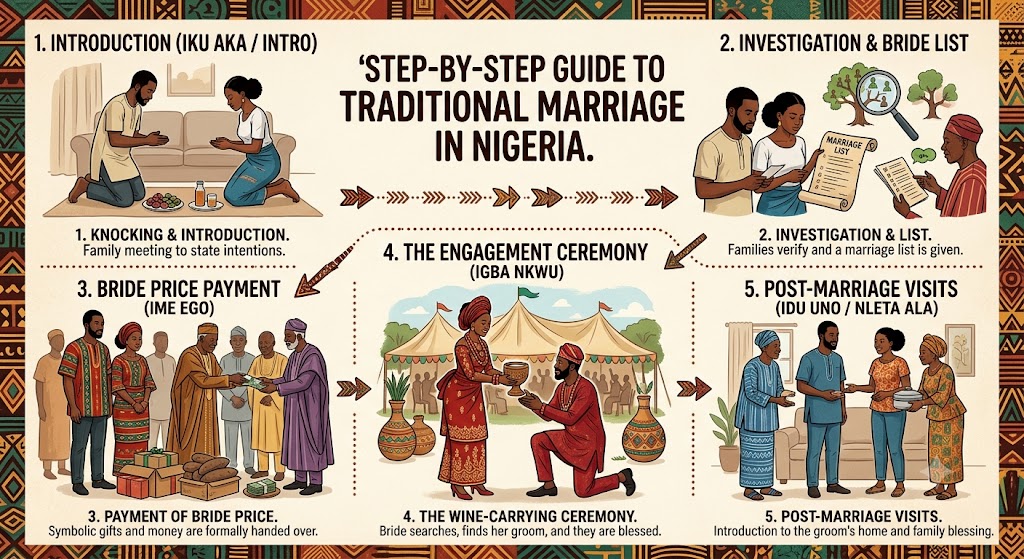
Customary Marriage
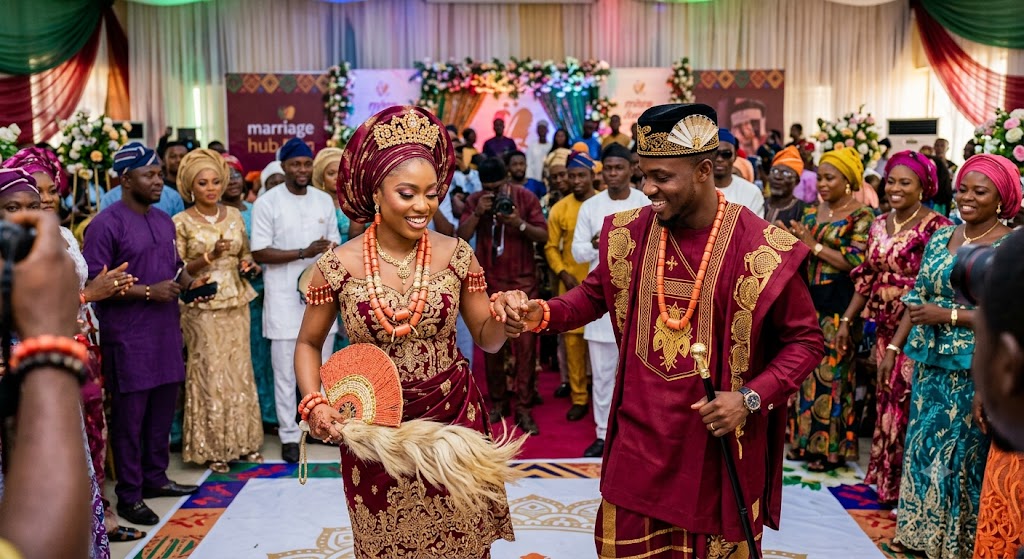
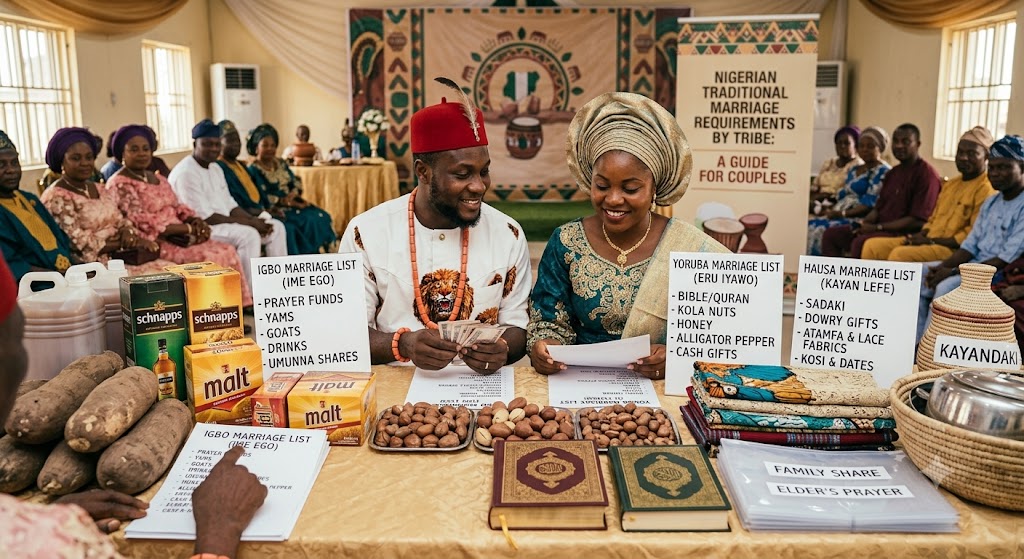
Customary marriages are based on ethnic traditions and recognized under customary law. They are common among Yoruba, Igbo, Hausa (non-Islamic contexts), and many other ethnic groups.
Rights under customary marriage may differ depending on the community. Polygamy may be permitted unless otherwise agreed.
Islamic Marriage
Islamic marriages operate under Sharia principles in applicable states. Contract terms are often clearly defined during the marriage agreement, including dowry (Mahr) and responsibilities.
Islamic marriage may permit polygamy under specified conditions.
Legal Framework Governing Marriage Rights
Marriage contract rights in Nigeria are primarily governed by:
-
The Marriage Act
-
The Matrimonial Causes Act
-
Customary and Sharia court systems
-
State-level inheritance and succession laws
The Matrimonial Causes Act governs divorce, separation, custody, and maintenance under statutory marriages.
Understanding which law governs your marriage is critical to understanding your rights.
Property Rights of Married Couples
One of the most misunderstood aspects of marriage in Nigeria is property ownership.
Under statutory marriage, property acquired during the marriage may be considered jointly owned depending on contributions. Courts examine:
-
Financial contributions
-
Non-financial contributions (such as homemaking)
-
Intent of the parties
Nigeria does not automatically apply a 50/50 property division rule. Instead, courts consider fairness and evidence of contribution.
Under customary marriage, property rights may depend on local traditions. In some communities, property ownership remains primarily with the husband unless jointly documented.
To protect property rights, couples are advised to:
-
Maintain documentation of purchases
-
Clearly state ownership in property agreements
-
Consider written agreements
Financial Responsibilities and Maintenance
Marriage creates mutual financial responsibilities. Spouses owe each other support.
Under statutory marriage, a spouse may seek maintenance (financial support) during separation or divorce. Courts consider:
-
Income levels
-
Standard of living
-
Needs of children
-
Duration of marriage
Failure to provide maintenance when ordered can have legal consequences.
In customary and Islamic marriages, financial roles may be defined culturally or contractually.
Rights Over Children and Custody
Marriage establishes legal parentage and rights over children born within the union.
Under the Matrimonial Causes Act:
-
Courts prioritize the best interests of the child.
-
Custody may be granted to either parent.
-
Joint custody arrangements are possible.
The Child Rights Act reinforces the principle that a child’s welfare is paramount in custody decisions.
Both parents have responsibilities for child support, education, and healthcare.
Inheritance and Succession Rights
Marriage significantly affects inheritance rights.
Under statutory marriage:
-
A surviving spouse has inheritance rights.
-
A legally recognized spouse may challenge unlawful exclusion.
-
Wills are enforceable.
Under customary law, inheritance may follow traditional lineage systems, which can disadvantage widows in some communities.
To protect spousal rights, couples should consider drafting a will.
Without a will, estate distribution may follow intestacy laws or customary rules.
Polygamy and Contract Implications
Polygamy is prohibited under statutory marriage. If someone married under statutory law contracts another marriage, it may constitute bigamy, which is a criminal offense.
However, customary and Islamic marriages may allow polygamy.
This distinction significantly affects:
-
Property division
-
Inheritance rights
-
Maintenance obligations
Couples should fully understand these implications before choosing the type of marriage.
Prenuptial Agreements in Nigeria
Prenuptial agreements are becoming more common, especially among business owners and high-net-worth individuals.
A prenuptial agreement outlines:
-
Property ownership before marriage
-
Asset division in case of divorce
-
Financial obligations
-
Business protections
While Nigerian courts may review prenups for fairness, they are increasingly recognized as valid contractual agreements.
A prenuptial agreement does not weaken a marriage; it clarifies expectations and protects both parties.
Divorce and Dissolution Rights
Under statutory marriage, divorce is governed by the Matrimonial Causes Act.
Grounds for divorce include:
-
Irretrievable breakdown
-
Adultery
-
Desertion
-
Cruelty
-
Long separation
Divorce proceedings occur in the High Court.
Customary and Islamic divorces follow their respective legal systems, but statutory marriages must be dissolved through civil courts.
Understanding your rights before marriage helps avoid complications later.
Protection Against Domestic Abuse
Marriage does not eliminate individual rights.
Spouses are protected against domestic violence under Nigerian criminal law and various state-level protection laws.
Abuse can be:
-
Physical
-
Emotional
-
Financial
-
Psychological
Courts may grant protection orders and custody decisions may be influenced by evidence of abuse.
Marriage does not justify violence under Nigerian law.
Practical Legal Checklist for Couples
Before marriage, couples should:
-
Decide which legal system governs their union.
-
Confirm eligibility (age, single status).
-
Gather proper documentation.
-
Understand property implications.
-
Consider drafting a will.
-
Discuss financial roles and expectations.
-
Seek legal advice if assets are significant.
After marriage, couples should:
-
Safely store marriage certificates.
-
Update next-of-kin records.
-
Review beneficiary details on bank and pension accounts.
-
Maintain financial transparency.
Proactive planning prevents future disputes.
Common Misconceptions About Marriage Rights
Many Nigerians believe that once married, all property automatically becomes jointly owned. This is not always true. Courts assess contribution and intent.
Another misconception is that traditional marriage offers no legal protection. In reality, customary marriages are recognized, though enforcement mechanisms differ.
Some assume that prenuptial agreements are only for celebrities. In truth, any couple can benefit from clarity and documentation.
Legal literacy strengthens marital stability.
Frequently Asked Questions (FAQs)
What type of marriage gives the strongest legal protection in Nigeria?
Statutory marriage provides the broadest legal recognition and is governed by federal law.
Can a spouse claim property if their name is not on the title?
Yes, if they can prove financial or significant non-financial contribution.
Is a prenuptial agreement enforceable in Nigeria?
Yes, provided it is fair, properly drafted, and voluntarily signed.
Does marriage automatically grant inheritance rights?
Yes under statutory law, but inheritance may differ under customary systems.
Can a spouse be arrested for bigamy?
Yes, if married under statutory law and contracts another marriage.
Conclusion: Knowledge Is Protection
Marriage in Nigeria is more than a celebration; it is a legal contract with serious implications. From property rights and inheritance to custody and financial obligations, understanding your contract rights protects both spouses and promotes fairness.
Whether entering a statutory, customary, or Islamic marriage, couples should approach the union with legal awareness and transparency. Clear expectations, proper documentation, and informed decision-making create a stronger foundation for long-term stability.
Love may bring two people together, but knowledge ensures their union is secure under the law.




.jpg)


Sign in to comment