 Nurturing Marriages, Enriching Families!
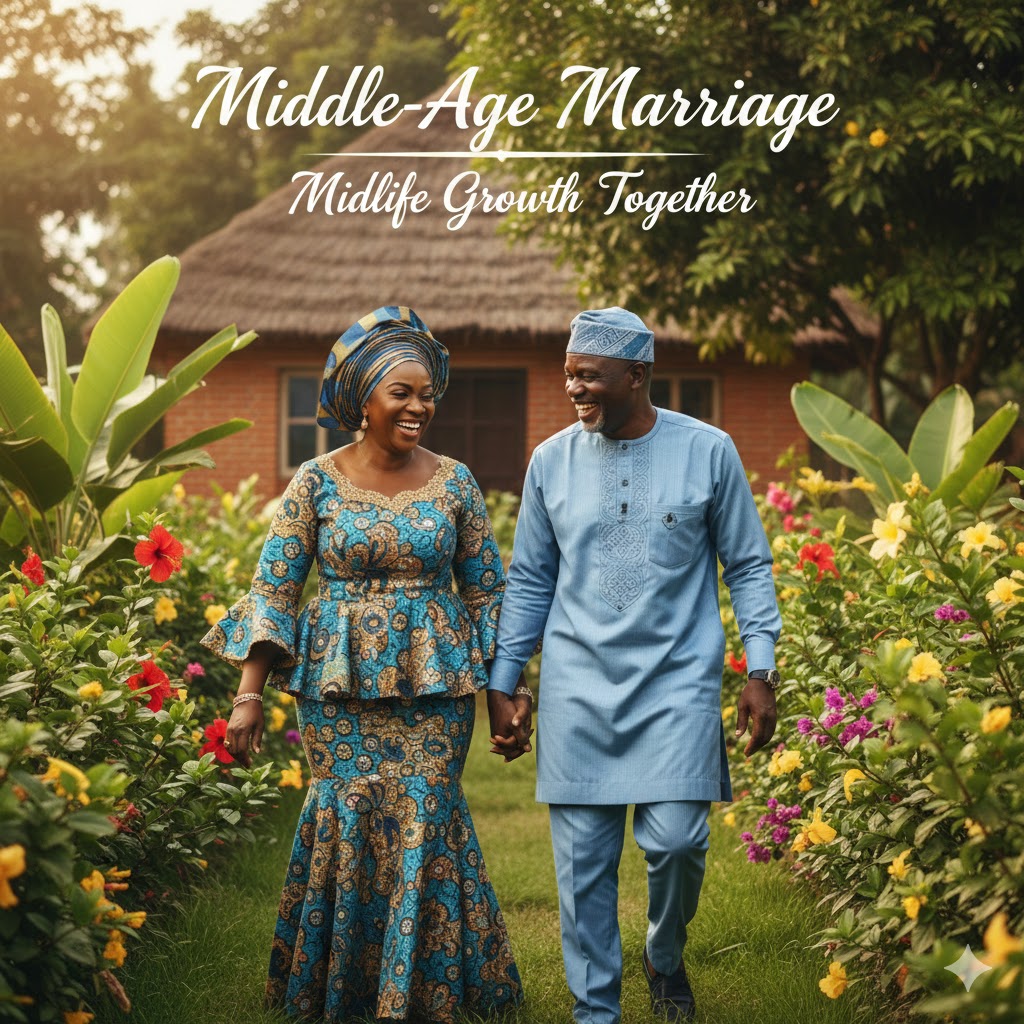
Middle-Age Marriage: Growing Together Through the Midlife Season
Middle age is a powerful, complex season in marriage. It is a time when life slows down in some areas and becomes more demanding in others. Careers may be at their peak or beginning to change. Children may be growing into teenagers or young adults. Bodies change, priorities shift, and long-held dreams are reassessed.
For many couples, middle-age marriage is not about starting life together—it is about deciding how to continue it together.
In Nigeria, midlife often comes with cultural expectations, family responsibilities, financial pressure, and silent emotional struggles that couples rarely talk about openly. Yet this stage of marriage can be one of the richest seasons of growth, intimacy, and renewed partnership—if approached intentionally.
Understanding the Midlife Season in Marriage
Middle age is often marked by reflection. Couples begin to ask deeper questions: Is this the life we imagined? Are we still growing? Are we still connected?
This is not a sign of failure—it is a sign of awareness. Midlife naturally invites evaluation, and marriage is part of that process.
Some couples feel closer during this phase, while others feel distant. The difference often lies in whether partners choose growth together or drift apart quietly.
Emotional Shifts and Identity Changes
By middle age, both partners have evolved. The person you married years ago is not exactly the same—and neither are you. Emotional needs change. What once felt exciting may now feel shallow, and what once felt unnecessary—like emotional intimacy—now feels essential.
In Nigerian marriages, emotional conversations are sometimes avoided in favor of endurance and responsibility. Yet midlife is the season when suppressed emotions surface.
Healthy couples learn to talk again—not just about children or money, but about fears, regrets, hopes, and personal growth.
Career Transitions and Financial Realities
Middle age often brings career reassessment. Some people reach professional fulfillment; others face burnout, job loss, or unfulfilled ambitions. These changes can affect self-esteem and marital dynamics.
In Nigeria, financial responsibility often increases during this stage—school fees, extended family support, healthcare, and future planning.
Couples who face this season well do so as a team. They communicate openly about finances, support each other emotionally, and resist the temptation to measure worth solely by income or status.
Parenting Pressures and Shifting Roles
For many middle-aged couples, parenting takes center stage. Teenagers, young adults, or even grandchildren can reshape marital focus.
Parents may unintentionally prioritize children over their relationship, leading to emotional distance. Others struggle with disagreements about discipline, independence, or expectations.
Strong marriages remember that parenting is a shared assignment—but marriage remains the foundation. Children benefit most from seeing parents who respect, support, and enjoy each other.
Physical Changes and Intimacy
Bodies change in midlife. Energy levels shift. Hormonal changes, health concerns, and stress can affect intimacy.
In many Nigerian marriages, discussions around sexual health and emotional intimacy are avoided due to cultural discomfort. Silence, however, often creates misunderstanding and resentment.
Couples who grow together address intimacy with honesty and compassion. They redefine closeness—not just as physical connection, but as emotional safety, affection, and presence.
Faith, Meaning, and Purpose Revisited
Middle age often reignites spiritual questions. Couples may re-examine faith, values, and purpose. Some grow spiritually together; others grow in different directions.
Marriage benefits when couples create space for these conversations. Shared faith or mutual respect for spiritual differences strengthens emotional bonding and long-term stability.
Dealing With Regret and Unfulfilled Dreams
Midlife can awaken regret—dreams not pursued, paths not taken, opportunities missed. If not handled carefully, regret can lead to bitterness or emotional withdrawal.
Healthy marriages create room for honesty without blame. Partners learn to grieve lost dreams together while creating new ones that fit their current reality.
It is never too late to redefine purpose.
Choosing Each Other Again
Middle-age marriage is not sustained by romance alone—it is sustained by choice. Choosing patience over criticism. Choosing curiosity over assumptions. Choosing partnership over pride.
Couples who thrive in this season consciously reconnect. They revisit shared goals, rediscover friendship, and intentionally create time for each other.
Growth does not happen automatically—it happens by agreement.
Conflict in Midlife: A Different Approach
Conflict in midlife is often quieter but deeper. It may revolve around long-standing issues that were never fully addressed.
Instead of avoiding conflict, mature couples learn to resolve it with wisdom. They listen more, react less, and prioritize understanding over winning.
Peace becomes more valuable than proving a point.
Midlife as a Season of Renewal
Contrary to popular belief, middle age is not the beginning of decline—it is the beginning of depth. Couples who embrace this season with honesty and intention often experience stronger emotional intimacy, clearer communication, and renewed companionship.
This stage of marriage offers a chance to move from survival to fulfillment.
Conclusion: Growing Forward, Together
Middle-age marriage is not about holding on to the past—it is about growing forward together. It is about honoring shared history while creating a meaningful future.
Couples who succeed in this season are not those without challenges, but those who face them side by side—with grace, courage, and commitment.
Midlife is not the end of love’s story. For many marriages, it is the chapter where love becomes deeper, wiser, and more enduring.






.jpg)


Sign in to comment