 Nurturing Marriages, Enriching Families!
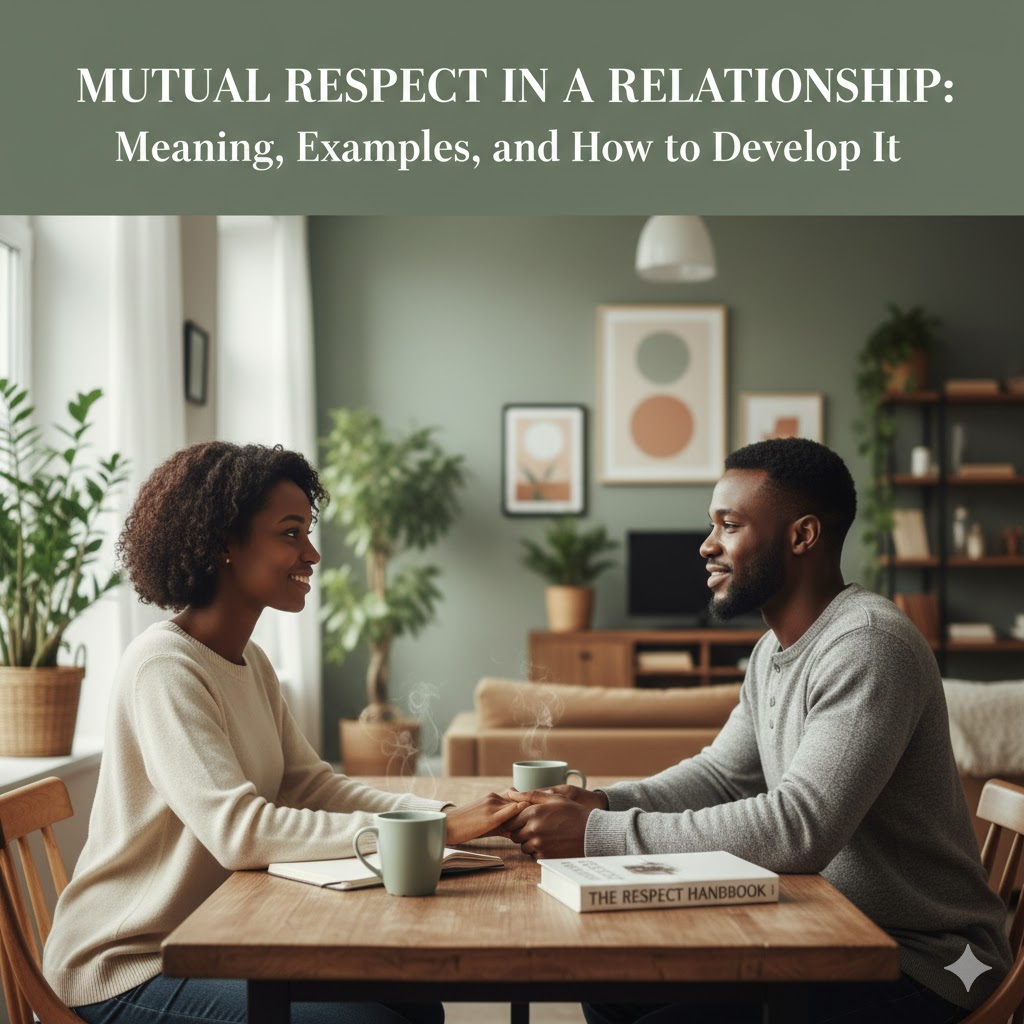
Mutual Respect in a Relationship: Meaning, Examples and How to Develop It
We often hear that love is the cornerstone of a successful relationship. While love is undeniably vital, it is not enough on its own. You can love someone deeply and still treat them poorly, dismiss their feelings, or undermine their dreams. This is where mutual respect becomes the unsung hero of lasting partnerships. If love is the engine of a relationship, mutual respect is the steering wheel, keeping you both moving in the same direction safely.
But what does mutual respect actually look like in day-to-day life? It is more than just being polite; it is a fundamental approach to how you view and treat your partner. This article will break down the meaning of mutual respect, provide clear examples of what it looks like in action, and offer a practical guide on how to develop and strengthen it in your relationship.
The Meaning of Mutual Respect in a Relationship
At its core, mutual respect in a relationship is the understanding that your partner is your equal. It is the practice of valuing their thoughts, feelings, boundaries, and needs as much as you value your own. It means seeing your partner as a whole, separate person with their own identity, rather than an extension of yourself.
Mutual respect is the foundation upon which trust, safety, and intimacy are built. When respect is present, you feel secure in being your authentic self. You know your opinions will be heard, even if they aren't always agreed with. You trust that your partner has your best interests at heart and will treat you with kindness and consideration.
Conversely, a lack of respect is often the first sign of a toxic dynamic. It can manifest as contempt, criticism, stonewalling, and defensiveness—behaviors that relationship expert John Gottman famously identified as predictors of divorce. Without respect, love erodes because the fundamental sense of safety and partnership is gone.
Real-Life Examples of Mutual Respect
Understanding the definition is one thing, but recognizing respect in action is another. Here are some concrete examples of what mutual respect looks like in a healthy relationship.
1. Respecting Boundaries
You and your partner have different needs for alone time. You are an extrovert who loves being around people, while your partner is an introvert who needs to recharge in solitude. Mutual respect means not taking their need for space personally. Instead of guilt-tripping them, you honor their need to recharge, just as they honor your need for social interaction. This also applies to digital boundaries (not looking through each other's phones) and emotional boundaries (not pushing them to share feelings before they are ready).
2. Active Listening During Disagreements
Disagreements are inevitable, but they don't have to be destructive. A couple with mutual respect doesn't fight to win; they fight to understand. When you are arguing, you listen to your partner's perspective without interrupting or formulating your rebuttal in your head. You might say, "Tell me more about why you feel that way," even if you disagree. You validate their feelings by acknowledging them: "I can see why you would feel frustrated about that." This shows that you value their experience, even in the heat of conflict.
3. Supporting Individual Growth
Respect means cheering for your partner's success, even when it doesn't directly involve you. Perhaps your partner decides they want to go back to school for a degree that requires evening classes. Mutual respect means you support this goal because you value their happiness and fulfillment. You might take on extra chores during their study time or celebrate their good grades. You don't view their personal growth as a threat to the relationship, but as an asset that makes them—and your partnership—richer.
4. Valuing Opinions and Input
From big financial decisions to choosing a weekend activity, respect means genuinely considering your partner's input. You don't make major purchases without discussing them first. You ask for their opinion on a career move because you value their perspective. This also applies to social settings; you don't roll your eyes or mock their ideas in front of friends. You present a united front, showing that you value their contribution to the team.
5. The "Small Stuff"
Often, respect is most visible in the small, daily interactions. It's saying "please" and "thank you." It's not interrupting them when they are speaking. It's putting your phone down when they are telling you about their day. It's being on time for dates or events that are important to them. These micro-moments of consideration build a powerful reservoir of goodwill.
How to Develop Mutual Respect in Your Relationship
Respect isn't something that is either present or absent; it is a muscle that can be strengthened over time. If you feel that your relationship could benefit from a greater foundation of respect, here are actionable steps to develop it.
1. Cultivate Self-Respect
The journey to mutual respect begins with yourself. If you don't respect your own boundaries, needs, and values, it is difficult to teach your partner how to respect them. Practice self-care, stand up for your own beliefs, and avoid people-pleasing at the expense of your own well-being. When you model self-respect, you set the standard for how you expect to be treated.
2. Practice Radical Acceptance
Your partner is not a project. One of the quickest ways to erode respect is to constantly try to "fix" or change your partner. Radical acceptance means loving your partner for who they are right now, not for the idealized version you hope they will become. This doesn't mean accepting abusive behavior, but it does mean accepting their quirks, habits, and personality traits that are simply part of who they are.
3. Master the Art of Apology
A genuine apology is a powerful sign of respect. When you mess up, own it. Avoid defensive apologies like, "I'm sorry you felt that way," or "I'm sorry, but..." A respectful apology is specific and takes full responsibility: "I'm sorry I raised my voice at you earlier. It was disrespectful, and I will do better to stay calm." This shows your partner that you respect them enough to be accountable for your actions.
4. Make Time for "Bids for Connection"
Psychologist John Gottman's research highlights the importance of "bids" for connection. A bid can be a question, a touch, or a laugh—a small attempt to get your partner's attention. Respect means "turning toward" these bids rather than "turning away." If your partner points out a funny-looking dog on the street, it's a bid. Putting down your phone to look and laugh with them is a sign of respect for their attempt to connect with you.
5. Establish and Communicate Boundaries
Boundaries are the guidelines that protect your respect. Have an open, calm conversation about your needs. This could be about needing time to decompress after work, not wanting to discuss certain topics at family gatherings, or needing help with household chores. When you clearly communicate your boundaries, you are teaching your partner how to love you respectfully. Likewise, when they share their boundaries, honor them without argument.
6. Check Your Language
The words you use during conflict can either build bridges or burn them. Avoid absolute statements like "You always..." or "You never...," as they are rarely accurate and feel accusatory. Instead, use "I" statements to express your feelings without blaming. For example, instead of "You never listen to me," try "I feel unheard when you look at your phone while I'm talking." This invites a conversation rather than a fight.
7. Appreciate Your Differences
It is easy to respect a partner who is exactly like you. The real test is respecting the partner who is different. Maybe you are a spender and they are a saver. Maybe you are spontaneous and they are a planner. Instead of seeing these differences as obstacles, try to see them as strengths that balance the relationship. Respect their approach to the world, even if it's not your own.
The Long-Term Payoff
Developing mutual respect requires conscious effort, especially when you are tired, stressed, or angry. However, the payoff is immeasurable. A relationship built on respect is a safe harbor. It is a place where you can be vulnerable, ambitious, silly, or sad without fear of judgment or ridicule.
It transforms a partnership from a source of stress into a source of strength. When you respect your partner and feel respected in return, you build a love that is resilient, enduring, and truly fulfilling. It is the foundation upon which a lifetime of partnership is built.










.jpg)



Sign in to comment