 Nurturing Marriages, Enriching Families!
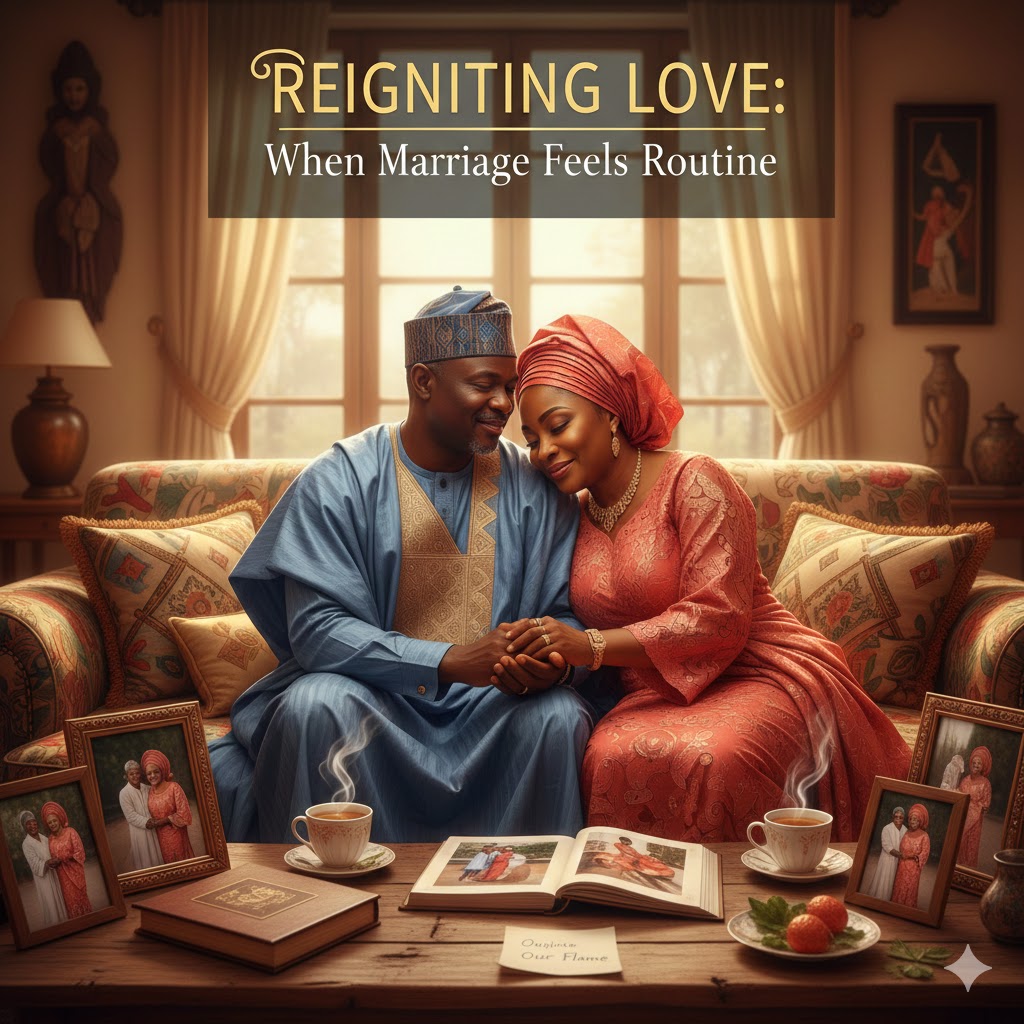
Reigniting Love When Marriage Feels Routine: How Couples Can Rediscover Connection, Passion, and Purpose
Marriage rarely collapses because love suddenly disappears. More often, it quietly drifts into routine. Days begin to look the same. Conversations revolve around bills, children, work schedules, and responsibilities. Laughter becomes occasional. Affection becomes functional. Romance feels like a memory rather than a reality.
Many couples find themselves asking a difficult but honest question: “Is this all there is?”
Feeling stuck in routine does not mean your marriage is failing. It means your marriage has entered a normal, predictable season—one that requires intentional renewal. Routine is not the enemy of marriage; neglect is. When routine is allowed to replace connection, love begins to feel distant even when commitment remains strong.
The good news is that love can be reignited. Not by chasing unrealistic excitement, but by intentionally restoring emotional connection, curiosity, and affection within everyday life.
Why Marriage Naturally Becomes Routine
Routine emerges because marriage is built for stability. Predictability brings security, structure, and order. Over time, couples develop patterns—how they communicate, how they handle stress, how they spend evenings, and how they express affection.
The problem begins when routine becomes automatic rather than intentional.
In many Nigerian homes, routine is intensified by pressure. Financial responsibility, extended family obligations, religious commitments, parenting, and work demands often leave little emotional energy for romance. Love becomes practical, but emotional nourishment is postponed indefinitely.
Routine itself is not wrong. A marriage without routine would feel chaotic. But routine without renewal slowly drains emotional vitality.
When Routine Turns Into Emotional Distance
The shift from comfort to emotional distance is subtle. Couples may still function well as partners but feel disconnected as lovers.
Signs often include reduced meaningful conversation, less affection, fewer shared experiences, increased irritability, and a sense of loneliness even while together. Partners may assume the other is satisfied because there is no obvious conflict.
This silent drift is one of the most dangerous seasons of marriage because it feels “normal.”
Real-life scenario:
Kunle and Aisha had been married for ten years. Their home was peaceful, their children were thriving, and bills were paid. Yet Aisha felt emotionally invisible. Kunle believed everything was fine because there were no arguments. Neither realized that routine had quietly replaced intimacy—until resentment began to surface.
Understanding That Love Evolves, Not Disappears
One of the biggest misconceptions about marriage is believing that love should always feel exciting. Early-stage love is fueled by novelty and anticipation. Long-term love is fueled by trust, shared history, and intentional effort.
When couples expect love to feel the same forever, they may misinterpret normal emotional shifts as loss of love.
Love in routine seasons becomes quieter—but it also becomes deeper. It requires different expressions. Reigniting love means learning how to love intentionally in this season, not wishing for a past version of the relationship.
Why Reigniting Love Requires Intention, Not Waiting
Many couples wait for motivation to return before acting. Unfortunately, emotional renewal rarely happens spontaneously. Intention must come before feeling.
Choosing to reconnect emotionally—through conversation, affection, and shared moments—often brings feelings back with time. Waiting for feelings to magically return usually leads to longer emotional distance.
Love grows when couples act lovingly, even when the emotional spark feels dim.
The Power of Emotional Awareness
Reigniting love begins with awareness. Couples must acknowledge that routine has set in without assigning blame.
This awareness allows honest reflection. What changed? What was lost? What has been neglected? These questions open the door to renewal rather than resentment.
When partners feel safe to express emotional dissatisfaction without fear of dismissal, healing begins.
Relearning How to Truly See Each Other
Routine often causes couples to stop truly seeing each other. Partners become roles rather than individuals—provider, caregiver, parent, planner.
Reigniting love requires curiosity. Asking thoughtful questions, noticing emotional shifts, and showing interest in each other’s inner world restores connection.
People continue to grow and change. Marriages feel alive when partners keep rediscovering who the other is becoming.
Restoring Meaningful Conversation
One of the first casualties of routine is deep conversation. Couples talk frequently but rarely connect deeply.
Reigniting love involves creating space for meaningful dialogue—conversations that go beyond logistics into emotions, dreams, fears, and reflections.
This does not require hours. Even short, intentional conversations restore emotional intimacy when practiced consistently.
Affection as Emotional Reassurance
Affection often decreases as routine increases. Touch becomes functional or limited to sexual contexts.
Non-sexual affection—hugs, holding hands, gentle touches, warm greetings—reassures partners emotionally. It communicates safety, warmth, and closeness.
Affection rebuilds emotional bridges that routine quietly erodes.
Reintroducing Playfulness and Joy
Routine can make marriage feel serious and heavy. Reigniting love requires moments of lightness.
Laughter, shared jokes, playful teasing, and reminiscing about good memories revive emotional energy. Joy reminds couples that marriage is not only about responsibility but also about companionship.
Playfulness reconnects couples to the friendship at the heart of marriage.
Creating New Shared Experiences
Routine thrives on repetition. Love is reignited through shared novelty.
Trying something new together—learning a skill, visiting a new place, starting a shared habit—creates fresh emotional memories. These experiences break monotony and reignite curiosity.
Newness does not require extravagance. It requires willingness to step outside comfort zones together.
Addressing Unspoken Resentments
Routine often masks unresolved emotional wounds. Small disappointments accumulate when left unspoken.
Reigniting love sometimes requires addressing these quietly stored hurts with honesty and compassion. Healing conversations clear emotional blockages that prevent closeness.
Forgiveness and understanding are powerful tools for emotional renewal.
Supporting Each Other Through Life Pressure
Routine is often intensified by stress. Couples who support each other emotionally during demanding seasons strengthen connection.
Offering empathy, reducing criticism, and sharing emotional burdens rekindle partnership. Feeling supported emotionally makes love feel safe again.
Support is one of the most underrated romantic gestures in marriage.
Reclaiming Intentional Time Together
Time together often exists but lacks intention. Reigniting love requires purposeful time—time protected from distractions and responsibilities.
This does not always mean dates. It can be intentional walks, quiet evenings, shared meals, or intentional check-ins.
Consistency matters more than duration.
Letting Go of Unrealistic Expectations
Some couples believe reigniting love means returning to intense passion permanently. This expectation often leads to disappointment.
Healthy marital love includes calm, comfort, excitement, and deep connection. Accepting this balance allows couples to appreciate what they have while nurturing growth.
Love matures; it does not disappear.
Real-Life Renewal: A Marriage Reawakened
After fifteen years of marriage, Samuel and Ngozi realized they felt more like roommates than partners. Instead of panicking, they committed to small intentional changes—weekly conversations, daily affection, and shared prayer.
Over time, emotional closeness returned. Not because life became easier, but because love became intentional again.
Why Routine Can Become a Strength
When handled well, routine provides stability that allows love to deepen. It creates a safe foundation where vulnerability, trust, and companionship can thrive.
Routine becomes harmful only when emotional connection is neglected.
Marriage thrives when couples combine stability with intentional affection.
Conclusion: Love Can Always Be Renewed
Marriage routines are inevitable. Emotional stagnation is not.
Reigniting love does not require starting over—it requires paying attention again. It requires choosing connection over convenience and intention over assumption.
Love that feels routine is not dead. It is waiting to be awakened.
When couples intentionally nurture emotional connection, marriage transforms from predictable to meaningful, from functional to fulfilling.
Love does not fade because time passes.
It fades when effort stops.
And effort can always begin again.










.jpg)



Sign in to comment