 Nurturing Marriages, Enriching Families!
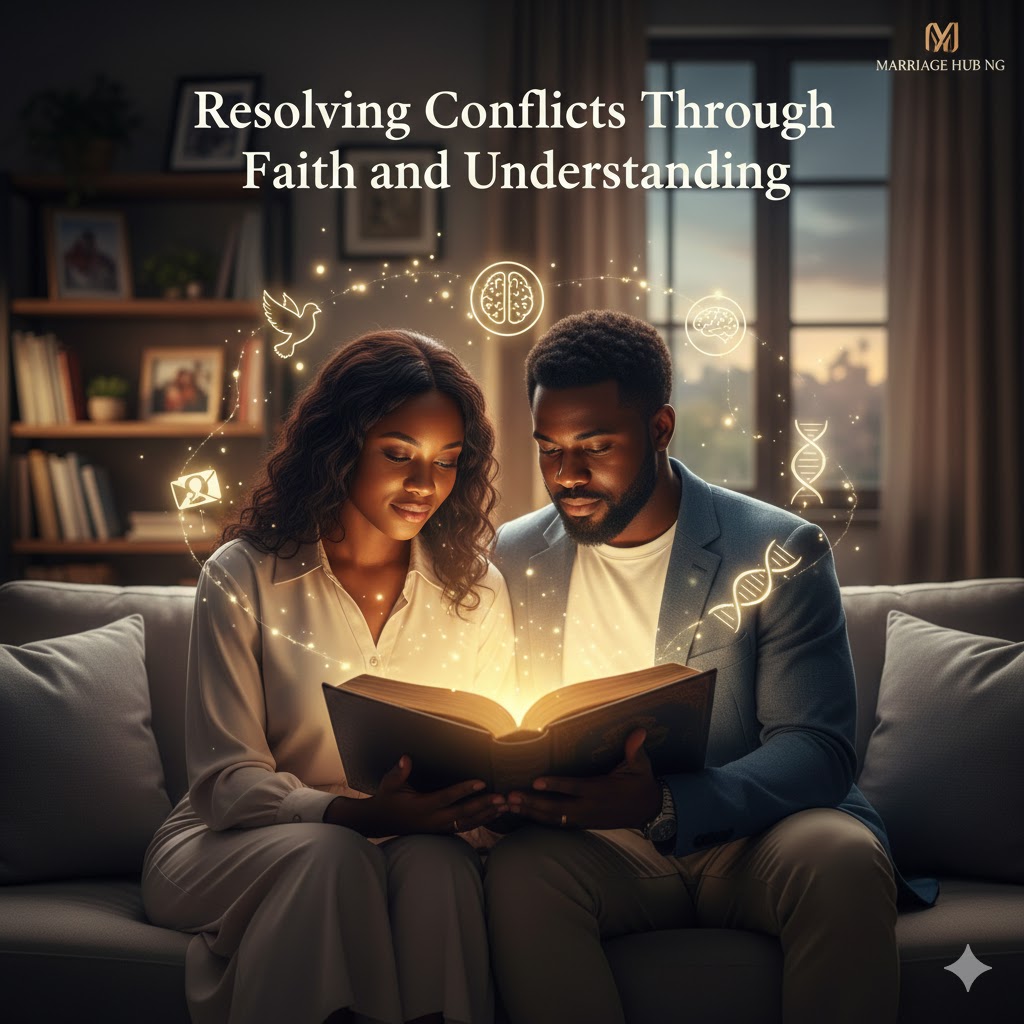
Resolving Conflicts Through Faith and Understanding
Conflict is an unavoidable part of every human relationship. Whether in marriage, family life, friendships, workplaces, or faith communities, disagreements will arise. What determines the strength or weakness of a relationship is not the absence of conflict, but how it is handled. Resolving conflicts through faith and understanding offers a powerful, lasting solution—especially in homes where spiritual values shape daily life.
In Nigeria and across the world, faith remains central to identity, marriage, and family structure. When couples and families allow spiritual principles to guide their responses, conflicts become opportunities for growth instead of destruction. This article explores how faith and understanding work together to restore harmony, rebuild trust, and strengthen relationships.
Understanding the Root of Conflict
Before resolving conflict, it is important to understand where it comes from. Most conflicts stem from:
-
Miscommunication
-
Unmet expectations
-
Pride and ego
-
Financial pressure
-
Cultural differences
-
Emotional wounds
-
Stress and external influences
In marriage, for example, disagreements may revolve around finances, in-laws, parenting styles, intimacy, or career decisions. In extended families, conflict may arise from cultural obligations or inheritance expectations.
Faith teaches that conflict is not always about the surface issue—it often reveals deeper emotional or spiritual struggles.
The Role of Faith in Conflict Resolution
Faith provides a moral compass during emotionally charged moments. Instead of reacting impulsively, believers are encouraged to respond with patience, humility, and self-control.
In Christian homes, teachings from the Bible emphasize forgiveness, gentleness, and reconciliation. Scriptures encourage believers to be “slow to anger” and quick to forgive.
Similarly, Islamic teachings from the Qur'an promote peace, fairness, mercy, and respectful dialogue. Reconciliation is considered an act of righteousness and spiritual maturity.
Faith reframes conflict. Instead of asking, “How do I win this argument?” faith asks, “How can we restore peace and honor God?”
The Power of Understanding Before Judgment
Many conflicts escalate because individuals feel unheard or misunderstood. Understanding requires:
-
Listening without interruption
-
Seeking clarification instead of assuming
-
Asking calm questions
-
Validating feelings even if you disagree
When a spouse says, “You never support me,” the deeper message may be, “I feel alone.” Responding defensively increases tension. Responding with curiosity reduces it.
Understanding does not mean agreeing with everything. It means recognizing the emotional reality of the other person.
Humility: The Foundation of Peace
Pride fuels conflict. Humility resolves it.
Faith encourages humility by reminding believers that no one is perfect. Admitting mistakes is not weakness; it is strength.
Saying:
-
“I was wrong.”
-
“I misunderstood you.”
-
“I should not have spoken that way.”
-
“Please forgive me.”
These simple statements can prevent long-term resentment.
Humility softens hearts. It opens the door to restoration.
Forgiveness as a Spiritual Discipline
Unforgiveness keeps conflict alive long after the issue has passed. Faith-based conflict resolution emphasizes forgiveness—not because the offense was small, but because bitterness damages the heart.
Forgiveness does not erase accountability. It releases resentment and chooses healing over revenge.
In marriage, forgiveness must be continuous. Couples who keep records of past mistakes struggle to move forward. Those who forgive sincerely create emotional safety.
Prayer and Reflection Before Confrontation
One of the most powerful faith-based tools for resolving conflict is prayer or personal reflection.
Before confronting someone, take time to:
-
Reflect on your own role in the issue.
-
Calm your emotions.
-
Ask for wisdom and clarity.
-
Consider the desired outcome.
When emotions settle, conversations become productive rather than explosive.
Faith creates a pause between feeling hurt and reacting harshly.
Communication Rooted in Respect
Understanding requires respectful communication. This includes:
-
Avoiding insults or name-calling
-
Speaking in a calm tone
-
Using “I feel” statements instead of accusations
-
Avoiding exaggerations like “You always” or “You never”
For example:
Instead of: “You never care about this family.”
Say: “I feel overwhelmed and would appreciate more support.”
Respect preserves dignity—even during disagreement.
Managing Anger Through Faith
Anger itself is not wrong; uncontrolled anger is destructive.
Faith encourages self-control. Practical steps include:
-
Taking a short break when emotions rise
-
Avoiding conflict discussions late at night
-
Practicing deep breathing
-
Refraining from public arguments
Spiritual maturity means choosing calmness over chaos.
In many Nigerian homes, arguments escalate because of extended family involvement. Handling conflict privately and respectfully protects the marriage bond.
Cultural Sensitivity and Understanding
In Nigeria’s diverse cultural landscape, intercultural marriages and extended family systems can introduce unique challenges.
Faith can bridge cultural gaps by emphasizing shared spiritual values over ethnic differences. Instead of focusing on “my culture versus yours,” couples can focus on:
-
Shared respect
-
Shared faith
-
Shared long-term goals
Understanding cultural background helps prevent misinterpretation. What appears as disrespect may simply be a difference in upbringing.
Seeking Wise Counsel
Sometimes conflicts require external guidance. Faith communities often provide mentorship through:
-
Pastors
-
Imams
-
Marriage counselors
-
Trusted elders
Seeking help is not a sign of failure. It is a sign of commitment to peace.
However, couples should choose counsel carefully—favoring wise, neutral advisors over those who may escalate tensions.
Practicing Empathy Daily
Empathy is the ability to step into another person’s emotional experience.
Ask:
-
What pressures is my spouse facing?
-
What fears might be influencing this reaction?
-
What childhood experiences shape this response?
Understanding emotional triggers helps resolve conflicts at their root rather than addressing only symptoms.
Conflict as an Opportunity for Growth
When handled properly, conflict can strengthen relationships. It can:
-
Reveal unmet needs
-
Improve communication skills
-
Increase emotional intimacy
-
Build resilience
-
Strengthen spiritual maturity
Couples who navigate conflict successfully often report deeper closeness afterward.
Conflict becomes destructive only when handled with pride, disrespect, or unforgiveness.
Setting Healthy Boundaries
Faith encourages love—but love includes boundaries.
Resolving conflict does not mean tolerating abuse or continuous disrespect. Healthy boundaries protect emotional and physical well-being.
For example:
-
Refusing to engage in shouting matches
-
Setting limits on extended family interference
-
Agreeing on fair financial decisions
Boundaries maintain dignity and prevent repeated harm.
Teaching Children Faith-Based Conflict Resolution
Parents who resolve conflicts respectfully teach their children valuable life skills.
Children observe:
-
How apologies are given
-
How disagreements are handled
-
How forgiveness works
-
How unity is restored
Homes where conflicts are resolved with faith and understanding raise emotionally secure children who replicate those patterns in adulthood.
Practical Steps to Resolve Conflict Through Faith
-
Pause and pray or reflect before responding.
-
Identify the real issue beneath the argument.
-
Listen actively without interrupting.
-
Speak respectfully and clearly.
-
Take responsibility for your part.
-
Offer genuine forgiveness.
-
Seek wise counsel if necessary.
-
Agree on practical solutions moving forward.
Consistency is key. One peaceful conversation does not fix everything—but repeated faith-based responses build trust over time.
When Conflict Persists
Some conflicts repeat because underlying issues remain unresolved. In such cases:
-
Address recurring patterns honestly.
-
Schedule calm discussions rather than arguing spontaneously.
-
Consider structured marriage counseling.
-
Evaluate personal growth areas.
Faith does not eliminate effort; it strengthens it.
The Spiritual Reward of Peace
Peace is not merely the absence of arguments. It is emotional security and spiritual harmony.
Faith teaches that peacemaking is honorable. Couples and families who prioritize reconciliation experience:
-
Reduced stress
-
Greater unity
-
Emotional safety
-
Stronger spiritual connection
-
Deeper trust
When faith and understanding guide conflict resolution, relationships become safer and more resilient.
Conclusion
Resolving conflicts through faith and understanding is not about suppressing disagreement—it is about transforming it. Faith softens pride, encourages forgiveness, and promotes humility. Understanding builds empathy and prevents misinterpretation.
In marriages, families, and communities, peace requires intentional effort. By listening deeply, speaking respectfully, forgiving sincerely, and relying on spiritual principles, conflicts can become stepping stones to growth rather than stumbling blocks to unity.
In the end, relationships strengthened by faith and understanding are not perfect—but they are grounded, resilient, and capable of enduring life’s inevitable challenges.









.jpg)




Sign in to comment