 Nurturing Marriages, Enriching Families!
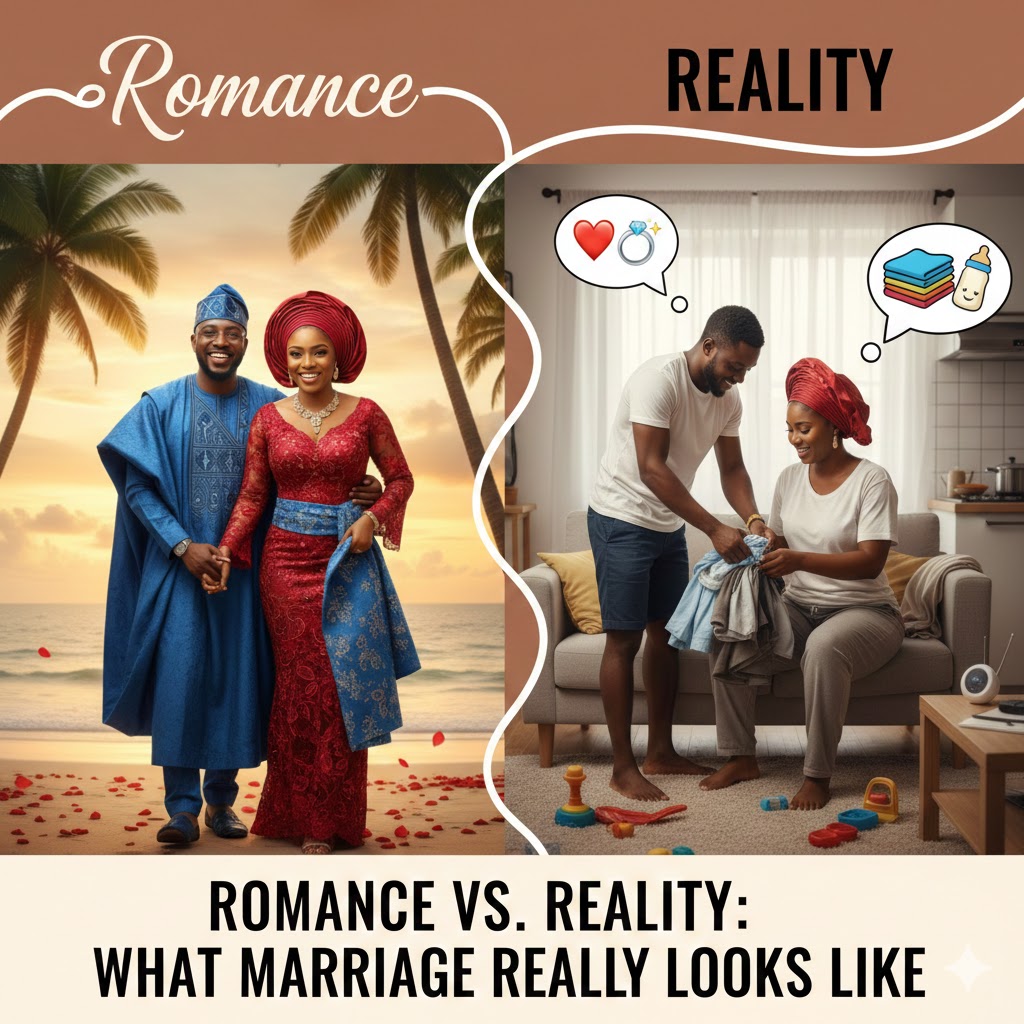
Romance vs. Reality: What Marriage Really Looks Like
Many people enter marriage carrying powerful romantic expectations. Movies, social media, relationship advice, and even cultural storytelling often present marriage as a continuous emotional high—a place where love flows effortlessly and happiness comes naturally. Reality, however, tells a more complex and more meaningful story.
Marriage is not the absence of difficulty. It is the presence of commitment through difficulty.
Understanding the difference between romance and reality does not weaken marriage; it strengthens it. When couples embrace what marriage truly looks like, they stop feeling disappointed and start building something deeper, more resilient, and more fulfilling.
The Romance We Imagine
Before marriage, romance is often idealized. Love feels exciting, intense, and consuming. Couples imagine endless conversations, emotional closeness, passion, and support. Conflict is minimized or believed to be easily resolved by love alone.
This romantic vision is not wrong—it is incomplete.
Romance highlights the emotional potential of marriage, but it does not show the work required to sustain it. When reality eventually appears, many couples feel unprepared rather than informed.
The Reality Couples Experience
Real marriage involves routine. It involves responsibility, fatigue, compromise, and growth. Partners bring not only love into the marriage, but also habits, wounds, expectations, and personal histories.
Reality introduces bills, career pressure, extended family influence, parenting stress, health changes, and personal transformation. Love is no longer just a feeling; it becomes a daily decision.
Real-life scenario: Ayo and Blessing entered marriage deeply in love. Within two years, financial stress and family expectations began to strain their connection. They still loved each other, but romance felt distant. What they lacked was not love, but realistic understanding of marriage’s demands.
Romance Does Not Disappear—It Evolves
One of the biggest misconceptions is that romance fades because marriage kills love. In truth, romance changes form.
Early romance is fueled by novelty and anticipation. Marital romance is fueled by intentionality and trust. It is quieter, deeper, and more meaningful.
When couples expect romance to feel exactly the same as it did before marriage, they may miss the richer version available to them now.
Love Becomes Practical
In marriage, love shows up in everyday actions—supporting each other through exhaustion, choosing patience during conflict, and staying committed during uncertainty.
Practical love does not mean passion disappears. It means passion is rooted in reliability. Knowing your partner will show up consistently creates emotional security that fleeting excitement cannot replace.
This form of love may not always feel dramatic, but it is deeply powerful.
Conflict Is Not a Sign of Failure
Many couples believe conflict means something is wrong with their marriage. In reality, conflict is a sign of two individuals learning to live as one.
Disagreements arise from differences in personality, upbringing, values, and expectations. Healthy marriages are not conflict-free; they are repair-focused.
How couples handle conflict matters far more than how often they disagree.
Emotional Intimacy Requires Effort
Romantic feelings may arise naturally, but emotional intimacy must be nurtured intentionally. Listening, vulnerability, empathy, and communication are skills that grow over time.
Reality teaches couples that connection requires practice. Love deepens when partners learn to understand and support each other’s emotional needs.
Marriage Exposes Growth Areas
Marriage reveals strengths and weaknesses. It challenges selfishness, sharpens patience, and demands emotional maturity.
This exposure can feel uncomfortable, but it is also transformative. Marriage becomes a space where personal growth and relational growth intersect.
Couples who embrace this process rather than resist it experience deeper connection and mutual respect.
Romance Thrives Within Realistic Expectations
When couples release unrealistic expectations, romance has room to flourish. Romance becomes less about perfection and more about presence.
Real romance exists in laughter after a long day, kindness during stress, and choosing each other repeatedly even when feelings fluctuate.
Romance grounded in reality is sustainable.
Real-Life Love Is Stronger Than Fantasy
Fantasy romance depends on circumstances. Real love survives circumstances.
Couples who understand the reality of marriage are less likely to feel disillusioned. They measure success not by constant happiness, but by growth, connection, and resilience.
This understanding creates peace, patience, and deeper appreciation.
Conclusion: Embracing the Truth Strengthens Love
Marriage is neither pure romance nor harsh reality—it is the meeting point of both.
Romance brings warmth and hope. Reality brings depth and endurance. Together, they create a love that is not fragile, but strong.
When couples embrace what marriage truly looks like, they stop chasing illusions and start building something real—something lasting.
Marriage is not perfect. But it is profoundly beautiful when understood and lived with intention.





.jpg)


Sign in to comment