 Nurturing Marriages, Enriching Families!
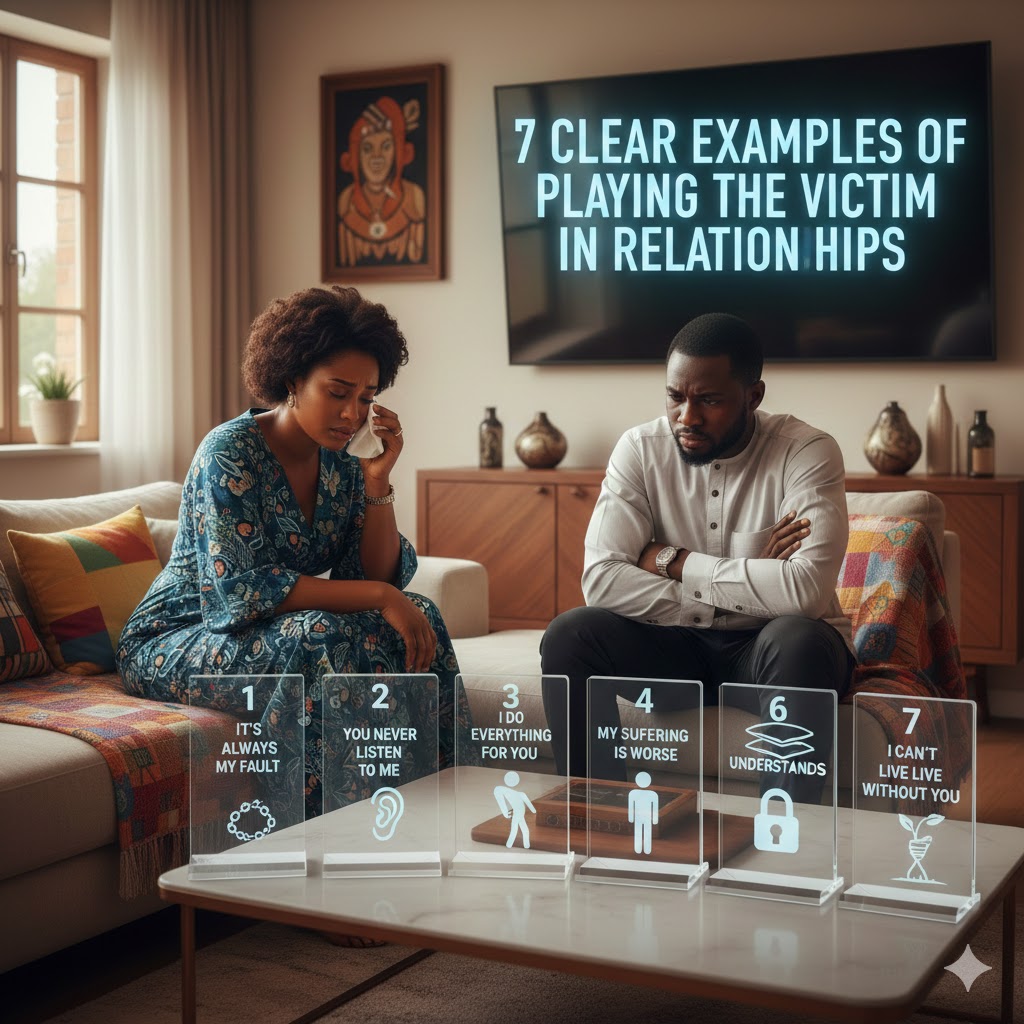
Seven (7) Clear Examples of Playing the Victim in Relationships
Playing the victim in a relationship rarely begins as a deliberate choice. It often develops slowly—out of unresolved hurt, unmet expectations, fear of confrontation, or emotional neglect. Over time, pain stops being something you experience and becomes something you live by. When this happens, the relationship suffers, communication breaks down, and emotional growth stalls.
In Nigeria, cultural expectations to endure, maintain family image, respect authority, or “manage” marriage at all costs can quietly encourage victimhood. While pain deserves compassion, staying trapped in a victim mindset prevents healing, accountability, and genuine intimacy.
Understanding how victimhood shows up in everyday relationships is the first step toward change.
One common example is when every problem in the relationship is consistently blamed on one partner. In such situations, a person may believe their spouse is the sole cause of all unhappiness. Financial stress is blamed entirely on the partner’s irresponsibility, conflicts are blamed on their temperament, and emotional distance is blamed on their lack of effort. There is little or no reflection on how constant criticism, emotional withdrawal, or refusal to communicate calmly may be contributing to the problem. When responsibility is always external, growth becomes impossible.
Another clear sign appears when past trauma is used as a permanent excuse for present behavior. Someone who has been betrayed in a previous relationship may carry deep wounds into a new marriage. Instead of seeking healing, they allow fear and suspicion to dominate the relationship. They may monitor their partner’s phone, question their movements, or constantly accuse them of infidelity. When confronted, they justify their behavior by referencing past pain. While trauma is real and deserves care, using it to control or emotionally harm a partner keeps both people trapped in pain.
Victimhood also shows up through unspoken expectations and emotional mind-reading. A partner may feel overwhelmed, neglected, or unloved but never clearly communicate these feelings. Instead, they withdraw emotionally, become irritable, or grow distant. When asked what is wrong, they respond with statements like, “If you truly loved me, you would know.” This pattern creates resentment and disappointment because needs remain hidden while expectations remain high.
Another pattern is constant complaining without meaningful action. Some people repeatedly tell friends, family members, or religious leaders that their relationship is unbearable, yet they avoid difficult conversations, refuse counseling, and fail to set boundaries. Suffering becomes familiar, and endurance is mistaken for strength. Over time, complaining replaces responsibility, and helplessness becomes a lifestyle rather than a temporary phase.
Playing the victim can also be seen in how feedback is received. In healthy relationships, feedback is an opportunity for growth. In victim-driven dynamics, even gentle feedback feels like an attack. A partner may respond defensively, interpreting every concern as criticism or rejection. This shuts down communication and turns honest conversations into emotional battles. Growth becomes impossible when self-protection replaces self-reflection.
Emotional withdrawal and silence are another subtle but damaging example. After conflict, one partner may stop communicating entirely, refusing calls, messages, or eye contact. While they describe this as being hurt or needing space, the silence becomes a form of punishment. Instead of addressing the issue, emotional distance is used to express pain indirectly. This behavior deepens resentment and creates emotional insecurity in the relationship.
Perhaps the most painful example of playing the victim is staying in a relationship while feeling completely powerless. Many people remain emotionally stuck due to children, financial dependence, religious pressure, or fear of societal judgment—factors that are especially strong in Nigerian society. They repeatedly say, “I have no choice,” while resentment and emotional exhaustion grow. Although these challenges are real, believing you have no agency at all strips you of the ability to make healthy decisions or seek support.
Playing the victim does not mean your pain is imaginary or unimportant. It means pain has quietly taken control of your narrative. Healing begins when pain becomes a signal for change rather than a permanent identity.
The shift happens when you move from seeing yourself as helpless to recognizing your capacity for choice, boundaries, and growth. Healthy relationships require both empathy and accountability. Without accountability, empathy alone turns into emotional stagnation.
You deserve a relationship where your voice matters, your feelings are respected, and your growth is supported—not one where suffering becomes your identity.








.jpg)
Sign in to comment