 Nurturing Marriages, Enriching Families!

Six Important Pre-Marriage Tips for Brides
The engagement period is often portrayed as a whirlwind of dress fittings, cake tastings, and venue tours. While these are joyful parts of the journey, they can also distract you from the most important task at hand: preparing for the marriage itself. As a bride-to-be, you are not just planning a wedding; you are laying the foundation for the rest of your life.
Before you walk down the aisle, it is essential to pause, reflect, and have the conversations that truly matter. This article outlines six crucial pre-marriage tips designed to help you enter your union with eyes wide open, a peaceful heart, and a solid plan for a lifetime of love and partnership.
1. Have the "Unsexy" Conversations Early
It is easy to talk about your dreams of traveling the world or where you want to raise children. It is harder, but infinitely more important, to talk about the practical, day-to-day realities of marriage. These conversations are the bedrock of trust and prevent major surprises down the road.
Finances: The #1 Cause of Marital Strife
Money is consistently cited as one of the leading sources of conflict in marriages. Before you merge your lives, you need to merge—or at least understand—your financial philosophies.
-
Full Disclosure: Be completely transparent about your financial situation. This includes your income, savings, debts (credit cards, student loans, car payments), and credit scores . Hiding a debt is a breach of trust that can fester for years.
-
Spending Habits: Are you a saver while he's a spender? Do you believe in budgeting for every penny, or do you prefer a more flexible approach? Neither is wrong, but you need to find a system that works for both of you .
-
Banking Logistics: Discuss whether you will have joint accounts, separate accounts, or a combination of both. There is no one-size-fits-all answer, but you must agree on a system that feels fair and transparent .
-
Financial Goals: Talk about your big-picture dreams. Do you want to buy a house? When do you want to retire? How important is saving for your children's education? Aligning on these goals early helps you create a financial roadmap together .
Household Responsibilities
In the age of modern partnerships, the "mental load" of running a household should not fall solely on the bride. Have an honest conversation about chores. Who cooks? Who cleans? Who manages the bills and handles car maintenance? Discussing this now prevents resentment from building when one person feels like the default manager of the home .
2. Discuss Children, Careers, and Core Values
While you may have a general sense of your partner's stance on major life topics, the pre-marriage period is the time to get specific. Vague agreements can lead to heartbreak later.
-
Children: "Wanting kids someday" is not a plan. Discuss how many children you want, if any. Are there strong feelings about adoption or biological children? What are your views on discipline and education? Perhaps most importantly, discuss what would happen if you faced infertility . Knowing you are on the same page about these fundamental issues is non-negotiable.
-
Career Ambitions and Relocation: Talk about your individual career goals. Is one of you hoping to pursue a demanding promotion that requires long hours? Is there a dream to start a business? What happens if one of you gets an incredible job opportunity in another city or country? Understanding each other's ambitions and willingness to relocate prevents future conflict .
-
Core Values: Beyond religion and politics, discuss your core values regarding family, community, and personal integrity. How important is it to live near your parents? What role does giving to charity play in your life? These values are the compass that will guide your life together.
3. Learn to Fight Fair (Conflict Resolution is a Skill)
Every couple argues. The health of your marriage will not be determined by the absence of conflict, but by how you navigate it. Before you marry, it is vital to understand each other's conflict styles and agree on some ground rules.
-
Identify Your Patterns: Do you need space to process before you can talk (stonewalling), while your partner wants to hash it out immediately? This classic pursuer-distancer dynamic can be managed once you recognize it .
-
Establish Ground Rules: Agree to fight fair. This means no name-calling, no bringing up past mistakes, and no hitting below the belt . It means sticking to the issue at hand and avoiding absolute statements like "you always" or "you never."
-
Take a Time-Out: Agree on a signal for when a conversation is getting too heated and one of you needs a break to cool down. The key is to agree to return to the conversation once you have both regulated your emotions .
-
Focus on Understanding, Not Winning: The goal of a disagreement in a loving relationship should be to understand your partner's perspective, not to prove you are right . When both people feel heard, compromise becomes much easier.
4. Go Beyond Romance: Premarital Counseling
Many couples skip premarital counseling because they feel they don't "need" it, assuming it's only for couples in trouble. In reality, it is one of the smartest investments you can make in your future. Think of it as a health check-up for your relationship.
-
A Safe Space for Hard Topics: A skilled counselor or religious leader can facilitate conversations about difficult topics (like money, in-laws, and intimacy) in a neutral, structured environment .
-
Uncovering Blind Spots: A counselor can help you identify potential areas of conflict you may not have even considered. They can offer tools and exercises to strengthen your communication and problem-solving skills .
-
Strengthening Your Foundation: Premarital counseling isn't about finding problems; it's about building on your strengths and ensuring you have the tools to handle life's inevitable challenges together. Studies have shown that couples who participate in premarital education often have stronger, more resilient marriages .
5. Set Boundaries With Family and Friends
You are not just marrying an individual; you are entering a new family system. Navigating this transition with grace requires conscious effort and clear boundaries.
-
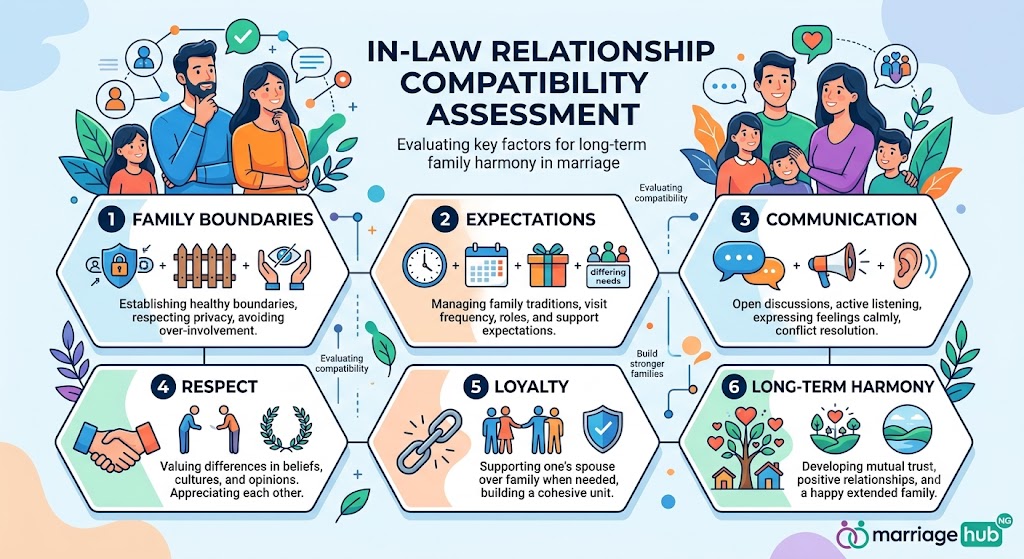
The In-Law Relationship: Discuss the role your families will play in your lives. How often will you visit for holidays? How involved will grandparents be with future children? It is crucial that you and your partner present a united front to your families . If your mother has a habit of criticizing your fiancé, it is your job to address it, not his .
-
Friendships: Marriage changes friendships, but it shouldn't end them. Discuss how you will maintain your individual friendships and make time for them. A healthy marriage consists of two whole people with rich lives, not two people who have become completely enmeshed . Encourage each other to maintain these vital connections.
-
Creating Your Own Traditions: Part of setting boundaries is creating your own family identity. This might mean alternating holidays between families or deciding to start your own Thanksgiving tradition at home. It's about balancing your family of origin with your new family unit.
6. Prepare Yourself, Not Just the Wedding
Amidst the chaos of planning, it is easy to lose yourself. The best gift you can bring to your marriage is a healthy, whole, and self-aware version of yourself.
-
Maintain Your Identity: You are becoming a wife, but you are not ceasing to be you. Continue to pursue your hobbies, nurture your friendships, and maintain your career goals . A strong marriage is made of two strong individuals.
-
Work on Yourself: Use this time for self-reflection. Are there personal insecurities or past wounds you need to address? Consider individual therapy to work through these issues. The more you heal yourself, the less you will project your baggage onto your partner.
-
Don't Lose the Romance: In the final weeks before the wedding, make a conscious effort to connect with your fiancé without talking about seating charts or floral arrangements. Go on dates. Talk about your hopes for the future. Remember why you fell in love. This is the "us time" that will sustain you through the stress of the big day .
A Final Word of Wisdom
As you count down the days to your wedding, remember that the marriage is the main event. The dress will be worn once, the flowers will wilt, and the cake will be eaten. But the vows you make and the life you build will last forever.
By having these important conversations now, you are not being unromantic; you are being deeply wise. You are building a marriage on a foundation of honesty, respect, and shared vision. That is the most beautiful preparation of all.








.jpg)
Sign in to comment