 Nurturing Marriages, Enriching Families!
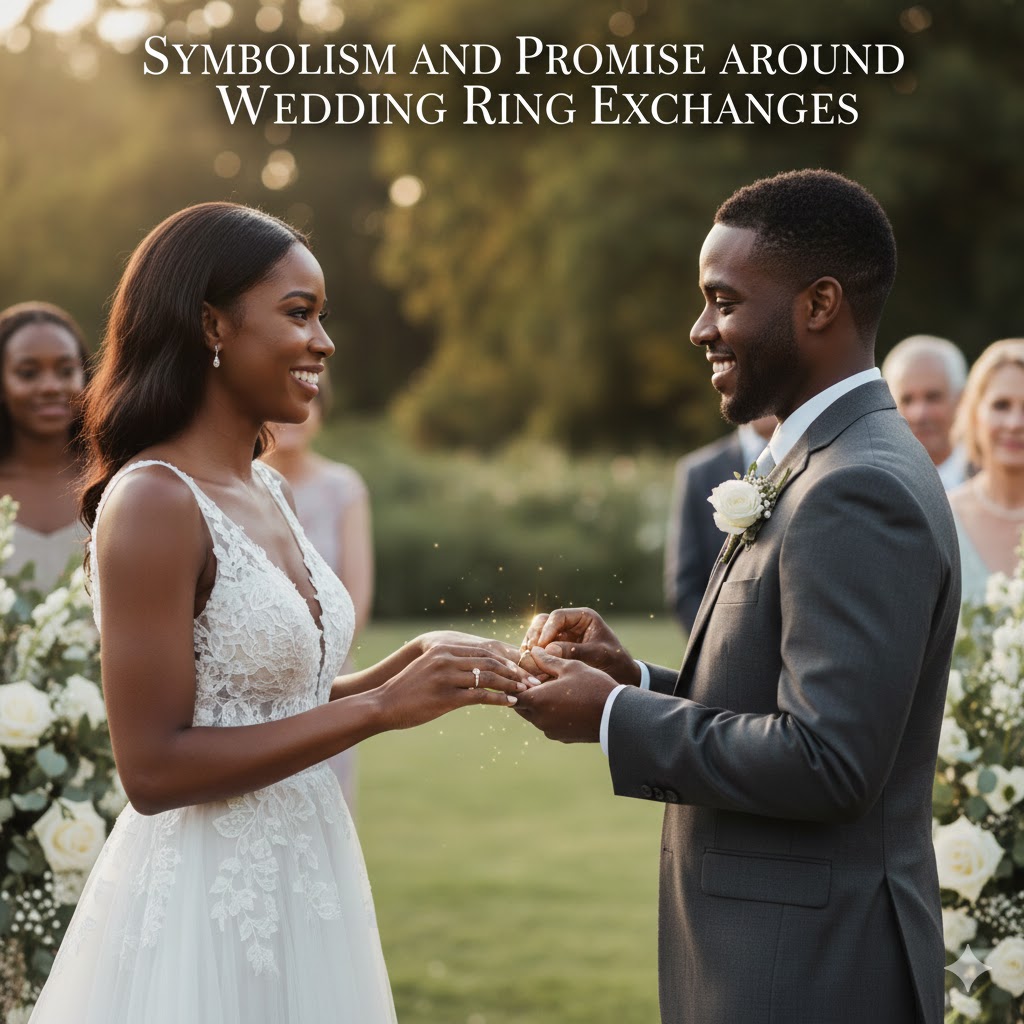
Symbolism and Promise Around Wedding Ring Exchanges
Of all the traditions associated with weddings, none is as universally recognized or emotionally charged as the exchange of rings. It is often the centerpiece of the ceremony—the moment when vows are sealed, and a couple is declared married. But beneath the simple act of sliding a band onto a finger lies a world of profound symbolism, ancient history, and deep personal promise.
The wedding ring is far more than a piece of jewelry. It is a circle without end, a symbol of eternity. It is made of precious metal, meant to withstand the tests of time. It is placed on a specific finger, believed to connect directly to the heart. Every aspect of the wedding ring, from its shape to its material to the moment it is exchanged, is laden with meaning.
This article explores the rich history and powerful symbolism behind wedding ring exchanges, and the promises that couples make when they place that band on each other's fingers.
The Ancient Origins of the Wedding Ring
The tradition of exchanging rings is ancient, predating written history. Its origins lie not in romance as we know it today, but in practical and symbolic gestures of ownership and commitment.
Egyptian Circles of Eternity
The earliest evidence of wedding rings comes from ancient Egypt, dating back over 4,800 years . The Egyptians saw the circle as a powerful symbol—it had no beginning and no end, representing the eternal cycle of life, death, and rebirth, as well as the sun and the moon . By exchanging rings made of braided reeds or hemp, they were symbolizing an unending, everlasting love and commitment.
They also placed great significance on the ring finger. Egyptians believed that the vena amoris, or the "vein of love," ran directly from the fourth finger of the left hand to the heart . Placing the ring on this finger was a way of connecting the symbol of eternal love directly to the seat of emotion and life itself.
Roman Evolution: From Iron to Gold
The Romans adopted the tradition but added their own layers of meaning. Initially, Roman rings were made of iron, symbolizing strength and permanence . The iron ring was a sign of a binding contract, a legal agreement between two parties . This introduced the concept of the ring as a seal of a solemn, unbreakable oath.
As the Roman Empire grew wealthier, gold became the metal of choice, representing prosperity and status. Wealthy Romans even had their rings engraved with intricate designs, personalizing the symbol of their union. The Roman man would give his bride a ring as a sign of his commitment and intent to marry, a practice that evolved into the betrothal ring we know today.
The Profound Symbolism of the Wedding Ring
The wedding ring is a multi-layered symbol, carrying meanings that resonate on personal, cultural, and spiritual levels.
The Circle: Infinity and Wholeness
The most fundamental symbol of the wedding ring is its shape. The unbroken circle represents eternity, infinity, and wholeness . It has no end, just as the love and commitment between spouses is meant to be everlasting . It symbolizes a love that is complete and continuous, a bond that cannot be broken.
In many spiritual traditions, the circle also represents the divine, a perfect and unending whole. By exchanging circles, the couple is inviting a sacred, eternal quality into their union. The circle also symbolizes the cycle of life—birth, growth, death, and rebirth—and the couple's commitment to navigate these cycles together.
The Precious Metal: Durability and Value
The choice of metal for wedding rings—traditionally gold, platinum, or silver—is also deeply symbolic. These are precious metals, valued for their rarity and beauty . They represent the preciousness of the relationship itself.
More importantly, these metals are chosen for their durability. Gold does not tarnish or rust. Platinum is incredibly strong. The ring is meant to be worn every day, through every season of life, and to withstand the test of time. This symbolizes the couple's desire for their marriage to be just as durable, to remain strong and beautiful even through the most challenging circumstances.
The Finger: Connection to the Heart
As mentioned, the tradition of placing the ring on the fourth finger of the left hand stems from the ancient Egyptian belief in the vena amoris, the "vein of love" that ran directly to the heart . While we now know this to be anatomically incorrect, the symbolism remains powerfully romantic.
Today, wearing the ring on this finger is a universal sign that one's heart is taken. It is a public declaration that your love and loyalty belong to another, and that your heart is connected to theirs. In many cultures, this finger is also associated with commitment, making it the perfect location for such a significant symbol.
The Open Center: A Gateway to the Future
The empty space within the ring is not just a hole; it is a gateway. It represents the couple's shared future, a space filled with potential, dreams, and the life they will build together . It is a void waiting to be filled with memories, children, challenges overcome, and joys shared. The ring encloses this space, protecting it and signifying that the couple's future is now intertwined.
The Weight: A Tangible Reminder
There is a physical weight to a wedding ring. This weight is a constant, tangible reminder of the vows exchanged. When a spouse is away, working late, or facing a difficult decision, the subtle weight on their finger reminds them of their commitment, their partner, and the home they share. It is a silent anchor, a physical connection to the promise they made.
The Promise: What the Exchange Represents
The act of exchanging rings is not just about giving a gift; it is a sacred ritual where promises are made manifest. The words spoken during the exchange often articulate these promises.
A Vow of Unending Love and Fidelity
The most fundamental promise sealed by the ring is one of unending love and fidelity. The circular shape vows that this love will not have an end. The ring is a constant reminder to remain faithful, to keep the heart reserved for one person alone. It is a public declaration that you have chosen this one person, and you will continue to choose them every day.
A Commitment to Partnership
Exchanging rings symbolizes the creation of a new partnership. It is a promise to no longer walk through life as two separate individuals, but as a unified team. The couple promises to share each other's burdens, to celebrate each other's joys, and to face the world together. The matching or complementary nature of many wedding bands underscores this unity—they are two halves of a whole, distinct but forever linked.
A Pledge of Protection and Provision
Historically, the ring was also a sign of the groom's promise to protect and provide for his bride. While the dynamics of modern marriage are more egalitarian, the underlying sentiment remains. The ring can symbolize a promise to create a safe and secure home together, to protect each other's hearts, and to provide emotional, physical, and spiritual support.
A Testament to Permanence
In a world of fleeting trends and temporary connections, the wedding ring stands as a bold testament to permanence. It is a promise that this relationship will not be discarded when difficulties arise. It is a vow to work through problems, to grow together, and to remain committed "for better, for worse, for richer, for poorer, in sickness and in health."
A Public Declaration
The exchange of rings happens in the presence of witnesses—family, friends, and community. This makes the promise not just a private agreement, but a public declaration. The ring on your finger tells the world, "I am taken. I am committed. I am part of a union." It invites the community to support and honor that union, holding the couple accountable to their vows.
Modern Variations and Personalization
While the core symbolism remains, modern couples are finding beautiful ways to personalize the tradition of ring exchange.
-
Unique Materials: Some couples choose rings made from alternative materials like titanium, tungsten, wood, or even silicone, each carrying its own symbolism (strength, connection to nature, practicality).
-
Engraved Messages: Many couples engrave the inside of their rings with a personal message, a significant date, or a short phrase from their vows, making the promise even more intimate.
-
Heirloom Rings: Using rings passed down through generations adds layers of family history and continuity. It symbolizes that the couple's love is part of a larger story, connecting them to ancestors and future descendants.
-
Matching vs. Complementary: Some couples choose identical bands to emphasize their unity. Others choose rings that are different but designed to complement each other, symbolizing that they are two unique individuals who have chosen to create a harmonious life together.
The Ring as a Daily Reminder
Perhaps the most powerful aspect of the wedding ring is its role in daily life. Long after the wedding cake is eaten and the flowers have wilted, the ring remains. It is the one tangible element of the wedding day that is carried into every subsequent day.
It is there during mundane tasks—washing dishes, typing at a computer, holding a child's hand. In these ordinary moments, it serves as a quiet, constant reminder of the extraordinary promise made. It can bring a smile during a stressful day, offer comfort during an argument, and reinforce the bond when miles apart.
A Final Reflection
The exchange of wedding rings is a moment of profound beauty and significance. It is the physical culmination of every vow, every dream, and every hope a couple has for their future. The circle, the metal, the finger, the weight—all of these elements combine to create a symbol so powerful that it has endured for millennia.
When you place that ring on your partner's finger, you are participating in an ancient ritual. You are promising forever. You are declaring your love to the world. And you are giving them a tangible reminder, a small circle of precious metal, that will sit next to their heart and whisper, "I am loved, I am chosen, and I am not alone."


.jpg)

Sign in to comment