 Nurturing Marriages, Enriching Families!
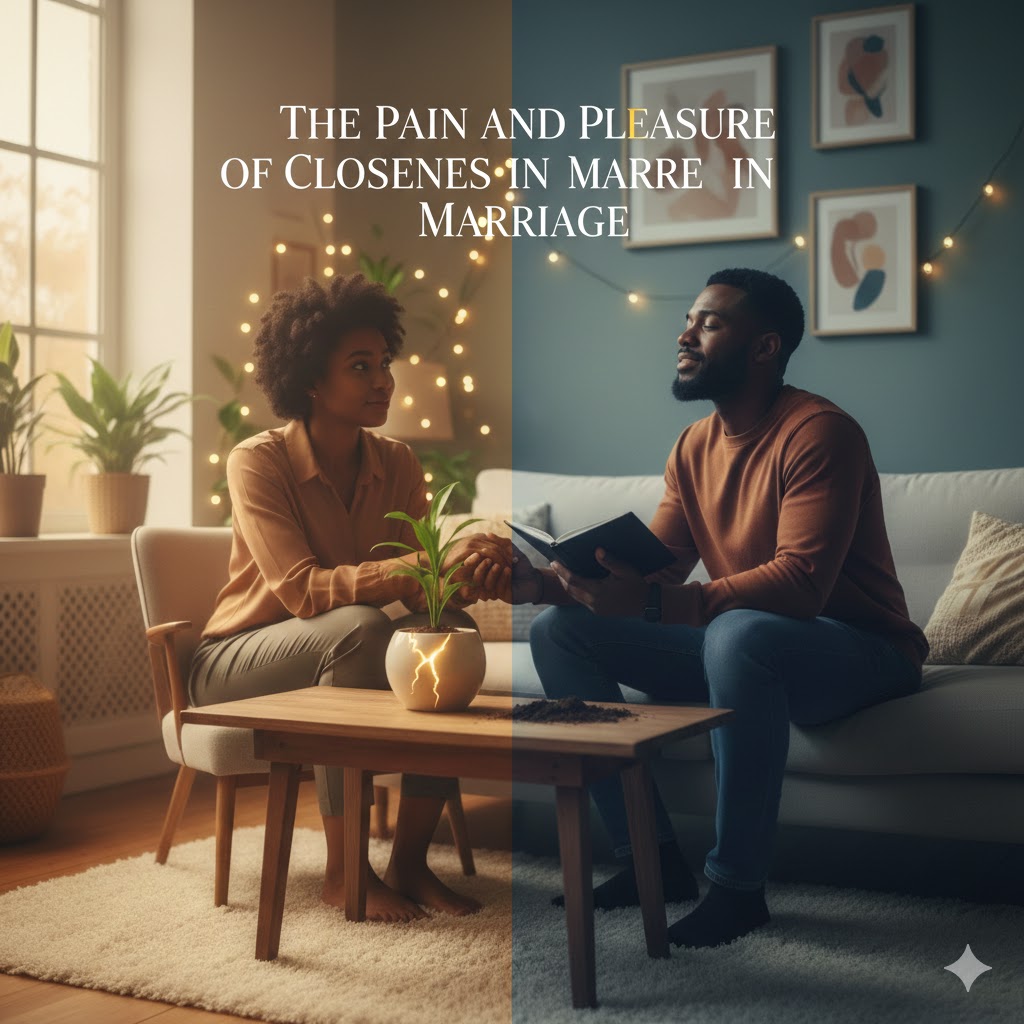
The Pain and Pleasure of Closeness in Marriage
Marriage is often portrayed as a state of perpetual bliss—two souls united, forever in sync, basking in the warm glow of togetherness. While this image is beautiful, anyone who has been married for more than a few years knows that the reality is far more complex. The very closeness that makes marriage so rewarding is also the source of its deepest challenges.
This paradox lies at the heart of every marriage: the same intimacy that brings us the greatest joy can also cause us the deepest pain. Understanding this duality is essential for building a relationship that not only survives but thrives through the decades.
The Pleasure: Why Closeness Matters
The Foundation of Emotional Safety
At its core, emotional intimacy is the feeling of closeness, connectedness, and togetherness shared between partners . It's what creates safety in a relationship, allowing both individuals to be vulnerable without fear of judgment .
When emotional intimacy is present, partners experience a profound sense of being truly seen and heard. They can share their deepest fears, wildest dreams, and most embarrassing moments, knowing they will be met with acceptance rather than ridicule. This safety is the bedrock upon which all other aspects of a healthy marriage are built.
Research confirms that intimacy is a major part of romantic relationships and is linked to positive and satisfying relationships . It nurtures empathy, reduces conflict, and improves communication between partners .
The Many Dimensions of Connection
Intimacy in marriage extends far beyond the physical. It encompasses multiple dimensions of our lives:
-
Emotional intimacy: The sense of self-disclosure, sharing one's inner world, and feeling closer to one's partner
-
Physical and sexual intimacy: The drives that lead to romance, physical attraction, and sexual connection
-
Intellectual intimacy: Sharing ideas and engaging each other's minds
-
Spiritual intimacy: Connecting on matters of faith, meaning, and purpose
When these dimensions are healthy and balanced, couples experience what researchers call "committed intimacy"—a relationship defined as a container for the growth of both participants and the relationship itself . In this type of intimacy, partners show ongoing interest in actively participating in one another's lives emotionally, intellectually, and physically .
The Health Benefits of a Strong Bond
The pleasures of closeness aren't just emotional—they're physical too. Physical touch, such as holding hands or hugging, helps release oxytocin, often called the "bonding hormone" or "love hormone" . This chemical reaction leaves couples feeling emotionally closer than ever.
Moreover, people in committed relationships like marriage tend to be healthier on average, though the quality of the relationship matters tremendously . Good relationships are genuinely good for your health .
The Pain: Why Closeness Hurts
The Vulnerability Factor
The very safety that makes intimacy so beautiful also makes it dangerous. When we open ourselves to another person, we give them the power to hurt us more deeply than anyone else could. Our partner knows our insecurities, our tender spots, our deepest wounds. In moments of conflict or betrayal, they can wound us in ways that strangers never could.
This vulnerability is inevitable. As conflict mediator Chad Ford explains, conflict is not only natural but necessary in intimate relationships where two individuals are blending their lives . The absence of conflict can actually signal relationship trouble .
The Closeness Discrepancy
One of the most significant sources of pain in marriage is what researchers call "closeness discrepancies"—situations where one partner experiences more or less closeness than they desire . These discrepancies are surprisingly common.
Research from Columbia University reveals that feeling not enough closeness and too much closeness are equally bad for mental health, both for the person experiencing the discrepancy and their partner . The greater the misalignment, the greater the risk that the relationship will end .
Most often, it's someone who isn't getting enough closeness, frequently because of stress outside the relationship like financial troubles or problems at work . When one partner craves connection while the other needs space, both feel frustrated and misunderstood.
When Intimacy Becomes Conflict
The same emotional investment that creates deep pleasure also creates deep pain during disagreements. Marital conflict often stems from unmet needs, wants, and desires . When one person needs something badly enough, and the other is unwilling or unable to meet that need, resentment grows.
Conflict can cause psychological pain that manifests in withdrawal and distance, depression, anxiety, and aggression—not only between the couple but also with those living around them . The pain of feeling unheard, dismissed, or unloved by the person who promised to cherish you cuts to the very core of our being.
Navigating the Paradox: From Pain to Deeper Pleasure
The goal of a healthy marriage is not to eliminate the pain of closeness—that's impossible. Rather, it's to navigate that pain in ways that ultimately deepen the connection. Here's how.
1. Recognize That Conflict Is Growth in Disguise
Conflict, when handled constructively, can actually strengthen a marriage. People who continue to relate to one another despite their disagreements may build greater trust and confidence in each other and become more adept at resolving their problems .
The key is shifting from a "win/lose" mentality to a collaborative one. As Chad Ford suggests, when we truly see our partner's humanity and respond to their needs rather than what we think they "deserve," profound healing becomes possible .
2. Develop Emotional Intelligence Skills
Research examining multiple dyadic behaviors in marriage found that different skills matter in unique ways . For husbands, sexual intimacy was the strongest predictor of marital satisfaction over time, while for wives, communication and conflict management were the strongest predictors .
This doesn't mean one is more important than the other—both matter tremendously. But understanding that your partner may experience and express intimacy differently can help bridge gaps in understanding.
3. Balance Togetherness and Separateness
Counterintuitively, spending time apart can actually help you feel closer. "Healthy attachment relies on a balance between togetherness and separateness," explains therapist Rachel Zar . Time apart gives you the chance to miss your partner, crave togetherness, and have things to share with them when you do see them .
This balance allows both partners to maintain their individual identities while still nurturing the "we" of the relationship. When both partners feel whole as individuals, they bring more to the partnership.
4. Practice Intentional Connection
In long-term relationships, emotional intimacy doesn't just happen—it requires intentionality . Therapist Jenni Skyler recommends the "three date rule": each week (or at least monthly), carve out time for three different types of connection:
-
The Fun Date: Anything you both enjoy that creates a sense of play
-
The Business Date: Discuss practical matters like finances and family responsibilities
-
The Emotional Connection Date: Have a heart-to-heart conversation where you check in on how you're both feeling
This routine ensures that both the practical and emotional aspects of your relationship receive attention.
5. Develop Fair Fighting Skills
Since conflict is inevitable, learning to fight fairly is essential. This means:
-
Using "I" statements rather than "you" statements that put your partner on the defensive ("I feel overwhelmed when..." instead of "You always...")
-
Taking a "time-out" when emotions run too high, with a commitment to return to the conversation
-
Listening to understand rather than to win
-
Addressing the problem, not attacking the person
6. Embrace Both Types of Intimacy
Physical and emotional intimacy work in tandem. You really can't have one without the other in a long-term, healthy relationship . While physical intimacy allows couples to express and enjoy their connection on a sensual level, emotional intimacy is necessary for people to feel safe enough to build and maintain a lasting connection in the first place .
Partners may value each type differently, and that's okay—as long as both recognize that both types hold equal weight in the marriage . This might mean one partner makes more effort toward physical intimacy while the other prioritizes deep conversation.
The Beauty of the Struggle
There is a reason that couples who have weathered decades of marriage often speak of their bond with a depth that newlyweds cannot replicate. They have learned that the pain of closeness—the arguments, the disappointments, the moments of feeling misunderstood—can actually deepen the pleasure.
When you work through conflict together, you build something that cannot be built any other way: a trust that is tested and proven, a love that has survived disappointment and chosen to continue, a partnership that has learned to navigate both the calm and the storms.
As one couple who attended a marriage enrichment programme discovered, learning to communicate differently transformed their relationship. The husband, who previously withdrew during conflicts, learned to call a "time-out" instead—stepping away to calm down and returning ready to talk things through constructively . The result? Fewer quarrels and a deeper connection .
Conclusion
The pain and pleasure of closeness in marriage are not opposites to be balanced—they are two sides of the same coin. You cannot have the profound joy of being truly known without also risking the pain of being truly hurt. You cannot experience the ecstasy of deep connection without also facing the challenges that deep connection inevitably brings.
The marriages that last are not the ones that avoid pain, but the ones that learn to grow through it. They are the ones where partners commit to staying in the conversation, even when it's hard. Where they learn to see conflict not as a threat to the relationship, but as an opportunity for deeper understanding.
In the end, the pain of closeness is not a sign that something is wrong—it is a sign that something deeply meaningful is at stake. And the pleasure of closeness, when it comes, is all the sweeter for having been earned.










.jpg)
Sign in to comment