 Nurturing Marriages, Enriching Families!
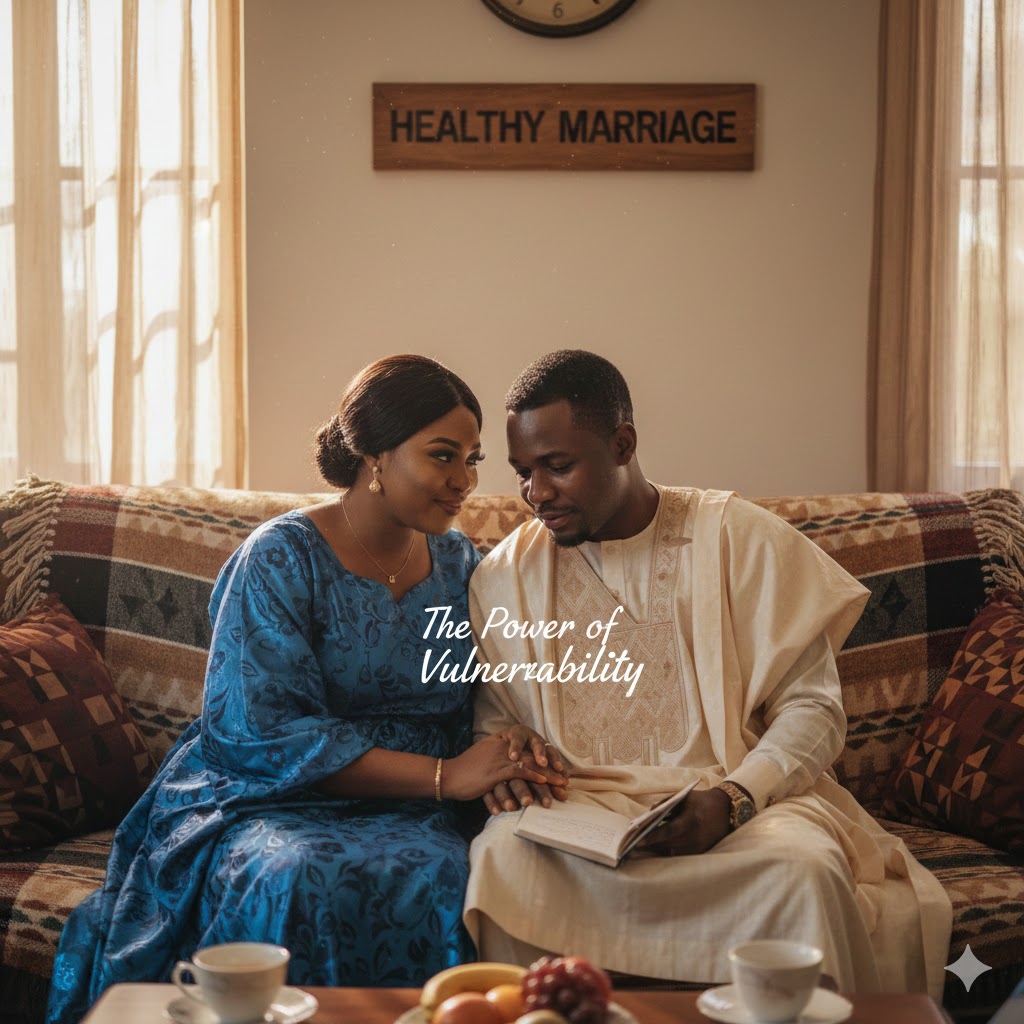
The Power of Vulnerability in a Healthy Marriage: Why Emotional Openness Strengthens Love
Many couples believe that strength in marriage means emotional control, silence during pain, and the ability to “handle things” alone. From a young age, many Nigerians are taught not to cry, complain, or expose emotional weakness—especially within marriage. Over time, this mindset turns emotional distance into a badge of maturity, even though it slowly weakens intimacy.
Vulnerability, often mistaken for weakness, is actually one of the strongest forces in a healthy marriage. It is the willingness to be seen fully—to share fears, doubts, disappointments, desires, and hopes without pretending to be invincible. When couples embrace vulnerability, emotional connection deepens, trust grows, and intimacy becomes more meaningful.
Marriage thrives not on perfection, but on honesty. Couples who hide their struggles may appear strong from the outside, but inside, emotional walls quietly form. Vulnerability dismantles those walls and replaces them with understanding and closeness.
Why Vulnerability Feels Risky in Marriage
For many couples, vulnerability feels dangerous because it involves risk. Sharing emotions means risking rejection, misunderstanding, or being judged. Cultural upbringing often reinforces the idea that spouses should not “burden” each other with personal struggles.
Men, in particular, may feel pressure to appear emotionally strong and financially stable at all times. Women may fear being labeled “too emotional” or “difficult” if they express hurt or unmet needs. These fears create emotional self-protection that limits true connection.
Tunde, a business owner in Ibadan, lost a major contract that shook his confidence. Instead of sharing his fear with his wife, Funmi, he became withdrawn and irritable. Funmi assumed he was angry with her, which led to tension and silence. When Tunde finally opened up about his fear of failure, Funmi felt closer to him, not disappointed. Vulnerability turned confusion into compassion.
How Vulnerability Builds Emotional Safety
Emotional safety is the foundation of intimacy. When spouses feel safe to express themselves without ridicule or punishment, trust grows naturally. Vulnerability signals to your partner, “I trust you with my truth.”
In healthy marriages, vulnerability invites empathy rather than criticism. It allows couples to move from assumptions to understanding. When partners share honestly, they stop guessing and start connecting.
Emotional safety does not mean agreement on everything; it means respect during disagreement. Couples who feel emotionally safe are more likely to resolve conflict constructively rather than defensively.
Vulnerability and Communication in Marriage
Communication is often cited as the key to a strong marriage, but vulnerability determines the quality of that communication. Without vulnerability, conversations remain surface-level—focused on logistics rather than emotions.
When couples communicate vulnerably, they go beyond discussing what happened to exploring how it felt. This depth fosters emotional closeness.
Ngozi struggled with resentment because she felt unsupported with household responsibilities. Instead of expressing her feelings, she complained indirectly. When she finally shared her exhaustion and need for help without accusation, her husband understood her emotional state for the first time. That conversation shifted their dynamic from conflict to collaboration.
Vulnerability Strengthens Intimacy and Desire
Sexual intimacy thrives where emotional closeness exists. Vulnerability allows partners to express desires, insecurities, and boundaries without shame. It also helps couples navigate changes in libido, body image, and emotional connection over time.
Many couples struggle sexually not because of lack of attraction, but because emotional distance has replaced openness. Vulnerability restores trust and allows intimacy to feel safe and fulfilling.
When spouses feel emotionally seen, physical closeness becomes more natural and satisfying.
Healing Past Wounds Through Vulnerability
Every individual enters marriage with emotional baggage from past experiences—family dynamics, previous relationships, childhood trauma, or unmet expectations. Vulnerability creates space for healing rather than hiding these wounds.
Sharing painful experiences allows partners to understand triggers and respond with compassion rather than frustration. It transforms hurt from a private burden into a shared journey toward healing.
Aisha shared with her husband how past rejection affected her ability to trust. Understanding her vulnerability helped him respond with reassurance rather than defensiveness. Healing began not because the pain disappeared, but because it was no longer hidden.
Vulnerability During Conflict
Conflict is inevitable in marriage, but vulnerability determines whether conflict divides or strengthens the relationship. Defensive reactions escalate disagreements, while vulnerable expressions de-escalate them.
Saying “I feel hurt” instead of “You always hurt me” changes the tone of conversation. Vulnerability shifts focus from winning an argument to preserving connection.
Couples who practice vulnerability during conflict are more likely to reach resolution and maintain emotional closeness even during disagreement.
Faith and Vulnerability in Marriage
For couples of faith, vulnerability aligns deeply with spiritual values such as humility, honesty, and mutual care. Faith encourages openness, forgiveness, and emotional transparency.
Praying together, sharing fears, and seeking guidance together foster vulnerability. Faith becomes a safe framework for emotional expression rather than a tool for suppression.
When faith supports vulnerability, marriages experience deeper emotional and spiritual intimacy.
Overcoming Fear of Vulnerability
Fear is the biggest obstacle to vulnerability. Fear of rejection, misunderstanding, or emotional exposure often keeps spouses guarded. Overcoming this fear requires small, consistent steps.
Vulnerability begins with honesty in simple moments—expressing gratitude, admitting stress, acknowledging emotional needs. As trust grows, deeper sharing becomes easier.
It is important for partners to respond to vulnerability with care. Dismissing or minimizing emotional expression discourages openness and rebuilds walls.
Creating a Culture of Openness in Marriage
Vulnerability flourishes in an environment of acceptance. Couples can intentionally create this culture by listening without interrupting, validating feelings, and avoiding criticism or sarcasm.
A marriage where vulnerability is welcomed becomes a safe refuge from external pressures. Spouses become emotional allies rather than adversaries.
When Vulnerability Feels One-Sided
Sometimes one partner opens up more than the other. This imbalance can feel discouraging, but patience and encouragement often help. Vulnerability cannot be forced; it must be invited.
Consistent emotional safety eventually fosters mutual openness. Over time, shared vulnerability becomes a natural rhythm in the marriage.
Conclusion
Vulnerability is not weakness; it is emotional courage. In marriage, it allows couples to connect deeply, heal together, and grow stronger through life’s challenges. When spouses choose openness over self-protection, intimacy flourishes and trust deepens.
Healthy marriages are not built on emotional perfection, but on the willingness to be real. Vulnerability transforms marriage from coexistence into true partnership.
In a world that teaches emotional restraint, choosing vulnerability in marriage is a powerful act of love.







.jpg)
Sign in to comment