 Nurturing Marriages, Enriching Families!
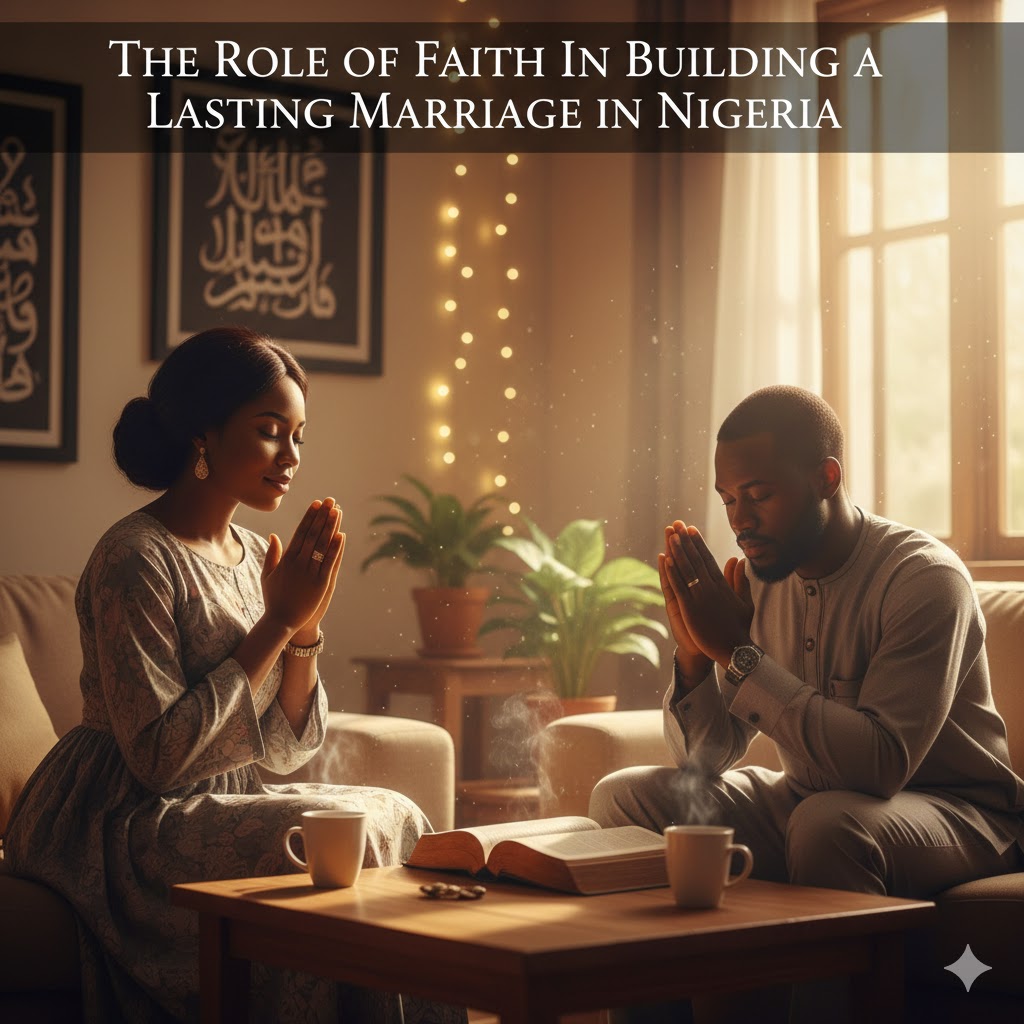
The Role of Faith in Building a Lasting Marriage in Nigeria
Marriage in Nigeria is more than a legal contract between two individuals—it is a spiritual covenant, a family alliance, and a cultural institution deeply rooted in faith. Whether Christian, Muslim, or rooted in traditional beliefs, faith plays a central role in shaping marital expectations, values, and long-term commitment. In a society where family bonds are highly valued and community influence is strong, the role of faith in building a lasting marriage in Nigeria cannot be overstated.
This article explores how faith influences marital stability, strengthens commitment, shapes conflict resolution, and provides couples with a foundation for enduring love.
Understanding Marriage Through Faith in Nigeria
Nigeria is one of the most religious countries in the world. Christianity and Islam are the dominant religions, alongside traditional belief systems that emphasize spirituality and ancestral values. In many homes, marriage is seen as divinely ordained.
For Christians, marriage is often viewed as a covenant before God, guided by teachings from the Bible. For Muslims, marriage is regarded as a sacred contract under the guidance of the Qur'an. Across traditional cultures, marriage is blessed through rituals that invoke spiritual protection and ancestral approval.
Faith gives marriage a deeper meaning beyond romance. It transforms marriage into a spiritual journey requiring patience, forgiveness, humility, and sacrifice.
Faith as a Foundation for Shared Values
One of the strongest predictors of marital success is shared values. Faith provides a moral framework that shapes how couples approach:
-
Commitment
-
Fidelity
-
Financial responsibility
-
Parenting
-
Conflict resolution
-
Gender roles
When couples share similar religious beliefs, they often have aligned expectations about marriage. This alignment reduces confusion and prevents value-based conflicts.
In Nigeria, couples who pray together, attend religious services together, and participate in faith-based community activities often report stronger emotional bonds.
Strengthening Commitment Through Spiritual Beliefs
Marriage inevitably faces challenges—economic hardship, family interference, health issues, and personal growth differences. Faith strengthens commitment by reminding couples that marriage is not only about feelings but about covenant and responsibility.
Religious teachings often emphasize:
-
Patience during hardship
-
Forgiveness after offense
-
Sacrifice for the greater good
-
Love as an intentional action
When couples believe that their union is spiritually ordained, they may be more motivated to work through difficulties rather than abandon the relationship at the first sign of trouble.
Faith encourages endurance.
The Role of Prayer in Marital Stability
Prayer is one of the most powerful tools couples use to sustain their marriage.
In many Nigerian homes, couples:
-
Pray together in the morning or evening
-
Seek divine guidance before major decisions
-
Pray during conflict
-
Fast for breakthroughs
Praying together builds emotional intimacy. It creates vulnerability and shared dependence on a higher power. Couples who pray together often develop stronger empathy toward each other.
Prayer also reduces stress. When financial pressure or family challenges arise, spiritual reassurance provides hope and emotional balance.
Faith and Conflict Resolution
Conflict is natural in every marriage. The difference between a lasting marriage and a failing one often lies in how conflict is handled.
Faith teaches principles such as:
-
Humility
-
Self-control
-
Kind speech
-
Forgiveness
-
Reconciliation
Instead of escalating arguments, faith-based couples may seek counsel from religious leaders, elders, or trusted mentors within their community.
In Nigerian culture, pastors, imams, and traditional elders often play advisory roles in resolving marital disputes. This community support system strengthens marriages by offering guidance and accountability.
Financial Faith and Trust in Marriage
Economic pressure is one of the leading causes of marital stress in Nigeria. Rising living costs, unemployment, and extended family responsibilities can strain relationships.
Faith provides reassurance during financial uncertainty. Couples who share spiritual beliefs often rely on hope, trust, and collective effort rather than blame.
Religious teachings also encourage:
-
Honesty in financial dealings
-
Generosity
-
Contentment
-
Avoiding destructive debt
When couples align their financial goals with their spiritual values, they are more likely to practice discipline and teamwork.
Parenting and Faith-Based Marriage
Children are central to Nigerian family life. Faith influences parenting styles, discipline methods, and moral education.
Couples who share religious values often:
-
Raise children with moral guidance
-
Encourage spiritual education
-
Model respect and discipline
-
Create stable home environments
A shared faith ensures consistency in how children are taught right and wrong. This consistency reduces conflict between parents about child-rearing decisions.
Faith and Gender Roles in Nigerian Marriages
Religion also influences gender expectations in marriage. While interpretations vary, faith traditions often define responsibilities within the home.
However, modern Nigerian couples increasingly balance traditional values with contemporary realities. Many faith-based marriages now emphasize partnership rather than rigid role division.
The key is mutual respect. Faith teaches dignity and love for one another, which helps couples adapt roles based on circumstance rather than rigid stereotypes.
Community Support Through Faith
One of the greatest strengths of faith in Nigerian marriages is community involvement.
Religious communities provide:
-
Marriage counseling
-
Pre-marital classes
-
Mentorship programs
-
Emotional support networks
-
Accountability structures
Couples are not isolated; they belong to a spiritual family. This support can prevent small issues from becoming major crises.
Community involvement also discourages secrecy and emotional isolation.
Interfaith Marriages in Nigeria
Interfaith marriages—such as Christian-Muslim unions—are increasingly common in Nigeria. While they can succeed, they require intentional dialogue and mutual respect.
Challenges may arise in areas like:
-
Wedding ceremonies
-
Child religious upbringing
-
Extended family expectations
-
Religious celebrations
Successful interfaith marriages depend on compromise, understanding, and strong communication. Mutual respect for each other's faith traditions is essential.
Challenges of Faith in Marriage
While faith strengthens marriage, it can also create tension if misunderstood or misapplied.
Some potential challenges include:
-
Religious extremism
-
Misinterpretation of scriptures
-
Using religion to justify unhealthy control
-
External religious pressure
Healthy faith in marriage promotes love and respect—not dominance or suppression.
Couples should prioritize balanced teachings that emphasize compassion, equality, and partnership.
Faith as Emotional Security
Faith gives couples hope beyond present difficulties. When circumstances feel overwhelming, spiritual belief provides reassurance that challenges are temporary.
In Nigeria, testimonies of couples overcoming hardship through faith are common. These narratives reinforce belief in perseverance and divine support.
Emotional security rooted in faith often reduces fear of abandonment. Couples are more likely to fight for their marriage when they see it as spiritually significant.
Building a Faith-Centered Marriage
To intentionally build a faith-based marriage, couples can:
-
Pray or reflect together regularly
-
Study religious teachings about marriage
-
Attend religious gatherings as a couple
-
Seek mentorship from older couples
-
Discuss shared spiritual goals
-
Serve in community activities together
Faith becomes more powerful when practiced intentionally rather than assumed.
Balancing Faith and Practical Effort
While faith is essential, it must be complemented by practical relationship skills.
A lasting marriage requires:
-
Effective communication
-
Financial planning
-
Emotional intelligence
-
Conflict management
-
Personal growth
Faith strengthens these areas but does not replace effort. Prayer must be accompanied by action.
The Nigerian Cultural Context
In Nigeria, marriage is rarely private. Families, elders, and community members are involved. Faith integrates into cultural marriage ceremonies, from church weddings to Islamic nikah ceremonies and traditional rites.
This cultural integration reinforces the spiritual seriousness of marriage.
Couples are reminded that their union affects not only themselves but their extended families and communities.
Final Thoughts
The role of faith in building a lasting marriage in Nigeria is profound. Faith provides shared values, strengthens commitment, guides conflict resolution, and offers hope during hardship. It connects couples to a supportive community and gives spiritual meaning to their union.
However, faith must be practiced with wisdom, compassion, and balance. A strong marriage combines spiritual devotion with practical effort.
In Nigeria’s deeply religious society, couples who intentionally integrate faith into their daily lives often find resilience, peace, and enduring love.
Marriage is not merely sustained by emotion—it is sustained by conviction, commitment, and shared belief.









.jpg)




Sign in to comment