 Nurturing Marriages, Enriching Families!
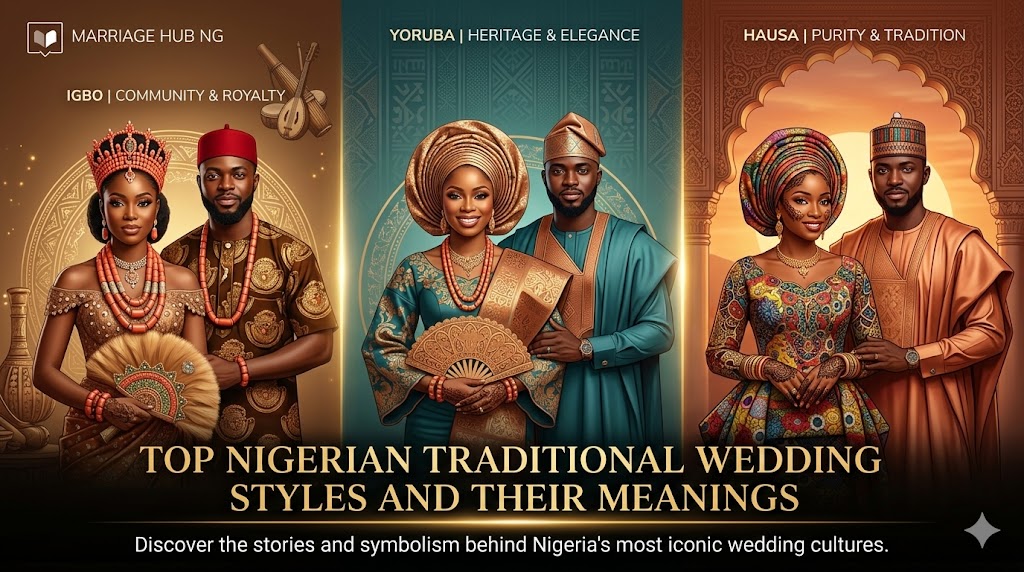
Top Nigerian Traditional Wedding Styles and Their Meanings
Nigeria is a nation rich in culture, language, and tradition. With over 250 ethnic groups, weddings in Nigeria are more than romantic celebrations—they are cultural ceremonies that honour ancestry, family lineage, spirituality, and community values. Traditional weddings are deeply symbolic, colourful, and filled with rituals that communicate respect, unity, and heritage.
From the vibrant aso-oke of the Yoruba to the regal coral beads of the Igbo and the modest elegance of the Hausa-Fulani bridal attire, Nigerian traditional wedding styles carry profound meaning.
In this article, we explore the top Nigerian traditional wedding styles and the cultural significance behind each one.
1. Yoruba Traditional Wedding Style (Ìgbéyàwó)
The Yoruba traditional wedding, known as Ìgbéyàwó, is one of the most elaborate and structured ceremonies in Nigeria. It is a vibrant event filled with prostrations, prayers, music, and colourful attire.
Bridal Attire
The Yoruba bride typically wears:
-
Aso-oke (handwoven fabric)
-
Iro (wrapper)
-
Buba (blouse)
-
Gele (headgear)
-
Ipele (shawl)
The groom wears:
-
Agbada (flowing robe)
-
Buba and Sokoto
-
Fila (cap)
Meaning and Symbolism
-
Prostration (Dobale): The groom and his friends lie flat on the floor to greet the bride’s family. This symbolizes humility and respect.
-
Aso-oke fabric: Represents prestige and cultural pride.
-
Gele: Symbolizes dignity and womanhood.
Yoruba weddings emphasize respect for elders, family approval, and community unity. The structured engagement process highlights negotiation, honour, and responsibility.
2. Igbo Traditional Wedding Style (Igba Nkwu)
The Igbo traditional marriage ceremony, known as Igba Nkwu (wine carrying), is symbolic and deeply spiritual.
Bridal Attire
The Igbo bride often wears:
-
George wrapper or lace fabric
-
Coral beads (necklace and bracelets)
-
Elaborate head tie
-
Decorative blouse
The groom wears:
-
Isiagu (lion-head patterned top)
-
Red cap
-
Walking stick
Meaning and Symbolism
-
Wine carrying ceremony: The bride searches for her groom among guests and offers him palm wine. This symbolizes her free will and acceptance of the marriage.
-
Coral beads: Represent royalty, wealth, and marital status.
-
Red cap: Symbolizes authority and cultural pride.
Igbo weddings emphasize family consent, bride price negotiation, and ancestral blessings.
3. Hausa-Fulani Traditional Wedding Style (Kamu)
In Northern Nigeria, Hausa-Fulani weddings are elegant, modest, and culturally refined.
Bridal Attire
The bride typically wears:
-
Luxurious lace or brocade gowns
-
Hijab or veil
-
Henna (Lalle) designs on hands and feet
-
Gold jewelry
The groom wears:
-
Babban riga (flowing robe)
-
Traditional cap (Hula)
Meaning and Symbolism
-
Henna (Lalle): Symbolizes beauty, joy, and celebration.
-
Modest dressing: Reflects religious values.
-
Kamu ceremony: Formal introduction and acceptance of gifts.
Hausa-Fulani weddings emphasize modesty, religious observance, and family honour.
4. Efik Traditional Wedding Style
Efik weddings in Cross River State are known for their dramatic and regal presentation.
Bridal Attire
The bride wears:
-
Beaded corset top
-
Multiple layered wrappers
-
Intricate beadwork
-
Ornate headpieces
Meaning and Symbolism
-
Beads: Represent wealth and femininity.
-
Fattening room tradition: Historically, brides were prepared physically and culturally for marriage.
-
Dance rituals: Celebrate femininity and readiness for marital life.
Efik weddings highlight beauty, preparation, and family prestige.
5. Edo Traditional Wedding Style
Edo (Benin) weddings are known for their stunning coral regalia.
Bridal Attire
The bride wears:
-
Red coral beads covering neck and chest
-
Elaborate beaded crown
-
Velvet or lace wrapper
Meaning and Symbolism
-
Coral beads: Signify royalty and blessings from the Benin kingdom heritage.
-
Red colour: Represents power and fertility.
Edo weddings celebrate royal ancestry and cultural continuity.
6. Tiv Traditional Wedding Style
Tiv weddings in Benue State emphasize simplicity and strong communal bonds.
Bridal Attire
The bride and groom wear:
-
Black and white striped fabric (Anger cloth)
Meaning and Symbolism
-
Anger fabric: Represents Tiv identity and unity.
-
Community involvement: Marriage unites clans, not just individuals.
Tiv weddings stress communal harmony and shared responsibility.
7. Ijaw Traditional Wedding Style
Ijaw weddings in the Niger Delta are colourful and celebratory.
Bridal Attire
The bride wears:
-
George wrapper
-
Beads
-
Flowing blouse
-
Head tie
Meaning and Symbolism
-
Beads: Symbolize femininity and prosperity.
-
Cultural dances: Represent joy and ancestral blessing.
Ijaw weddings focus on family ties and celebration of heritage.
8. Urhobo Traditional Wedding Style
Urhobo weddings are elegant and rich in symbolism.
Bridal Attire
-
George wrapper
-
Heavy bead necklaces
-
Decorative blouse
Meaning and Symbolism
-
Bride price ceremony: Formalizes family agreement.
-
Traditional prayers: Seek fertility and prosperity.
Urhobo weddings reflect honour and respect between families.
Cultural Elements Common Across Nigerian Traditional Weddings
Though diverse, many Nigerian traditional weddings share similar features:
1. Bride Price (Dowry)
Symbolizes appreciation—not purchase—of the bride.
2. Family Negotiation
Marriage is seen as union of families, not individuals alone.
3. Cultural Music and Dance
Traditional drummers and dancers celebrate joy and heritage.
4. Symbolic Gifts
Kola nuts, palm wine, fabrics, and livestock often carry cultural meaning.
5. Public Blessings
Elders pray for fertility, unity, and longevity.
Why Traditional Wedding Styles Matter Today
In modern Nigeria, many couples combine traditional and white weddings. Despite globalization, traditional ceremonies remain essential because they:
-
Preserve cultural identity
-
Honour ancestry
-
Strengthen family bonds
-
Instill pride in heritage
-
Provide spiritual and communal blessing
For many Nigerians, skipping the traditional ceremony feels incomplete.
The Modern Twist on Traditional Weddings
Today’s couples often blend:
-
Traditional attire with contemporary designs
-
Cultural music with DJs
-
Live streaming for diaspora family members
-
Professional décor with cultural motifs
This fusion keeps tradition alive while adapting to modern aesthetics.
Conclusion: Celebrating Unity Through Culture
Nigerian traditional wedding styles are more than fashion statements. They are living expressions of identity, respect, spirituality, and unity.
From the prostration in Yoruba ceremonies to the wine-carrying ritual of the Igbo, from the henna-adorned Hausa bride to the coral-beaded Edo queen, each style tells a story.
These ceremonies remind us that marriage is not just about romance. It is about heritage, family honour, and cultural continuity.
In a rapidly modernizing world, Nigerian traditional weddings stand as proud reminders of who we are and where we come from.
And that is what makes them truly beautiful.










.jpg)



Sign in to comment