 Nurturing Marriages, Enriching Families!
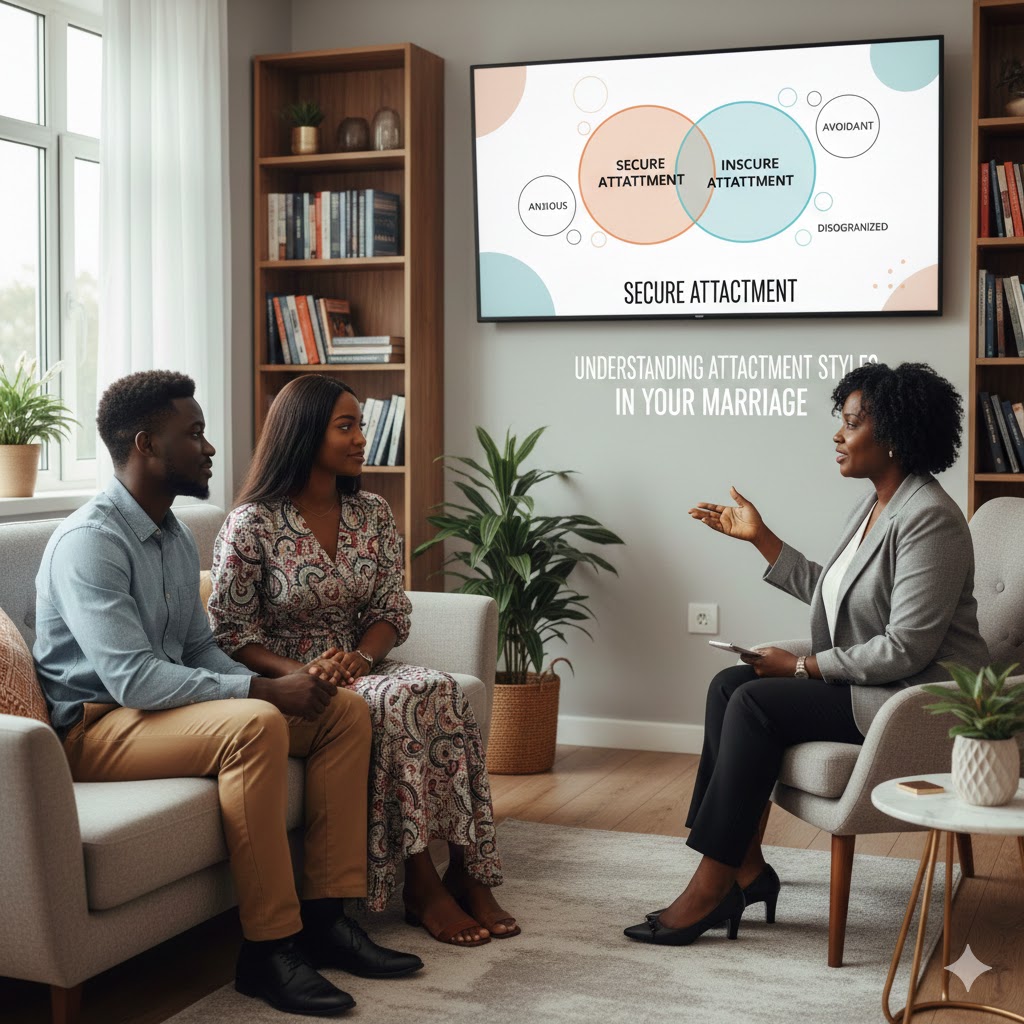
Understanding Attachment Styles in Your Marriage: A Nigerian Couples’ Guide
Healthy marriages thrive on emotional connection, trust, and effective communication. One of the key factors influencing these elements is your attachment style—the way you relate to your partner emotionally, especially in times of stress or intimacy.
Understanding attachment styles allows couples to identify patterns, anticipate challenges, and strengthen their bond. In Nigeria, couples face unique cultural, familial, and societal pressures, making awareness of attachment styles particularly valuable.
This article explores attachment styles in marriage, their impact on relationships, and practical strategies for Nigerian couples to foster secure attachment, using real-life examples.
What Are Attachment Styles?
Attachment styles originate from early childhood experiences with caregivers and influence how adults interact in romantic relationships. Psychologists commonly identify four attachment styles:
-
Secure Attachment: Comfortable with intimacy, trusts partner, communicates effectively.
-
Anxious Attachment: Craves closeness, fears abandonment, may become overly dependent.
-
Avoidant Attachment: Values independence, may avoid emotional closeness, struggles to express feelings.
-
Fearful-Avoidant (Disorganized) Attachment: Desires intimacy but fears it, oscillates between closeness and withdrawal.
Scenario:
In Lagos, Tobi exhibits anxious attachment, frequently seeking reassurance from Sade, while Sade has avoidant tendencies, withdrawing when pressured for emotional closeness. Understanding their styles through counseling helped them navigate conflicts without escalating tension.
Key Insight: Attachment styles are not permanent labels; awareness and practice can cultivate secure attachment patterns over time.
How Attachment Styles Affect Marriage
Attachment styles influence multiple aspects of a marital relationship:
-
Communication Patterns: Insecure attachment may lead to miscommunication or withdrawal.
-
Conflict Resolution: Avoidant partners may avoid conflict, while anxious partners may escalate it.
-
Emotional Intimacy: Attachment affects comfort with vulnerability and sharing feelings.
-
Trust and Dependability: Early attachment experiences shape trust in partners’ reliability.
-
Response to Stress: Couples respond differently under financial, family, or societal pressures.
Scenario:
In Abuja, Amaka and Chidi frequently clashed over financial stress. Amaka’s anxious attachment led her to seek constant reassurance, while Chidi’s avoidant tendencies made him withdraw. Counseling taught them healthy coping strategies aligned with their attachment styles.
Recognizing Your Attachment Style
1. Signs of Secure Attachment
-
Comfortable with intimacy and independence
-
Open and honest communication
-
Effective conflict resolution
-
High emotional support and empathy
Scenario:
In Port Harcourt, Chika shows secure attachment, openly discussing work stress with Emeka. Emeka responds with empathy, creating a balanced emotional connection.
2. Signs of Anxious Attachment
-
Constant need for reassurance
-
Fear of abandonment
-
Sensitivity to perceived rejection
-
Clingy or dependent behaviors
Scenario:
In Lagos, Tobi frequently texts Sade to confirm her feelings. Counseling helped Tobi recognize these patterns and develop healthy strategies to manage anxiety without overwhelming Sade.
3. Signs of Avoidant Attachment
-
Prioritizes independence over closeness
-
Hesitant to express emotions
-
Tends to withdraw during conflict
-
Difficulty trusting partner fully
Scenario:
In Abuja, Chidi often avoids discussions about future plans, making Amaka feel neglected. Therapy helped Chidi learn gradual emotional engagement and vulnerability.
4. Signs of Fearful-Avoidant Attachment
-
Desire for closeness but fear of getting hurt
-
Alternates between seeking intimacy and withdrawing
-
High sensitivity to perceived threats to the relationship
-
Emotional unpredictability
Scenario:
In Port Harcourt, Chika wants to connect deeply with Emeka but fears rejection. Counseling helped her identify triggers, communicate fears, and build trust gradually.
Common Attachment Challenges in Nigerian Marriages
-
Extended Family Influence: Strong family ties can amplify anxieties or avoidance behaviors.
-
Societal Pressure: Expectations to maintain marital harmony may prevent expressing true emotions.
-
Gender Roles: Traditional norms may reinforce avoidant or anxious patterns.
-
Financial Stress: Economic pressures exacerbate insecurity or withdrawal tendencies.
-
Past Relationship Trauma: Previous betrayals or failed relationships can reinforce insecure attachment.
Scenario:
In Lagos, Tobi’s anxious tendencies were heightened by societal pressure to “keep the marriage together at all costs,” while Sade’s avoidant behavior stemmed from past trust breaches. Counseling addressed these contextual influences to improve relational security.
How Counseling Helps Couples Address Attachment Issues
1. Increasing Self-Awareness
Therapy helps partners identify attachment patterns, triggers, and coping strategies.
Scenario:
In Abuja, Amaka realized her clinginess (anxious attachment) often triggered Chidi’s withdrawal (avoidant attachment). Awareness allowed her to adjust behaviors without compromising her needs.
2. Improving Communication
Counselors teach techniques to express needs and emotions constructively:
-
“I feel” statements
-
Reflective listening
-
Scheduled emotional check-ins
Scenario:
In Port Harcourt, Chika and Emeka practiced reflective listening, helping Chika feel heard and Emeka remain engaged without feeling pressured.
3. Rebuilding Trust and Security
Therapy focuses on consistent behavior, transparency, and mutual reassurance to foster secure attachment.
Scenario:
In Lagos, Tobi learned to trust Sade’s commitment while reducing repeated reassurance-seeking, gradually creating emotional stability in the marriage.
4. Managing Conflict Based on Attachment Styles
Therapists help couples navigate disputes using tailored strategies:
-
Avoidant partners learn to stay engaged
-
Anxious partners learn to self-soothe
-
Couples learn compromise and empathy
Scenario:
In Abuja, Amaka and Chidi used structured problem-solving to handle financial disputes without triggering attachment insecurities.
5. Encouraging Emotional Intimacy
Therapy helps couples build vulnerability safely, enhancing connection and empathy.
Scenario:
In Port Harcourt, Chika shared fears about past family expectations with Emeka, who responded with empathy and validation, fostering secure attachment.
6. Developing Healthy Coping Mechanisms
Couples learn strategies to manage stress, reduce anxiety, and prevent withdrawal behaviors.
Scenario:
In Lagos, Tobi used mindfulness and journaling to manage anxious tendencies, improving responses to relationship stress.
Counseling Exercises to Strengthen Attachment in Marriage
1. Daily Emotional Check-Ins
Purpose: Maintain connection and prevent misunderstandings
Method:
-
Spend 10–15 minutes discussing feelings
-
Focus on empathy and validation
-
Avoid blame or criticism
Scenario:
In Abuja, Amaka and Chidi implemented nightly check-ins, reducing anxiety and withdrawal behaviors.
2. Reflective Listening Practice
Purpose: Improve understanding and reduce miscommunication
Method:
-
Partner speaks uninterrupted
-
Listener repeats back key points
-
Speaker confirms accuracy
Scenario:
In Port Harcourt, Chika reflected Emeka’s concerns during a disagreement about future plans, reducing frustration and increasing empathy.
3. Attachment Journaling
Purpose: Identify triggers, patterns, and emotional responses
Method:
-
Record daily interactions and emotional reactions
-
Note secure behaviors and areas for improvement
-
Review progress with counselor
Scenario:
In Lagos, Tobi tracked moments of insecurity and reassurance, allowing therapy to target high-stress situations effectively.
4. Shared Vulnerability Exercises
Purpose: Foster emotional closeness and trust
Method:
-
Share personal fears, goals, and past experiences
-
Practice empathy and validation
-
Build trust through consistency
Scenario:
In Abuja, Amaka shared childhood experiences affecting her anxious tendencies, helping Chidi respond with empathy and reduce conflict triggers.
5. Structured Problem-Solving
Purpose: Address conflicts collaboratively without triggering attachment insecurities
Method:
-
Identify problem clearly
-
Brainstorm solutions together
-
Agree on compromises and review outcomes
Scenario:
In Port Harcourt, Chika and Emeka resolved household responsibilities through structured discussions, reducing tension related to attachment differences.
Cultural Considerations for Nigerian Couples
-
Extended Family Dynamics: Counseling helps balance family expectations and marital needs.
-
Religious Integration: Faith-based guidance can support attachment security.
-
Gender Norms: Therapy addresses societal roles while fostering equity in emotional expression.
-
Societal Pressure: Counseling provides private, neutral spaces for honest discussions.
Scenario:
In Lagos, Tobi and Sade balanced family expectations with their emotional needs through counseling, creating a secure attachment environment despite cultural pressures.
When to Seek Counseling for Attachment Issues
-
Persistent conflict due to emotional insecurities
-
Emotional withdrawal or over-dependence
-
Repeated misunderstandings escalating into arguments
-
Desire to strengthen emotional intimacy and trust
-
History of betrayals affecting current relational security
Scenario:
In Abuja, Amaka and Chidi sought therapy after repeated financial disputes and emotional withdrawal patterns strained the marriage. Counseling helped them understand attachment styles and improve interactions.
Long-Term Benefits of Understanding and Managing Attachment Styles
-
Enhanced Communication and Empathy
-
Reduced Conflict and Misunderstandings
-
Stronger Emotional Intimacy and Bonding
-
Increased Trust and Relationship Stability
-
Better Stress Management and Resilience
-
Improved Satisfaction in Marriage
-
Sustainable Healthy Relationship Patterns
Scenario:
In Port Harcourt, Chika and Emeka reported improved emotional connection, reduced conflict, and stronger intimacy six months after implementing attachment-based counseling strategies.
Tips for Sustaining Secure Attachment in Marriage
-
Practice daily or weekly emotional check-ins
-
Maintain journals to track emotional patterns
-
Engage in reflective listening and validation
-
Set healthy boundaries with external influences
-
Celebrate successes and milestones
-
Revisit counseling periodically for ongoing growth
Scenario:
In Lagos, Tobi and Sade maintained daily gratitude sharing and weekly reflection sessions, reinforcing secure attachment and emotional intimacy.
Common Pitfalls and How to Avoid Them
| Pitfall | Strategy to Avoid | Nigerian Scenario |
|---|---|---|
| Avoiding emotional discussions | Schedule regular check-ins | Abuja couple held weekly sessions to discuss triggers |
| Misunderstanding attachment needs | Use reflective listening | Lagos couple repeated back partner’s statements to ensure clarity |
| Over-dependence or withdrawal | Practice balanced engagement | Port Harcourt couple balanced reassurance with independence |
| Ignoring cultural pressures | Integrate family expectations thoughtfully | Lagos couple negotiated boundaries with extended family |
| Neglecting self-awareness | Maintain journaling and reflection | Abuja couple tracked attachment triggers for therapy guidance |
Conclusion: Attachment Awareness as a Path to Marital Growth
Understanding attachment styles is key to building a resilient, emotionally connected marriage. For Nigerian couples, awareness of attachment patterns helps navigate cultural expectations, family pressures, and personal insecurities.
Key Takeaways:
-
Attachment styles influence communication, conflict, intimacy, and trust
-
Therapy provides tools to recognize, understand, and manage attachment patterns
-
Practical exercises reinforce secure behaviors and reduce relational stress
-
Awareness and consistency promote long-term marital satisfaction
Final Thought: For Nigerian couples, understanding and managing attachment styles transforms challenges into opportunities for connection, empathy, and lasting marital growth, fostering a marriage rooted in trust, emotional intimacy, and resilience.








.jpg)



Sign in to comment