 Nurturing Marriages, Enriching Families!
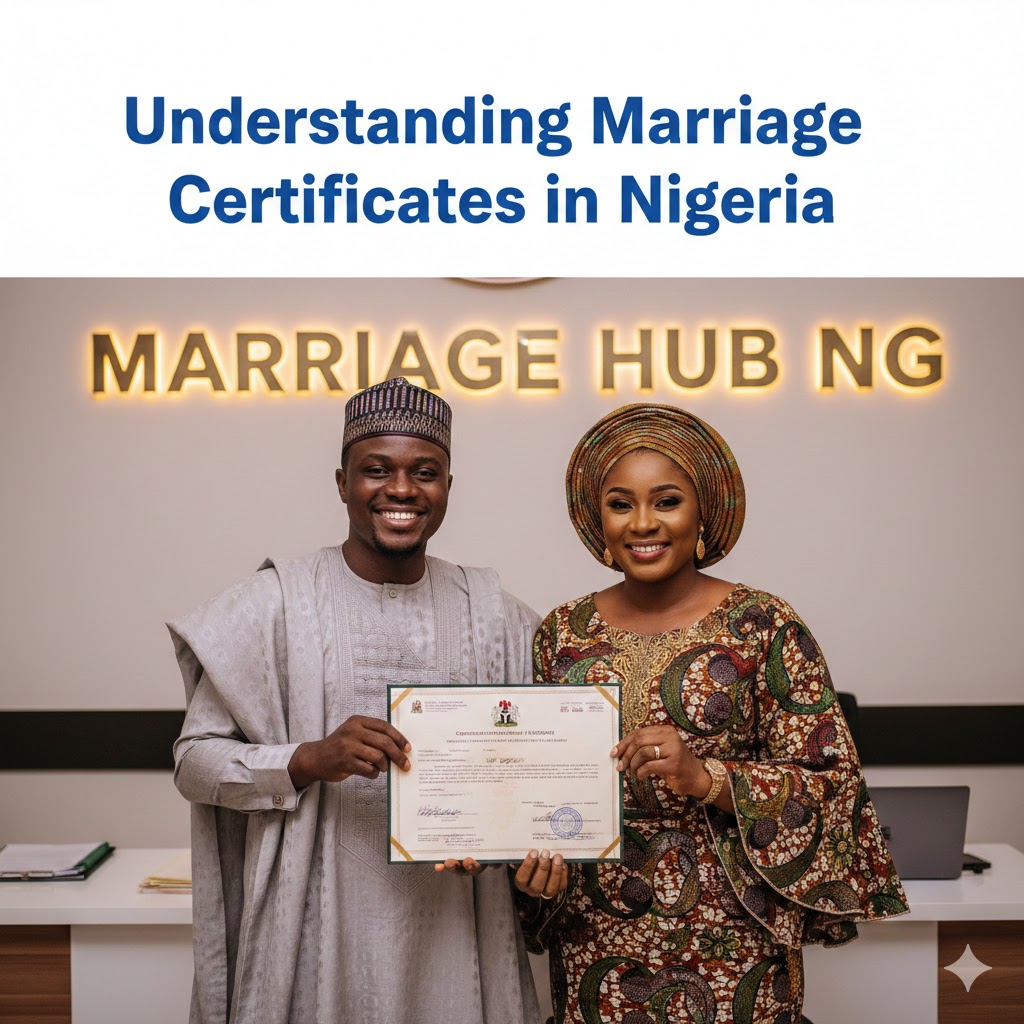
Understanding Marriage Certificates in Nigeria
Marriage is a profound milestone in life, symbolizing love, commitment, and partnership. In Nigeria, while the wedding ceremony—be it traditional, religious, or court—is a moment of celebration, the marriage certificate is the official document that legally validates the union. Understanding marriage certificates in Nigeria is crucial for couples who want to ensure their marriage is legally recognized, protected, and able to withstand any future legal, financial, or personal challenges.
In this article, we explore everything couples need to know about marriage certificates in Nigeria, including types, purposes, how to obtain them, common challenges, and the legal significance of having a valid certificate.
What is a Marriage Certificate?
A marriage certificate is an official document issued by a recognized authority that legally confirms the union between two individuals. In Nigeria, it serves as proof of marriage for civil, religious, and sometimes customary unions. The certificate contains essential details about the couple, the date of marriage, and the authority that conducted or registered the marriage.
Having a marriage certificate is not only a legal requirement in many cases, but it also provides proof of marital status for:
-
Government and legal processes
-
Financial and property transactions
-
Travel or immigration purposes
-
Insurance and pension claims
-
Resolving disputes involving marital rights
Types of Marriage Certificates in Nigeria
Nigeria recognizes different forms of marriage, and the corresponding marriage certificates vary based on the type of marriage.
1. Court (Civil) Marriage Certificate
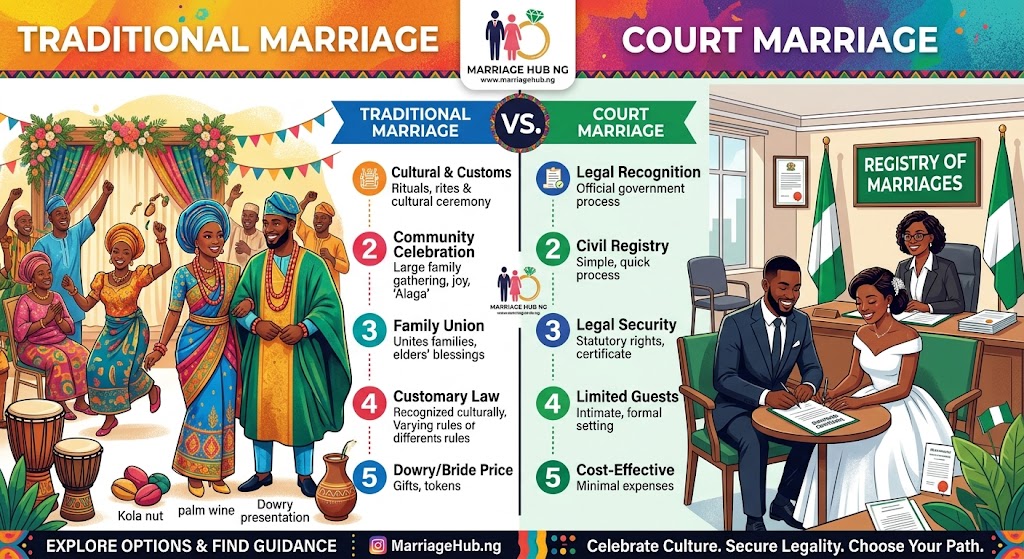
A court marriage certificate is issued after a civil marriage is conducted at a Marriage Registry under the Marriage Act. Features include:
-
Issued by a government registry
-
Recognized nationwide and internationally
-
Confirms the couple’s marital status legally
-
Required for legal, financial, and official documentation
2. Customary Marriage Certificate
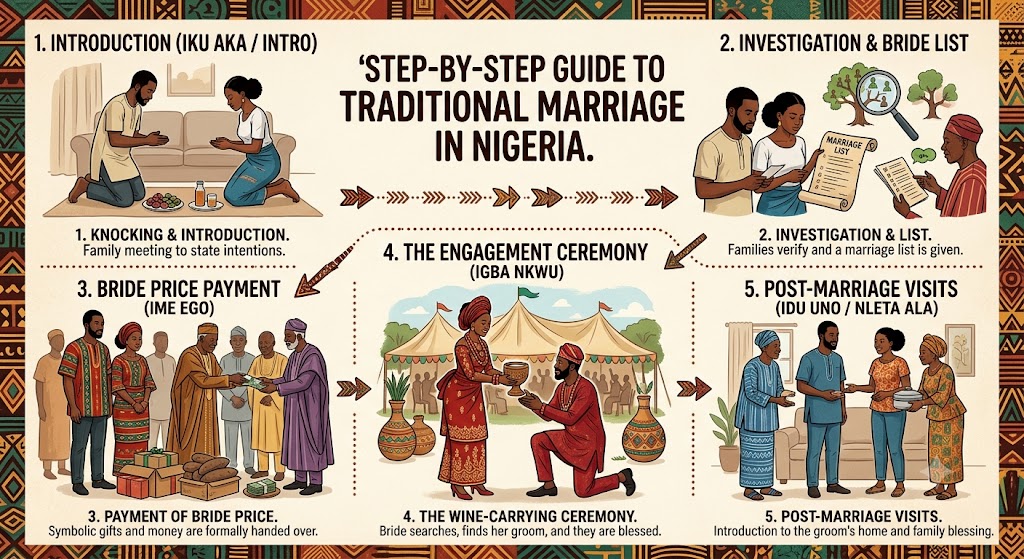
Customary marriage is rooted in ethnic or cultural traditions. Couples can obtain a customary marriage certificate if the marriage is registered with the government. Features include:
-
Reflects cultural practices and traditional rites
-
Can be legally recognized once registered
-
Provides protection in disputes involving property, inheritance, and spousal rights
3. Religious Marriage Certificate
Religious marriages, such as church or Islamic weddings, often provide a certificate from the religious institution. However, to gain full legal recognition, it is recommended that religious marriages also be registered with the government. Features include:
-
Issued by churches, mosques, or other religious institutions
-
May serve as proof of the ceremony for the religious community
-
Legal validity depends on government registration in Nigeria
Importance of a Marriage Certificate in Nigeria
Obtaining a marriage certificate provides numerous benefits for couples, including:
-
Legal Recognition of Marriage: The certificate confirms that the marriage is legally valid under Nigerian law.
-
Protection of Spousal Rights: Ensures both partners have legal rights to property, inheritance, and decision-making.
-
Facilitates Official Transactions: Needed for changing names, applying for passports, joint banking, or insurance claims.
-
Evidence in Dispute Resolution: Serves as proof in court cases regarding marital disputes, divorce, or child custody.
-
Immigration and Travel Requirements: Required for visa applications or relocation abroad.
In short, a marriage certificate transforms the marriage from a personal or cultural commitment to a legally recognized institution.
How to Obtain a Marriage Certificate in Nigeria
The process of obtaining a marriage certificate depends on the type of marriage.
1. Court (Civil) Marriage
To obtain a civil marriage certificate:
-
Choose a Marriage Registry: Couples must select a recognized Marriage Registry in their state.
-
Submit Notice of Marriage: A formal declaration is submitted at the registry.
-
Provide Required Documents: Typically includes birth certificates, identification, proof of divorce or death certificates if previously married, and photographs.
-
Wait for Objections: Notices are displayed for a specified period (usually 21 days) to allow objections.
-
Marriage Ceremony: Conducted at the registry with a registrar and two witnesses.
-
Issuance of Certificate: After the ceremony, a marriage certificate is issued, legally documenting the union.
2. Customary Marriage
To obtain a customary marriage certificate:
-
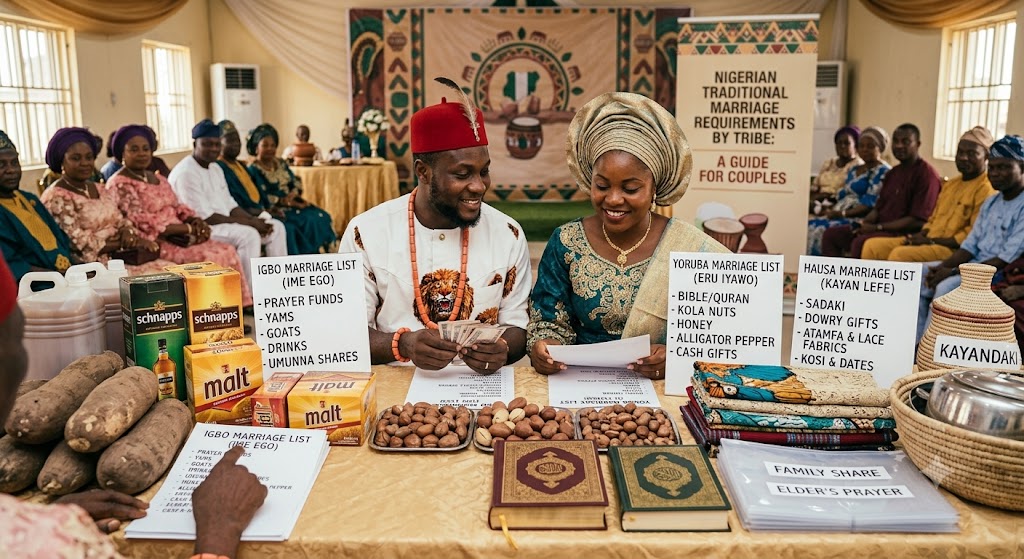
Conduct Traditional Ceremony: Follow the cultural rites and family negotiations customary to your ethnic group.
-
Collect Documentation: Proof of ceremony, family consent, and identification documents may be needed.
-
Register the Marriage: Couples are encouraged to register the marriage with a government registry for legal recognition.
-
Obtain Certificate: Upon registration, a certificate confirming legal recognition of the customary marriage is issued.
3. Religious Marriage
For religious marriages:
-
Perform the Religious Ceremony: According to your faith’s practices (e.g., church wedding, Nikah).
-
Obtain Religious Certificate: The religious institution issues a certificate as proof of the ceremony.
-
Optional Registration for Legal Recognition: Register the marriage at a government registry to obtain a legally recognized marriage certificate.
Documents Required for Marriage Certificate in Nigeria
Couples must prepare several documents to obtain a valid marriage certificate:
-
Birth Certificates or Age Declaration: To confirm the age of both parties.
-
Government-issued Identification: National ID, voter’s card, or passport.
-
Divorce or Death Certificates: If previously married.
-
Passport Photographs: Usually 2–4 recent photographs of each party.
-
Parental Consent: For couples under the legal age (if applicable).
-
Proof of Marriage Registration: For customary or religious marriages seeking legal recognition.
Proper documentation ensures a smooth process and avoids delays in obtaining the certificate.
Common Challenges in Obtaining a Marriage Certificate
While obtaining a marriage certificate is straightforward, couples may encounter challenges:
-
Incomplete or Missing Documents: Missing birth certificates or ID cards can delay the process.
-
Incorrect Information: Errors in names, dates, or details can invalidate the certificate.
-
Objections During Notice Period: Legal objections may be raised that require resolution before the certificate is issued.
-
Unregistered Traditional or Religious Marriages: Couples who only perform cultural or religious ceremonies without registration may face difficulties in legal recognition.
-
Delayed Processing: Some registries may have slow administrative processes.
Being aware of these challenges allows couples to prepare adequately and avoid delays.
How to Verify a Marriage Certificate
To ensure authenticity, couples and third parties can verify marriage certificates:
-
Check with the Registry: Contact the issuing Marriage Registry to confirm details.
-
Look for Official Stamps and Signatures: Legal certificates contain signatures of authorized officers and official stamps.
-
Compare with Marriage Records: Registries maintain records of all legally recognized marriages.
Verification is essential, especially for legal, financial, or immigration purposes.
Why Registration Matters
Even for traditional and religious marriages, government registration is crucial because:
-
It grants full legal recognition nationwide.
-
Protects spousal and property rights in case of divorce or death.
-
Provides official proof for administrative and legal matters.
-
Prevents future disputes over marital status or inheritance.
Registration ensures that the marriage is recognized not just socially or religiously, but also legally.
Tips for Couples
-
Start Early: Prepare documents and submit notice in advance to avoid delays.
-
Ensure Accuracy: Double-check names, dates, and personal information.
-
Keep Copies: Maintain multiple copies of the certificate for safety and ease of use.
-
Register Cultural or Religious Marriages: Even if the ceremony is traditional or religious, registering legally protects your rights.
-
Seek Professional Guidance: Lawyers or wedding planners can assist with complex documentation or legal requirements.
Conclusion
A marriage certificate in Nigeria is more than just a piece of paper; it is legal proof of one of the most important commitments in life. Whether you choose court, customary, or religious marriage, obtaining a valid certificate ensures your union is recognized, your rights are protected, and your marriage is legally secure.
Understanding the process, requirements, and significance of marriage certificates empowers couples to plan effectively, avoid legal pitfalls, and celebrate their union with confidence and peace of mind.
Marriage is a lifelong journey—taking steps to secure it legally strengthens the foundation of love, trust, and partnership.
Join the MarriageHub Community
You don’t have to navigate marriage preparation and legal processes alone. MarriageHub provides resources, communities, and guidance to help couples understand the legal, emotional, and relational aspects of marriage.
👉 Join groups or tribes here: https://www.marriagehub.ng/all-groups
👉 Create your own relationship group or tribe here: https://www.marriagehub.ng/create-tribes-group
You can also explore helpful products, services, and downloadable resources designed to strengthen marriages in our marketplace:



.jpg)

Sign in to comment