 Nurturing Marriages, Enriching Families!
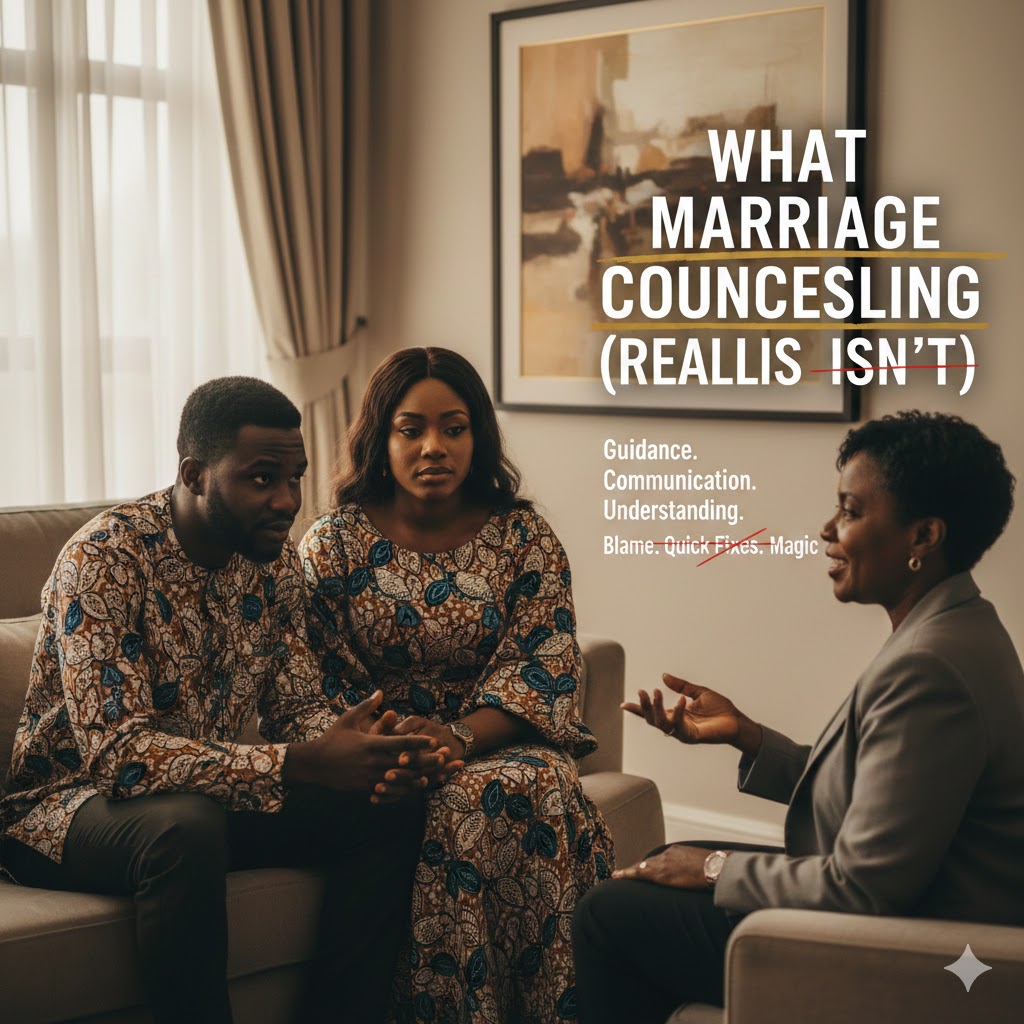
What Marriage Counseling Really Is (and isn’t): A Nigerian Couples’ Guide
Marriage is a journey that comes with joys, challenges, and opportunities for growth. While many Nigerian couples are familiar with the concept of marriage counseling, misconceptions abound about what it entails and who it’s for. Some couples fear counseling implies weakness or failure, while others misunderstand its purpose entirely.
This article explores what marriage counseling truly is, what it is not, and why Nigerian couples should consider it. Using real-life Nigerian scenarios, we’ll clarify misconceptions, explain the counseling process, and highlight its benefits.
Understanding Marriage Counseling
Marriage counseling, also called couples therapy, is a professional, guided process where a trained counselor helps couples improve their relationship. The aim is not to place blame but to help both partners communicate effectively, resolve conflicts, and build emotional intimacy.
Key Goals of Counseling:
-
Improve communication
-
Resolve recurring conflicts
-
Rebuild trust after breaches
-
Strengthen emotional connection
-
Navigate life transitions collaboratively
-
Provide a safe space for expression
Scenario:
In Lagos, Tobi and Sade attended counseling after constant arguments over financial priorities. The counselor helped them identify communication patterns, clarify expectations, and develop conflict resolution strategies, resulting in a more harmonious home environment.
What Marriage Counseling Is Not
Understanding what counseling is not is just as important as understanding what it is. Common misconceptions include:
-
It’s Not a Place for Blame – Counseling does not aim to assign fault but to help couples work together.
-
It’s Not Just for “Broken” Marriages – Couples seeking growth, prevention, or stronger intimacy also benefit.
-
It’s Not a Quick Fix – True change requires time, effort, and practice.
-
It’s Not About Forcing Decisions – Couples retain autonomy; therapists guide, not dictate.
-
It’s Not Only for Extreme Problems – Regular counseling can prevent small issues from escalating.
Scenario:
In Abuja, Amaka initially thought counseling meant admitting failure. After attending sessions with Chidi, she realized it was a tool for building understanding and improving their relationship, not a judgment of their marriage.
Why Nigerian Couples Might Seek Counseling
1. Communication Challenges
-
Misunderstandings or inability to express feelings
-
Repeated arguments without resolution
-
Emotional withdrawal
Scenario:
In Port Harcourt, Chika and Emeka’s constant disagreements about household responsibilities led them to counseling. They learned techniques such as reflective listening and “I feel” statements to reduce conflict.
2. Emotional Disconnection
-
Feeling distant, unsupported, or misunderstood
-
Lack of meaningful conversations
-
Decline in physical or emotional affection
Scenario:
In Lagos, Sade felt disconnected from Tobi, who was preoccupied with work. Counseling helped them schedule quality time, express appreciation, and rekindle emotional intimacy.
3. Infidelity or Trust Issues
-
Suspected or confirmed affairs
-
Difficulty rebuilding trust
-
Emotional withdrawal or secrecy
Scenario:
In Abuja, Amaka discovered an emotional affair involving Chidi. Counseling provided a structured environment for honest dialogue, forgiveness, and trust rebuilding, helping them repair their relationship.
4. Life Transitions
-
Marriage, relocation, career changes
-
Parenthood or blended family dynamics
-
Health issues or bereavement
Scenario:
In Lagos, Tobi and Sade struggled to adjust after their first child was born. Counseling offered strategies to balance parenting duties, maintain intimacy, and communicate effectively during stress.
5. Conflict Over Finances or Family
-
Repeated disagreements about money
-
Pressure from extended family or societal expectations
-
Disputes over household responsibilities
Scenario:
In Port Harcourt, Chika and Emeka had arguments about financial contributions from extended family. Counseling guided them to set boundaries and agree on a financial plan that respected cultural expectations.
What Couples Can Expect in a Counseling Session
1. Safe and Confidential Environment
Counseling sessions provide a non-judgmental space for honest expression. Confidentiality ensures couples feel secure sharing sensitive information.
Scenario:
In Lagos, Tobi was initially hesitant to discuss work-related stress. The counselor reassured him of confidentiality, creating a safe environment to open up.
2. Structured Discussions
Counselors guide sessions with structured approaches:
-
Identifying concerns and goals
-
Exploring communication and conflict patterns
-
Practicing problem-solving and coping strategies
-
Setting actionable goals and homework exercises
Scenario:
In Abuja, Amaka and Chidi identified communication breakdown as their main issue. The counselor structured sessions to explore triggers, practice empathetic listening, and create actionable solutions.
3. Active Participation
Counseling requires both partners to engage actively, attend sessions consistently, and practice skills outside the sessions.
Scenario:
In Port Harcourt, Chika and Emeka practiced reflective listening exercises daily, resulting in significant improvements in understanding and reduced arguments.
4. Skill Development
Counseling equips couples with practical tools for long-term success, including:
-
Conflict resolution techniques
-
Effective communication strategies
-
Emotional regulation methods
-
Trust-building practices
-
Goal-setting and problem-solving frameworks
Scenario:
In Lagos, Sade and Tobi applied conflict resolution techniques learned in counseling, reducing the frequency and intensity of disagreements.
Benefits of Marriage Counseling
-
Enhanced Communication – Couples learn to express themselves clearly and listen actively.
-
Conflict Management – Resolve disputes constructively and prevent escalation.
-
Trust and Forgiveness – Address past breaches and rebuild confidence.
-
Emotional Intimacy – Deepen connection, empathy, and mutual support.
-
Cultural Awareness – Counselors understand Nigerian family structures, norms, and expectations.
-
Long-Term Relationship Satisfaction – Build resilience and sustainable partnership skills.
Scenario:
In Abuja, Amaka and Chidi reported stronger emotional intimacy, fewer conflicts, and better problem-solving after several months of counseling.
Misconceptions Nigerian Couples Often Have
1. Counseling Is Only for Extreme Problems
Many believe therapy is only needed when a marriage is failing. In reality, counseling is beneficial for:
-
Strengthening healthy relationships
-
Preventing small issues from becoming major conflicts
-
Preparing for life transitions
Scenario:
In Lagos, Tobi and Sade attended counseling proactively, enhancing communication and preventing future conflicts.
2. Therapy Assigns Blame
Counseling is collaborative. The counselor does not take sides but facilitates understanding and problem-solving.
Scenario:
In Port Harcourt, Chika initially feared being blamed for conflicts. Counseling focused on shared responsibility and mutual solutions.
3. Therapy Is a Quick Fix
Change requires consistent effort, active participation, and patience. Expect gradual improvement over time.
Scenario:
In Abuja, Amaka and Chidi noticed incremental changes after the first month, with substantial improvement only after several sessions.
4. Counseling Is Only for Couples
Individual counseling can also complement marriage therapy, helping each partner manage personal stressors, emotional baggage, or mental health concerns.
Scenario:
In Lagos, Tobi attended individual sessions alongside couples therapy, addressing personal stress that contributed to conflicts.
Cultural Considerations in Nigerian Marriages
-
Extended Family Influence – Counselors guide couples in balancing family expectations with marital needs.
-
Religious Beliefs – Therapy respects religious values and integrates spiritual considerations when relevant.
-
Societal Pressure – Counselors help couples navigate judgment from friends, neighbors, and community members.
-
Gender Roles – Therapy addresses traditional norms that may affect emotional expression and decision-making.
Scenario:
In Port Harcourt, Chika and Emeka learned to negotiate financial boundaries while respecting extended family, guided by culturally aware counseling.
Steps to Take Before Seeking Counseling
-
Identify the Issues Clearly – Determine the main challenges affecting your marriage.
-
Discuss Willingness Openly – Talk with your partner about counseling intentions without pressure.
-
Research Counselors – Look for licensed professionals familiar with Nigerian culture.
-
Set Realistic Goals – Understand what counseling can and cannot achieve.
-
Commit to Active Participation – Attend sessions consistently and apply learned strategies.
Scenario:
In Lagos, Sade researched therapists, discussed goals with Tobi, and scheduled a trial session to gauge comfort and suitability.
When to Seek Urgent Counseling
-
Cases of abuse, domestic violence, or severe infidelity
-
Persistent depression, anxiety, or emotional distress affecting the marriage
-
Inability to resolve recurring, escalating conflicts
-
Desire to prevent divorce or separation
Scenario:
In Abuja, Amaka sought counseling immediately after discovering Chidi’s emotional affair, addressing both emotional recovery and practical steps to rebuild trust.
Tips for Maximizing Counseling Benefits
-
Be Honest and Open – Share feelings without fear of judgment.
-
Listen Actively – Understand your partner’s perspective.
-
Practice Homework Exercises – Apply techniques between sessions.
-
Be Patient – Progress may be gradual but steady.
-
Celebrate Milestones – Recognize small successes to reinforce positive change.
Scenario:
In Port Harcourt, Chika and Emeka noted improvements in communication and conflict resolution after applying daily reflective exercises from counseling.
Real-Life Nigerian Success Story
Case Study: Tobi and Sade, Lagos
-
Challenge: Constant arguments over finances and work-life balance.
-
Approach: Attended culturally sensitive counseling sessions.
-
Process: Practiced reflective listening, problem-solving exercises, and quality time planning.
-
Outcome: Improved communication, reduced conflict, and stronger emotional connection, demonstrating that counseling is a proactive tool, not a sign of failure.
Conclusion: Embracing Counseling Without Misconceptions
Marriage counseling is a proactive, supportive, and culturally sensitive process designed to strengthen relationships, improve communication, and foster emotional intimacy.
Key Takeaways:
-
Counseling is a tool for growth, not blame.
-
It benefits couples at all stages, not just those in crisis.
-
Nigerian couples face unique cultural and societal pressures; counseling can help navigate these effectively.
-
Active participation, patience, and consistent application of learned skills maximize results.
Final Thought: For Nigerian couples, understanding what marriage counseling really is (and isn’t) empowers them to seek help confidently, strengthen their bond, and build lasting, resilient relationships. Counseling is not a last resort—it’s an investment in love, understanding, and shared growth.





.jpg)
Sign in to comment