 Nurturing Marriages, Enriching Families!
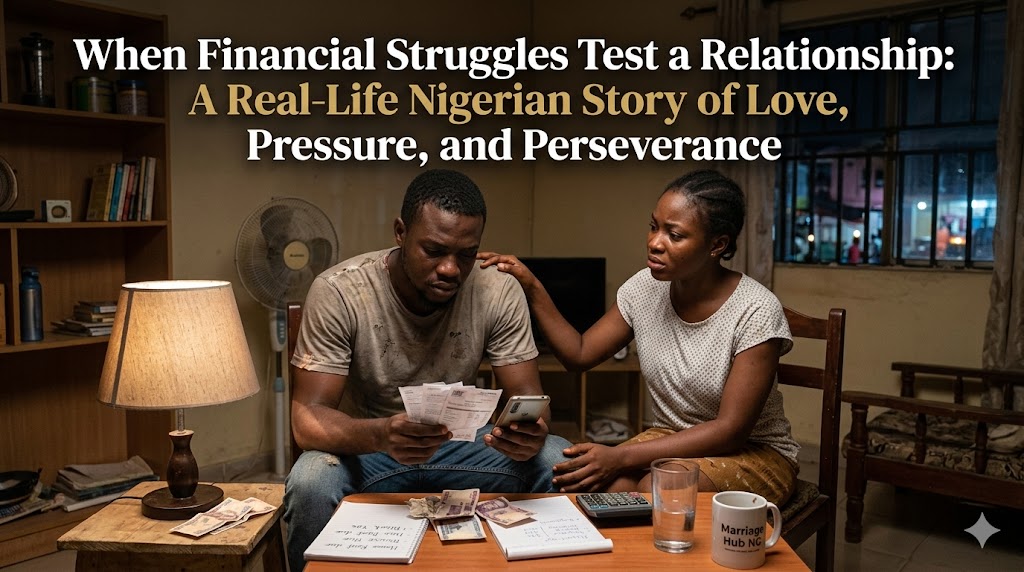
When Financial Struggles Test a Relationship: A Real-Life Nigerian Story of Love, Pressure, and Perseverance
Money is one of the most sensitive topics in any relationship. In Nigeria today, where inflation rises, fuel prices fluctuate, and job security feels uncertain, financial struggles can put enormous pressure on couples. Love may bring two people together, but economic realities often test the strength of that love.
This is a real-life Nigerian-style story of how financial hardship can shake a relationship—and how resilience, communication, and shared vision can hold it together.
The Beginning: Dreams Bigger Than the Wallet
When Tunde and Amaka got married in Surulere, Lagos, they were full of hope. Tunde worked in a mid-level role at a logistics company in Apapa, while Amaka ran a small online fashion business on Instagram. Their combined income wasn’t massive, but it was steady.
They rented a modest two-bedroom apartment, bought fairly used furniture from Yaba, and created a cozy home. On weekends, they enjoyed suya by the roadside and occasionally treated themselves to cinema dates at Ikeja City Mall.
Life wasn’t extravagant, but it was peaceful.
Then things changed.
The Job Loss That Changed Everything
In early 2024, Tunde’s company downsized due to economic challenges. One Friday afternoon, he received an email asking him to report to HR. By 4 p.m., he was officially unemployed.
He drove home in silence, gripping the steering wheel harder than usual. How would he tell Amaka? Rent was due in three months. NEPA bills were piling up. They had just started planning for their first child.
That evening, he sat at the edge of their bed and said quietly, “They let me go.”
Amaka froze.
Financial struggles rarely arrive with warning. In many Nigerian homes, job loss can trigger panic, fear, and even shame—especially for men who often feel culturally pressured to be primary providers.
The Silent Tension That Followed
At first, they were optimistic.
“We will manage,” Amaka said confidently. “It’s just temporary.”
But weeks turned into months. Tunde applied for jobs daily—Lagos Island, Victoria Island, even remote roles abroad. Interviews came, but offers didn’t.
Meanwhile, inflation continued to climb. Food prices doubled. A crate of eggs that once cost ₦2,500 now cost almost ₦5,000. Transportation expenses increased after fuel subsidy changes. Their savings shrank rapidly.
Gradually, tension filled the house.
Small arguments started:
“Why is the generator on again?”
“Did you really need to order takeaway?”
“Why haven’t you followed up with that HR manager?”
Financial stress has a way of magnifying minor issues into major conflicts.
Pride, Pressure, and Masculinity
For Tunde, the hardest part wasn’t the lack of income—it was the loss of identity.
In many Nigerian settings, a man’s worth is often linked to his ability to provide. Relatives began asking questions during family gatherings:
“So, how is work?”
“Have you considered government jobs?”
“Maybe you should start something small.”
Though well-intentioned, these comments felt like subtle reminders of failure.
Tunde became withdrawn. He spent more time on his phone, less time talking. Amaka misinterpreted his silence as lack of effort.
One night she blurted out, “You don’t even seem serious about getting another job!”
That statement cut deeply. Financial struggles often create emotional distance—not because love disappears, but because stress clouds empathy.
The Turning Point: Honest Conversation
Their breakthrough came unexpectedly.
One evening during a power outage, they sat on the balcony under the dim light of rechargeable lamps. With fewer distractions, they finally talked honestly.
Tunde admitted, “I feel useless. I wake up every day feeling like I’m failing you.”
Amaka’s eyes filled with tears. “I’m not angry because you lost your job. I’m scared because I don’t know what’s next.”
That conversation shifted everything.
Instead of fighting each other, they began fighting the problem together.
Adjusting Lifestyle Without Losing Dignity
Financial struggles often require painful adjustments. Tunde and Amaka decided to:
-
Move to a smaller one-bedroom apartment in Yaba.
-
Sell their second television.
-
Reduce eating out completely.
-
Cut down data subscriptions and entertainment expenses.
Downsizing wasn’t easy. Moving from a two-bedroom to a one-bedroom apartment felt like a step backward. But they reframed it as a strategic decision rather than a failure.
In Nigeria’s current economic climate, many couples are learning that flexibility is survival.
The Power of Partnership
As months passed, Amaka’s online business began growing slowly. She expanded from selling ready-made outfits to offering custom tailoring services. She leveraged WhatsApp marketing and collaborated with influencers.
Tunde, initially reluctant, began helping with deliveries, customer service, and bookkeeping.
At first, pride resisted. But he soon realized something powerful: providing isn’t always about salary—it’s about contribution.
Financial hardship forced them into teamwork they had never experienced before.
The Hidden Blessings in Hardship
While financial struggles can strain relationships, they can also reveal strengths.
Tunde discovered skills in digital marketing. He took free online courses and started managing social media accounts for small businesses in Lagos.
Amaka developed resilience and confidence as the primary earner during that season.
They began praying together every night—not necessarily for sudden wealth, but for wisdom and endurance.
Hardship humbled them, but it also united them.
Extended Family Pressure
No Nigerian financial story is complete without extended family influence.
During Christmas in the village, subtle comparisons surfaced:
“Your cousin just bought land.”
“When are you building your own house?”
These conversations added external pressure. But Tunde and Amaka had grown stronger internally.
They learned to smile politely and redirect conversations. Financial struggles taught them that comparison is dangerous.
Every couple’s journey is different.
Communication: The Lifeline During Financial Stress
Research consistently shows that money is one of the leading causes of conflict in marriages worldwide. In Nigeria, the pressure can be amplified by cultural expectations and economic instability.
What saved Tunde and Amaka wasn’t a miracle deposit—it was communication.
They began weekly “money meetings” where they:
-
Reviewed expenses
-
Planned the week’s budget
-
Set realistic financial goals
-
Discussed emotional concerns openly
Talking about money removed its power to divide them.
Rebuilding Stability
After nearly a year, Tunde secured a remote job with a tech company. The salary wasn’t as high as his previous role, but it provided stability.
By then, Amaka’s business had also expanded significantly.
Ironically, financial struggle had diversified their income streams. Instead of depending on one salary, they now had multiple sources.
The season of hardship had reshaped their mindset. They became more cautious with spending and more intentional with savings.
Lessons Nigerian Couples Can Learn
1. Financial Struggles Are Not Moral Failures
Economic downturns, layoffs, and inflation are systemic realities. Losing income does not mean losing worth.
2. Avoid the Blame Game
Blame destroys unity. Focus on solutions rather than accusations.
3. Adjust Quickly and Strategically
Downsizing is not shameful. It is often necessary.
4. Communicate Frequently
Silence creates assumptions. Honest conversations build understanding.
5. Diversify Income Where Possible
In Nigeria’s economy, relying on a single income source can be risky.
6. Protect Your Mental Health
Financial stress can lead to anxiety and depression. Couples must support each other emotionally.
Faith and Financial Hardship
Many Nigerian couples rely on faith during difficult times. Whether Christian or Muslim, prayer often becomes a coping mechanism and source of hope.
For Tunde and Amaka, faith reminded them that seasons change.
But faith alone did not replace action. They combined prayer with strategy, persistence, and learning new skills.
Love Beyond Money
One night, long after stability returned, Amaka said, “If we survived that year, we can survive anything.”
Financial hardship stripped away superficial comforts and exposed the foundation of their relationship.
They learned that love is not tested when everything is convenient—it is tested when everything feels uncertain.
Conclusion: Stronger Through the Storm
When financial struggles test a relationship, couples face a choice: drift apart or grow closer.
In Nigeria’s unpredictable economic environment, many couples will experience seasons of scarcity. The key is not avoiding hardship—it is navigating it together.
Tunde and Amaka’s story reflects a broader truth for modern Nigerian relationships: money problems can either become walls or bridges. With humility, communication, and shared vision, they can become bridges.
Financial struggle does not define a marriage. How a couple responds to it does.
And sometimes, the season that feels like breaking you is the one that builds you the most.









.jpg)




Sign in to comment