 Nurturing Marriages, Enriching Families!

When Parents and Adult Children Clash: Understanding, Healing, and Rebuilding Relationships in Nigerian Families
Conflict between parents and adult children is one of the most emotionally complex and least discussed family challenges in Nigeria. In many homes, tension grows quietly—masked by respect, tradition, and silence—until it erupts into resentment, withdrawal, or complete breakdown of communication.
Unlike childhood disagreements, clashes between parents and adult children are layered with culture, expectations, financial pressure, independence, marriage, and identity. In Nigeria, where family hierarchy and obedience are deeply rooted, these conflicts can feel especially painful and confusing.
This in-depth guide explores why parents and adult children clash, how it manifests in Nigerian families, and practical, culturally sensitive ways to manage and heal these relationships—without losing respect, peace, or personal growth.
Understanding the Nature of Parent–Adult Child Conflict
Conflict between parents and adult children often arises from transition. Parents struggle to adjust from authority figures to advisers, while adult children struggle to assert independence without feeling guilty or disrespectful.
In Nigeria, this transition is even more complicated because adulthood does not automatically reduce parental control. Many parents continue to feel responsible for their children’s choices—career, marriage, finances, religion, and even parenting styles.
When expectations clash with reality, emotional friction begins.
Why Parent–Adult Child Conflict Is Common in Nigeria
Strong Cultural Emphasis on Obedience
From a young age, Nigerian children are taught to respect elders unquestioningly. This value is deeply ingrained and reinforced by family, religion, and society.
As adults, children may intellectually understand their right to independence but emotionally struggle with fear of being labeled “disrespectful” or “rebellious.” Parents, on the other hand, may interpret independence as rejection.
This cultural gap creates silent tension.
Financial Dependency and Expectations
In Nigeria, financial relationships between parents and adult children often remain intertwined for decades.
-
Parents may continue to support adult children financially
-
Adult children may be expected to support parents and extended family
-
Financial success may be seen as family property, not individual achievement
Disagreements about money—how it is earned, spent, or shared—are one of the biggest sources of conflict.
Marriage Choices and Timing
Marriage is a major trigger of parent–adult child conflict in Nigeria.
Parents may:
-
Pressure adult children to marry early
-
Insist on choosing or approving partners
-
Disapprove based on tribe, religion, class, or family background
-
Interfere in marital decisions after marriage
Adult children may feel trapped between personal happiness and parental approval.
Career and Life Path Differences
Many Nigerian parents sacrificed greatly for their children’s education and expect specific outcomes—prestigious careers, financial stability, and social status.
When adult children choose unconventional paths—entrepreneurship, creative careers, relocation, delayed marriage—parents may feel disappointed or betrayed.
This disconnect often leads to constant criticism, comparison, and emotional distance.
How These Clashes Show Up in Real Life
Parent–adult child conflict is not always loud. In many Nigerian families, it appears subtly:
-
Constant arguments disguised as “advice”
-
Silent treatment and emotional withdrawal
-
Guilt-tripping and emotional manipulation
-
Avoidance of family gatherings
-
Adult children hiding major life decisions
-
Parents feeling abandoned or unappreciated
Over time, unresolved conflict damages trust and emotional safety.
Real-Life Nigerian Scenario: The Marriage Pressure
Chioma, a 34-year-old professional in Lagos, enjoyed a stable career and independence. Her parents, however, constantly pressured her to marry—introducing suitors and comparing her to younger cousins.
Every visit home turned into an interrogation. Eventually, Chioma began avoiding family gatherings altogether. Her parents felt disrespected; she felt emotionally suffocated.
What began as concern slowly destroyed their relationship.
Emotional Impact on Parents
Parents are often portrayed as the source of pressure, but they also experience deep emotional pain.
Common feelings include:
-
Fear of losing control or relevance
-
Anxiety about children’s future
-
Shame from societal judgment
-
Feeling unappreciated after years of sacrifice
-
Confusion about changing roles
Understanding parents’ emotional perspective does not excuse harmful behavior—but it helps create empathy.
Emotional Impact on Adult Children
Adult children often carry silent burdens:
-
Guilt for wanting independence
-
Fear of disappointing parents
-
Emotional exhaustion from constant criticism
-
Identity confusion
-
Difficulty setting boundaries
Many Nigerian adults live double lives—one for family approval, another for personal fulfillment.
The Power Struggle: Authority vs Autonomy
At the heart of most clashes is a power struggle.
Parents may struggle to release authority.
Adult children struggle to claim autonomy.
In healthy relationships, authority evolves into influence. In unhealthy ones, authority becomes control.
Recognizing this dynamic is key to resolving conflict.
Communication: The Bridge or the Battlefield
Why Communication Fails
Communication often breaks down because:
-
Parents speak from fear, not understanding
-
Adult children speak from frustration, not clarity
-
Conversations become lectures or arguments
-
Cultural taboos prevent honest dialogue
Many families talk at each other, not with each other.
How to Communicate More Effectively
Effective communication requires intention and timing.
For adult children:
-
Speak respectfully but firmly
-
Use “I feel” statements instead of accusations
-
Avoid emotional outbursts
-
Choose calm moments, not heated ones
For parents:
-
Listen without interrupting
-
Ask questions instead of assuming
-
Separate concern from control
-
Respect adulthood as a phase, not rebellion
Setting Boundaries Without Disrespect
One of the hardest skills for Nigerian adults is setting boundaries with parents.
Boundaries are not rejection.
Boundaries are clarity.
Healthy boundaries may include:
-
Limiting intrusive questions
-
Declining unsolicited advice
-
Protecting marital decisions
-
Managing financial expectations
Boundaries must be communicated calmly and consistently.
Real-Life Nigerian Scenario: Financial Control
Kunle supported his parents and siblings financially. Over time, his parents began dictating how he spent his money and criticized his wife for “changing him.”
After counseling, Kunle learned to set financial boundaries while maintaining respect. Though initially uncomfortable, the relationship eventually stabilized.
When Parents Interfere in Marriage
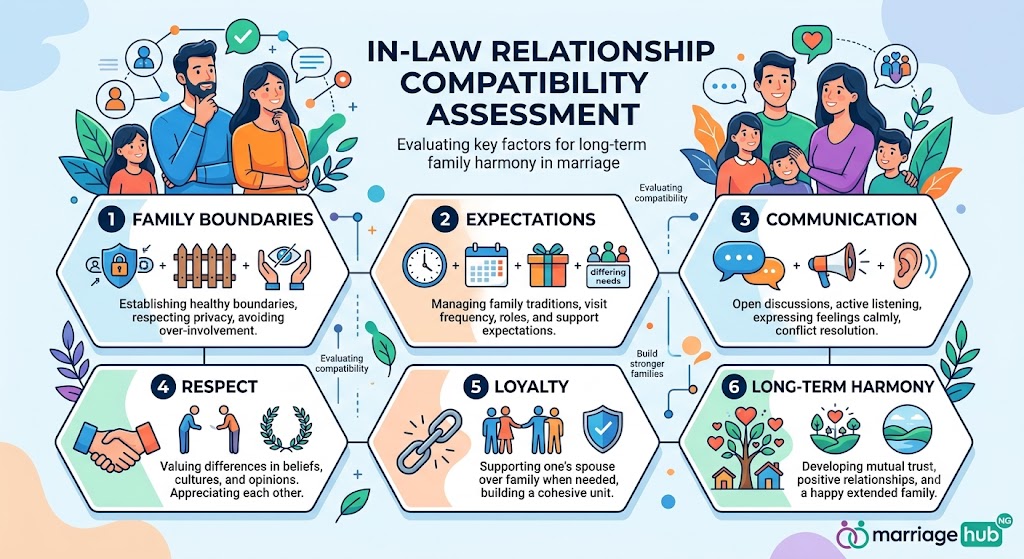
Parental interference in marriage is a major source of conflict.
This includes:
-
Taking sides during marital disagreements
-
Criticizing spouses
-
Comparing marriages
-
Undermining decisions
Adult children must protect marital boundaries while maintaining family relationships.
Marriage requires unity, not divided loyalty.
The Role of Respect in Conflict Resolution
Respect does not mean silence.
Respect means honesty delivered with dignity.
In Nigerian culture, tone matters as much as content. Calmness, humility, and consistency go a long way in difficult conversations.
When Adult Children Need to Let Go of Approval
One of the most painful but necessary steps in maturity is releasing the need for parental approval.
Approval is comforting, but dependence on it can destroy self-identity.
Adult children must learn to validate themselves while still honoring parents.
When Parents Need to Let Go of Control
Parents must recognize that control does not guarantee success or safety.
Trusting adult children builds confidence, not rebellion.
Letting go is not abandonment—it is evolution.
Forgiveness and Healing Past Wounds
Many clashes are rooted in unresolved childhood wounds—harsh discipline, favoritism, neglect, or unmet expectations.
Healing may require:
-
Honest reflection
-
Forgiveness (without denial)
-
Therapy or counseling
-
Faith-based guidance
Forgiveness frees emotional energy for healthier connection.
When Distance Becomes Necessary
In some cases, temporary emotional or physical distance is necessary to preserve mental health.
Distance is not hatred.
Distance can be healing.
With time, clarity and maturity may restore healthier engagement.
Seeking External Support
Family counseling, trusted elders, or faith leaders can help mediate complex conflicts.
In Nigeria, choosing a neutral and emotionally intelligent mediator is crucial.
Breaking Generational Patterns
How parents and adult children handle conflict sets the tone for future generations.
Healing today prevents cycles of control, silence, and resentment tomorrow.
Building a New Kind of Relationship
The goal is not perfection.
The goal is evolution.
Parent–adult child relationships must shift from:
-
Control to guidance
-
Fear to trust
-
Obligation to connection
Conclusion
Clashes between parents and adult children are common, especially in Nigerian families shaped by strong culture, tradition, and expectations. These conflicts are painful—but they are not permanent.
With empathy, communication, boundaries, and emotional maturity, it is possible to rebuild relationships that honor both respect and independence.
Healthy families are not those without conflict—but those willing to grow through it.






.jpg)

Sign in to comment