 Nurturing Marriages, Enriching Families!
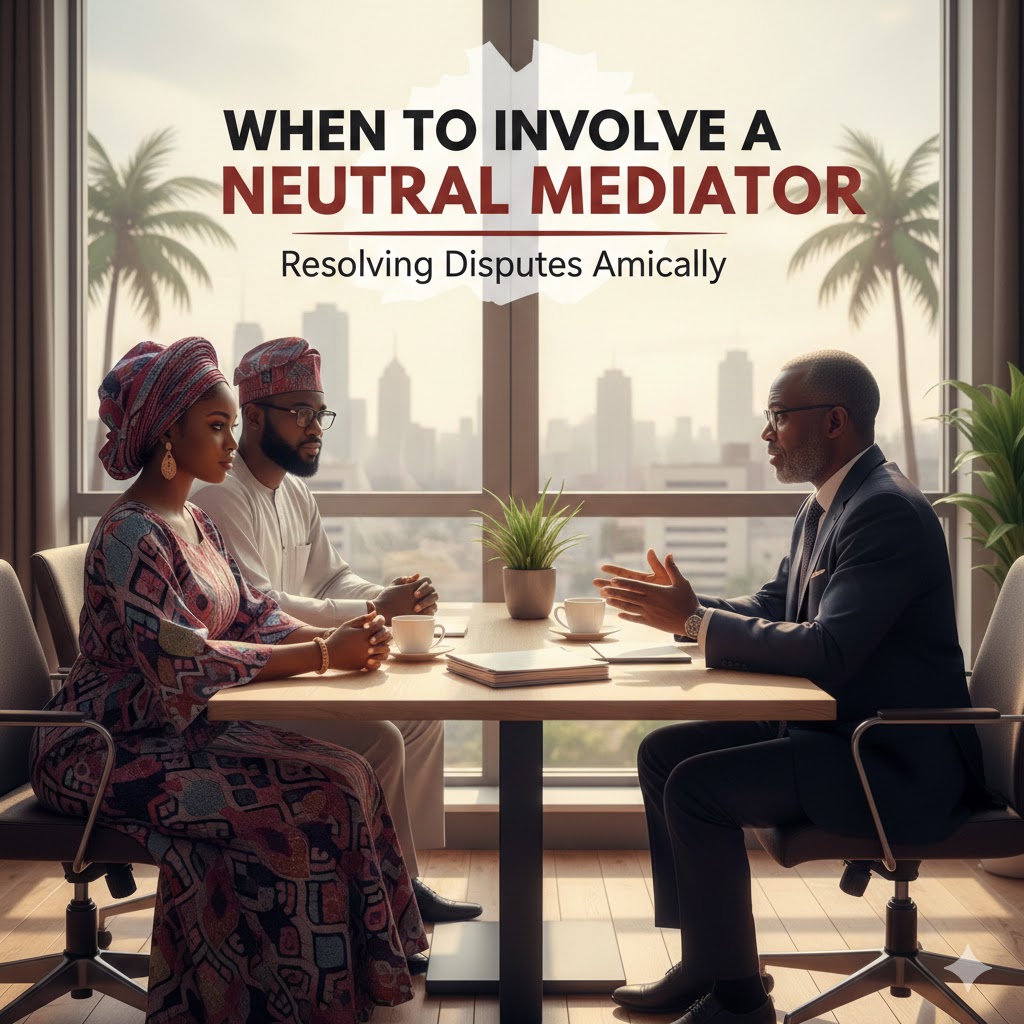
When to Involve a Neutral Mediator: Resolving Family Conflicts in Nigerian Homes
Family disputes are a common feature of life in Nigeria. With extended families, cultural expectations, financial responsibilities, and generational differences, disagreements can escalate quickly if not handled carefully. While communication and personal conflict resolution strategies often work, some conflicts require the guidance of a neutral mediator. Understanding when and how to involve a mediator can prevent disputes from causing long-term damage to relationships, property, or mental health.
This comprehensive guide explores situations in which involving a neutral mediator is necessary, the benefits of mediation, and practical strategies for Nigerian families. Real-life Nigerian scenarios are included to illustrate how mediation can transform conflict into collaboration.
Understanding Mediation
Mediation is a structured process where a neutral third party helps conflicting parties communicate, understand each other, and reach mutually acceptable solutions. The mediator does not impose decisions but facilitates dialogue, ensures fairness, and helps identify solutions.
In Nigerian culture, where respect for elders, hierarchy, and collective decision-making is strong, a neutral mediator can play a vital role in balancing authority and fairness while preserving relationships.
Why Mediation Is Important
Mediation becomes necessary when:
-
Direct communication fails or leads to repeated arguments
-
Conflicts escalate into verbal or emotional aggression
-
Family dynamics involve multiple generations or stakeholders
-
Property, inheritance, or finances are at stake
-
Emotional wounds or mistrust prevent resolution
Without mediation, unresolved conflict can result in:
-
Estranged family members
-
Mental health issues for adults and children
-
Broken marriages or relationships
-
Loss of property, businesses, or inheritance rights
-
Long-lasting resentment across generations
Real-Life Nigerian Scenario: The Disputed Inheritance
In Lagos, three siblings disagreed over their late father’s estate. Each believed they were entitled to the majority share. Arguments involved in-laws, neighbors, and even local community leaders, creating tension and potential for legal battles. The siblings eventually agreed to mediation with a trusted elder and a legal advisor. Through structured discussion, they clarified rights, addressed misunderstandings, and drafted an agreement. The family avoided court and preserved their relationship.
Common Situations in Nigerian Families That Require Mediation
1. Inheritance and Property Disputes
Property is a frequent source of family conflict in Nigeria. Disputes may arise due to:
-
Unequal perceived inheritance
-
Polygamous family arrangements
-
Miscommunication regarding wills or land ownership
-
Pressure from extended family members
Neutral mediators, often elders, lawyers, or community leaders, help clarify legal and cultural expectations, ensuring fairness for all parties.
2. Marital Conflicts and In-Law Disputes
Many Nigerian couples experience tension from:
-
Interference by parents or in-laws
-
Polygamous arrangements
-
Differences in cultural or religious expectations
A mediator can guide conversations, set boundaries, and provide tools for resolving disputes without escalating anger or causing embarrassment.
Real-Life Scenario: In Kano, a wife struggled with her husband’s mother interfering in child-rearing decisions. After repeated arguments, a respected elder mediated. The mediator established ground rules and facilitated compromise, restoring peace in the household.
3. Financial Disagreements
Family financial conflicts include:
-
Loans or contributions to extended family
-
Business partnerships among relatives
-
Disagreements over household budgeting
When discussions repeatedly fail, mediation can clarify responsibilities, expectations, and equitable contributions, preventing resentment.
4. Sibling Rivalry
Sibling rivalry often persists into adulthood in Nigeria, especially when:
-
Parents treat children unequally
-
Inheritance or resources are involved
-
Marital alliances cause tension
Neutral mediators help siblings communicate, acknowledge past grievances, and reach mutually acceptable agreements.
5. Parenting and Caregiving Conflicts
Extended families often live together, creating tension over childcare and elderly care. Mediation is useful when:
-
Adult children disagree on caregiving responsibilities
-
Elders have differing expectations
-
Conflict affects children’s emotional safety
Real-Life Scenario: In Enugu, three siblings argued over caring for their aging mother. Mediation by a family elder helped divide responsibilities fairly while ensuring the mother felt respected and cared for.
6. Community or Neighbor-Related Family Conflicts
In Nigeria, family disputes can involve neighbors or community members, particularly over land, noise, or shared resources. Neutral mediation can:
-
Prevent escalation to violence
-
Protect reputations and relationships
-
Ensure culturally appropriate resolution
Signs It’s Time to Involve a Neutral Mediator
Knowing when to escalate to mediation is crucial. Common signs include:
-
Repeated failed attempts at communication: Arguments cycle without resolution.
-
Escalating emotional responses: Yelling, threats, or withdrawal indicate conflict is unmanageable.
-
Involvement of multiple family members: More voices can complicate fairness.
-
High stakes: Property, finances, or health are involved.
-
Breakdown of trust: Parties refuse to listen or compromise.
-
Children are affected: Conflicts impact emotional well-being of minors.
-
Threats of legal action: A mediator can prevent escalation to courts.
Choosing the Right Mediator in Nigeria
Selecting a mediator requires consideration of:
-
Neutrality: Avoid individuals with vested interests in the conflict.
-
Cultural understanding: The mediator should understand Nigerian customs, hierarchy, and family structures.
-
Respect and credibility: Elders, religious leaders, or professionals are often trusted.
-
Experience or training: Knowledge of mediation techniques, negotiation, and emotional intelligence.
Types of Mediators
-
Family Elders: Respected elders often mediate disputes while balancing cultural expectations.
-
Faith Leaders: Pastors, imams, or spiritual counselors provide guidance grounded in faith and morality.
-
Professional Mediators: Lawyers, counselors, or trained conflict resolution specialists handle complex disputes, especially regarding property or finances.
Real-Life Scenario: In Lagos, a family conflict over a business partnership required a professional mediator because emotions were high, and legal implications existed. The mediator guided discussions, helped draft agreements, and prevented lawsuits.
How Mediation Works
A typical mediation process involves:
-
Preparation: Parties agree to mediation and select a neutral mediator.
-
Setting Ground Rules: Respectful communication, no interruptions, and confidentiality are emphasized.
-
Issue Identification: Each party explains their perspective.
-
Exploration of Interests: Mediator uncovers underlying needs, not just positions.
-
Brainstorming Solutions: All parties suggest options for resolution.
-
Negotiation and Agreement: Parties reach mutually acceptable solutions.
-
Follow-Up: Mediator ensures commitments are honored.
Benefits of Mediation for Nigerian Families
-
Preserves relationships: Avoids long-term bitterness and estrangement.
-
Saves time and money: Prevents prolonged litigation or legal fees.
-
Culturally sensitive solutions: Mediators respect family traditions and hierarchy.
-
Empowers participants: Parties actively participate in crafting solutions.
-
Reduces stress: Emotional tensions decrease when structured dialogue occurs.
-
Protects children: Shields them from escalation and models healthy conflict resolution.
Real-Life Nigerian Scenario: Avoiding Litigation Through Mediation
A family in Abuja was set to go to court over a disputed piece of farmland. Emotions ran high, and relationships were strained. A mediator from the local community helped them explore options, clarify ownership, and agree on profit-sharing. Litigation was avoided, and relationships were preserved.
Tips for Successful Mediation
-
Agree to Participate: All parties must commit voluntarily.
-
Respect Confidentiality: Discussions are private to ensure honesty.
-
Keep Emotions in Check: Mediation requires calm and open-mindedness.
-
Be Ready to Compromise: Solutions often require flexibility.
-
Follow Through: Commitments made during mediation must be honored to prevent future disputes.
When Mediation Might Not Be Enough
Some conflicts may require additional steps:
-
Severe abuse or violence: Safety first—seek legal or protective measures.
-
Complex legal disputes: Property or inheritance disputes may need legal documentation.
-
Persistent refusal to cooperate: Mediation requires willingness from all parties.
In these cases, mediation can still be the first step before legal or professional interventions.
Integrating Mediation Into Nigerian Family Culture
Mediation aligns with Nigerian values:
-
Respect for elders
-
Community problem-solving
-
Faith-based reconciliation
-
Family cohesion and unity
By using mediation intentionally, families can resolve disputes without sacrificing cultural integrity or relationships.
Preventing Future Conflicts
Mediation not only resolves current issues but also equips families with tools for the future:
-
Clear communication strategies
-
Defined boundaries
-
Conflict resolution frameworks
-
Collaborative decision-making skills
Over time, families learn to manage disagreements independently, reducing the need for external intervention.
Conclusion
Family conflicts are inevitable in Nigerian homes, but involving a neutral mediator at the right time can prevent disputes from escalating, protect relationships, and maintain family harmony. Whether disputes involve property, finances, marital tensions, or intergenerational disagreements, mediation provides a structured, culturally sensitive, and effective method for resolution.
Recognizing the signs that indicate mediation is needed, choosing the right mediator, and following a structured process ensures Nigerian families resolve conflicts peacefully while modeling healthy communication and problem-solving for future generations.





.jpg)

Sign in to comment