 Nurturing Marriages, Enriching Families!
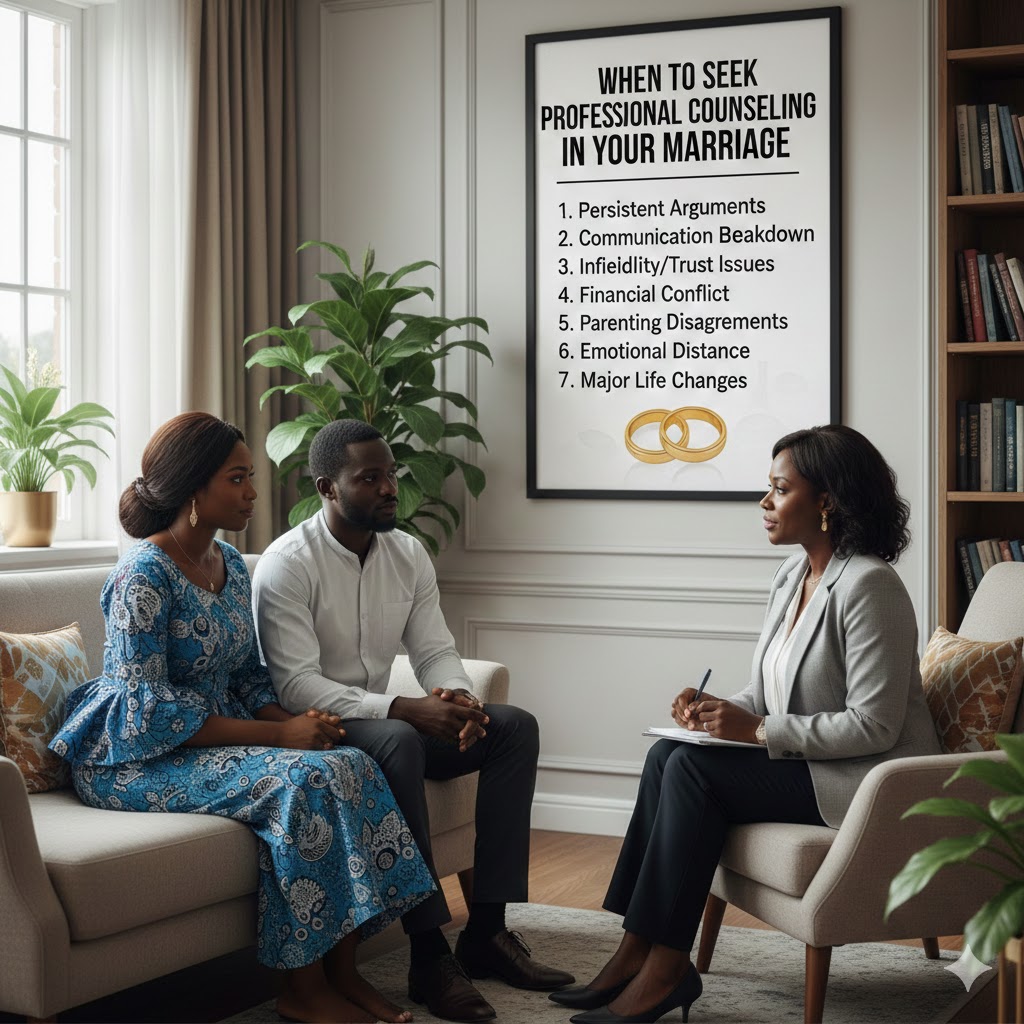
When to Seek Professional Counseling in Your Marriage: A Nigerian Couples’ Guide
Marriage is a journey filled with love, growth, and occasional challenges. Even the most committed couples can face communication breakdowns, trust issues, or conflicts that feel insurmountable. Seeking professional counseling is a proactive step to strengthen your relationship, prevent escalation, and promote emotional intimacy.
In Nigeria, where cultural norms, extended family expectations, and societal pressures influence marriages, professional counseling provides a neutral space for couples to navigate challenges effectively. This article explores when and why Nigerian couples should seek counseling, using real-life examples and actionable strategies.
Understanding Professional Counseling for Marriage
Professional counseling, also known as marriage or couples therapy, involves working with a trained therapist to address relationship challenges. Counselors provide:
-
Tools for effective communication
-
Conflict resolution strategies
-
Techniques to rebuild trust
-
Emotional support and guidance
-
Culturally sensitive approaches
Scenario:
In Lagos, Tobi and Sade attended counseling after repeated financial disputes and communication breakdowns. The counselor guided them through conflict resolution exercises, improving their emotional connection and daily interactions.
Why Nigerian Couples Sometimes Delay Counseling
Despite its benefits, many Nigerian couples delay seeking professional help due to:
-
Cultural Stigma: Belief that counseling is only for “broken marriages.”
-
Fear of Judgment: Worry that others will perceive the marriage as failing.
-
Lack of Awareness: Many couples are unaware of counseling benefits.
-
Financial Concerns: Therapy costs can be a deterrent.
-
Gender Expectations: Traditional norms may discourage emotional vulnerability, especially in men.
Scenario:
In Abuja, Amaka’s husband initially resisted counseling, fearing societal judgment. Once he understood that therapy was a tool for growth rather than shame, he agreed to participate.
Signs It’s Time to Seek Professional Counseling
1. Persistent Communication Problems
-
Frequent misunderstandings
-
Arguments escalating without resolution
-
Emotional withdrawal or avoidance
Scenario:
In Port Harcourt, Chika and Emeka argued daily over parenting styles. Counseling taught them communication techniques like reflective listening, reducing conflict and improving cooperation.
2. Loss of Emotional Intimacy
-
Feeling distant or disconnected
-
Lack of meaningful conversations
-
Decline in physical and emotional affection
Scenario:
In Lagos, Sade felt emotionally neglected by Tobi, who was preoccupied with work. Counseling helped them rekindle emotional closeness through structured exercises and quality time planning.
3. Infidelity or Breach of Trust
-
Suspicions or confirmed cheating
-
Repeated secrecy or dishonesty
-
Difficulty forgiving and rebuilding trust
Scenario:
In Abuja, Amaka discovered Chidi had an emotional affair. Counseling provided a structured environment for honest dialogue, trust rebuilding, and establishing boundaries.
4. Frequent or Escalating Conflicts
-
Arguments over finances, responsibilities, or extended family
-
Feeling stuck in repetitive conflict patterns
-
Escalating tension affecting daily life
Scenario:
In Port Harcourt, Chika and Emeka constantly clashed about extended family involvement. Therapy helped them negotiate boundaries and communicate expectations clearly.
5. Difficulty Managing Life Transitions
-
Marriage, relocation, or career changes
-
Childbirth or blended family adjustments
-
Coping with illness or loss
Scenario:
In Lagos, Tobi and Sade struggled with parenting a newborn while maintaining their relationship. Counseling offered strategies to balance responsibilities and nurture their bond.
6. Emotional or Psychological Distress
-
Persistent anxiety, depression, or resentment
-
Feeling emotionally overwhelmed
-
Struggling to cope with relationship stress
Scenario:
In Abuja, Amaka felt constant anxiety over conflicts with Chidi. Therapy helped her develop coping strategies, communicate effectively, and reduce stress within the marriage.
7. Repeated Breakdowns in Conflict Resolution
-
Attempts to resolve issues independently fail
-
Arguments spiral into emotional disconnection
-
Unable to find compromises
Scenario:
In Port Harcourt, Chika and Emeka repeatedly failed to agree on financial decisions. Counseling guided them in structured problem-solving techniques to find mutually acceptable solutions.
8. Desire for Growth and Relationship Strengthening
-
Couples not facing crisis but seeking improvement
-
Interest in building deeper emotional connection
-
Proactive approach to sustaining a healthy marriage
Scenario:
In Lagos, Tobi and Sade attended counseling despite no major conflicts, focusing on strengthening communication, intimacy, and long-term satisfaction.
How to Approach Counseling in a Nigerian Context
1. Choose a Culturally Sensitive Counselor
-
Understands Nigerian family dynamics and societal norms
-
Respects religious and cultural values
-
Uses approaches suited to the couple’s context
Scenario:
In Abuja, Amaka and Chidi selected a counselor familiar with Nigerian extended family pressures, making discussions about boundaries easier and more effective.
2. Discuss Goals and Expectations Together
-
Clarify what each partner hopes to achieve
-
Agree on session frequency and duration
-
Set realistic expectations for progress
Scenario:
In Port Harcourt, Chika and Emeka set clear goals to improve communication and manage financial disagreements, which guided therapy focus.
3. Commit to Active Participation
-
Attend sessions consistently
-
Practice exercises between sessions
-
Be open to feedback and change
Scenario:
In Lagos, Sade and Tobi committed to weekly sessions and daily check-ins, reinforcing lessons learned in counseling.
4. Overcome Cultural Stigma
-
Frame counseling as proactive growth rather than failure
-
Highlight its role in fostering family harmony and stability
Scenario:
In Abuja, Amaka framed counseling as a preventive measure, comparing it to regular health check-ups, reducing Chidi’s hesitation.
5. Be Patient and Persistent
-
Change takes time; progress may be gradual
-
Avoid expecting instant results
-
Celebrate small successes along the way
Scenario:
In Port Harcourt, Chika and Emeka noticed small improvements in the first month, but significant change took several months of consistent effort.
Benefits of Seeking Professional Counseling
-
Improved Communication: Learn effective ways to express thoughts and emotions.
-
Conflict Resolution Skills: Manage disagreements constructively.
-
Trust Rebuilding: Address past betrayals or misunderstandings.
-
Emotional Intimacy: Strengthen connection and empathy.
-
Problem-Solving Tools: Navigate challenges collaboratively.
-
Stress Management: Develop coping strategies for life pressures.
-
Cultural and Religious Sensitivity: Address challenges while respecting values.
-
Relationship Satisfaction: Increase marital happiness and resilience.
Scenario:
In Lagos, Tobi and Sade reported enhanced emotional connection, better conflict management, and stronger intimacy after six months of counseling.
Overcoming Barriers to Counseling in Nigeria
1. Financial Concerns
-
Consider affordable counseling centers or online therapy
-
Evaluate long-term benefits versus short-term costs
Scenario:
In Abuja, Amaka and Chidi attended an affordable counseling center with sliding fees, making sessions accessible without financial strain.
2. Family or Societal Pressure
-
Maintain confidentiality
-
Frame therapy as relationship enhancement, not failure
Scenario:
In Port Harcourt, Chika and Emeka did not disclose sessions publicly initially, allowing them to participate without judgment from extended family.
3. Misconceptions About Counseling
-
Emphasize that therapy is collaborative, not blame-focused
-
Share examples of successful counseling outcomes
Scenario:
In Lagos, Sade explained that counseling provides tools to both partners, alleviating Tobi’s fears of being blamed for conflicts.
What to Expect During Counseling
-
Safe and Confidential Environment: Open discussion without judgment.
-
Structured Sessions: Guided by the counselor to address key issues.
-
Goal-Oriented Approach: Focus on problem-solving, skill-building, and growth.
-
Homework or Exercises: Reinforce lessons between sessions.
-
Cultural Sensitivity: Therapist respects Nigerian family and societal dynamics.
Scenario:
In Abuja, Amaka and Chidi appreciated the structured approach, which included exercises for better communication, conflict management, and boundary-setting.
Signs Counseling Is Working
-
Reduced frequency and intensity of arguments
-
Increased empathy and understanding
-
More open and honest communication
-
Emotional reconnection and intimacy
-
Ability to resolve conflicts collaboratively
-
Improved stress management within the marriage
Scenario:
In Port Harcourt, Chika and Emeka noticed that disagreements about finances no longer escalated, and they felt emotionally closer after three months of consistent counseling.
When to Seek Urgent Professional Help
-
Abuse or Violence: Physical, emotional, or psychological abuse requires immediate intervention.
-
Severe Trust Breaches: Infidelity or financial betrayal causing extreme distress.
-
Mental Health Concerns: Anxiety, depression, or emotional instability affecting the relationship.
-
Persistent Dysfunction: Continuous conflicts impacting daily life, parenting, or family harmony.
Scenario:
In Lagos, Sade sought counseling after discovering financial infidelity, addressing both emotional recovery and practical solutions in a safe, guided environment.
Practical Tips for Nigerian Couples Considering Counseling
-
Research Counselors: Look for experience, cultural awareness, and positive reviews.
-
Set Goals Together: Discuss what you hope to achieve before the first session.
-
Maintain Confidentiality: Keep therapy private to reduce external pressure.
-
Be Open to Change: Counseling requires effort, patience, and self-reflection.
-
Practice Learned Skills: Apply communication and problem-solving techniques daily.
-
Celebrate Small Wins: Recognize progress, no matter how incremental.
Real-Life Nigerian Scenario: A Success Story
Case Study: Amaka and Chidi in Abuja
-
Challenge: Frequent arguments over finances, extended family expectations, and communication breakdown.
-
Approach: Attended professional counseling with culturally sensitive therapist.
-
Process: Completed communication exercises, reflective listening sessions, and goal-setting discussions.
-
Outcome: Reduced conflicts, improved emotional intimacy, and stronger mutual understanding. Counseling became a proactive tool for sustaining marital harmony.
Conclusion: Counseling as a Lifeline for Marriage
Professional counseling is not a sign of weakness but a proactive investment in your relationship. Nigerian couples face unique challenges from cultural expectations, family dynamics, and societal pressures, making counseling a valuable tool to enhance communication, resolve conflicts, and strengthen emotional intimacy.
Key Takeaways:
-
Recognize signs indicating a need for counseling.
-
Approach counseling as a collaborative, growth-oriented process.
-
Overcome resistance with empathy, patience, and culturally sensitive strategies.
-
Consistent effort and active participation maximize benefits.
-
Counseling fosters resilience, trust, and long-term marital satisfaction.
Final Thought: For Nigerian couples, seeking professional counseling is a strategic step to preserve love, deepen connection, and navigate life’s challenges together, creating a marriage that thrives emotionally, mentally, and relationally.







.jpg)

Sign in to comment