 Nurturing Marriages, Enriching Families!
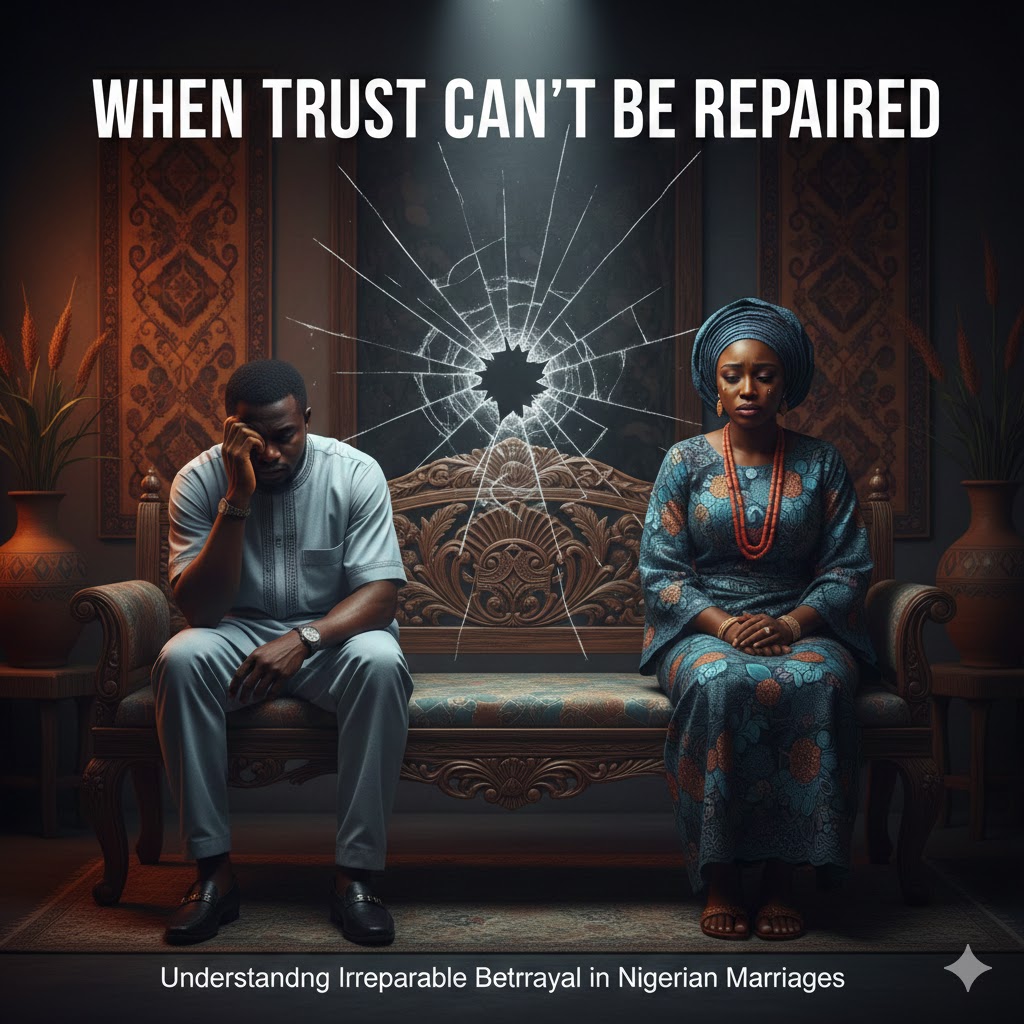
When Trust Can’t Be Repaired: Understanding Irreparable Betrayal in Nigerian Marriages
Trust is the foundation of every healthy marriage. When it is broken, the emotional consequences can be devastating. Forgiveness, counseling, and reconciliation are often possible after betrayal, but sometimes the damage is so profound that trust cannot be restored. Recognizing when trust is irreparable is crucial for making informed decisions about your marriage, protecting your emotional wellbeing, and safeguarding your family.
In Nigeria, cultural expectations, religious beliefs, and family pressure often make the choice to leave a marriage difficult. Many couples feel compelled to stay together despite betrayal, but there are circumstances where staying may be more harmful than leaving. Understanding the warning signs, emotional dynamics, and practical steps to take when trust cannot be repaired can help Nigerian spouses navigate these complex situations with clarity and courage.
Understanding Irreparable Betrayal
Betrayal in marriage can take many forms, including infidelity, financial deception, emotional abuse, or repeated broken promises. While some breaches of trust can be addressed through counseling, transparency, and consistent effort, others may reach a point where repair is impossible.
Irreparable betrayal is often characterized by repeated violations of boundaries, lack of accountability, and a persistent disregard for the spouse’s emotional wellbeing. In Nigeria, where social and family pressures encourage preservation of the marriage, recognizing when trust is beyond repair requires careful reflection and emotional honesty.
Scenario:
In Lagos, Tobi discovered that his wife, Sade, had been physically unfaithful multiple times despite prior attempts at reconciliation. Each confession was followed by promises to change, but the behavior continued. Tobi realized that his trust could no longer be restored, and staying in the marriage was causing more emotional harm than good.
Signs That Trust Cannot Be Repaired
There are several indicators that trust may be beyond repair in a marriage. Recognizing these signs can prevent prolonged suffering and help individuals make informed decisions.
One major sign is repeated infidelity or betrayal despite genuine attempts to rebuild the relationship. A partner who continues to violate boundaries, lies, or manipulates the truth demonstrates a lack of commitment to change. This pattern can erode trust to the point where reconciliation becomes impossible.
Scenario:
Amaka forgave her husband, Chidi, for an emotional affair, and they attended counseling. Despite this, Chidi continued secretive communication with the same person. Amaka realized that repeated betrayal indicated an unwillingness to prioritize their marriage.
Another warning sign is a lack of accountability. When a partner refuses to acknowledge their actions, manipulate situations to deflect blame, or gaslight their spouse, repairing trust becomes unlikely. Emotional honesty is essential for healing, and without it, the foundation of trust remains broken.
Scenario:
Chika discovered that her husband, Emeka, had mismanaged family finances and hidden his actions for years. When confronted, he refused to accept responsibility, blaming her for being “too controlling.” The persistent deflection made it impossible for Chika to rebuild trust.
Persistent emotional abuse or manipulation is also a key indicator. When a partner consistently undermines your confidence, disregards your feelings, or uses guilt and fear to maintain control, trust cannot be effectively restored. Emotional safety is a prerequisite for any reconciliation, and without it, the relationship becomes toxic.
Cultural and Social Factors in Nigerian Marriages
In Nigeria, societal norms often pressure couples to preserve marriages, even when trust is irreparably broken. Family expectations, religious teachings, and community judgment can make separation seem unacceptable. Women, in particular, may face stigmatization for leaving a marriage, while men may fear losing social status or parental influence.
Scenario:
Amaka struggled with the decision to leave Chidi because her family emphasized reconciliation and feared community judgment. Despite these pressures, she realized that staying would compromise her emotional and mental health.
Religious beliefs also influence decisions about forgiveness and staying together. Many Nigerian couples seek spiritual guidance, hoping for divine intervention to restore trust. While faith can support healing, it cannot compensate for repeated betrayal, manipulation, or emotional harm. Recognizing the limits of forgiveness is essential.
Scenario:
Tobi sought pastoral counseling for guidance on reconciling with Sade. Despite spiritual advice to forgive, he understood that repeated physical betrayal and emotional manipulation were beyond repair, and leaving was the healthiest choice.
Emotional Impact of Irreparable Trust
Living with a partner who repeatedly violates trust can have profound emotional consequences. Victims may experience chronic anxiety, depression, low self-esteem, and emotional exhaustion. The constant fear of betrayal can erode happiness and overall wellbeing.
Scenario:
Chika endured years of financial deception and emotional neglect from Emeka. The ongoing stress affected her mental health, and she realized that staying in the marriage was causing more harm than benefit.
The impact extends beyond the individual to children and family dynamics. Children exposed to repeated marital conflict, betrayal, or emotional abuse may experience emotional instability or adopt unhealthy relationship patterns. In Nigeria, where extended families are involved, the ripple effect of irreparable trust can affect multiple generations.
Scenario:
Amaka considered her children when deciding to leave Chidi. She recognized that continuing in a marriage characterized by repeated betrayal could negatively impact their emotional development.
When to Consider Separation
Knowing when to leave a marriage is a difficult but necessary step when trust cannot be repaired. Separation may be warranted if there is persistent betrayal, emotional abuse, lack of accountability, or ongoing manipulation.
It is essential to assess the partner’s willingness to change. Genuine remorse, consistent transparency, and a commitment to counseling indicate that trust may be repairable. Without these factors, reconciliation may only prolong pain and prevent personal and relational growth.
Scenario:
Tobi realized that Sade’s repeated affairs and refusal to set boundaries were signs that trust could not be restored. After careful reflection and counseling support, he decided to separate to preserve his emotional wellbeing.
Safety is another critical consideration. In cases of emotional, financial, or physical abuse, leaving the relationship may be necessary for protection. Personal safety and mental health must take priority over societal expectations or family pressure.
Scenario:
Chika’s situation involved repeated emotional abuse alongside financial deception. She chose separation, prioritizing her safety and emotional health over community opinion.
Practical Steps for Navigating Irreparable Trust
When trust cannot be repaired, navigating the aftermath requires deliberate action and emotional resilience.
1. Seek Professional Support:
Counseling or therapy provides guidance, emotional processing, and strategies for rebuilding personal strength. Nigerian couples can benefit from both individual and family counseling to understand dynamics and plan the next steps.
Scenario:
Amaka attended counseling sessions to process the pain of Chidi’s repeated infidelity and develop strategies for moving forward while supporting her children.
2. Establish Boundaries:
If separation is necessary, setting clear boundaries around communication, finances, and co-parenting ensures safety and minimizes emotional harm.
Scenario:
Tobi and Sade implemented clear guidelines on co-parenting, property division, and communication after deciding to separate, reducing potential conflict.
3. Focus on Emotional Healing:
Investing in self-care, mindfulness, and supportive relationships is critical. Healing after betrayal takes time, and prioritizing mental and emotional wellbeing helps prevent future relational challenges.
Scenario:
Chika dedicated time to personal development, connecting with trusted friends and spiritual mentors to rebuild confidence and emotional resilience.
4. Consider Legal and Financial Planning:
Understanding legal rights, property division, and child custody in Nigeria ensures fair outcomes during separation or divorce. Professional advice helps protect interests and provides clarity.
Scenario:
Amaka consulted a family lawyer to understand her rights and responsibilities, ensuring her children and financial interests were safeguarded during the divorce process.
5. Lean on Support Systems:
Friends, family, and faith communities can provide essential emotional support. However, it’s important to prioritize guidance from those who understand the nuances of betrayal and divorce.
Scenario:
Tobi leaned on a close friend network and his church community for emotional and practical support, helping him navigate the separation with confidence.
Real-Life Nigerian Scenarios
Case Study 1: Tobi and Sade, Lagos
Tobi discovered repeated physical and emotional infidelity despite counseling attempts. Recognizing that trust could not be restored, he prioritized his wellbeing and chose to separate while maintaining a co-parenting plan for their children.
Case Study 2: Amaka and Chidi, Abuja
Chidi’s repeated financial deception and brief affair created a pattern of betrayal. Amaka engaged in counseling, established clear boundaries, and left the marriage to protect herself and her children, focusing on emotional healing and stability.
Case Study 3: Chika and Emeka, Port Harcourt
Emeka’s persistent emotional manipulation, gaslighting, and lack of accountability made reconciliation impossible. Chika sought legal and emotional guidance, ultimately separating to rebuild her life with clarity and confidence.
Lessons from Irreparable Trust
-
Acknowledge Reality: Accepting that trust cannot be repaired is the first step toward healing and empowerment.
-
Prioritize Wellbeing: Emotional and physical safety should guide decisions, even in the face of societal or family pressure.
-
Seek Support: Professional guidance, counseling, and supportive networks provide clarity and resilience.
-
Learn and Grow: Reflecting on relational patterns helps prevent similar situations in future relationships.
-
Focus on Children: Decisions should consider children’s emotional stability and long-term wellbeing.
Conclusion: Moving Forward When Trust Cannot Be Restored
Trust is the cornerstone of any marriage. When it is irreparably broken, staying in the relationship can perpetuate emotional harm and prevent personal growth. Nigerian spouses often face additional challenges due to cultural expectations, religious beliefs, and family pressure. Yet recognizing when trust cannot be repaired empowers individuals to make informed, healthy decisions.
Navigating the aftermath requires emotional resilience, professional support, and practical planning. Separation may be necessary to protect emotional wellbeing, safety, and family stability. By prioritizing self-care, accountability, and clarity, Nigerian spouses can move forward with dignity, rebuild their lives, and create relationships founded on mutual respect and trust in the future.
Understanding that leaving a marriage when trust is irreparable is not a failure, but a courageous act of self-preservation, allows individuals to reclaim their lives, heal from betrayal, and embrace the possibility of healthier, more fulfilling relationships ahead.









.jpg)


Sign in to comment