 Nurturing Marriages, Enriching Families!
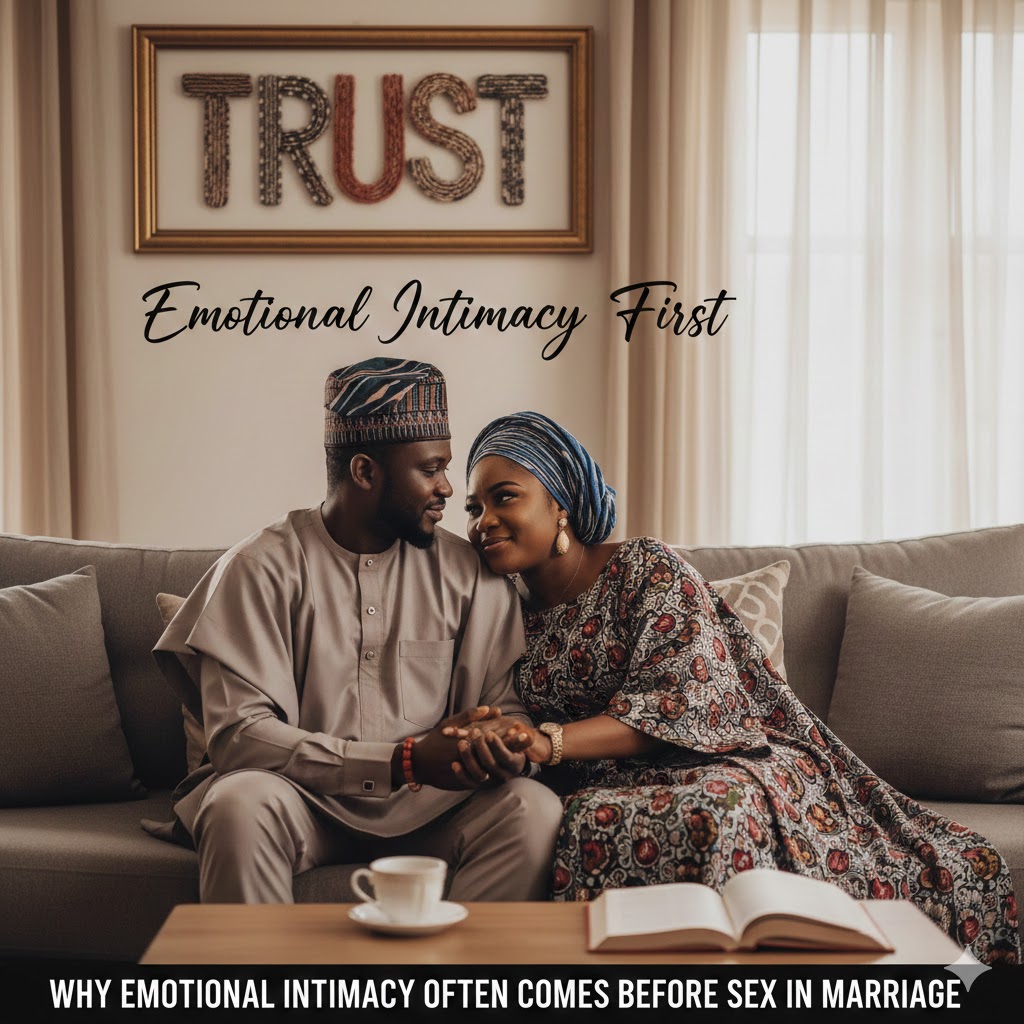
Why Emotional Intimacy Often Comes Before Sex in Marriage
In many marriages, couples are surprised to discover that sexual desire does not simply respond to physical attraction or opportunity. Instead, it often rises and falls with emotional closeness. For many married couples—especially in Nigeria—emotional intimacy comes before sexual intimacy, not the other way around. When emotional connection is weak, sex often feels forced, infrequent, or unsatisfying. When emotional intimacy is strong, sexual desire flows more naturally and consistently.
This article explores why emotional intimacy is the foundation of healthy sex in marriage, how this plays out in real Nigerian marriages, and what couples can do to strengthen emotional closeness for lasting sexual satisfaction.
Understanding Emotional Intimacy in Marriage
Emotional intimacy is the feeling of being seen, heard, valued, and safe with your spouse. It involves trust, vulnerability, empathy, and consistent emotional connection. Emotional intimacy allows spouses to share thoughts, fears, desires, frustrations, and dreams without fear of judgment or rejection.
In marriage, emotional intimacy shows up through:
- Honest communication
- Feeling supported and understood
- Mutual respect
- Emotional safety
- Consistent affection and reassurance
When these elements are present, sexual intimacy becomes a natural extension of emotional closeness rather than a duty or obligation.
Why Emotional Intimacy Often Precedes Sexual Desire
Sex Is Deeply Emotional for Many People
For many spouses—particularly women, but also a significant number of men—sex is closely tied to emotional connection. Feeling emotionally disconnected can shut down sexual desire, even when physical attraction still exists.
In Nigerian marriages, where emotional expression is sometimes discouraged or misunderstood, this dynamic is often overlooked. A spouse may not refuse sex out of spite but because they feel emotionally distant, unheard, or unloved.
Emotional Safety Creates Sexual Openness
Sex requires vulnerability. When a spouse does not feel emotionally safe—perhaps due to criticism, unresolved conflict, neglect, or disrespect—sexual openness decreases.
Emotional intimacy creates a safe environment where:
- Desires can be expressed without shame
- Boundaries are respected
- Vulnerability is welcomed
- Trust replaces fear
Without emotional safety, sex can feel risky, mechanical, or emotionally draining.
Unresolved Emotional Issues Suppress Desire
Emotional wounds do not stay in the heart alone; they affect the body as well. Lingering resentment, hurtful words, betrayal, neglect, or chronic conflict can suppress sexual desire over time.
Real-life Nigerian scenario: A couple in Ibadan struggled with declining sexual intimacy. The husband felt rejected, while the wife felt emotionally abandoned due to his long absences and lack of communication. Once they addressed emotional neglect through honest conversations and intentional bonding, sexual desire gradually returned.
This pattern is common: sex improves when emotional issues are resolved.
Cultural Factors in Nigeria That Reinforce This Reality
Emotional Expression Is Often Suppressed
In many Nigerian homes, emotional vulnerability is not encouraged—especially for men. Spouses may struggle to articulate feelings, leading to emotional distance.
When emotional connection is weak, sexual intimacy suffers, even if both partners desire closeness.
Marriage Is Often Duty-Driven, Not Connection-Driven
Some couples enter marriage with the belief that sex is a marital duty rather than a shared emotional experience. While obligation may sustain sexual activity early on, it rarely sustains passion or satisfaction long-term.
Over time, spouses crave emotional connection, not just physical access.
Stress and Pressure Reduce Emotional Availability
Economic pressures, extended family responsibilities, child-rearing, and work stress common in Nigerian households often reduce emotional availability. When emotional energy is drained, sexual desire usually declines as well.
Why Emotional Intimacy Matters More as Marriage Progresses
In the early stages of marriage, physical attraction and novelty may drive sexual desire. As years pass, however, emotional intimacy becomes the primary fuel for sexual connection.
As couples age, face stress, raise children, and navigate life challenges:
- Bodies change
- Energy levels fluctuate
- Sexual routines become familiar
What keeps sex alive is not novelty alone, but emotional closeness, friendship, trust, and affection.
Signs Emotional Intimacy Is Missing Before Sex
Couples often notice:
- Sex feels forced or routine
- One partner avoids intimacy
- Sexual frequency declines without clear explanation
- Emotional conversations are rare
- Touch outside the bedroom disappears
- Small conflicts kill desire quickly
These are usually emotional signals, not sexual problems.
How Emotional Intimacy Fuels Better Sex
Emotional Connection Builds Desire
Feeling emotionally close increases attraction and anticipation. Compliments, attention, empathy, and shared laughter reignite desire more effectively than sexual pressure.
Communication Improves Sexual Satisfaction
Emotionally intimate couples talk more openly about:
- Preferences
- Needs
- Boundaries
- Timing and frequency
This leads to sex that feels mutually satisfying rather than one-sided.
Emotional Closeness Reduces Performance Anxiety
When spouses feel accepted and valued, sex becomes less about performance and more about connection. This reduces anxiety, pressure, and fear of rejection.
How Nigerian Couples Can Strengthen Emotional Intimacy
Prioritize Emotional Conversations
Regularly ask:
- “How are you really feeling?”
- “What has been stressing you lately?”
- “What do you need more from me emotionally?”
Listening without defensiveness builds trust and closeness.
Increase Affection Outside the Bedroom
Hugs, holding hands, kind words, thoughtful gestures, and quality time reinforce emotional safety and desire.
Resolve Conflicts Promptly and Respectfully
Unresolved conflict is one of the biggest killers of sexual desire. Emotional healing restores intimacy faster than sexual pressure.
Create Quality Time Together
Intentional time—without phones, distractions, or children—helps couples reconnect emotionally and romantically.
Validate Each Other’s Feelings
Emotional intimacy grows when spouses feel understood, not dismissed. Validation does not require agreement; it requires empathy.
When Sex Is Used to Replace Emotional Intimacy
Some couples try to fix emotional distance with sex alone. While sex can temporarily mask emotional disconnection, it rarely heals it.
Over time, this leads to:
- Emotional emptiness
- Decreased satisfaction
- Increased resentment
- Avoidance of intimacy
Healthy marriages build emotional intimacy first, allowing sex to deepen rather than compensate for connection.
A Balanced Truth: Emotional Intimacy and Sex Reinforce Each Other
While emotional intimacy often comes before sex, the relationship is circular:
- Emotional closeness fuels sexual desire
- Healthy sex reinforces emotional bonding
The key is recognizing that sex thrives best in an emotionally connected environment, especially in long-term marriage.
Conclusion
In marriage, sex is not just a physical act—it is an emotional exchange. For many couples, especially within the Nigerian context, emotional intimacy is the gateway to satisfying and lasting sexual connection. When spouses feel emotionally safe, valued, and understood, sexual desire flows naturally.
Rather than pressuring sex or viewing intimacy as an obligation, couples should focus on building emotional closeness through communication, affection, trust, and empathy. When emotional intimacy is nurtured, sex becomes not just more frequent—but more fulfilling, meaningful, and enduring.
A strong marriage understands this truth: emotional intimacy often comes before sex, and sex flourishes where emotional connection lives.











.jpg)



Kaetochukwu Anaekwe
testing