 Nurturing Marriages, Enriching Families!
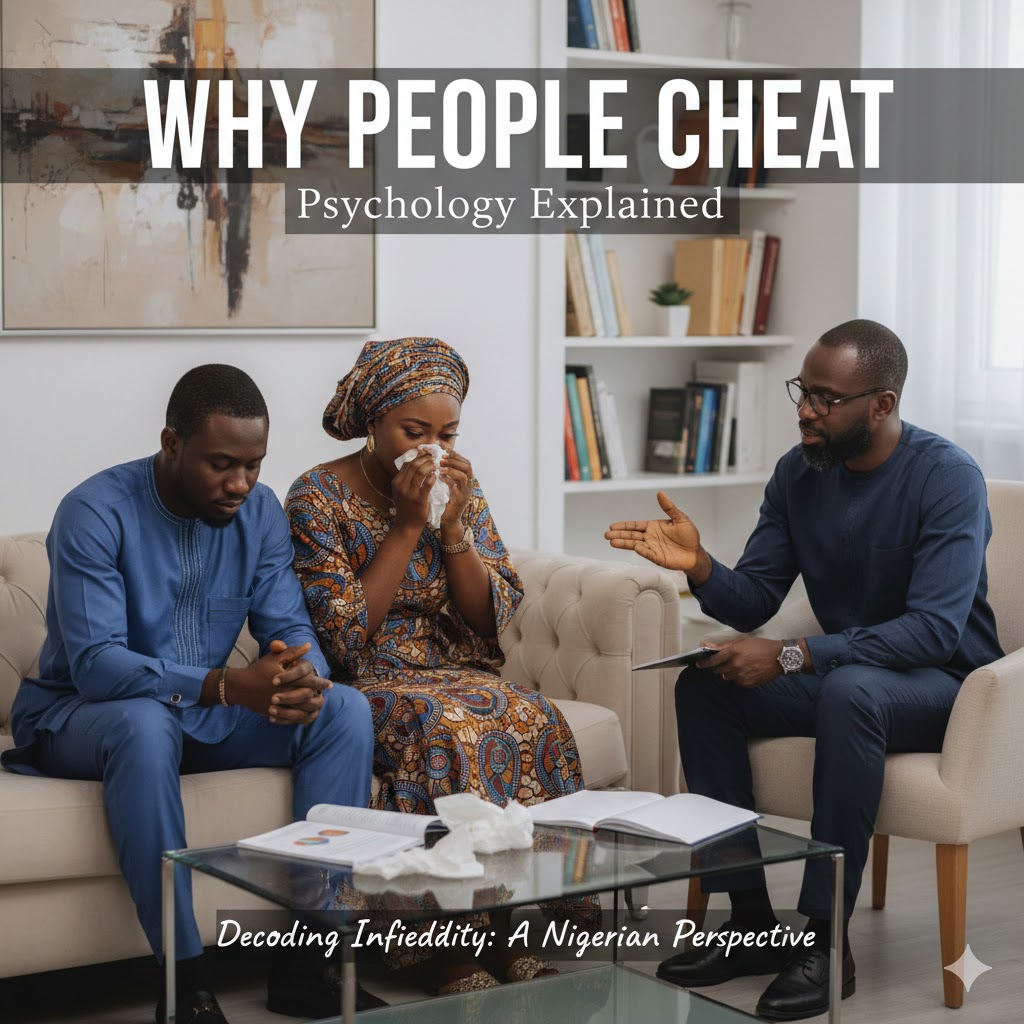
Why People Cheat: Psychology Explained for Nigerian Couples
Infidelity is a reality that affects many marriages worldwide, and Nigeria is no exception. Cheating can devastate relationships, erode trust, and cause long-term emotional harm. While discovering a partner’s infidelity is painful, understanding why people cheat from a psychological perspective can provide insights that help couples prevent, address, or recover from it.
This article explores the psychology of cheating, common motivations, real-life Nigerian examples, and strategies to strengthen relationships.
Understanding Infidelity
Infidelity, often referred to as cheating or unfaithfulness, is a violation of the expectations and boundaries of a committed relationship. It can manifest in different ways:
-
Emotional Infidelity: Deep emotional attachment, secrecy, or romantic involvement with someone outside the relationship.
-
Physical Infidelity: Sexual contact or romantic encounters with someone else.
-
Digital Infidelity: Involves social media, online messaging, or dating apps.
Scenario:
In Lagos, Tobi discovered that his wife, Sade, had been developing an emotional connection with a former colleague through constant messaging. Although no physical affair occurred, the secrecy and emotional closeness felt like betrayal.
Common Psychological Reasons People Cheat
Understanding why someone cheats requires examining personal, relational, and environmental factors.
1. Lack of Emotional Fulfillment
Many people cheat because they feel emotionally neglected or unappreciated in their relationships.
-
Signs: Feeling lonely, unacknowledged, or disconnected from a partner.
-
Psychology: Humans seek connection; unmet emotional needs may push someone toward attention elsewhere.
Scenario:
In Abuja, Amaka’s husband, Chidi, felt underappreciated at home due to her long work hours and family commitments. He sought emotional validation from a female coworker, leading to emotional infidelity.
2. Sexual Dissatisfaction
Sexual dissatisfaction or mismatched libido can motivate infidelity.
-
Signs: Reduced intimacy, frustration, or unfulfilled sexual needs.
-
Psychology: Individuals may cheat to meet physical desires not being addressed in the relationship.
Scenario:
In Port Harcourt, Chika experienced a lower sexual desire due to stress and fatigue, while Emeka sought sexual fulfillment elsewhere, resulting in a brief physical affair.
3. Thrill-Seeking or Novelty
Some individuals cheat for excitement, adventure, or novelty.
-
Signs: Seeking attention from new partners, risky behavior, or impulsiveness.
-
Psychology: Dopamine-driven pursuit of excitement; thrill-seeking personalities may be more prone to infidelity.
Scenario:
In Lagos, Tobi’s colleague engaged in multiple affairs driven by the excitement of secret encounters, rather than dissatisfaction at home.
4. Low Commitment or Immaturity
Individuals with low emotional maturity or weak commitment may cheat more frequently.
-
Signs: Difficulty taking responsibility, impulsivity, avoidance of conflict.
-
Psychology: Emotional immaturity and fear of vulnerability increase susceptibility to cheating.
Scenario:
In Abuja, a newly married couple experienced cheating because the husband struggled with commitment and unresolved personal insecurities, seeking validation elsewhere.
5. Opportunity and Accessibility
Easy access to potential partners, especially in urban centers or workplaces, increases cheating likelihood.
-
Signs: Workplace flirts, secret social media activity, frequent unsupervised outings.
-
Psychology: Opportunity without accountability can trigger temptation and rationalization.
Scenario:
In Lagos, Sade’s colleague frequently interacted with a coworker during long work hours, leading to emotional attachment that escalated into infidelity.
6. Revenge or Retaliation
Sometimes, people cheat as a form of retaliation for perceived neglect or betrayal.
-
Signs: Cheating shortly after a partner’s neglect, argument, or infidelity.
-
Psychology: Acts as a misguided coping mechanism or way to regain power.
Scenario:
In Port Harcourt, Chika’s affair occurred after feeling ignored and criticized by Emeka, highlighting revenge as a motivator rather than desire.
7. Psychological Disorders or Personality Traits
Certain psychological traits or conditions can increase infidelity risk:
-
Narcissism or self-centered tendencies
-
Low empathy or moral reasoning
-
Impulsivity and poor self-control
Scenario:
In Lagos, Tobi’s coworker displayed narcissistic traits, prioritizing personal gratification over marital fidelity. Counseling later helped him recognize and manage these behaviors.
8. Cultural and Social Influences
In Nigeria, social norms and peer influence can shape infidelity behaviors.
-
Extended family opinions may inadvertently condone or discourage certain behaviors.
-
Peer groups emphasizing “success” and status may encourage extramarital affairs.
Scenario:
In Abuja, Amaka’s husband justified an affair with a wealthy acquaintance as a “status symbol,” reflecting social and cultural pressures influencing behavior.
Warning Signs Your Partner May Be Cheating
Recognizing early indicators can help couples address issues proactively.
-
Sudden secrecy with phone or social media
-
Reduced emotional or sexual intimacy
-
Increased defensiveness or irritability
-
Frequent unexplained absences or work-related excuses
-
Behavioral changes like grooming, dressing up more, or unusual spending
Scenario:
In Lagos, Tobi noticed Sade spending more time texting in private and avoiding discussions, prompting him to address concerns before escalation.
How Counseling Helps Address Infidelity
1. Providing a Safe Space
Counseling offers neutral ground to discuss betrayal without hostility.
Scenario:
In Abuja, Amaka and Chidi used counseling sessions to openly discuss the emotional affair, reducing tension and emotional reactivity.
2. Understanding Motivations
Counselors help couples explore why the infidelity occurred, addressing underlying emotional, sexual, or relational gaps.
Scenario:
Chika and Emeka discovered counseling revealed unmet emotional needs were a primary driver for the affair.
3. Rebuilding Trust
Structured therapy focuses on transparency, accountability, and consistent behavior to rebuild trust over time.
Scenario:
Tobi and Sade implemented weekly check-ins, shared schedules, and accountability exercises through counseling.
4. Improving Communication
Counseling teaches effective communication skills to prevent misunderstandings and avoid recurrence of infidelity.
Scenario:
Amaka and Chidi learned reflective listening and “I feel” statements to express needs without blame.
5. Strengthening Emotional and Physical Intimacy
Therapists help couples reconnect emotionally and physically, reducing vulnerability to future infidelity.
Scenario:
In Port Harcourt, Chika and Emeka implemented date nights, shared hobbies, and intimacy exercises recommended by their counselor.
Steps to Prevent Infidelity in Marriage
-
Regular Communication: Discuss needs, desires, and concerns openly.
-
Prioritize Emotional Connection: Nurture intimacy through shared experiences.
-
Address Problems Early: Resolve conflicts before resentment builds.
-
Set Clear Boundaries: Define acceptable interactions with others.
-
Seek Counseling Proactively: Attend therapy even when no crisis exists.
Scenario:
In Lagos, Tobi and Sade continued monthly counseling sessions after reconciling to maintain emotional and sexual closeness.
Real-Life Nigerian Scenario: Lessons from Infidelity
Case Study: Amaka and Chidi, Abuja
-
Challenge: Chidi engaged in an emotional affair with a coworker due to unmet emotional needs.
-
Action: Amaka confronted him calmly, and they attended weekly counseling sessions.
-
Process: Explored underlying causes, addressed emotional neglect, and rebuilt intimacy and communication.
-
Outcome: The couple reconciled, strengthened their relationship, and implemented preventive strategies to avoid future infidelity.
Conclusion: Understanding Why People Cheat
Infidelity is a complex phenomenon influenced by psychological, relational, and social factors. Understanding the motivations behind cheating is essential for couples in Nigeria to address issues constructively, rebuild trust, and prevent future betrayals.
Key Takeaways:
-
People cheat due to emotional, sexual, social, or psychological factors.
-
Warning signs include secrecy, emotional distance, and behavioral changes.
-
Counseling provides a safe space to understand motivations, rebuild trust, and improve communication.
-
Proactive relationship maintenance, clear boundaries, and ongoing emotional connection reduce infidelity risk.
-
Infidelity does not always signify the end of a marriage; with commitment and guidance, couples can recover.
Final Thought: Understanding the psychology of cheating empowers Nigerian couples to make informed decisions, strengthen their marriage, and protect emotional and family wellbeing.






.jpg)
Sign in to comment