 Nurturing Marriages, Enriching Families!
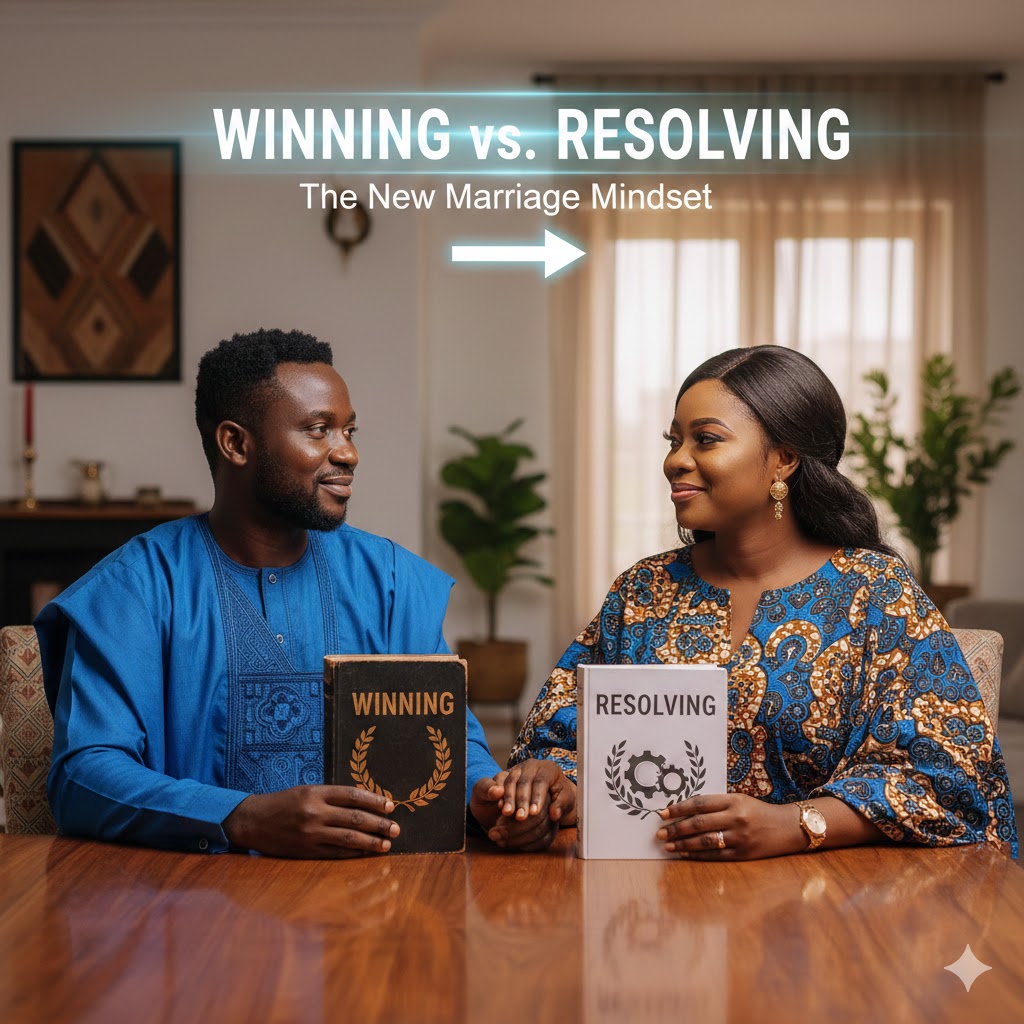
Winning vs. Resolving: The New Marriage Mindset in Nigerian Relationships
Marriage is often described as a partnership, but many couples unintentionally treat disagreements as competitions to “win” rather than opportunities to resolve issues collaboratively.
In Nigerian marriages, where cultural expectations, family influence, and societal norms often shape behavior, the tendency to treat arguments as battles can lead to long-term frustration, resentment, and emotional distance.
Adopting a mindset that prioritizes resolution over winning is essential for healthy communication, emotional intimacy, and marital longevity.
Understanding this distinction, practicing effective strategies, and integrating culturally informed approaches can transform Nigerian marriages into resilient partnerships capable of weathering disagreements without conflict eroding the bond.
Understanding the “Winning” Mindset
When a spouse approaches disagreements with a “winning” mentality, their focus is on being right, asserting dominance, or proving the other wrong. The goal becomes personal victory rather than joint problem-solving. This mindset often results in defensiveness, power struggles, and arguments that escalate rather than resolve.
In Nigeria, cultural norms around pride, respect, and public perception can exacerbate this tendency. A spouse may feel compelled to “win” an argument to maintain status, uphold family expectations, or avoid appearing weak. While winning may bring short-term satisfaction, it can corrode trust, intimacy, and long-term marital satisfaction.
Understanding the “Resolving” Mindset
The resolving mindset shifts the focus from being right to finding solutions that benefit both partners. It emphasizes listening, empathy, compromise, and shared decision-making. Couples who resolve conflicts prioritize the health of the marriage over individual ego, recognizing that partnership requires collaboration, patience, and humility.
In Nigerian marriages, resolving effectively often involves balancing cultural expectations with personal needs. For instance, couples must navigate input from extended family, religious teachings, and community norms, while keeping the marital bond and family harmony intact.
Real-Life Nigerian Scenarios
Scenario 1: Lagos Couple and Financial Disagreements
Chinwe and Emeka frequently argued over household expenses. Emeka wanted strict budgeting, while Chinwe preferred flexibility. Initially, their debates focused on “winning”—each trying to assert their authority. Over time, they realized this approach only fueled frustration.
By shifting to a resolving mindset, they created a joint monthly budget, negotiated compromises, and agreed on discretionary spending limits. The focus moved from proving a point to achieving shared financial goals.
Scenario 2: Abuja Couple and Parenting Styles
Ngozi and Chinedu disagreed on disciplining their first child. Chinedu insisted on traditional strict methods, while Ngozi preferred positive reinforcement. Their early attempts to “win” often led to yelling, confusion for the child, and emotional distance.
By adopting a resolving approach, they held calm discussions, listened actively to each other, and developed a hybrid discipline plan that integrated both perspectives. This not only reduced conflict but enhanced teamwork and family cohesion.
Scenario 3: Port Harcourt Couple and Extended Family Pressure
Funke and Emeka faced disagreements over in-law involvement in household decisions. Emeka initially tried to “win” by defending his mother’s opinions, which escalated tensions with Funke.
Shifting to a resolving mindset allowed them to set private boundaries, discuss family input calmly, and negotiate compromises, maintaining respect for extended family while protecting their marriage.
Why Winning Hurts Marriages
Prioritizing victory over resolution can erode emotional intimacy. It fosters defensiveness, resentment, and withdrawal. When couples focus on winning, they listen less, empathize less, and often repeat patterns of blame. Children observing these dynamics may adopt similar conflict behaviors, perpetuating cycles of unhealthy communication.
Moreover, the winning mindset discourages vulnerability and humility, both essential for emotional connection. Nigerian cultural expectations can intensify the desire to “win” in arguments, especially in public or extended family settings. However, consistently prioritizing winning over resolution damages long-term trust, respect, and mutual satisfaction.
How to Cultivate a Resolving Mindset
Shifting to a resolving mindset begins with self-awareness. Recognize when the desire to be right is driving your responses. Reflect on whether your goal is to assert dominance or to find a solution that strengthens the marriage.
Active listening is critical. Truly hear your partner without planning a rebuttal. Validate their feelings, show empathy, and focus on understanding their perspective. For example, instead of saying, “You’re wrong about this,” say, “I understand you feel strongly about this; let’s explore options together.”
Collaboration over competition should guide discussions. Couples can frame disagreements as joint problem-solving exercises rather than battles. This mindset encourages compromise, creativity, and mutual respect.
Pause and reflect before responding during heated discussions. Taking a short break allows emotions to settle and prevents impulsive reactions fueled by pride or defensiveness.
Admit mistakes openly and honestly. Acknowledging errors demonstrates humility and fosters trust. In Nigerian marriages, openly admitting when one is wrong, even in culturally sensitive settings, strengthens marital resilience and reduces tension.
Practical Exercises for Nigerian Couples
One exercise is joint reflection sessions, where couples discuss past conflicts and analyze how they could have approached the situation differently. This helps identify patterns of the winning mindset and encourages collaborative solutions.
Role reversal exercises allow each partner to articulate the other’s perspective, promoting empathy and understanding. Couples can practice this in private, safe spaces, reducing defensiveness and building emotional connection.
Shared goal mapping involves identifying mutual priorities, such as finances, parenting, or household routines, and aligning decisions to achieve those goals rather than asserting personal agendas.
Conflict journals can be used to document recurring arguments, triggers, and feelings. Couples review the entries together, reflecting on opportunities to resolve rather than win.
Benefits of the Resolving Mindset
Couples who prioritize resolution over winning enjoy deeper emotional intimacy, stronger trust, and more harmonious communication. Arguments become opportunities to learn about each other’s perspectives rather than battles to assert dominance.
Children learn effective conflict management and respect for collaborative problem-solving. Couples experience reduced stress, improved satisfaction, and stronger resilience in the face of cultural, family, or societal pressures.
Real-Life Nigerian Couple Tips
Chinwe and Emeka realized that focusing on shared financial goals reduced tension and fostered teamwork. Ngozi and Chinedu discovered that combining parenting approaches strengthened family cohesion. Funke and Emeka negotiated boundaries with extended family while maintaining respect, illustrating that a resolving mindset preserves cultural sensitivity without sacrificing marital unity.
These examples show that resolution-oriented approaches can transform disputes into growth opportunities, even in complex Nigerian family systems.
Reflection Prompts for Nigerian Couples
Couples can benefit from regularly reflecting on their conflict dynamics. Consider questions such as: Are we trying to win or resolve during disagreements? How do cultural expectations influence our argument style? How can we actively listen and validate each other’s feelings? Which practical steps can help us shift from competition to collaboration? How can we balance pride and humility while maintaining marital harmony?
Cultural Considerations in Nigerian Marriages
Nigerian couples often navigate cultural expectations around pride, respect for elders, and family involvement. These norms can magnify tendencies to insist on being right or “win” arguments, particularly in public or extended family settings. Shifting to a resolving mindset requires balancing cultural sensitivities with marital needs. Private discussions, empathy, and compromise help couples maintain harmony, satisfy cultural obligations, and protect the marital bond.
Conclusion
The difference between winning and resolving may seem subtle, but it profoundly affects the health of a marriage.
Nigerian couples face unique pressures from extended family, societal expectations, and cultural norms, which can exacerbate conflict. However, adopting a resolution-focused mindset, rooted in empathy, humility, collaboration, and reflection, transforms disagreements into opportunities for connection, growth, and stronger emotional intimacy.
Marriage is a partnership, not a competition. Couples who prioritize resolution over winning cultivate trust, harmony, and resilience. By understanding the impact of arguments, practicing effective strategies, and incorporating culturally informed approaches, Nigerian couples can navigate disagreements with grace, reduce conflict, and build marriages that thrive despite life’s challenges.









.jpg)




Sign in to comment