 Nurturing Marriages, Enriching Families!

Avoiding Common Divorce Mistakes: A Comprehensive Guide for Nigerian Couples
Divorce is one of life’s most complex transitions—emotionally taxing, legally demanding, and often financially overwhelming. For many Nigerian couples, the process can be made even more difficult by cultural expectations, family pressures, financial misunderstanding, and lack of preparation.
While separation may sometimes be the healthiest choice, the path to and through divorce is not the same for everyone. Avoiding common mistakes can protect your mental well‑being, financial security, and relationships with children and family.
This detailed guide explores the most common pitfalls people encounter when going through divorce in Nigeria—from emotional missteps to legal oversights—and offers practical strategies to avoid them. Real‑life scenarios anchored in Nigerian context illustrate how simple mistakes can have long‑lasting consequences—and how better choices lead to better outcomes.
1. Entering Divorce Without Emotional Preparation
One of the biggest mistakes people make is treating divorce solely as a legal or financial process and failing to prepare emotionally. Divorce often feels like a loss of identity, stability, and future expectation, particularly when the marriage was long‑standing.
Why This Happens
Many Nigerians come from cultural backgrounds that place high value on marital stability and endurance. As a result, when marriage breaks down, individuals may feel guilt, shame, or fear of social stigma. Instead of addressing these feelings, they jump into legal proceedings.
Consequences
-
Emotional decisions can cloud judgment in property division and custody discussions
-
Anger and unresolved grief can fuel conflict
-
Lack of emotional support can lead to depression, anxiety, or destructive behavior
Avoidance Strategy
-
Seek individual counseling or therapy early in the separation process
-
Build a supportive network of trusted friends, mentors, or faith leaders
-
Acknowledge and work through grief before facing negotiation or court
Real‑Life Scenario
Chinelo had been married for 15 years. After years of emotional distance and conflict, she decided to separate from her husband. Instead of seeking help, she bottled up her emotions, believing she should be “strong.” By the time she spoke with a counselor months later, her anger had hardened into resentment. This emotional build‑up affected how she communicated with her ex, leading to unnecessarily aggressive legal interactions that escalated conflict, delayed resolution, and increased legal costs.
2. Failing to Understand Legal Rights and Marriage Type
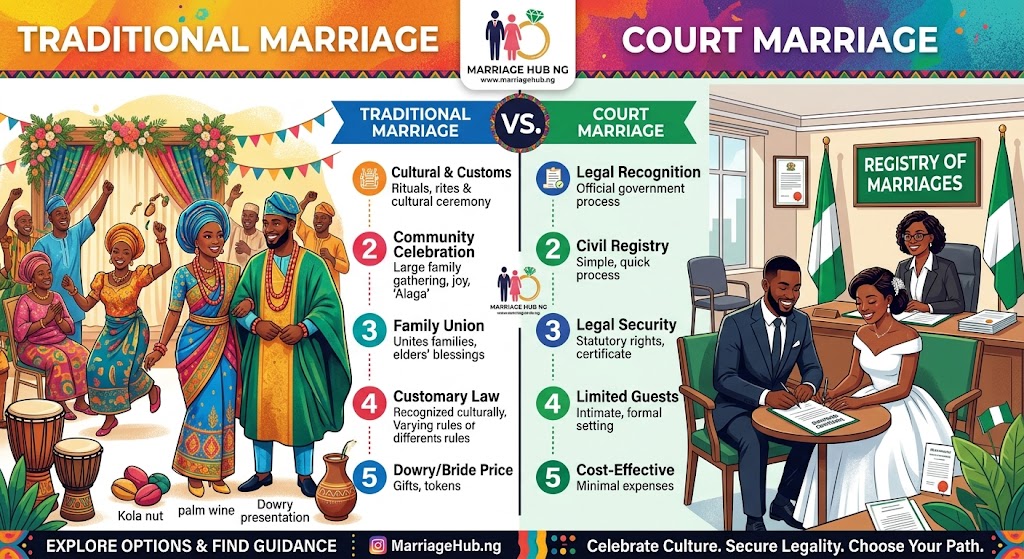
Understanding how marriage is recognized in Nigeria—and its implications for divorce—is critical. Nigeria recognizes statutory (civil), customary, and Islamic marriages, each with different legal implications.
Why This Matters
The type of marriage one has directly affects how property, support, and custody issues are handled. Many couples incorrectly assume that all marriages follow the same legal standards, leading to misunderstandings and missteps.
Common Error
Assuming that a customary marriage will automatically be treated like a statutory marriage, which can result in unfair property distribution.
Avoidance Strategy
-
Confirm your type of marriage (customary, statutory, or Islamic) with your lawyer
-
Understand which laws apply (e.g., Matrimonial Causes Act for statutory marriages)
-
Gather wedding certificates or evidence of marriage rites performed
Real‑Life Scenario
Tunde and Aisha were married under customary rites and lived together for over 10 years. When Aisha filed for divorce, she assumed the courts would divide all assets evenly. However, because her marriage was treated under customary law, the court gave more weight to traditional norms rather than equitable distribution. Had she and her lawyer clarified the legal framework early, she could have negotiated a prenup‑style agreement or mediation strategy that protected her interests better.
3. Ignoring Financial Planning Before Filing
Many people focus only on the emotional or relational aspects of divorce, leaving financial planning to the last minute. This often leads to losing assets, unclear financial expectations, and legal disadvantage.
Common Mistakes
-
Sharing all financial accounts without documentation
-
Not knowing the full value of marital assets
-
Leaving large expenses or debts undisclosed
-
Not securing independent access to funds
Avoidance Strategy
-
Compile a detailed list of all assets and liabilities
-
Open individual bank accounts to protect your financial independence
-
Gather documentation: bank statements, property deeds, pension records, business valuations, tax returns
-
Speak with a reputable divorce lawyer and financial advisor before filing
Real‑Life Scenario
Emeka, a business owner in Lagos, assumed his wife knew all family finances. They had joint accounts and no personal documents. When separation began, his ex requested detailed financial disclosure. Emeka scrambled to retrieve documents and legal statements, costing him time, money, and leverage in negotiations. Had he prepared financial records earlier, his negotiations would have been faster and less costly.
4. Allowing Social Media to Influence the Divorce Process
In today’s digital age, social media is one of the most overlooked pitfalls in divorce.
Common Errors
-
Posting emotional or accusatory content about your spouse
-
Sharing photos or statements that could be used against you in court
-
Responding to provocative comments publicly
Why This Matters
What you post online can be used in legal proceedings, especially in child custody disputes or claims of irresponsible behavior. Even innocent statements can be misinterpreted when taken out of context.
Avoidance Strategy
-
Immediately reduce posting or take a social media break
-
Make accounts private and adjust privacy settings
-
Avoid posting about personal feelings, conflicts, or details of the divorce
-
Do not tag the ex in emotional content
Real‑Life Scenario
Oluchi shared a series of emotional posts on Instagram about her marriage breakdown. Her lawyer later advised that these messages could be interpreted as instability or aggression, affecting custody negotiations. By temporarily deactivating her accounts and avoiding online arguments, she preserved privacy and legal leverage.
5. Engaging in Hostile Communication With Your Ex
Angry or emotionally driven communication is one of the biggest mistakes in divorce.
Consequences
-
It escalates conflict
-
It makes negotiations hostile
-
It affects children’s emotional stability
-
Courts may view angry behavior negatively
Avoidance Strategy
-
Communicate only in writing (email, text) when possible
-
Use neutral language—stay factual and focused on logistics
-
Avoid emotional reactions in conversation
-
Consider using a mediator or lawyer as an intermediary
Real‑Life Scenario
Kemi and Yemi initially communicated directly during their separation. Heated text messages led to confrontations, canceled meetings, and stalled negotiations. Once they switched to email and mediation, they resolved issues without emotional conflict slowing progress.
6. Not Prioritizing Children’s Emotional Needs
Children are often the most affected by divorce, but their emotional needs are frequently overlooked in the early stages.
Common Mistakes
-
Arguing in front of children
-
Using children as messengers or emotional intermediaries
-
Withholding affection as a retaliatory measure
-
Failing to provide consistent routines
Avoidance Strategy
-
Communicate with children in age‑appropriate terms
-
Assure them both parents love them
-
Avoid involving children in adult disagreements
-
Maintain consistent routines and structures
-
Consider professional counseling for children if needed
Real‑Life Scenario
Ugo and Chika separated when their two children were young. In the early months, heated conversations in front of the kids caused anxiety and behavioral problems at school. After attending family counseling, they learned strategies to shield their children from conflict, support emotional expression, and collaboratively maintain stability at home.
7. Underestimating the Importance of Mediation
Many couples jump straight to litigation without considering mediation—an approach that can be faster, cheaper, and less adversarial.
Why It’s a Mistake
Litigation often increases tension, costs, and delays resolution. Judges make decisions based on legal frameworks—not the nuanced needs of your family.
Mediation Benefits
-
Confidential and private
-
Allows couples to craft personalized agreements
-
Reduces legal fees
-
Preserves dignity and cooperation
-
Works especially well in co‑parenting situations
Avoidance Strategy
-
Ask your lawyer about mediation options early
-
Consider professional mediators or faith‑based counseling
-
Use mediation to resolve financial or parenting disputes before going to court
Real‑Life Scenario
Ifunanya and Bolaji faced conflict over property and custody. Instead of litigation, they agreed to mediation. Over several sessions, they crafted a co‑parenting plan and a equitable property settlement that both parties felt respected. Not only did they save money, they avoided months of courtroom stress.
8. Neglecting to Build a Strong Legal Team
Choosing the wrong legal representation is a common and costly mistake.
Common Errors
-
Hiring a lawyer without family law expertise
-
Choosing representation solely based on cost
-
Ignoring communication and compatibility with your lawyer
Avoidance Strategy
-
Prioritize lawyers with proven family law experience
-
Seek referrals from trusted sources
-
Interview multiple lawyers before deciding
-
Choose someone who listens, communicates clearly, and respects your goals
Real‑Life Scenario
Betty hired the first lawyer she met to save money. Her lawyer had limited experience in family law, leading to unclear advice and slower progress. After switching to a specialist in divorce law, her case moved more strategically and efficiently.
9. Ignoring Post‑Divorce Planning
Many couples make the mistake of thinking the divorce ends when the decree is issued. In reality, post‑divorce life requires its own planning.
Common Oversights
-
Not updating wills, beneficiaries, or life insurance
-
Failing to revise financial plans
-
Not negotiating co‑parenting schedules that reflect changing needs
-
Forgetting to protect digital and personal privacy
Avoidance Strategy
-
Update legal and financial documents
-
Rebudget based on post‑divorce income and expenses
-
Adjust co‑parenting arrangements as children grow
-
Practice healthy digital boundaries
Real‑Life Scenario
Olalekan finalized his divorce but forgot to change the beneficiary on his life insurance policy. Years later, this oversight created legal and relational complications. Addressing documentation early prevents such problems.
10. Isolating Yourself During the Process
Divorce can feel lonely, but isolating yourself often worsens emotional outcomes.
Common Mistake
Trying to “handle everything” alone without reaching out for emotional or social support
Avoidance Strategy
-
Join divorce support groups
-
Speak to trusted friends or family
-
Consider faith‑based communities or counseling
Real‑Life Scenario
Nkem felt ashamed about her divorce and withdrew from social circles. With time, she became more anxious and depressed. Joining a divorce support group connected her with others in similar situations, offering empathy, practical advice, and emotional relief.
Conclusion
Divorce is rarely easy, but avoiding common mistakes can transform a destructive process into a dignified transition. Whether it’s emotional readiness, legal understanding, financial planning, or protecting your children’s welfare, thoughtful preparation matters. Nigerian couples face unique cultural and legal complexities, making informed decisions even more critical.
By:
-
Preparing emotionally,
-
Understanding legal frameworks,
-
Planning financially,
-
Communicating respectfully,
-
Prioritizing children, and
-
Choosing the right support systems
you protect not only your rights, but your future well‑being.
Divorce need not be a crisis— it can be a beginning.








.jpg)

Sign in to comment