 Nurturing Marriages, Enriching Families!
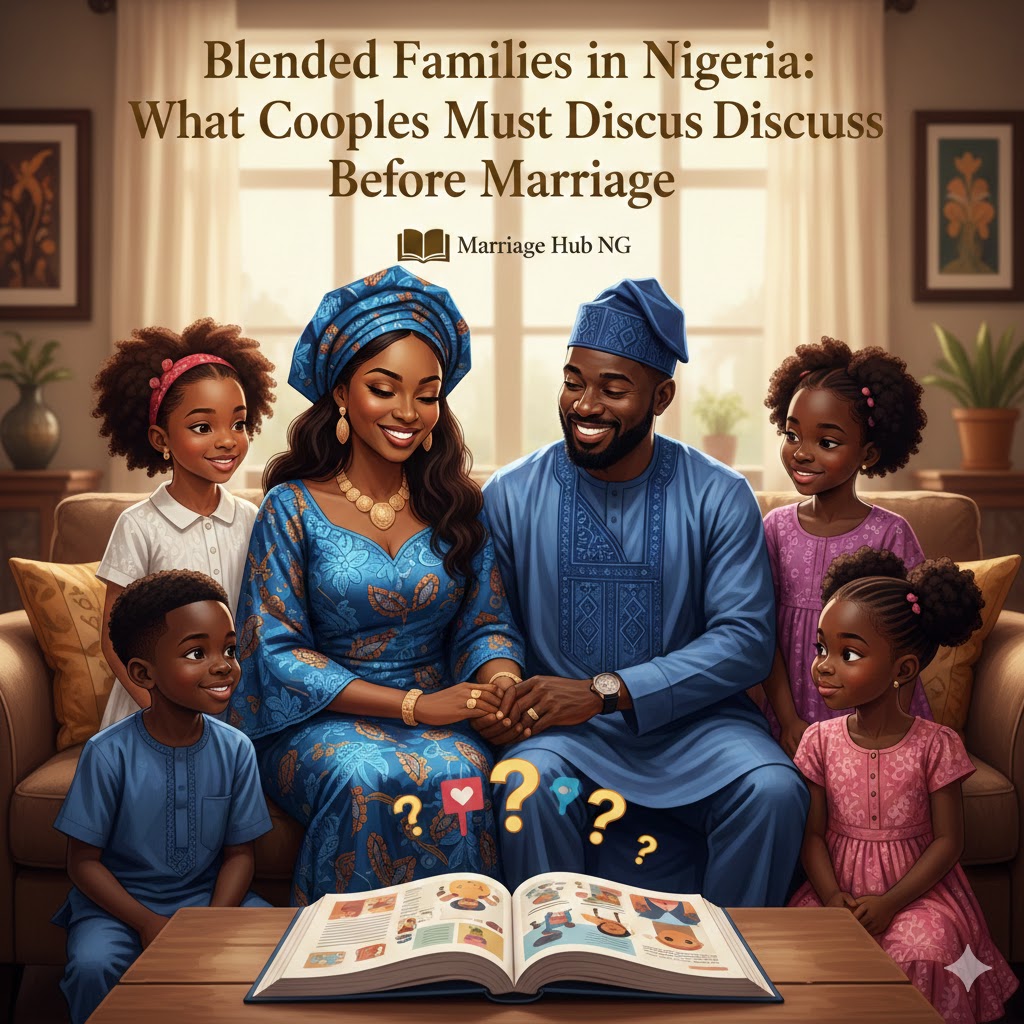
Blended Families in Nigeria: What Couples Must Discuss Before Marriage
Blended families are becoming increasingly common in Nigeria. Divorce, separation, widowhood, and previous relationships mean that many couples enter marriage with children already in their lives. While love may bring two people together, building a healthy blended family requires intentional planning, honest conversations, and a deep understanding of responsibilities.
Unlike traditional first marriages without children, blended families introduce additional dynamics—step-parenting, co-parenting with former partners, inheritance concerns, cultural expectations, and emotional adjustment for children.
For couples planning to marry in Nigeria where one or both partners already have children, certain conversations are absolutely essential before the wedding day.
This article explores the most important issues couples must discuss before forming a blended family and how they can build a stable, loving home for everyone involved.
Understanding Blended Families in the Nigerian Context
A blended family is a family formed when two people marry or partner while bringing children from previous relationships into the new household.
In Nigeria, blended families can emerge from several situations:
-
A widow or widower remarrying
-
Divorcees entering new marriages
-
Individuals with children from previous relationships
-
Couples adopting children into an existing family structure
However, Nigerian culture often places strong emphasis on biological lineage, extended family influence, and inheritance rights. This makes blended families particularly sensitive to issues like acceptance, family hierarchy, and financial responsibility.
Without proper discussions beforehand, these issues can become sources of tension after marriage.
1. Parenting Roles and Expectations
One of the most important conversations couples must have is about parenting roles.
Key questions to discuss include:
-
Will the step-parent discipline the child?
-
Who makes major decisions regarding the child?
-
How will parenting responsibilities be shared?
Many Nigerian parents struggle with defining the authority of a step-parent. Some biological parents may expect the step-parent to act fully as a parent, while others prefer them to remain in a supportive role.
If expectations are unclear, misunderstandings can occur quickly.
For example:
A stepfather who tries to discipline a child may be seen as “overstepping,” while a stepmother who stays distant may be accused of not caring.
Couples must decide together how involved the step-parent will be in:
-
Discipline
-
School decisions
-
Religious upbringing
-
Emotional support
Clear boundaries prevent conflicts later.
2. Relationship With the Biological Parent Outside the Marriage
If a former partner is still involved in the child's life, this must be discussed openly.
In Nigeria, co-parenting after separation or divorce can sometimes be complicated because:
-
Communication with ex-partners may cause jealousy
-
Financial responsibilities may still exist
-
Children may travel between homes
Questions couples should ask include:
-
How often will the child see the other parent?
-
How will communication with the ex-partner be handled?
-
Will the new spouse be involved in discussions?
Transparency is crucial.
A new spouse should never feel surprised by hidden communication with a former partner.
3. Financial Responsibilities Toward Children
Money can easily become a source of conflict in blended families.
Couples must clearly discuss financial responsibilities regarding children from previous relationships.
Important questions include:
-
Who pays school fees?
-
Will the new spouse contribute financially?
-
How will household expenses be shared?
-
Will financial support be provided to children living elsewhere?
For example, a husband supporting children from a previous relationship may allocate a significant portion of his income toward them.
If the new spouse is unaware or unprepared, this may create resentment.
Open discussions about finances help couples plan realistically.
4. Living Arrangements and Household Structure
Where children will live is another major topic.
Possibilities include:
-
Children living full-time with the couple
-
Children visiting during holidays
-
Children splitting time between parents
-
Boarding school arrangements
Living arrangements affect:
-
Space in the home
-
Daily routines
-
Emotional bonding
-
Household expenses
For instance, if a woman marries a man with three children who will live with them permanently, she must be fully aware and prepared for that responsibility.
Likewise, children need time and emotional support to adjust to the new family environment.
5. Cultural and Extended Family Expectations
In Nigeria, marriage is rarely just between two individuals—it involves extended families.
Grandparents, uncles, aunties, and other relatives may influence how children from previous relationships are treated.
Couples should discuss:
-
How extended families will relate to the children
-
Whether the children will be accepted by in-laws
-
How cultural traditions will apply to stepchildren
Sadly, some stepchildren face discrimination within extended families.
Planning ahead helps couples protect the emotional well-being of the children.
A united front between spouses is essential.
6. Discipline and Household Rules
Children need consistency.
When two households merge, differences in parenting styles can become obvious.
Questions to discuss include:
-
What household rules will apply?
-
What behaviors are unacceptable?
-
What disciplinary methods are allowed?
For example, one parent may believe in strict discipline, while the other prefers a more gentle approach.
Without agreement, children may exploit the differences.
Consistency helps maintain order and stability in the home.
7. Emotional Adjustment for Children
Children in blended families may experience:
-
Confusion
-
Loyalty conflicts
-
Fear of losing their biological parent
-
Difficulty accepting a step-parent
These emotions are normal.
Couples should plan ways to help children adjust.
Helpful strategies include:
-
Gradual introductions before marriage
-
Family bonding activities
-
Individual time between parent and child
-
Open conversations about feelings
Children should never feel forced to immediately accept a step-parent as a replacement for their biological parent.
Building trust takes time.
8. Inheritance and Property Issues
Inheritance can be a sensitive topic in Nigerian families.
Without clear planning, disputes may arise between biological children and stepchildren.
Couples should discuss:
-
How property will be shared
-
Whether stepchildren will inherit assets
-
The use of wills and legal documentation
Proper planning protects everyone involved.
Many families avoid discussing inheritance because it feels uncomfortable, but ignoring it can create serious conflicts later.
9. Religious and Moral Upbringing
Religion plays a significant role in many Nigerian homes.
Couples should discuss how children will be raised spiritually.
Important questions include:
-
Which religious practices will the family follow?
-
Will children attend the same place of worship?
-
How will religious differences be handled?
Consistency in moral and spiritual guidance helps children feel stable within the family structure.
10. Expectations About Future Children
Some couples forming blended families also plan to have children together.
This raises additional questions:
-
Will both partners want more children?
-
How will attention be balanced among all children?
-
Will biological children be treated differently from stepchildren?
These conversations help prevent jealousy and feelings of favoritism within the family.
Common Challenges Blended Families Face in Nigeria
Even with preparation, blended families may face challenges such as:
-
Resistance from children
-
Pressure from extended families
-
Financial stress
-
Communication breakdowns
-
Emotional conflicts
However, many blended families also build strong, loving homes when couples approach the journey with patience and understanding.
How Couples Can Prepare for a Successful Blended Family
Preparation is key.
Couples should consider:
-
Premarital counseling
-
Parenting education
-
Conflict resolution skills
-
Financial planning
-
Emotional support for children
A strong foundation before marriage greatly increases the chances of success.
A Practical Resource for Couples Preparing for Blended Families
If you are planning to marry and one or both partners already have children, having the right guidance can make a huge difference.
You can purchase the resource:
Blended Families & Step-Parenting (Pre-Marriage Guide – A Course-Style Guide for Couples Where One or Both Partners Have Children from a Previous Relationship)
Available on MarriageHub for ₦3,500.
This practical guide helps couples navigate:
-
Step-parenting roles
-
Communication strategies
-
Parenting expectations
-
Financial planning
-
Emotional adjustment for children
-
Long-term family stability
This resource is designed specifically for Nigerian couples and provides structured lessons to help families thrive.
Join the MarriageHub Community
Marriage is a journey that becomes easier with the support of others.
You can connect with other couples and families through our community groups.
Join existing groups here: https://www.marriagehub.ng/all-groups
Create your own tribe or discussion group here: https://www.marriagehub.ng/create-tribes-group
You can also purchase helpful products, services, and downloadable resources for relationships and family life here:
https://www.marriagehub.ng/marketplace
Follow MarriageHub for More Relationship Insights
Stay connected for more practical relationship tips, guides, and discussions.
WhatsApp: https://whatsapp.com/channel/0029VbCav9MCcW4pw3GSM72w
X (Twitter): https://x.com/MarriageHubNG
Facebook: https://web.facebook.com/MarriageHubNigeria
Instagram: https://www.instagram.com/marriagehubng3




.jpg)

Sign in to comment