 Nurturing Marriages, Enriching Families!

Conflict Resolution Exercises for Couples Dealing With In-Laws
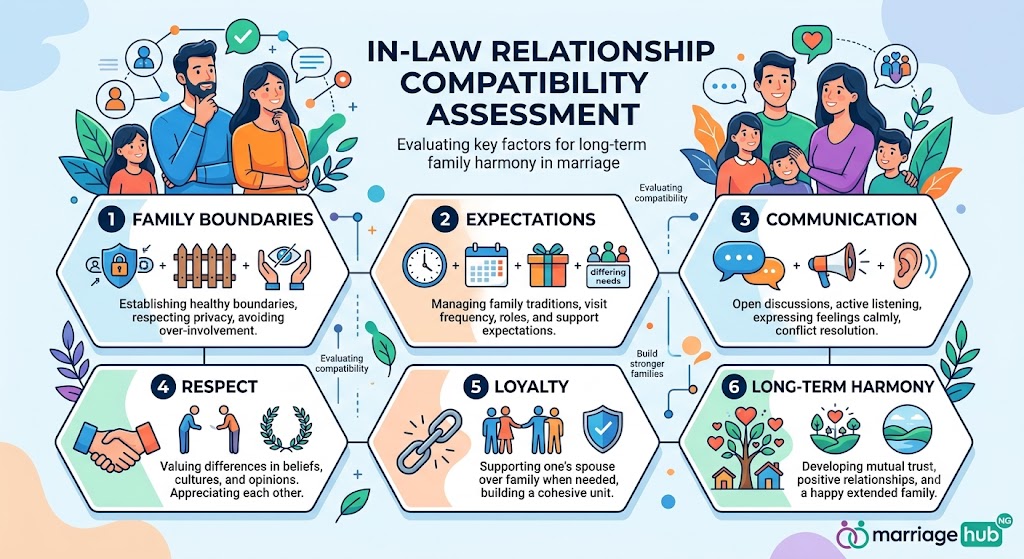
Conflicts involving in-laws are among the most sensitive challenges couples face, particularly in societies where extended family plays an active role in marriage. In Nigeria and many African cultures, family involvement is often rooted in love, tradition, and responsibility.
However, when boundaries are unclear or expectations clash, in-law issues can quickly spill into the marriage, creating tension, resentment, and emotional distance between spouses.
Resolving these conflicts requires more than advice. Couples need intentional practices that help them communicate better, stay emotionally connected, and present a united front. Conflict resolution exercises are practical tools that slow reactions, deepen understanding, and shift the focus from blame to partnership.
One of the most important mindset shifts couples must make is learning to see the issue as something they are facing together, not something they are fighting each other over. In-law problems easily turn into arguments between spouses when one partner feels unsupported or the other feels torn between loyalty to their family and commitment to their marriage.
Reframing the situation as “us versus the problem” helps reduce defensiveness and reminds both partners that the marriage is the priority. When couples consciously remind themselves that the real challenge is managing boundaries, not attacking each other, conversations become more productive and less emotional.
Emotional awareness also plays a key role in resolving in-law conflicts. Many arguments are fueled by unspoken fears—fear of disrespecting parents, fear of being controlled, or fear of losing one’s voice in the marriage. Taking time to openly express how in-law situations make each partner feel creates emotional safety. When one partner listens without interrupting or defending, it builds empathy and understanding. Feeling heard often reduces anger more effectively than winning an argument.
Another powerful practice is acknowledging how family background shapes reactions. People raised in homes where elders were never questioned may feel deep internal conflict when boundaries are needed. Others who grew up in more independent households may struggle to understand constant family involvement.
Talking openly about these differences helps couples stop interpreting each other’s behavior as stubbornness or betrayal. Instead, they begin to see the emotional conditioning behind those reactions, which fosters compassion rather than conflict.
Clear communication is also essential. Many couples agree on boundaries privately but struggle to express them respectfully to in-laws. Practicing calm, respectful responses together builds confidence and consistency. When both partners know what will be said and how it will be said, there is less fear and hesitation during real-life interactions. This shared approach prevents confusion and reduces the chances of one partner feeling exposed or unsupported.
Unity in public is another crucial element. In-law conflicts often escalate when couples contradict each other openly, especially in front of extended family. Agreeing to discuss disagreements privately while showing unity publicly protects trust within the marriage. Even when one partner disagrees internally, maintaining a united front sends a clear message that decisions are made together. This discourages manipulation and reinforces respect for the marriage.
Managing emotional triggers is equally important. Certain behaviors from in-laws—such as comparisons, financial pressure, public criticism, or interference in parenting—can provoke strong reactions. Identifying these triggers helps couples pause before reacting. Agreeing on a way to slow down conversations when emotions rise, such as taking a break or revisiting the issue later, prevents arguments from escalating into hurtful exchanges.
Perspective also matters. While boundaries are necessary, completely demonizing extended family can deepen resentment. Reflecting on positive intentions or past support helps couples maintain balance. Gratitude does not cancel boundaries, but it softens communication and reduces hostility. When couples approach in-law issues with maturity rather than bitterness, solutions become easier to find.
Clarity around decision-making is another area where many conflicts arise. When couples have not clearly agreed on who has the final say in matters like finances, parenting, or housing, extended family opinions can easily cause division. Openly discussing these areas and agreeing that marital decisions come first reduces confusion and repeated arguments. This clarity strengthens trust and reduces the emotional burden on both partners.
Regular emotional check-ins also help prevent unresolved tension from building up. Talking about family interactions soon after they happen allows couples to address discomfort early, rather than allowing frustration to accumulate. These conversations do not need to be long or dramatic; consistency matters more than intensity.
Sometimes, despite best efforts, in-law conflicts remain overwhelming. In such cases, involving a neutral third party such as a counselor, trusted elder, or religious leader can be helpful. Discussing this option ahead of time ensures that outside support strengthens the marriage rather than creating new divisions.
Ultimately, conflict resolution around in-laws is not about choosing between family and spouse. It is about protecting the marriage while maintaining respect for extended family. Couples who practice emotional awareness, clear communication, unity, and empathy are better equipped to handle family pressures without sacrificing peace or intimacy.
In-law challenges are not a sign of failure. They are an opportunity for couples to grow in maturity, strengthen their bond, and learn how to navigate complex relationships together. When couples face these challenges as a team, the marriage becomes stronger, not weaker.








.jpg)



Sign in to comment