 Nurturing Marriages, Enriching Families!

Top Nigerian Marriage Customs: Yoruba, Igbo & Hausa Explained (2026 Complete Guide)
Nigeria is one of the most culturally diverse countries in Africa, and marriage traditions reflect that diversity in powerful and meaningful ways. Among the country’s largest ethnic groups — the Yoruba, Igbo, and Hausa — marriage customs are rich in symbolism, family involvement, and communal celebration. Nigerian traditional weddings are not simply romantic ceremonies between two individuals; they are deeply rooted cultural rites that unite families, affirm heritage, and reinforce social values.
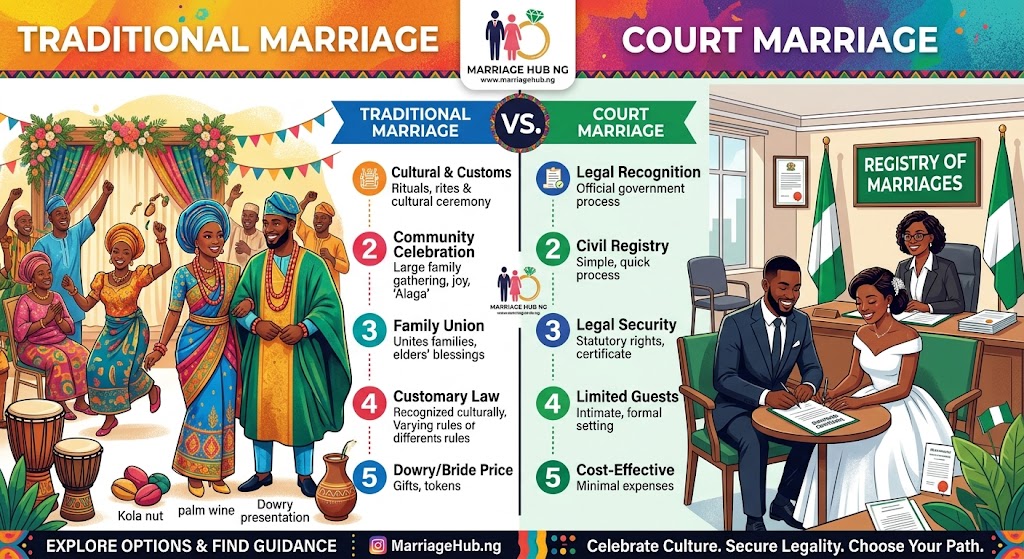
Whether you are planning a traditional wedding, preparing for an inter-ethnic marriage, or researching Nigerian culture, understanding these customs offers insight into how marriage functions beyond legal paperwork. While modern weddings often include civil or religious ceremonies, traditional rites remain foundational across much of Nigeria.
Why Marriage Customs Matter in Nigeria
Marriage in Nigeria carries social, spiritual, and communal weight. It is widely regarded as a union of families rather than just a partnership between two people. Traditional ceremonies establish legitimacy within the community and demonstrate that both families approve of and support the union. These customs also serve as cultural preservation tools, passing down values, expectations, and identity from one generation to another.
Even couples who hold church or registry weddings frequently complete traditional rites first. For many families, traditional marriage represents the true validation of the relationship.
Yoruba Marriage Customs Explained
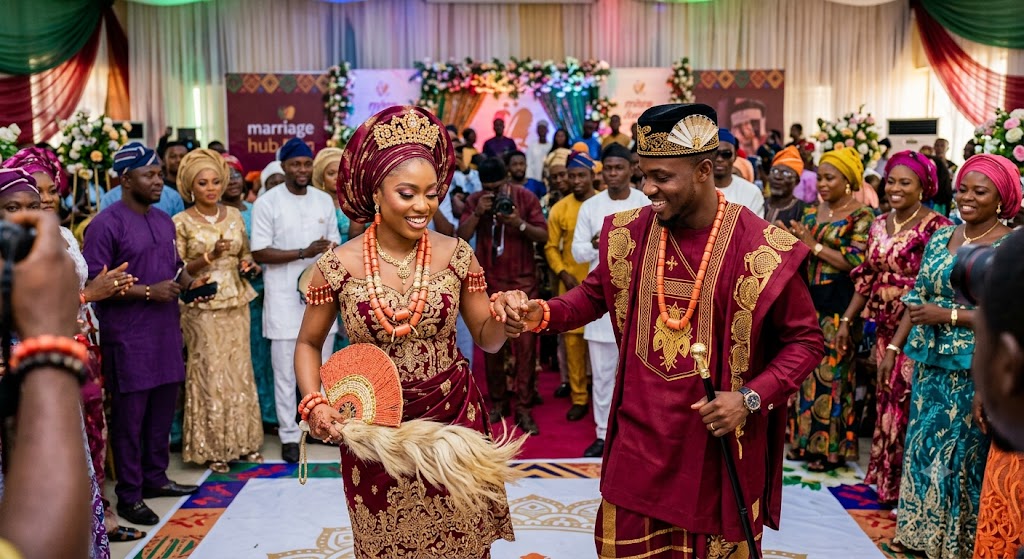
The Yoruba people, predominantly located in southwestern Nigeria, have some of the most colorful and theatrical marriage traditions in the country. Yoruba weddings are known for their vibrant attire, coordinated aso-ebi fabrics, lively music, and structured ceremonial process.
The marriage journey typically begins with a private introduction ceremony often referred to as “Mo Mi I Mo E,” which translates to “I know you and you know me.” During this meeting, close family members from both sides gather to formally acknowledge the relationship and discuss intentions. This gathering sets the stage for the engagement ceremony and allows families to confirm backgrounds and compatibility.
The engagement ceremony itself is elaborate and highly organized. The groom’s family arrives formally to request the bride’s hand in marriage. An engagement letter is read aloud, outlining the groom’s intentions and background. Representatives from the bride’s family respond, and negotiations regarding ceremonial requirements are concluded. Professional female coordinators, known as Alaga Iduro and Alaga Ijoko, often direct proceedings, adding humor and structure to the event.
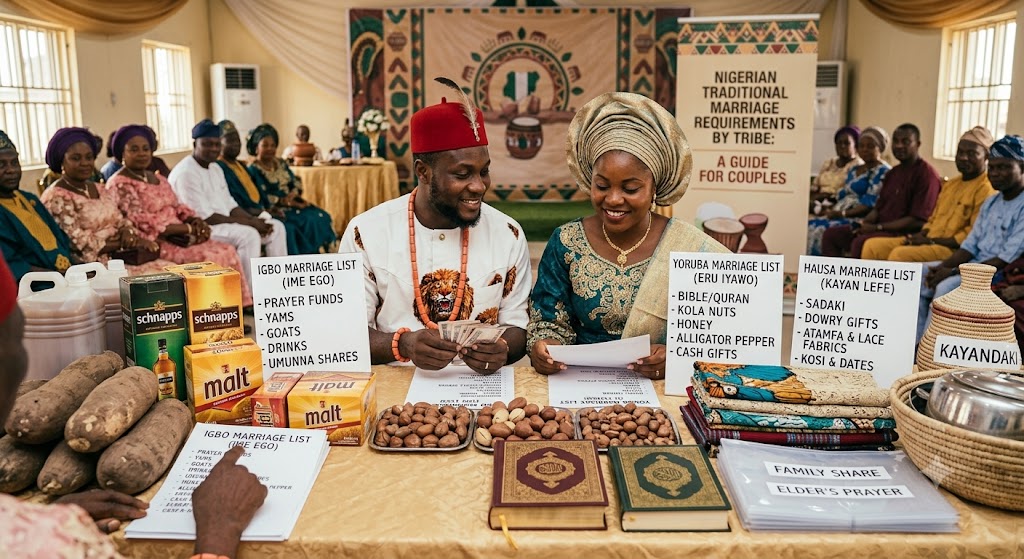
Bride price among the Yoruba is typically symbolic rather than excessive. Items such as kolanuts, honey, yams, drinks, and modest cash sums may be included. The emphasis is less on financial value and more on cultural symbolism and goodwill.
One of the most distinctive Yoruba customs is the act of prostration. The groom and his friends lie flat on the ground before the bride’s family as a sign of deep respect. In turn, the bride kneels before the groom’s family. These gestures symbolize humility, acceptance, and reverence for elders. Family blessings follow, sealing the union culturally and spiritually.
Igbo Marriage Customs Explained
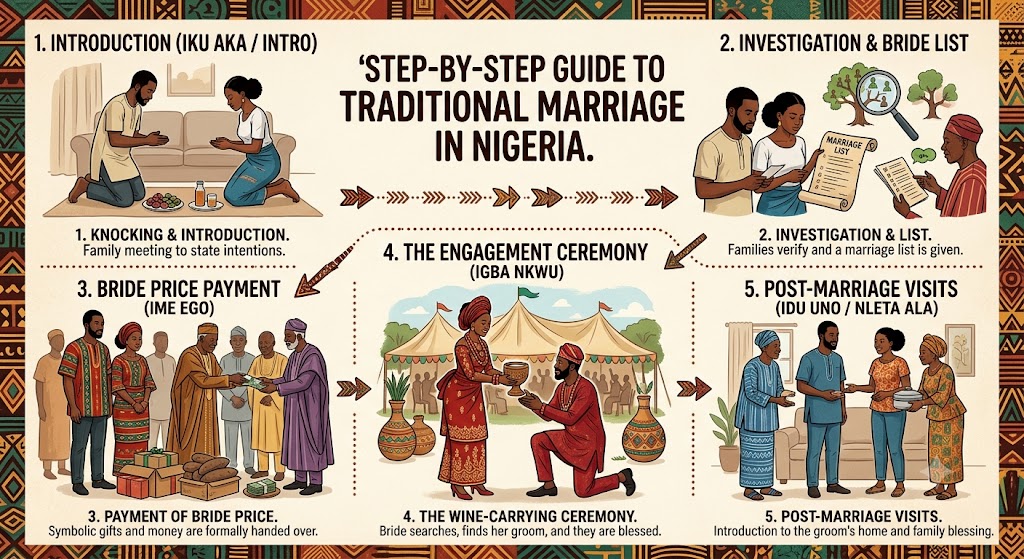
Among the Igbo people of southeastern Nigeria, traditional marriage is highly symbolic and often unfolds in stages. The process begins with what is known as “Iku Aka,” meaning “knocking.” During this ceremony, the groom’s family visits the bride’s family to formally declare interest. Palm wine and drinks are presented, and discussions about the future union begin. This stage confirms mutual interest and paves the way for further negotiations.
Bride price negotiation is a central aspect of Igbo marriage customs. Extended family members participate actively, and elders guide the discussion. The list of requested items may include traditional foods, livestock, clothing, drinks, and cash. In many communities today, the monetary component is intentionally kept symbolic to emphasize that marriage is not a commercial exchange but a cultural covenant.
The highlight of Igbo traditional marriage is the “Igba Nkwu,” commonly referred to as the wine-carrying ceremony. During this public celebration, the bride is presented in traditional attire adorned with coral beads and elegant fabrics. She carries a cup of palm wine and searches for her groom among the crowd of guests. Once she finds him, she kneels and offers him the drink. He sips from it and often places money in the cup before leading her to his family for blessings. This act publicly demonstrates her choice and affirms their union before the community.
Music, dance, and celebration follow, with community members witnessing and rejoicing in the marriage. The Igbo ceremony is both theatrical and deeply meaningful, reinforcing the importance of family approval and communal participation.
Hausa Marriage Customs Explained
In northern Nigeria, Hausa marriage customs are strongly influenced by Islamic traditions. While cultural elements remain important, religious principles guide much of the process.
The journey typically begins with a formal proposal known as “Neman Aure.” The groom’s family approaches the bride’s father or guardian to request permission for marriage. Consent from the bride is essential under Islamic law, and discussions focus on compatibility and readiness.
Central to Hausa marriage is the payment of “Sadaki,” a dowry given directly to the bride rather than her family. The amount is agreed upon beforehand and symbolizes commitment and responsibility. This payment validates the marriage contract under Islamic principles.
A pre-wedding event known as the Kamu often follows. During this playful gathering, members of the groom’s family visit the bride’s home and may be humorously delayed at the entrance until small symbolic payments are made. The ceremony strengthens bonds between families and creates a celebratory atmosphere.
The wedding celebration, known as the Walima, is marked by Islamic prayers, modest festivities, and communal meals. While Hausa weddings can be grand, they often maintain a focus on religious observance and simplicity compared to some southern ceremonies.
Similarities Across Yoruba, Igbo, and Hausa Traditions
Despite cultural differences, these three groups share common themes in their approach to marriage. Family approval is indispensable, and elders play a guiding role in negotiations and blessings. Bride price or dowry, whether symbolic or monetary, forms part of the process in each tradition. Marriage ceremonies serve not only as private commitments but as public affirmations before extended relatives and community members.
The communal nature of Nigerian marriage stands out across ethnic lines. Weddings are social events that reinforce collective identity and strengthen inter-family relationships.
Key Differences in Style and Structure
Yoruba ceremonies are often dramatic and colorful, featuring coordinated fabrics and structured performances. Igbo weddings emphasize symbolic storytelling, particularly through the wine-carrying ritual. Hausa marriages center strongly on Islamic contractual principles and the payment of Sadaki, reflecting religious influence.
While southern ceremonies frequently incorporate elaborate décor and multiple stages, Hausa weddings may prioritize modesty and faith-based observance. Bride price practices also vary in structure and interpretation, reflecting historical and regional distinctions.
Modern Trends and Inter-Ethnic Marriages
Urbanization and increased mobility have contributed to a rise in inter-ethnic marriages. In cities like Lagos and Abuja, couples often blend customs from both families. A Yoruba-Igbo union, for example, may incorporate both prostration and wine-carrying elements. Families negotiate which rites to include, and ceremonies are sometimes simplified for practicality.
Education and globalization have also influenced bride price practices, with many families intentionally reducing financial demands. Couples increasingly prioritize mutual understanding and legal registration alongside traditional validation.
Despite modernization, cultural roots remain strong. Traditional attire, music, and ceremonial symbolism continue to feature prominently in contemporary weddings.
Cultural Etiquette for Attendees
Attending a Nigerian traditional wedding requires cultural sensitivity. Guests are expected to dress appropriately, often in coordinated fabrics provided by the families. Respect for elders is essential, and participation in celebratory activities is encouraged. Monetary gifts are common and appreciated as contributions toward the couple’s new life together.
Understanding the significance behind rituals enhances appreciation and prevents misunderstandings, particularly in inter-ethnic settings.
The Enduring Significance of Nigerian Marriage Customs
Yoruba, Igbo, and Hausa marriage traditions reflect Nigeria’s cultural depth and diversity. While practices differ in detail and symbolism, the underlying purpose remains consistent: to unite families, honor heritage, and legitimize marital commitment within the community.
As Nigeria continues to modernize, these customs evolve, adapting to urban lifestyles and global influences. Yet their core meaning endures. Traditional marriage ceremonies remain powerful expressions of identity and belonging.
In understanding these customs, one gains insight not only into Nigerian weddings but into the broader social fabric of the country. Marriage in Nigeria is more than a celebration; it is a cultural bridge connecting past, present, and future generations.




.jpg)

Sign in to comment