 Nurturing Marriages, Enriching Families!

Traditional Wedding Rites: Understanding the “Marriage List” Across Cultures
Marriage is not just a union between two individuals; in many societies, it is a union between families, lineages, and communities. One of the most significant aspects of traditional weddings across cultures is the “marriage list” — a compilation of items requested by the bride’s family as part of customary marriage rites. Known by different names in various regions, the marriage list carries cultural, symbolic, and social meaning.
In Nigeria and many parts of Africa, Asia, and even Europe, the marriage list plays a vital role in formalizing traditional unions. This article explores what the marriage list is, its origins, cultural variations, modern realities, common misconceptions, and how couples can navigate it wisely in today’s world.
What Is the Marriage List?
The marriage list refers to a set of items traditionally presented by the groom and his family to the bride’s family during customary marriage rites. These items may include foodstuffs, clothing, drinks, symbolic gifts, bride price (dowry), and other culturally significant materials.
The list is not meant to be a commercial transaction but rather a cultural expression of appreciation, commitment, and respect. It signifies the groom’s readiness to assume responsibility and formally request the bride’s hand in marriage.
In many Nigerian cultures, this exchange happens during introduction ceremonies and traditional marriage celebrations.
The Historical Origins of the Marriage List
Historically, marriage was a communal affair. Families played a central role in vetting potential spouses and ensuring alliances strengthened social ties. The marriage list emerged as a structured way to formalize these alliances.
In pre-colonial African societies, marriage rites often included symbolic offerings rather than large financial payments. These items represented:
-
Gratitude to the bride’s parents for raising her
-
Commitment from the groom’s family
-
Recognition of the bride’s value and dignity
-
Strengthening of inter-family bonds
Over time, economic changes, modernization, and social pressures have influenced how marriage lists are interpreted and structured.
The Marriage List in Nigerian Cultures
Nigeria is home to over 250 ethnic groups, and each has unique variations of traditional marriage rites. However, the concept of a marriage list remains widely practiced.
Yoruba Traditional Marriage Rites
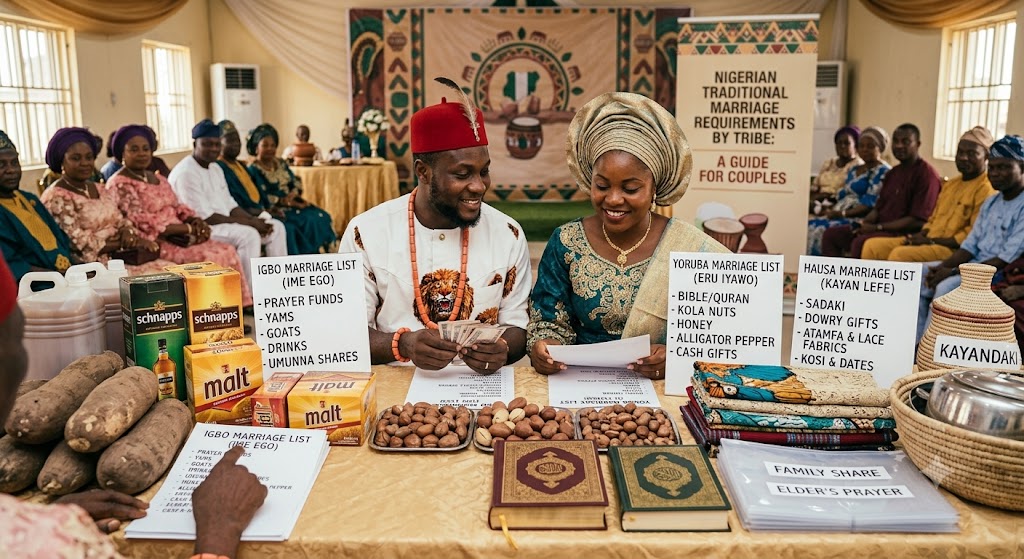
Among the Yoruba people, the marriage list typically includes items such as kolanuts, bitter kola, alligator pepper, honey, salt, drinks, clothing, and sometimes symbolic sums of money. These items are presented during the engagement ceremony, often accompanied by prayers and blessings from elders.
The groom and his friends perform cultural rites, including prostration to the bride’s family, demonstrating humility and respect.
Igbo Traditional Marriage Rites
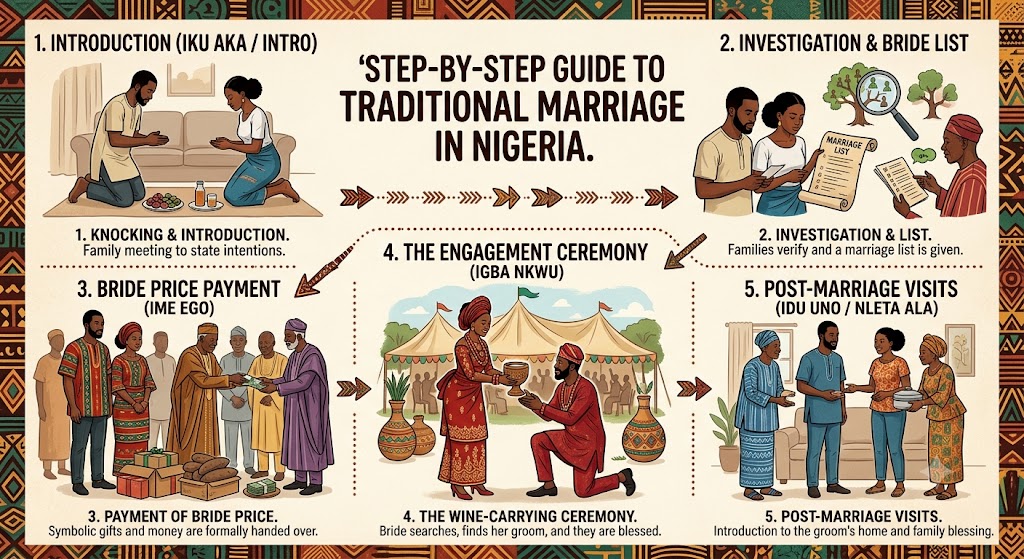
In Igbo culture, marriage rites involve stages such as “Iku Aka” (knocking on the door) and “Igba Nkwu” (wine-carrying ceremony). The marriage list may include tubers of yam, palm wine, livestock, drinks, clothing for family members, and bride price.
The bride price is typically symbolic and varies depending on the community. The central aim is not wealth accumulation but cultural acknowledgment.
Hausa/Fulani Marriage Rites
In Northern Nigeria, Islamic traditions strongly influence marriage rites. The dowry, known as “Sadaki,” is usually paid directly to the bride. The marriage list may include clothing, jewelry, and other culturally significant items.
Unlike some southern traditions, the dowry is often modest and religiously guided.
Marriage Lists Across Other Cultures
The concept of bride price or dowry is not unique to Nigeria.
East Africa
In countries like Kenya and Uganda, bride price negotiations are common. Livestock, cash, and food items are often requested as part of the marriage process.
Southern Africa
In South Africa and Zimbabwe, the practice of “lobola” involves negotiated payments from the groom’s family to the bride’s family. It symbolizes gratitude and alliance-building.
Asia
In parts of India and Southeast Asia, dowry systems historically involved gifts or wealth transferred to the bride or groom’s family. However, modern legal reforms in some countries have addressed abuses associated with dowry demands.
Europe (Historical Context)
Historically in Europe, dowries were provided by the bride’s family to support the new household. Over time, many Western societies phased out formal dowry systems.
These global comparisons show that marriage lists, bride price, and dowry systems are deeply rooted in cultural and historical frameworks worldwide.
Cultural Significance of the Marriage List
The marriage list carries several layers of meaning beyond material exchange.
First, it represents respect and gratitude. It acknowledges the role of the bride’s parents in raising and nurturing her.
Second, it symbolizes serious intent. By fulfilling the list, the groom’s family demonstrates commitment and readiness for marriage.
Third, it reinforces family unity. Traditional marriage is not just about two individuals but about bringing families together.
Fourth, it preserves cultural identity. In a rapidly modernizing society, marriage rites help communities maintain heritage and continuity.
Common Misconceptions About the Marriage List
One of the biggest misconceptions is that the marriage list is a way to “buy” a bride. This interpretation contradicts the original purpose of traditional marriage rites. Historically, items were symbolic rather than exploitative.
Another misconception is that the marriage list must be extravagant. In many communities, elders emphasize moderation and discourage excessive demands.
It is also wrongly assumed that failure to meet every item invalidates the marriage. In reality, families often negotiate and adjust based on circumstances.
Modern Challenges and Economic Pressures
In contemporary Nigeria, inflation and rising wedding costs have affected marriage list expectations. Some families request expensive items, luxury goods, or large sums of money, increasing financial pressure on couples.
This has led to debates about:
-
Commercialization of traditional marriage
-
Financial strain on young couples
-
Delayed marriages due to high costs
Economic realities have prompted many families to revise expectations and prioritize symbolism over material value.
Legal and Ethical Considerations
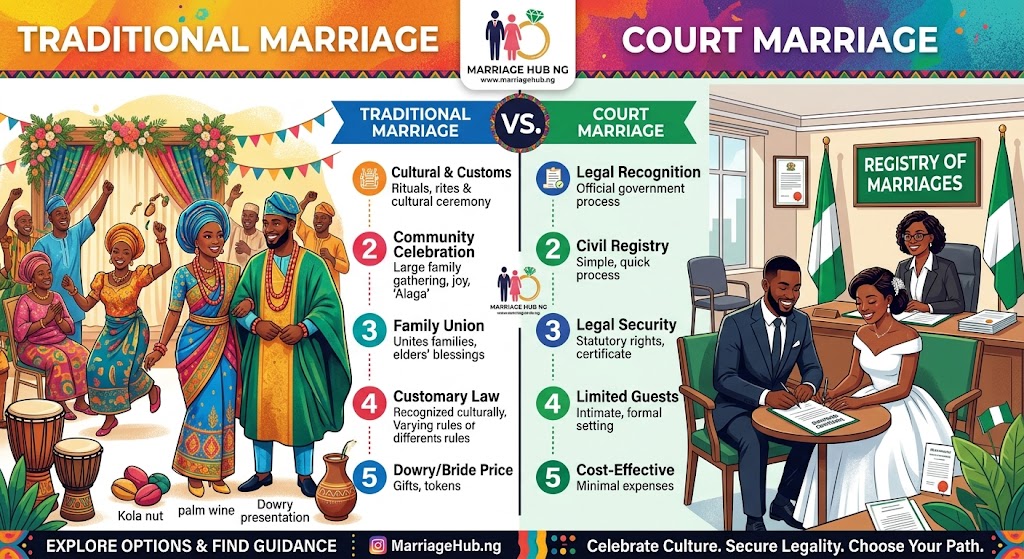
Under Nigerian statutory law, marriage legality is separate from traditional rites. A customary marriage remains valid within cultural frameworks, while statutory marriages require registry procedures under national law.
Importantly, cultural practices must align with ethical standards and human dignity. Marriage lists should not:
-
Dehumanize the bride
-
Promote coercion
-
Encourage financial exploitation
-
Foster inequality
Healthy traditional practices respect both families and prioritize mutual consent.
Navigating the Marriage List Wisely
For couples preparing for traditional marriage, preparation and communication are key.
Early discussions between families can clarify expectations and avoid misunderstandings. Transparency helps prevent surprises.
Couples should also remember that marriage is about long-term partnership, not a single day’s ceremony. Financial prudence protects the foundation of the marriage.
Open dialogue with elders can help maintain cultural integrity while avoiding excessive burdens.
Balancing Tradition and Modern Values
Modern couples often seek a balance between honoring culture and maintaining financial stability. Many families now emphasize symbolic gestures rather than lavish demands.
Some communities have even standardized bride price amounts to prevent exploitation. Others publicly discourage excessive lists.
Education and dialogue continue to reshape how traditional marriage rites are practiced across Nigeria.
The Emotional Dimension of Traditional Rites
Beyond material items, marriage lists carry emotional meaning. They represent a daughter leaving her parental home and entering a new chapter.
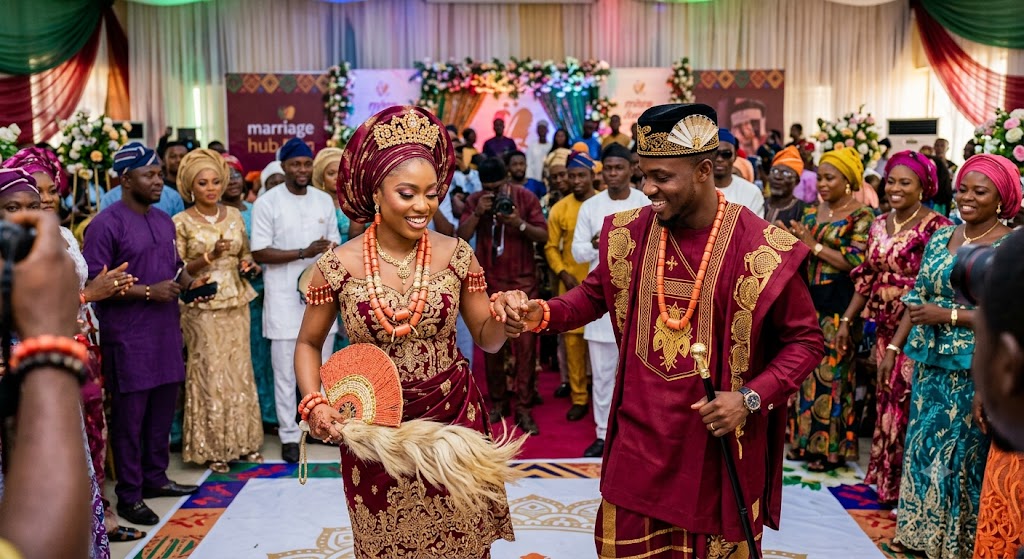
The ceremony often involves prayers, blessings, tears of joy, and communal celebration. These moments strengthen social bonds and reinforce shared values.
Understanding this emotional dimension helps couples appreciate the deeper significance of traditional rites.
Frequently Asked Questions (FAQs)
Is the marriage list compulsory in Nigeria?
In customary marriages, the marriage list is typically part of tradition. However, its scope and cost vary widely by community.
Does paying the marriage list mean ownership?
No. The marriage list is symbolic and cultural. It does not confer ownership or diminish the bride’s autonomy.
Can the marriage list be negotiated?
Yes. In many communities, negotiation is part of the process. Elders from both families often agree on reasonable terms.
What happens if the list is incomplete?
Practices vary. Some families allow completion over time or waive certain items. The emphasis is usually on goodwill.
Is bride price the same as dowry?
Not exactly. Bride price is typically paid by the groom’s family to the bride’s family, while dowry (in some cultures) is provided by the bride’s family.
Conclusion
The marriage list remains a significant aspect of traditional wedding rites across cultures. Rooted in history, symbolism, and family unity, it represents respect, commitment, and cultural identity.
However, like all traditions, it must evolve with time. When practiced with moderation and mutual understanding, the marriage list strengthens family bonds and preserves heritage. When commercialized or abused, it risks distorting its original purpose.
For couples navigating traditional marriage rites today, wisdom lies in balancing culture with compassion, tradition with practicality, and ceremony with long-term vision.
Marriage is not about transactions — it is about partnership. When traditional rites reflect this truth, they become powerful foundations for lasting unions.



.jpg)

Sign in to comment