 Nurturing Marriages, Enriching Families!
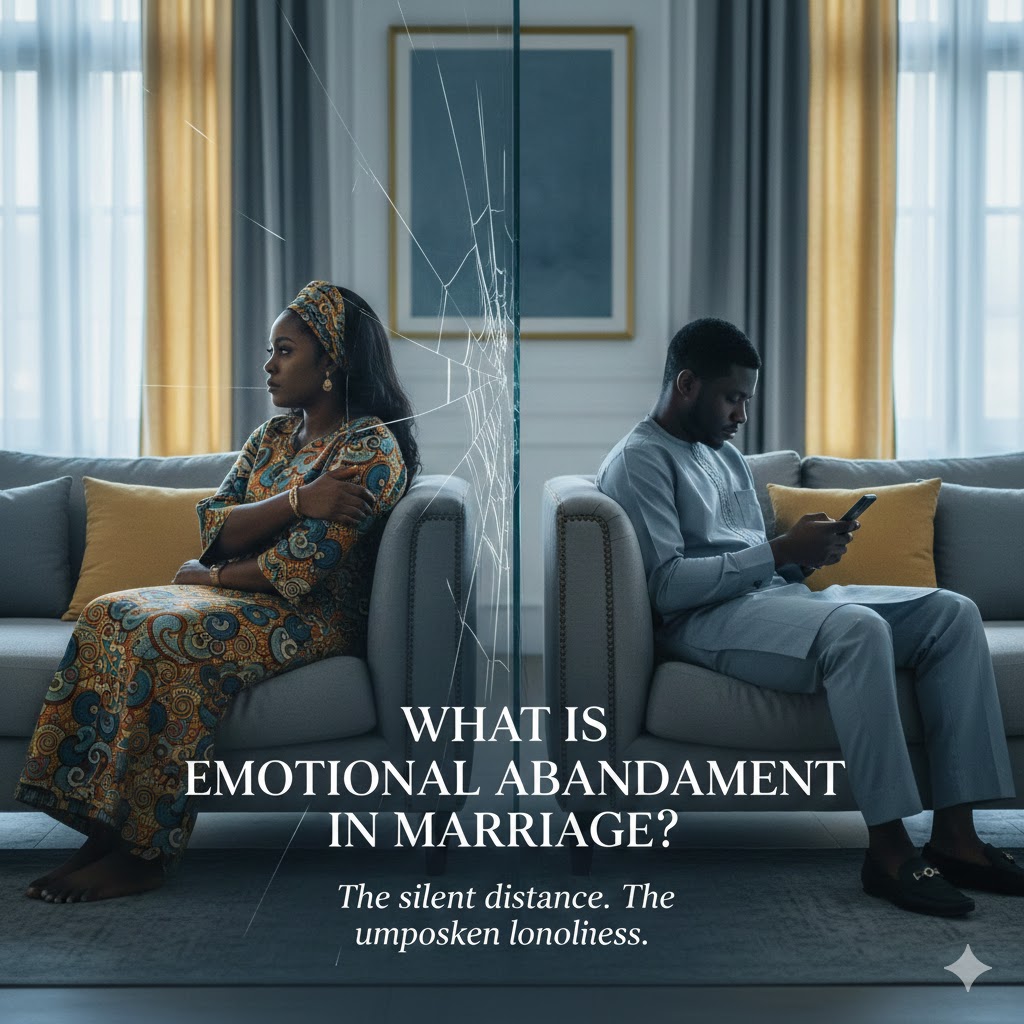
What Is Emotional Abandonment in Marriage?
Marriage is often defined by physical presence, legal commitment, and shared responsibilities. However, many couples experience a painful reality where both partners live under the same roof yet feel emotionally disconnected. This silent crisis is known as emotional abandonment.
Unlike physical abandonment, emotional abandonment is subtle, deeply painful, and often misunderstood—yet its effects can be just as damaging to a marriage.
In Nigeria, where marriage is highly valued and divorce often discouraged, emotional abandonment is frequently endured in silence. Many spouses remain married in name while suffering from loneliness, unmet emotional needs, and a sense of invisibility.
Understanding what emotional abandonment is, how it shows up, and why it matters is the first step toward healing and restoring intimacy.
Understanding Emotional Abandonment
Emotional abandonment in marriage occurs when one partner withdraws emotional support, affection, and engagement, leaving the other feeling alone, unloved, and emotionally unsafe. It does not necessarily involve physical separation or infidelity. Instead, it manifests through emotional distance, indifference, and lack of responsiveness.
A spouse who is emotionally abandoning may still provide financially, fulfill social obligations, and appear present to outsiders, yet remain emotionally unavailable at home. Over time, this creates an emotional void that erodes trust, intimacy, and connection.
Emotional abandonment is especially painful because it is often invisible. Friends, family members, and even religious leaders may see a couple together and assume all is well, while one partner feels deeply neglected and emotionally starved.
How Emotional Abandonment Shows Up in Marriage
Emotional abandonment often begins gradually. Conversations become shallow, affection decreases, and emotional sharing stops. One spouse may stop asking about the other’s feelings, struggles, or dreams. Important discussions are avoided, and emotional needs are dismissed or minimized.
In many Nigerian marriages, emotional abandonment may be normalized or excused as “men are not emotional” or “marriage is not about feelings.” Over time, one partner—often the wife, though men also experience it—may feel unheard, unappreciated, and emotionally alone.
The emotionally abandoned partner may feel like they are walking on eggshells, afraid to express feelings because they are met with silence, irritation, or indifference. Eventually, they may stop trying altogether, leading to emotional numbness or resentment.
Common Causes of Emotional Abandonment in Marriage
Emotional abandonment does not always come from bad intentions. In many cases, it develops due to unresolved personal issues, stress, or learned behaviors.
Work pressure, financial struggles, and societal expectations can cause a spouse to emotionally shut down. Some people were never taught how to express emotions and therefore withdraw when emotional intimacy is required. Others may emotionally detach as a defense mechanism after repeated conflict, disappointment, or unresolved resentment.
In Nigerian settings, cultural upbringing plays a major role. Many men are raised to suppress emotions, while many women are taught to endure emotional neglect quietly to “keep the home.” Over time, this imbalance creates emotional distance that grows into abandonment.
The Psychological Impact on the Abandoned Spouse
Emotional abandonment has deep psychological consequences. The abandoned spouse may experience chronic loneliness, anxiety, low self-esteem, and depression. They may begin to question their worth, attractiveness, or value in the marriage.
Many spouses describe emotional abandonment as feeling single while married. They may crave emotional connection but feel rejected or ignored whenever they try to reach out. This emotional isolation can lead to emotional fatigue, bitterness, or even emotional detachment as a form of self-protection.
In some cases, emotional abandonment opens the door to emotional affairs, as the neglected spouse seeks connection, understanding, and validation elsewhere—not necessarily out of disloyalty, but out of emotional survival.
Emotional Abandonment vs. Temporary Emotional Distance
It is important to distinguish emotional abandonment from temporary emotional distance. Every marriage experiences seasons of stress, fatigue, or emotional withdrawal due to life circumstances. Emotional abandonment, however, is persistent and unresolved.
Temporary emotional distance improves with communication, support, and time. Emotional abandonment, on the other hand, involves a consistent pattern of emotional neglect, refusal to engage, and lack of empathy despite repeated attempts to reconnect.
When emotional absence becomes the norm rather than the exception, the marriage is no longer emotionally safe.
Signs You May Be Experiencing Emotional Abandonment
You may be emotionally abandoned in your marriage if you feel lonely even when your spouse is present, if your emotions are consistently dismissed or ignored, or if meaningful conversations feel impossible. If your spouse avoids emotional discussions, shows little interest in your inner world, or treats your emotional needs as burdensome, emotional abandonment may be occurring.
You may also notice that affection has faded, communication feels transactional, and emotional intimacy is non-existent. Over time, you may stop sharing your feelings altogether because it feels pointless.
Why Emotional Abandonment Is Dangerous to Marriage
Emotional abandonment erodes the emotional bond that sustains marriage. Without emotional connection, trust weakens, intimacy disappears, and resentment builds. A marriage without emotional safety becomes vulnerable to conflict, emotional affairs, and eventual breakdown.
In Nigerian marriages, where couples often stay together despite deep unhappiness, emotional abandonment can lead to silent suffering for years. While the marriage may appear stable outwardly, emotional decay continues beneath the surface.
Can a Marriage Recover from Emotional Abandonment?
Yes, recovery is possible—but it requires intentional effort from both partners. The emotionally distant spouse must be willing to acknowledge the impact of their behavior and learn emotional responsiveness. The abandoned spouse must feel safe enough to express hurt without fear of dismissal or blame.
Healing begins with honest conversations, emotional accountability, and a shared commitment to rebuilding emotional intimacy. In many cases, professional counseling—especially culturally sensitive marriage counseling—is essential to help couples learn healthier communication and emotional connection.
Faith-based counseling, when balanced with emotional awareness, can also play a role in Nigerian marriages by encouraging empathy, compassion, and responsibility within the relationship.
What to Do If You Feel Emotionally Abandoned
If you feel emotionally abandoned, start by acknowledging your feelings without minimizing them. Emotional neglect is real, and your pain is valid. Try to communicate your experience calmly and clearly, focusing on how the emotional distance affects you rather than accusing your spouse.
If communication fails repeatedly, seeking professional guidance is crucial. Emotional abandonment should not be endured silently or normalized as a “marriage phase.” Your emotional well-being matters.
In situations where emotional abandonment is persistent and accompanied by emotional abuse or contempt, protecting your mental health becomes a priority. Emotional detachment, boundaries, or even separation may be necessary in extreme cases.
Emotional abandonment in marriage is a silent but powerful form of neglect that slowly drains love, trust, and connection. It leaves one partner feeling unseen, unheard, and emotionally alone—often within a marriage that looks intact from the outside.
Understanding emotional abandonment is not about assigning blame but about restoring emotional presence, empathy, and connection. Marriage is not sustained by physical presence alone; it thrives on emotional availability, mutual care, and shared vulnerability.
For Nigerian couples especially, addressing emotional abandonment requires courage, honesty, and a willingness to challenge cultural silence around emotional needs. Healing is possible—but only when emotional absence is recognized and addressed with intention.









.jpg)


Sign in to comment