 Nurturing Marriages, Enriching Families!
Economic Stress and Marital Stability in Nigeria
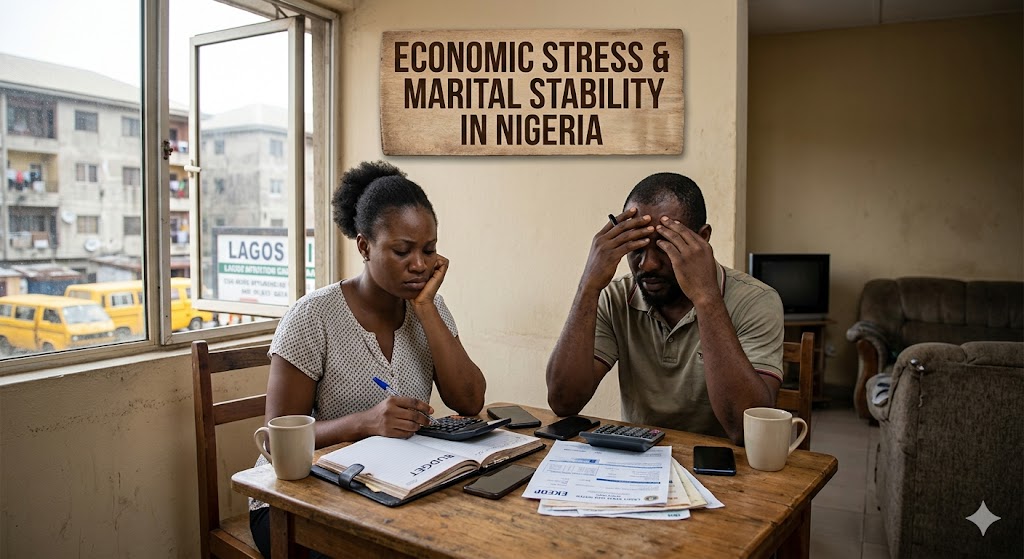
Economic stress has become one of the most defining pressures shaping marriages in Nigeria today. From rising inflation and unemployment to increasing family obligations and the high cost of living, financial realities are deeply influencing how couples form, sustain, and sometimes dissolve their unions. Across urban centers like Lagos and Abuja, as well as rural communities, economic hardship is no longer just a background issue—it is a central factor determining marital stability.
In a country where marriage is deeply valued culturally and socially, the growing strain of economic uncertainty is forcing couples to rethink expectations, priorities, and long-term commitments. This article explores how economic stress affects marital stability in Nigeria, supported by data, case studies, and real-life insights.
Understanding Economic Stress in Nigeria
Economic stress refers to the pressure individuals and households face when financial resources are insufficient to meet basic needs or expectations. In Nigeria, this stress is widespread and deeply structural.
A recent national survey revealed that 94% of Nigerians experience some form of financial strain, with only a small minority feeling financially secure. This highlights the scale of economic pressure affecting households across all regions and income levels.
The sources of this stress are varied but interconnected. Key drivers include high housing costs, school fees, financial obligations to extended family, and the rising cost of starting or maintaining a business.
Additionally, inflation, unemployment, and income inequality continue to erode purchasing power, making it increasingly difficult for families to maintain financial stability.
These economic realities create a challenging environment for marriages, where financial stability is often seen as a foundation for success.
The Link Between Economic Stress and Marital Stability
Money has long been recognized as one of the leading sources of conflict in marriages worldwide, and Nigeria is no exception. Financial stress affects not just material well-being but also emotional and psychological health within relationships.
When couples struggle to meet basic needs such as rent, food, and school fees, tension naturally arises. Research shows that financial difficulties often lead to arguments, emotional distancing, and reduced marital satisfaction.
Economic stress also affects intimacy and communication. Couples under financial pressure may experience anxiety, fatigue, and reduced emotional availability, making it harder to maintain a strong connection.
Over time, these challenges can erode trust and stability, increasing the risk of separation or divorce.
Key Sources of Economic Stress in Nigerian Marriages
One of the most significant sources of stress is income instability. Many Nigerians work in the informal sector, where earnings are unpredictable. Even those in formal employment often face delayed salaries or job insecurity.
Unemployment and underemployment further compound the problem. Young Nigerians, in particular, struggle to secure stable jobs, which delays marriage and creates financial tension within existing relationships.
Housing costs are another major burden. In cities like Lagos and Abuja, rent consumes a large portion of household income, leaving little room for savings or emergencies.
Education expenses also play a critical role. Parents often prioritize their children’s schooling, but tuition fees, uniforms, and related costs can strain family budgets significantly.
Extended family obligations, sometimes referred to as “black tax,” are uniquely significant in Nigeria. Couples are often expected to support parents, siblings, and relatives, adding another layer of financial responsibility.
Debt is another growing concern. Access to loans and credit has increased, but poor debt management can lead to financial crises that strain relationships.
Finally, social pressure to maintain a certain lifestyle—hosting events, buying luxury items, or keeping up appearances—can push couples beyond their financial limits.
Case Studies and Real-Life Insights
Real-life experiences across Nigeria illustrate how economic stress affects marriages.
In Lagos, a young couple working in the private sector may earn relatively good salaries but still struggle due to high living costs. Rent, transportation, and food expenses consume most of their income, leaving little for savings or emergencies. Over time, financial disagreements become frequent, affecting their emotional connection.
In Abuja, where social expectations are high, couples often feel pressure to maintain a certain lifestyle. This can lead to overspending and debt, creating tension within the marriage.
In southeastern Nigeria, migration is a common coping strategy. Many individuals travel abroad or to major cities for better opportunities, leaving their spouses behind. While this can improve financial stability, it often introduces emotional distance and trust issues.
In rural areas, economic stress is often tied to agriculture. Farmers depend on seasonal income, which can be unpredictable due to factors like weather and market prices. This uncertainty creates stress within households, affecting marital stability.
Research examples also highlight these dynamics. Couples like Kunle and Ngozi experienced constant arguments due to debt, while others struggled with income irregularities and family obligations.
These stories reflect a common reality: financial stress is not just about money—it affects every aspect of marital life.
Economic Stress and Delayed Marriage
Economic challenges are not only affecting existing marriages but also influencing decisions to marry in the first place.
Many young Nigerians now delay marriage due to financial uncertainty. The inability to afford wedding costs, housing, and family responsibilities makes marriage seem unattainable.
Studies show a growing trend of prolonged bachelorhood, particularly among men, linked to socio-economic factors such as employment and income levels.
This shift is changing the traditional timeline of marriage in Nigeria, with long-term implications for family structures and population dynamics.
Gender Dynamics and Financial Pressure
Economic stress affects men and women differently in Nigerian marriages.
Traditionally, men are expected to be the primary providers. When they are unable to fulfill this role due to unemployment or low income, it can lead to feelings of inadequacy and tension within the marriage.
For women, increased economic participation has created both opportunities and challenges. While financial independence empowers women, it can also lead to conflicts over roles and expectations.
In some cases, women become primary earners, which may challenge traditional norms and create friction within relationships.
At the same time, economic stress disproportionately affects women in cases of separation or divorce, as they may have fewer financial resources or opportunities.
Impact on Communication and Emotional Well-being
Economic stress significantly affects communication in marriages. Couples may avoid discussing financial issues to prevent arguments, leading to misunderstandings and unresolved problems.
Over time, this lack of communication can create emotional distance. Partners may feel unsupported or misunderstood, weakening the foundation of the relationship.
Mental health is another critical factor. Financial stress is linked to anxiety, depression, and low self-esteem, all of which can negatively impact marital stability.
In Nigeria, where mental health awareness is still developing, these issues often go unaddressed, further complicating relationships.
Economic Stress and Domestic Conflict
One of the most visible consequences of economic stress is increased domestic conflict. Financial disagreements are among the most common triggers of arguments in Nigerian households.
In some cases, these conflicts escalate into more serious issues, including verbal abuse or physical violence. While not all economic stress leads to violence, the pressure can intensify existing tensions.
The connection between financial strain and domestic conflict highlights the need for early intervention and support systems.
Broader Social and Economic Implications
The impact of economic stress on marriages extends beyond individual households to society as a whole.
High levels of financial strain can lead to increased divorce rates, single-parent households, and child welfare challenges. Children raised in financially unstable or conflict-prone homes may face emotional and educational difficulties.
At a societal level, economic stress contributes to shifting attitudes toward marriage. Some individuals may view marriage as a financial burden rather than a source of stability.
These changes have implications for social cohesion, population growth, and economic development.
Coping Strategies and Resilience
Despite these challenges, many Nigerian couples find ways to navigate economic stress and maintain stable marriages.
Effective communication is one of the most important strategies. Couples who openly discuss financial issues and work together to find solutions are better able to manage stress.
Financial planning and budgeting are also essential. Setting realistic goals, saving consistently, and avoiding unnecessary debt can reduce financial pressure.
Support systems, including family, religious institutions, and counselling services, play a crucial role in helping couples navigate challenges.
Education and awareness are equally important. Understanding the impact of economic stress on relationships can help couples take proactive steps to protect their marriages.
Policy Implications and the Way Forward
Addressing economic stress requires not only individual effort but also systemic solutions.
Policies that promote job creation, income stability, and economic growth are essential for reducing financial pressure on households.
Improving access to affordable housing and education can also alleviate key sources of stress.
Social protection programs, such as financial assistance and healthcare support, can provide a safety net for vulnerable families.
There is also a need for public awareness campaigns that promote financial literacy and healthy relationship practices.
By addressing both economic and social factors, Nigeria can create an environment that supports stable and resilient marriages.
Conclusion
Economic stress is one of the most significant challenges facing marriages in Nigeria today. From income instability and rising living costs to social expectations and family obligations, financial pressures are reshaping how couples navigate relationships.
While these challenges can strain marriages, they also present opportunities for growth and resilience. Couples who communicate effectively, plan financially, and support each other are better equipped to withstand economic pressures.
Ultimately, the future of marriage in Nigeria will depend on how individuals, families, and policymakers respond to these challenges. By addressing economic stress and promoting stability, it is possible to build stronger and more sustainable marriages in an increasingly complex world.
Users can join groups/tribes on https://www.marriagehub.ng/all-groups or create groups on https://www.marriagehub.ng/create-tribes-group. Users can also purchase products, services and downloadable on https://www.marriagehub.ng/marketplace.
Follow us on
WhatsApp - https://whatsapp.com/channel/0029VbCav9MCcW4pw3GSM72w
X - https://x.com/MarriageHubNG
Facebook - https://web.facebook.com/MarriageHubNigeria
Instagram - https://www.instagram.com/marriagehubng3









.jpg)

Sign in to comment